
Table of Contents
It’s 4:30 a.m. at a bottling plant, and one last truck is running late. It’s not carrying syrup or cans — it’s delivering carbon dioxide (CO₂), the gas that makes every drink sparkle. When the truck misses its window, production slows, carbonation drops, and schedules start to slip.
We usually think of carbon dioxide as a greenhouse gas. But in everyday industry, it keeps food cold as dry ice, puts the fizz in drinks, helps clean and stabilize water, and supports metalwork in manufacturing. It even plays a role in hospitals and labs. When supply runs short, production slows, costs rise, and quality can suffer.
The weak link is supply. For decades, U.S. CO₂ has come mainly from a few byproduct and natural-well sources — seasonal, geographically concentrated, and vulnerable to maintenance cycles and energy markets. That fragility can negatively impact businesses: bottling lines pause, cold-chain costs jump, and regional distributors scramble.
To build a more resilient and competitive industrial base, we need a domestic, circular CO₂ backbone. The solution is within reach: capture CO₂ from renewable, distributed waste streams, refine it to food and beverage-grade quality, and deliver it locally. The result would be shorter routes, steadier prices, fewer single points of failure, and a lower environmental footprint.
How can we realize this vision? First by securing supply of captured, domestic CO₂, then by embedding CO₂ into materials that make markets more circular, and finally by enabling lower-carbon fuels that can help future-proof aviation, maritime shipping, and logistics.
The Cisco Foundation is helping advance breakthroughs in this space through its Regenerative Future Fund, its early-stage investment vehicle for early-stage energy, climate, and resilience ventures, backing innovators that turn CO₂ from a constraint into a catalyst for economic resilience.
Turning “organic waste” into reliable industrial feedstock

A new generation of innovators is transforming how industries source carbon. They are capturing CO₂ from renewable, distributed streams and refining it into a dependable, high-purity supply.
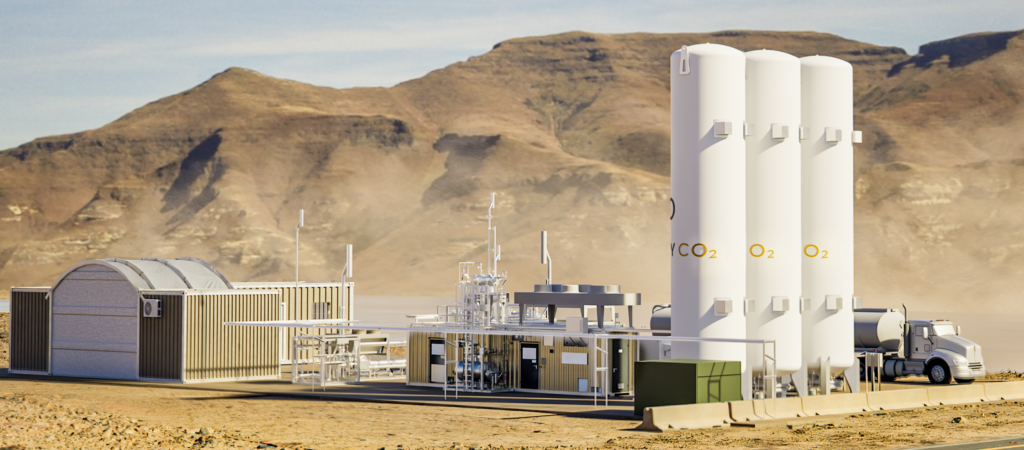
AlchemyCO₂ recovers CO₂ from renewable natural gas (RNG) facilities — where biogenic CO₂ is released during upgrading — and purifies it for use across food, beverage, and manufacturing. With 500+ operational RNG sites in North America (and approximately 150 more on the way), this co-located approach brings CO₂ closer to customers, cutting transport miles and exposure to fragile supply chains.
For renewable gas producers, it turns what was once wasted CO₂ into a new, steady source of revenue. For customers, it means high-quality CO₂ that can be more affordable and reliably sourced nearby.
AlchemyCO₂ has secured long-term access to more than a hundred-thousand metric tonnes of renewable CO₂ each year and financing to scale modular plants for regional clusters. Its first facilities are expected to come online in 2026. Backed by a growing patent portfolio and a process that recovers about 20% more CO₂ than conventional systems, AlchemyCO₂ is striving to build a national network of about 50 facilities by 2030, creating a more resilient, circular supply chain for one of industry’s essential gases.
Materials that make markets more circular
One of the most practical ways to strengthen industrial resilience is to make the materials we rely on more efficient and sustainable through the upcycling of waste — reducing reliance on virgin materials and advancing a more circular economy.
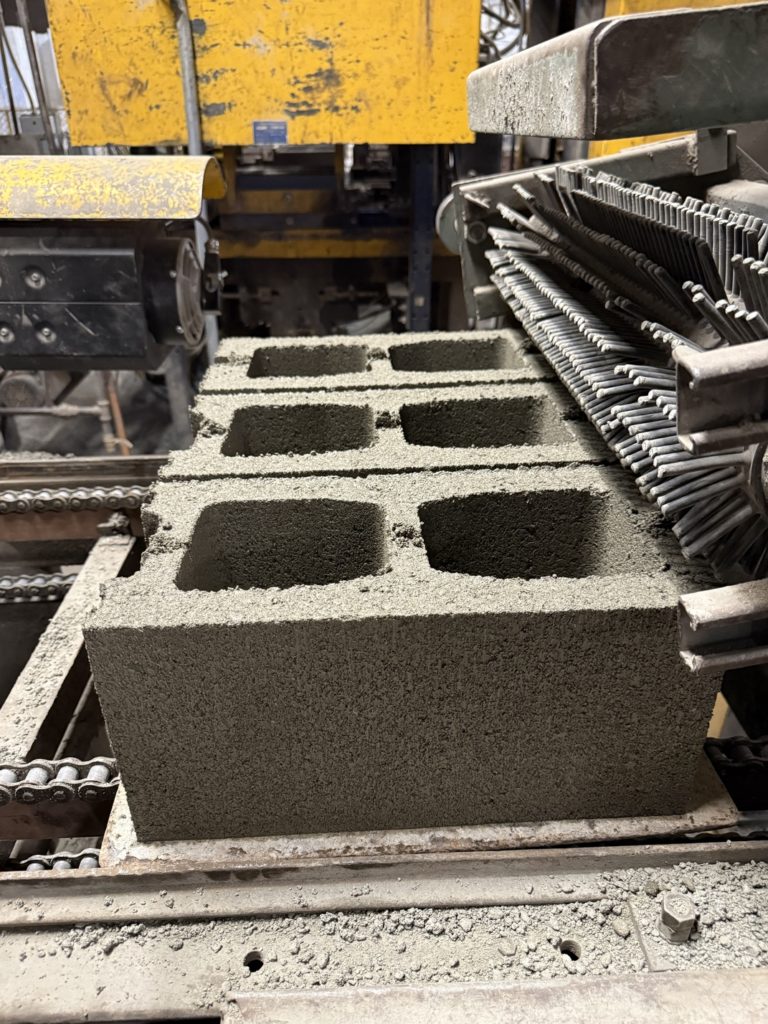
CarbonBuilt is demonstrating how this can be achieved at scale. Its Reversa Binder, a proprietary blend of industrial byproducts rich in the same chemical components as cement, replaces up to 50% of the cement in concrete. Alongside cement replacement, CarbonBuilt implements process improvements at manufacturing plants that significantly reduce waste and enhance operational efficiency. The result is a functional equivalent to conventional concrete that can be produced at a lower cost and with more than 50% lower embodied carbon content.
To date, CarbonBuilt shared their technology has been used to manufacture over 50,000 tons of concrete, reducing more than 2,000 metric tonnes of CO₂ emissions in the process. The technology enables greater industrial efficiency, lowers production costs, and produces a building material with substantially-reduced embodied carbon.
CarbonBuilt is demonstrating that economic competitiveness and environmental performance can go hand in hand.
Fuels that future-proof aviation and logistics
Captured CO₂ is also a critical molecule for next-generation fuels. Synthetic aviation fuels (SAF), including power-to-liquids e-SAF, combine captured CO₂ with renewable hydrogen to produce a drop-in jet fuel that uses existing aircraft and fueling infrastructure.
IATA projects SAF production to double to ~2 million metric tonnes in 2025, which remains ~0.7% of total airline fuel use. Supply is scaling but still trails demand — another case where durable buyer signals and cross-industry partnerships could unlock volume and reduce costs.
Cisco stepped in early: in January 2023, Cisco joined United Airlines’ Eco-Skies Alliance, helping spur real-world SAF use while we continue exploring ways to support energy and aviation partners. The through-line is practical: seeding reliable markets for diverse fuel sources strengthens U.S. energy security and competitiveness in hard-to-abate sectors.
Backing practical builders of a stronger carbon value chain
We’re proud to back innovators making the U.S. carbon value chain more reliable, local, and with reduced lifecycle emissions, including AlchemyCO₂ and CarbonBuilt. Together, they stabilize critical inputs for manufacturing and construction while laying the groundwork for tomorrow’s fuels — creating supply assurance, price stability, and industrial vitality.
What industrial leaders can do next
- Map CO₂ dependencies. Identify where operations rely on CO₂ (cooling, carbonation, welding, water treatment, materials) and assess concentration risk by source and region.
- Pilot circular CO₂ products. Start with low-friction substitutions, like CO₂-mineralized blocks and mixes, where specs are proven and costs are competitive.
- Secure resilient supply. Explore local, renewable CO₂ sources or multi-supplier strategies to reduce single points of failure and shorten routes.
- Signal demand for lower-carbon fuels. Consider joining buyer alliances, sign offtakes, or trial SAF certificates to help unlock volume and lower costs over time.
Reimagining carbon as a resource — not only a waste stream and an emission — is how we can build a more self-reliant industrial backbone. By scaling reliable, circular CO₂ supply and the materials and fuels that use it, Cisco and the Cisco Foundation are helping turn a known constraint and pollutant into durable competitive advantage for American industry.