
Table of Contents
Walk down any haircare aisle and you’ll see jars and bottles of coconut oil wearing different labels. Some say virgin. Others say refined. A few are liquid even when your kitchen counter is cold. Price tags vary wildly, and the texture in the jar can range from thick and creamy to thin and slippery.
The truth is, coconut oil is not one single product. Ask three friends how they use it and you’ll hear three completely different routines. Some swear by overnight treatments. Others put a drop on their ends before leaving the house. A few have banned it entirely because it left their hair feeling stiff and dry.
That last part matters. Coconut oil can be incredible for your hair — but only if you pick the right type and match your application method to your hair’s actual needs. Here’s a grounded comparison of the main options, including the trade-offs nobody puts on the label.
Choosing Your Coconut Oil: Refined vs. Virgin vs. Fractionated
Before you think about how to apply anything, you need to consider what’s actually in the jar. These three categories behave differently on your strands, and they’re not interchangeable.

Virgin Coconut Oil: The Heavyweight
Virgin coconut oil comes from fresh coconut meat, pressed without high heat or chemical solvents. It keeps most of its natural nutrients, including the antioxidants and medium-chain fatty acids that make coconut oil so popular for skin and hair.
Pros:
- Contains more natural compounds that can help soften and coat the hair shaft
- Rich, distinct coconut aroma that many people enjoy
- Unprocessed, which appeals to people who prefer the least refined option
Cons:
- Thicker and heavier, so it can easily plaster fine hair to the scalp
- Solid below 76°F (24°C), which is a genuine hassle for quick applications
- The strong scent is a problem if you want a neutral base for essential oils
Refined Coconut Oil: The Practical Middle Ground
Refined coconut oil has been bleached, deodorized, or processed to remove the coconut smell and some impurities. It has a higher smoke point and a texture closer to a neutral carrier oil.
Pros:
- No strong coconut aroma, so you can blend it with other hair oils without overwhelming the scent
- Lighter in some formulations, making it easier to wash out
- Often a better pick for low-porosity hair because the processing removes some of the large fatty acids that can sit on the hair shaft
Cons:
- Some nutrients are lost during processing
- May contain hexane or other solvents, though many brands offer expeller-pressed versions that skip chemicals
- Still solidifies at room temperature, so you’ll need to melt it before use
Fractionated Coconut Oil: The Lightweight Liquid
Fractionated coconut oil is a specific extraction that isolates the medium-chain triglycerides and removes the long-chain fatty acids. The result is a clear, scentless liquid that never turns solid.
Pros:
- Always liquid, which makes it perfect for mixing into formulas or applying straight to the scalp with a dropper
- Very light and quick-absorbing — no greasy residue
- Excellent carrier oil for rosemary, peppermint, or tea tree essential oils
Cons:
- Lacks the heavier protective coating that regular coconut oil provides for very dry or damaged ends
- More expensive per ounce than solid coconut oil
- Despite its name, fractionated coconut oil doesn’t have all the same conditioning benefits of its solid sibling — so don’t assume it’s exactly the same
Application Methods: Which One Actually Works?
Now that you’ve got the oil sorted, you still have to decide how to use it. A method that works beautifully for one person’s hair can backfire on you.
Pre-Shampoo Treatment: The Safest Starting Point
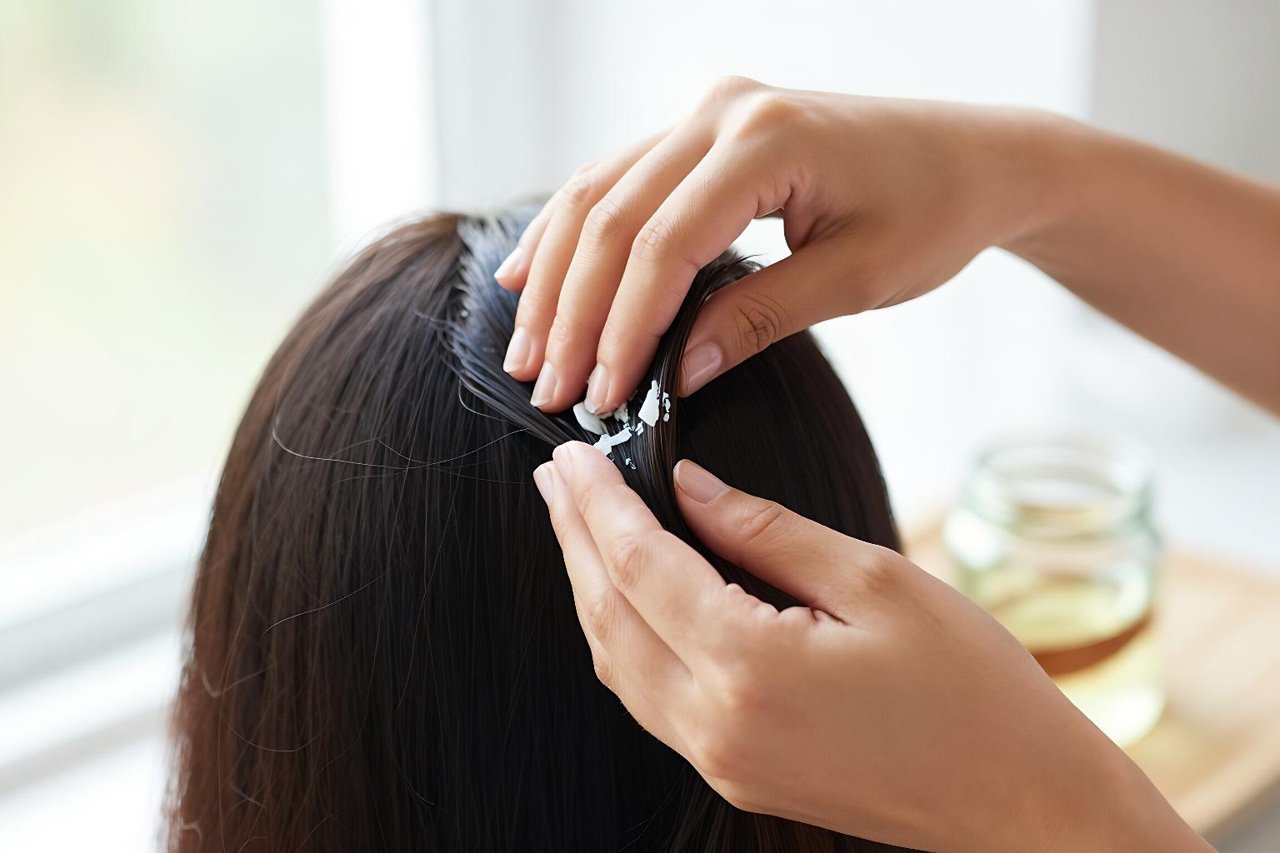
This is the classic approach. You apply coconut oil to dry hair, leave it on for 30 minutes to a few hours, then shampoo and condition as normal. Coconut oil is one of the few oils that can actually penetrate the hair shaft, thanks to its lauric acid content, which reduces protein loss from inside the strand.
This is the method I’d recommend for most people, especially if you’re new to coconut oil. The shampoo helps remove the heavier residues, so you get the conditioning benefits without the of weighing your hair down afterwards.
If you want a detailed walkthrough from washing to styling, check out this step-by-step coconut oil routine that I put together for how to actually pull this off without greasy leftovers.
Overnight Mask: High Reward, Higher Risk
Sleeping in coconut oil sounds luxurious, and many people swear by it. Applying a generous amount to your ends and leaving it on for 6 to 8 hours gives the oil maximum time to soak in. But there’s a catch.
If your hair is fine or has low porosity, an overnight mask of regular coconut oil can seal so tightly that water can’t get in later. You wake up with hair that feels brittle and straw-like, even after you wash it. That’s not a failure of coconut oil — it’s a sign that your hair had enough of the good stuff and was overwhelmed.
High-porosity hair, which craves increased moisture and tends to dry quickly, often responds beautifully to overnight coconut oil. But low-porosity hair struggles with it, because the hair’s tightly bound cuticle doesn’t easily absorb heavy oils.
Leave-In Conditioner: A Little Goes a Very Long Way
Some people skip the washing step and just rub a drop of coconut oil between their palms, then smooth it over the ends of damp hair. This tames frizz and adds shine instantly, but it’s a delicate balance.
Even a pea-sized amount of solid coconut oil can look greasy on thin hair. If you heat it to liquid and dip just your fingertip in, then pat your ends, that might be enough. Fractionated coconut oil is better here, since it won’t leave a slippery texture.
If you’re mixing your own leave-in treatments, you might also want to read about a DIY coconut oil spray with rosemary and volumizing powder — it shows how fractionated oil can be the base for a lighter, more practical everyday product.
Scalp Treatment and Carrier Oil
Because regular coconut oil has antimicrobial properties, some people massage it into the scalp to help with flakiness or a dry, itchy scalp. The problem is that solid coconut oil is very heavy for a scalp that’s prone to oiliness. Massaging it directly can clog follicles over time and even contribute to buildup.
Fractionated coconut oil is a far better carrier oil for scalp focus, especially if you’re adding essential oils to the mix. It glides on cleanly and absorbs faster.
Of course, if you’re serious about scalp health and hair growth, it’s worth remembering coconut oil alone isn’t a cure-all. A combination approach often makes more sense. If your goal is regrowth, take a look at how to find the best hair growth serum step-by-step — it breaks down what ingredients actually matter so you don’t waste money on magic potions.
What’s the Verdict for Each Hair Type?
Let’s make this simple. Here’s my quick recommendation matrix, based on years of seeing people get confused by the same questions:
- Fine, straight hair: Use fractionated coconut oil as a leave-in or skip solid coconut oil entirely. Avoid overnight masks with regular oil.
- Curly or coily hair: Try virgin coconut oil as a pre-shampoo treatment. Your curls can usually handle its weight, and it helps seal in moisture.
- Low-porosity hair: If your hair strands sit on water instead of absorbing it, stay away from the heavy stuff. A very light pre-wash treatment with refined coconut oil for 20 minutes is the best you can do.
- High-porosity hair: Your hair drinks up oil, so use a richer treatment like virgin coconut oil and leave it on longer.
- Damaged or chemical-treated hair: Focus on the ends and go with refined coconut oil, because it offers the same protective benefit without adding extra weight to an already fragile strand.
The Role of Processed Hair Care Products: When Coconut Oil Isn’t Enough
It’s easy to get swept up in single-ingredient solutions, but your hair and scalp are complex. Coconut oil can condition your strands, but it won’t clean your scalp, balance your pH, or stimulate dormant follicles. Many people find that a proper shampoo matters more than any oil when they face shedding or hair thinning.
Before you assume your hair needs a heavier dose of coconut oil, ask yourself whether your scalp is actually getting a clean start. Choosing the right shampoo for hair loss isn’t glamorous, but it can make a bigger difference than all the jars of oil in your pantry.
Similarly, if you’ve been slathering oil on your hair for months and see no meaningful change, it might be time to switch up your entire game plan. Coconut oil can make hair smoother and less prone to breakage, but it hasn’t been shown to grow new hair from a dormant follicle. For that, you need ingredients with actual clinical backing. A closer look at the best hair growth serums that have earned real science can point help you decide where to spend your energy.
Ethical and Practical Trade-Offs You Shouldn’t Ignore
One more comparison is worth making: cheap vs. high-quality coconut oil. Grocery store brands are often refined or heavily processed. If you’re only ever doing a pre-poo for 15 minutes, that’s fine. But buy the cheapest refined oil and you might get a blend that’s been deodorized so aggressively that it no longer has the fatty acids required to actually bind to your hair.
Look at the ingredients label. It should say “coconut oil” and nothing else. If you see “hydrogenated” or “partially hydrogenated” in front of it, put it back down. Those oils won’t give hair the same absorbent, repairing effect because their fatty acids have been chemically converted into a form that stays on the surface.
The beauty of coconut oil is that it offers real, measurable benefits for most hair types — when you choose the right one. Start with a small pre-shampoo treatment using the mildest option that makes sense for your porosity. See what your hair does over the course of a few washes. If it feels soft and looks shinier, you win. If it feels like straw, you know exactly which direction to adjust the next time: lighter oil, shorter application, or skip the whole thing for a few weeks and let your hair reset.


