
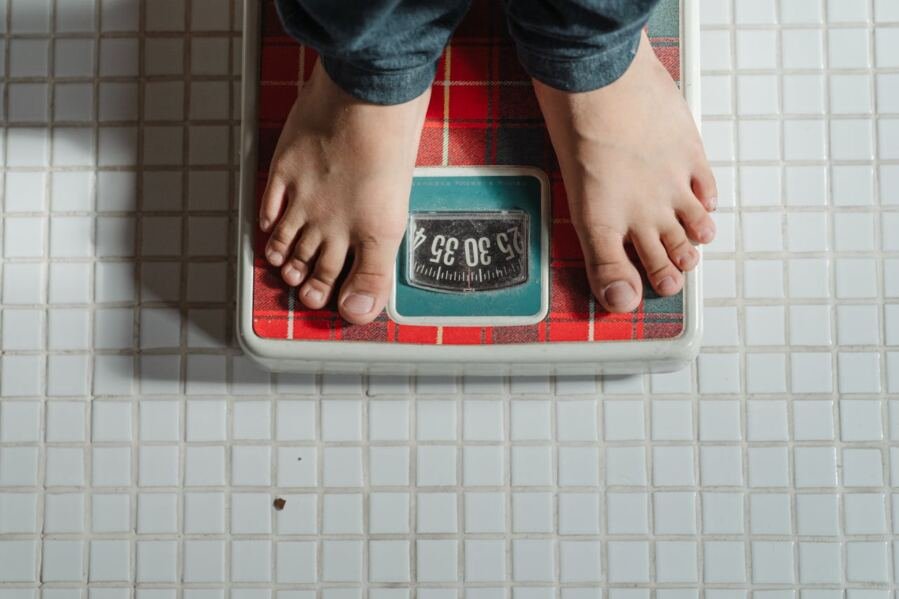
The scale is, in a sense, a liar. It tells you how much you weigh, but it cannot tell you what you’re losing. When GLP-1 drugs like semaglutide began producing dramatic weight reductions in people with obesity, the number on the dial dropped satisfyingly, compellingly. What was less satisfying was where some of that weight was coming from: not just fat, but muscle, bone, and organ tissue, the lean mass the body actually needs.
That trade-off has nagged at researchers since GLP-1 therapies became the dominant story in obesity medicine. Up to 40% of the weight shed by people on semaglutide is lean tissue, a proportion that worries clinicians because muscle loss can undermine metabolic function, reduce physical capacity, and leave patients worse off in ways the scale doesn’t capture.
A new approach, reported this week in Nature Medicine, attempts to fix that problem by running two biological interventions in parallel. A phase 2 trial involving 507 adults with obesity has found that combining semaglutide with bimagrumab, an antibody that acts on fat tissue and skeletal muscle through a completely different pathway, produced roughly 22% average body weight loss over 72 weeks, with more than 92% of that loss coming from fat mass. Lean mass was largely preserved. “Obesity treatment has traditionally focused on the number on a scale,” says Steven Heymsfield of the Pennington Biomedical Research Center at Louisiana State University, who led the study. “Patients with obesity who are at risk for low muscle mass, affecting both physical and metabolic function, may benefit from treatments that maximize fat mass reduction while preserving skeletal muscle.”
The results are, by some measures, substantial. Participants in the high-dose combination arm achieved fat mass reductions comparable to those reported after bariatric surgery.
To understand why the combination works, you need to understand what bimagrumab does, which is almost the opposite of what semaglutide does. Semaglutide acts on the brain: it mimics a gut hormone that signals satiety, suppressing appetite and reducing caloric intake. Bimagrumab ignores all that. Instead, it blocks a class of receptors called activin type II receptors, which regulate two very different processes depending on where they sit. In adipose tissue, these receptors normally dampen fat mobilisation; blocking them releases that brake, prompting fat cells to break down and shed their lipid stores. In skeletal muscle, blocking the same receptors has an anabolic effect, encouraging muscle growth. The drug was originally developed for muscle-wasting conditions, including sarcopenia in older adults. Its fat-burning properties were something of a later discovery.
The two pathways don’t overlap. “Bimagrumab and semaglutide work through distinct biological pathways,” says Heymsfield, “and when combined, we observed not only a preservation of lean mass but also an additive reduction in fat mass that exceeded what either therapy achieved alone.”
The trial, named BELIEVE, randomised participants into nine groups: bimagrumab alone at two dose levels, semaglutide alone at two dose levels, and all four possible dose combinations, plus placebo. After 48 weeks, and again at the end of a 24-week extension period, the body composition data told a fairly consistent story. Bimagrumab alone produced about 10.8% weight loss at week 72, but crucially, every kilogram of that came from fat, and participants actually gained lean mass (up 2.5% on average). Semaglutide alone at the highest approved dose produced 15.7% weight loss, but roughly a quarter of that loss was lean tissue, with lean mass falling about 7.4%. The high-dose combination brought a 22.1% loss, with lean mass declining only 2.9%, a reduction that researchers attribute largely to normal metabolic remodelling during weight loss rather than the drug effects per se.
There were other markers worth noting, too. Visceral adipose tissue (the deep abdominal fat most strongly linked to cardiovascular and metabolic disease) fell by 58% in the high-dose combination group. High-sensitivity C-reactive protein, a key inflammation marker, dropped by up to 84%. Adiponectin, a hormone that improves insulin sensitivity, rose substantially. Among participants who had prediabetes at the start of the trial, 100% of those in the combination group had reverted to normal blood sugar levels by week 72. Not most. All of them.
The drug combination was generally tolerated. Muscle spasms were the most common reason for discontinuation in bimagrumab monotherapy groups (five participants stopped for this reason), but none in the combination groups. Acne appeared in some bimagrumab recipients; mild-to-moderate, in most cases. The semaglutide side effects, nausea and constipation chiefly, were consistent with what clinicians already know about the drug. There were no deaths.
Less flattering, perhaps, is the LDL cholesterol picture. Bimagrumab alone raised LDL levels, an effect that persisted through the trial. In the high-dose combination groups, semaglutide appeared to counteract this, pulling LDL back toward baseline by week 48. But it’s a signal the researchers flag as needing further investigation, particularly given the intended patient population: people already at elevated cardiovascular risk. Small reductions in hip bone mineral density were also observed across groups, consistent with the reduced mechanical loading that accompanies weight loss, though researchers note these changes are likely modest and similar to those seen with other weight loss interventions.
There are practical hurdles ahead. Bimagrumab in this trial was administered intravenously, every twelve weeks, at clinical sites. That’s not a dosing schedule most patients or health systems would reckon workable at scale. A further phase 2 trial is now underway pairing bimagrumab with tirzepatide (a newer, dual-action incretin) and evaluating subcutaneous delivery of both drugs, which would make administration considerably more straightforward. Whether subcutaneous bimagrumab preserves the same body composition effects remains to be confirmed.
What the BELIEVE trial perhaps does most clearly is force a question about what obesity treatment is actually trying to achieve. Heymsfield and colleagues note that body weight and BMI are informative but incomplete measures, and that more routine assessment of body composition (fat versus lean tissue) might better guide clinical decisions. You can lose a fifth of your body weight and be metabolically improved in most respects, but if a significant portion of what you shed was muscle, you may have swapped one set of risks for another. The combination approach tested here is still phase 2. A lot of work remains. But the direction it points in, optimising not just the amount of weight lost but its composition, seems likely to shape where obesity pharmacology goes next.
There’s No Paywall Here, But We Depend On You!
If our reporting has informed or inspired you, please consider making a donation. Every contribution, no matter the size, empowers us to continue delivering accurate, engaging, and trustworthy science and medical news. Thank you for standing with us!
Related