
Table of Contents
A teenager swears off chocolate for two weeks before prom and her skin clears. A bodybuilder’s back erupts and he blames the gym towels, never the whey shake he drinks twice a day. Both stories feel like evidence. Neither one is. Acne and diet is one of those topics where personal experience, folklore and a handful of small studies have blurred into rules people repeat as fact.
Some of the myths are harmless. Others push people into cutting out whole food groups, spending £40 on celery juice, or blaming themselves for a condition that is largely genetic and hormonal. So here’s what the research actually says, what it doesn’t, and how to test your own triggers without turning dinner into a science project.
Myth 1: Chocolate gives you spots
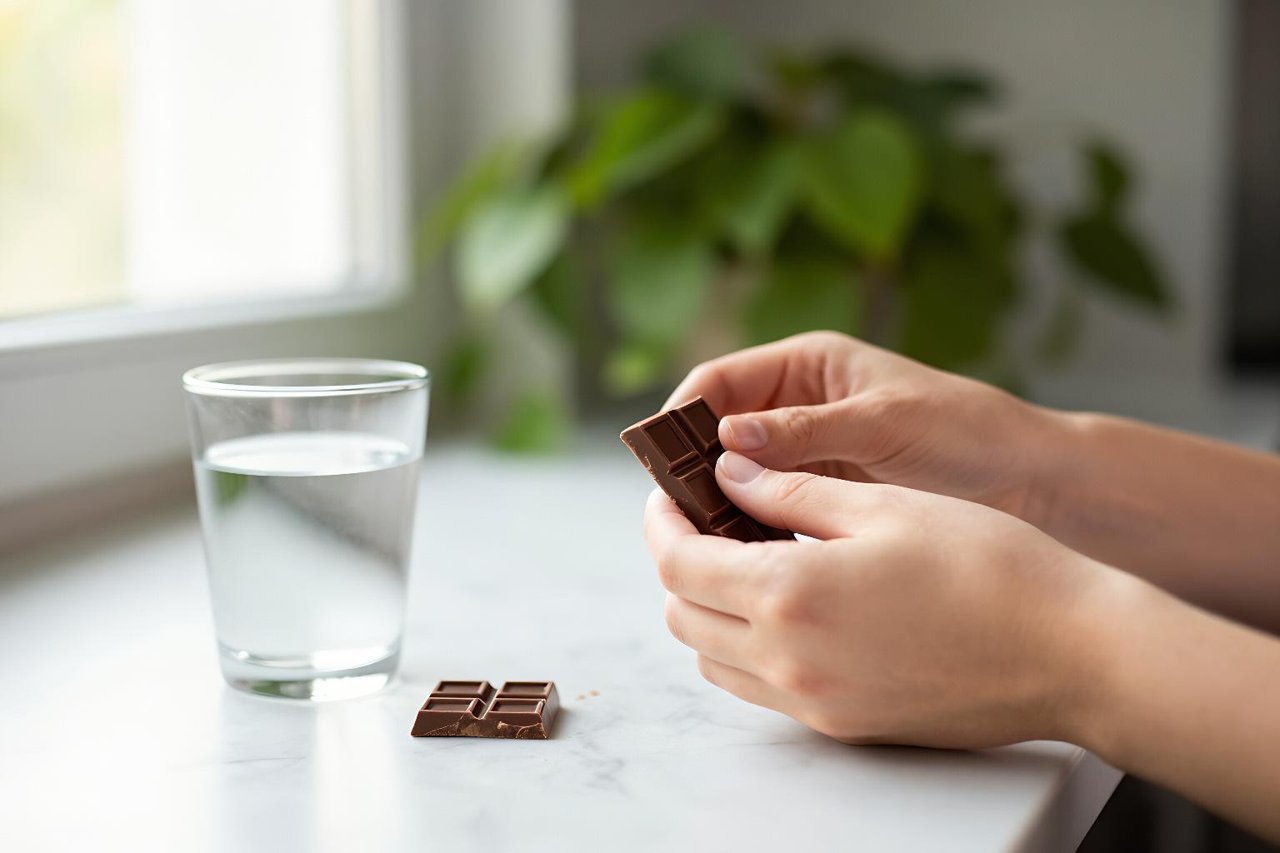
This one has survived for decades on very little. The most-cited study, published in 2011, gave 25 men with acne either capsules of 100% cocoa or a placebo for four days. The cocoa group had more inflamed lesions. Twenty-five people. Four days. That’s the foundation.
Later reviews have found the evidence for chocolate as a standalone acne trigger to be weak and inconsistent. Milk chocolate is a different story: it delivers a hefty dose of sugar plus dairy in one hit, which muddies any experiment. If your skin flares after a bar, it may be the sugar load or the milk, not the cocoa solids.

Why chocolate gets blamed anyway
Chocolate shows up at exam season, parties, stressful weeks and the days before a period. All of those things independently worsen acne. It’s an easy correlation to mistake for a cause.
Myth 2: Fried food makes your skin greasy
Sebum is produced by your sebaceous glands under the direction of androgens and insulin-like growth factor. Eating oil does not route it to your forehead. There is no pipe from your chips to your T-zone.
What fried food usually travels with is a different problem: refined starch and sugar. A burger bun, a portion of chips and a fizzy drink form a high-glycaemic meal, and that is the mechanism with actual research behind it.
Myth 3: Everyone with acne should quit dairy
Dairy is the myth with the most nuance. Large observational studies have found an association between skimmed milk and acne, particularly in teenagers. Case reports repeatedly link whey protein supplements to breakouts in athletes. Neither of those is proof of cause and effect.
What that means in practice: dairy helps some people and does nothing for others. A blanket ban for everyone is overkill, especially for teenagers who need the calcium and protein. If you want to test it, remove it for three weeks, then reintroduce it and watch what happens. If nothing changes, drink the milk.
Myth 4: Sugar has nothing to do with it
Sugar has more to do with it than chocolate does. Diets with a high glycaemic load spike insulin, and insulin raises IGF-1, which increases sebum production and speeds up the skin-cell turnover that clogs pores. Randomised trials of low-glycaemic diets have shown modest reductions in lesion counts. Modest is the honest word. It isn’t a cure, but it’s real.
The flip side of this myth is the equally wrong belief that cutting every gram of sugar will clear your skin. Extreme restriction usually backfires, and a bowl of berries or a birthday slice isn’t the problem. Liquid sugar is the problem: two cans of cola a day is a very different input from a square of dark chocolate.
Myth 5: Juice cleanses flush acne out of your system
Your liver and kidneys already handle detoxification, and they don’t need help from beetroot. A juice cleanse is mostly a very high-sugar, low-protein diet delivered in liquid form, which is close to a worst-case scenario for glycaemic load. People often report glowing skin afterwards because they’ve also cut alcohol, slept more and stopped eating crisps for a week.
The same logic applies to most beauty advice that sounds extreme but promises a fast fix. A surprising amount of it is either useless or actively irritating, as this rundown of beauty tips that backfire shows.
Myth 6: Diet plays no part at all
For a long stretch, dermatologists told patients food was irrelevant. That was a correction against the 1960s-era advice to avoid chocolate, cola and shellfish, and it went too far in the other direction. Current thinking sits in the middle: diet is a secondary factor that can nudge the condition, while genetics, hormones and the skin’s own microbiome do the heavy lifting.
What the evidence actually supports
- High-glycaemic diets are the strongest dietary link. Refined carbs, sugary drinks and white bread raise insulin, which drives sebum.
- Whey protein supplements have repeated case-report support in athletes, more than dairy foods themselves.
- Skimmed milk shows an association in large observational studies, but the data can’t separate milk from everything else in a teenager’s diet.
- Omega-3 intake from oily fish is linked to lower inflammation, though the acne-specific trials are small and mixed.
- Fibre and whole foods help mainly by displacing the foods above.
- Chocolate, fried food and iodine-heavy diets have the weakest evidence of all.
How to test your own triggers without spiralling
Change one variable at a time and give it three weeks, because a skin cycle is roughly 28 days and you can’t judge anything in four days. Keep the rest of your routine identical, photograph your jaw and cheeks in the same light each week, and note what you actually ate rather than what you remember eating.
Then reintroduce the food for ten to fourteen days. Most people discover nothing changes and can stop worrying. A few find a clear, repeatable pattern, usually with liquid sugar or whey. That’s a useful piece of information for life. Vague guilt about chocolate is not.
Where diet ends and treatment begins
Diet can nudge acne. It can’t fix a routine that’s stripping your skin barrier twice a day or treat a stubborn case of nodular acne on its own. If you’re cleansing with a foaming scrub, applying three actives and wondering why your skin is angry, sorting that out will likely do more than swapping your lunch. This guide to building a routine for acne-prone skin without wrecking your barrier is a sensible place to start.
For inflammatory acne, the evidence-based options are well documented, from benzoyl peroxide and retinoids to prescription combinations. Work through what actually works in acne treatment before spending money on supplements. And if your breakouts are mostly small white bumps rather than red lumps, that’s a different problem with a different first-line approach — these whitehead treatment options cover it properly.
The one dietary change worth making first
If you’re going to change anything, cut liquid sugar. Fizzy drinks, sweetened coffee, fruit juice and energy drinks are the fastest way to deliver a glycaemic spike with zero fullness and no nutrients. Swap them for water or sparkling water with lemon for three weeks and keep everything else the same.
It’s a single, specific change you can actually measure, it doesn’t require giving up food groups or believing anything unproven, and it’s good for your skin, your teeth and your energy regardless of what your acne does. If nothing happens after a month, you’ve lost nothing and you’ve ruled out the biggest dietary factor on the list. Then you can put your energy where it belongs: a steady routine, a sunscreen habit, and a dermatologist’s opinion if things aren’t shifting.


