
Table of Contents
You’ve probably tried a dozen things to sleep better. Blackout curtains, a weighted blanket, chamomile tea at 9 PM sharp. Then someone mentions deep sleep music, and you’re skeptical. Does pressing play on a track called “Delta Waves for Deep Rest” really do anything? Or is it just a way to fill your headphones with ambient hum while your brain refuses to switch off?
The truth is somewhere in between. Deep sleep music isn’t magic, but it’s not fake either. Used the right way, it can genuinely ease you into slower brainwaves, lower your heart rate, and block out the mental noise that keeps you up. The trick is knowing how it works and which tracks actually help.
What Exactly Is Deep Sleep Music?
Deep sleep music isn’t a genre you’ll hear on the radio. It’s a specific style of audio designed to promote relaxation and sleep. Typically, it has a slow tempo under 60 beats per minute, uses soft, repetitive melodies, and leans heavily on ambient soundscapes rather than strong chord progressions.
You’ll also find tracks that incorporate nature sounds like rain, ocean waves, or forest crickets. Others use binaural beats, where two slightly different frequencies are played in each ear, creating a perceived third tone that encourages specific brainwave states. The goal is to shift you from the alert beta state into alpha, then theta, and eventually into delta—the slowest brainwave activity associated with deep, restorative sleep.

There’s no single sound that works for everyone. Some people fall asleep to a rumbling thunderstorm. Others prefer minimalist piano. The common thread is predictability. Your brain recognizes an unchanging, soothing audio pattern and treats it as a safe signal.
The Science Behind Music and Sleep
When you listen to music that’s slow and quiet, your body responds physiologically. Heart rate slows, breathing deepens, and cortisol levels drop. This is the parasympathetic nervous system kicking in—the “rest and digest” mode that prepares you for sleep. A 2018 meta-analysis in the Journal of Nursing Studies found that music interventions significantly improved sleep quality in adults with insomnia, with effects that built up over time.
One reason music works is that it gives your mind a focal point. Instead of replaying the day’s awkward conversation or worrying about tomorrow’s deadline, you’re anchored to a steady rhythm. That’s especially helpful when anxiety and overthinking keep you wired at night. If racing thoughts are your main sleep obstacle, managing that mental loop is essential—sometimes with the help of real strategies that work when you’re struggling with anxiety or low mood.
The deeper sleep stage, known as slow-wave sleep, is when your body repairs muscle, consolidates memory, and secretes growth hormone. Getting enough of it is vital for daytime focus, mood, and even long-term cognitive health. Interestingly, the benefits of music on the brain extend beyond sleep. Lifelong musical engagement—whether playing an instrument or simply listening actively—has been linked to better memory and a lower risk of dementia. You can read more about how enjoying music may help protect against dementia, but for now, let’s keep you asleep.
What to Look for in Deep Sleep Music (and What to Avoid)
Not all “sleep music” is created equal. If you just type “deep sleep” into a streaming service, you’ll get a mix of tracks that might not work. Here’s a quick checklist to filter the good from the so-so:
- Tempo below 60 BPM. Your resting heart rate is around 60 beats per minute. Music that matches or slightly undercuts that tempo signals your body to slow down.
- No sudden changes. Avoid tracks with loud drops, unexpected instruments, or dynamic shifts. You want a steady sonic bed, not a surprise.
- Minimal lyrics. Vocals can engage your language processing and keep your brain active. Instrumental is usually safer, though some people like very faint, soft humming.
- Long duration. A 3-minute song isn’t enough. Look for tracks that are 30 minutes to an hour long, or loop seamlessly.
- Low, smooth frequencies. Bass-heavy sounds can feel relaxing, but avoid anything with distortion or harsh rumbles.
- No alarm-like tones. If a sound resembles a beep or notification, your brain will respond to it as a threat.
If you’re new to this, start with something simple: a looped rainstorm or a slow ambient pad. You can experiment with binaural beats later, but don’t get too hung up on the specific frequency labels.
How to Use Deep Sleep Music Effectively
Pressing play isn’t enough. How you set up the experience matters just as much as the track itself.
Speaker or Headphones?
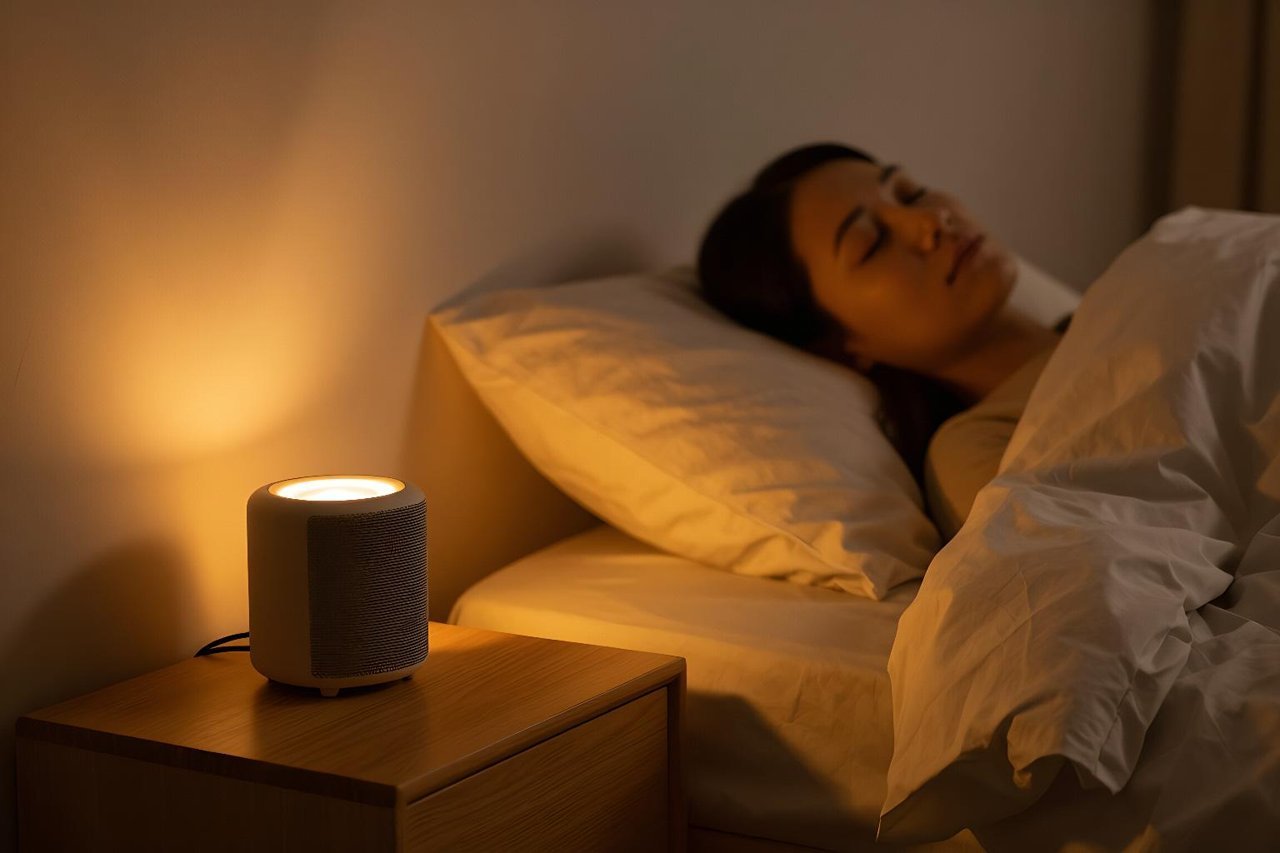
For most people, a speaker is better than headphones. Sleeping with earbuds can be uncomfortable, and if you roll over, the cord or In-ear pressure can wake you. A small Bluetooth speaker on a nightstand at low volume works well. If you absolutely need headphones, choose open-ear or bone-conduction styles that don’t block your ears completely.
Volume and Timer
Keep the volume low—just loud enough to hear clearly, but not so loud that it becomes the focus. Most sleep experts recommend around 30 to 40 decibels, which is roughly a whisper or soft rainfall. Also, set a sleep timer on your music app so it fades out after 30 to 45 minutes. You don’t want a loud track blasting at 3 AM when the algorithm decides to shuffle.
Build a Wind-Down Routine
Deep sleep music works best when it’s part of a broader routine. In the hour before bed, dim the lights, put your phone away, and dim the screen. You can pair your music with some gentle stretching or deep breathing. If you’re redesigning your space for better rest, your bedroom’s atmosphere can make or break a sleep routine. Simple changes like adding soft lighting and reducing clutter can amplify the effect of the music. For more ideas, check out this guide on how to create a home that supports your wellbeing.
Deep Sleep Music, Anxiety, and Overthinking
One of the biggest reasons people can’t sleep is an overactive mind. You lie down, and suddenly every worry, every task for tomorrow, every awkward thing you said in 2015 appears. This kind of monologue keeps your brain in an alert state, making it nearly impossible to fall asleep.
Deep sleep music gives you something else to focus on. The steady, unchanging sound acts as an anchor. Whenever your mind starts to wander, you gently bring your attention back to the music. It’s a form of mindfulness, but without needing any special skills. You just listen.
If anxiety or low mood are what keep you awake at night, music isn’t a cure, but it can be part of a larger toolkit. It’s a low-stakes way to calm your nervous system. And if you’re already dealing with depression, poor sleep can make things worse. Music won’t replace professional help, but it might help you cope. You might also find value in exploring proven simple tips for better sleep that take a more holistic approach.
What If It Doesn’t Work?
Deep sleep music isn’t a magic bullet. Some nights, nothing will work. You’ll play the prettiest ambient track, and your brain will still be locked onto your to-do list. That’s normal.
Don’t force yourself to listen if you find it annoying or if the sounds purely frustrate you. Not everyone responds to the same audio. You might do better with a white noise machine that creates a consistent, patternless hum. Or you might prefer a guided sleep meditation that combines spoken relaxation with background music.
It’s also worth checking your sleep hygiene first. Music can help, but if you’re drinking coffee at 6 PM, scrolling through Instagram in bed, or keeping your room uncomfortably warm, no track will save you. A solid foundation of sleep hygiene plus deep sleep music is a far better combination than music alone.
A Simple Sleep Playlist to Start With
Need a concrete starting point? Here’s a quick checklist of track types that consistently get good reviews from sleepers. You can search these terms in your app:
- Rain on a window — steady, low-frequency patter.
- Delta wave isochronic tones — pulsing tones designed for deep sleep.
- Brown noise — deeper and more rumbly than white noise.
- Slow ambient piano — with long, silent pauses between notes.
- Ocean waves at night — no crashing edges, just continuous wash.
Start with one or two of these. Use them for a week, not just one night, and notice how you feel in the morning. Deep sleep music works cumulatively. Your brain starts associating the sound with the transition to sleep, and eventually, just pressing play becomes a cue that it’s time to shut down.
With a little patience and a decent speaker, it might become the simplest part of your bedtime routine. Nothing to swallow, no screens to avoid, no effort beyond tapping a button. Just sound, and rest.


