
Table of Contents
Your liver finished a full shift while you slept. It took apart everything you ate and drank yesterday, separated what was useful from what wasn’t, and packaged the leftovers so your kidneys could escort them out. You didn’t think about any of it. That’s the part most detox marketing skips over: the machinery is already installed and running.
So why do people go on detox diets at all? What are they actually doing, and does any of it work? If you’ve never tried one and you’re trying to work out whether it’s worth your time, this is the place to start — no products, no promises, just the fundamentals in plain language.
What “detox diet” actually means
Here’s the first thing to untangle. The phrase gets used for at least four different things, and they’re not interchangeable.
- Commercial cleanses. Powders, teas, kits and juices sold with the promise of flushing toxins. This is where most of the marketing lives — and the least evidence.
- Short fasts or juice-only stretches. Restricting food for a few days or a week, usually to “reset” digestion or drop a quick few pounds.
- Elimination diets. Temporarily removing specific things — alcohol, caffeine, dairy, gluten, added sugar — to see how your body responds.
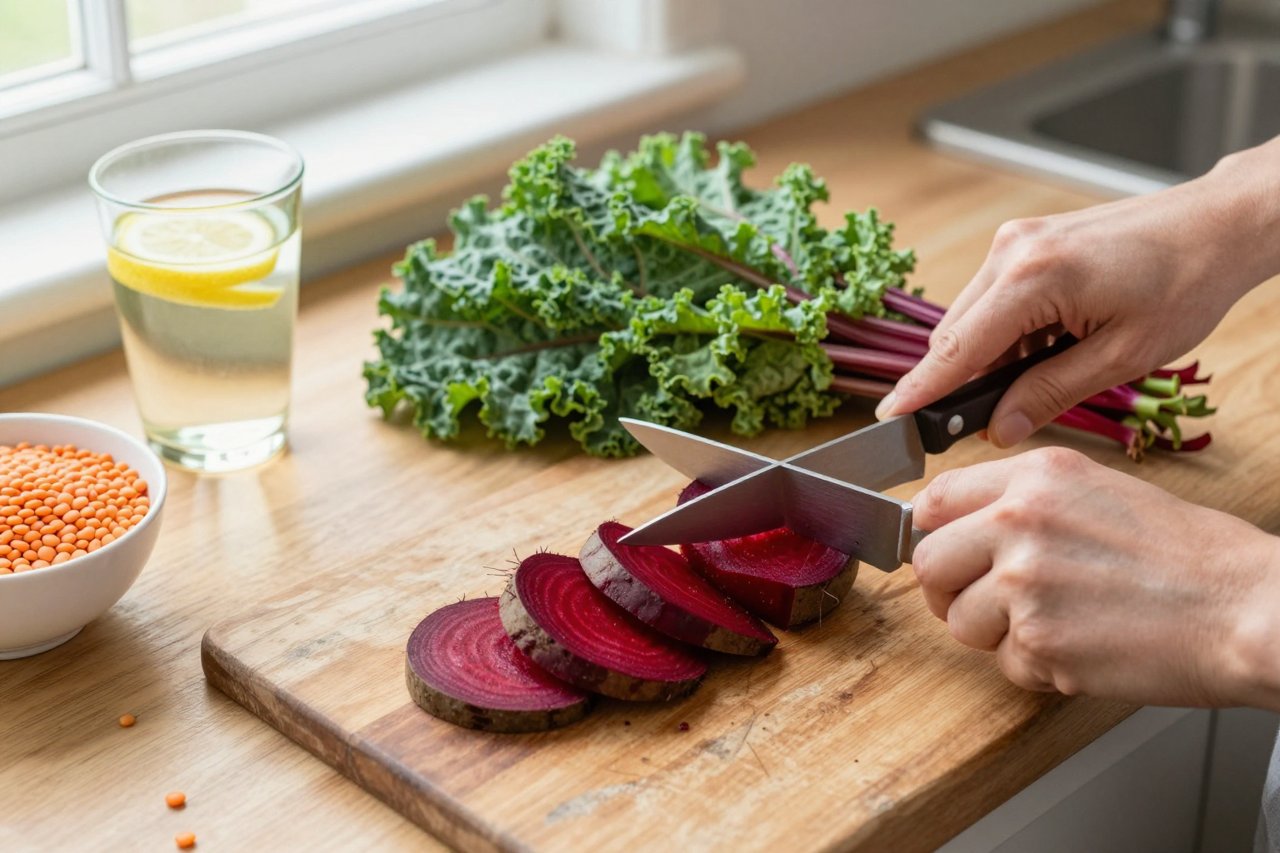
- Whole-food resets. Not removing much at all, but shifting the balance heavily toward vegetables, fruit, legumes, fish and water for a set period.
There’s also clinical detoxification, which is a medical procedure for drug or alcohol withdrawal. It has nothing to do with kale. Worth knowing, because the word gets borrowed from medicine and used to sell juice.

Loose rule: the closer a detox diet sits to real food and the further it sits from a bottle with a barcode, the more likely it is to help you.
The cleanup crew you already have
Every credible conversation about detoxing starts with the organs doing the work. Understanding them makes it obvious why some cleanses are pointless and others genuinely support you.
Your liver does the sorting
The liver processes waste in two stages. In the first, enzymes break harmful compounds into more reactive pieces. In the second, it binds those pieces to something harmless — often an amino acid like glutathione — so they can be carried out of the body. That second stage needs protein, B vitamins and antioxidants to run properly. A three-day juice fast supplies almost none of them.
If you want the longer explanation of these pathways and why they respond to food rather than powders, our breakdown of the science-backed way to support your body’s natural cleanse goes deeper.
Your kidneys do the flushing
Kidneys filter your blood and decide what leaves in urine. They’re sensitive to hydration, blood pressure and sodium balance. Drinking more water helps them do their job well; drinking nothing but maple syrup and cayenne does not make them filter harder.
Your gut is the exit route
Whatever your liver packages still has to leave — mostly through bile into the intestines. Fiber is what moves it along. Without enough fiber, that packaged waste sits around longer than you’d like, which is one reason a “detox” that removes all plant bulk is a bit self-defeating.
Skin and lungs play smaller roles, and no juice cleanse speeds them up. Your body is not backed up like a drain. It’s running a continuous process that responds to what you feed it.
What a detox diet can and can’t do
Being honest here saves you a lot of money.
It can cut your alcohol intake to zero for a stretch, which genuinely gives your liver a lighter workload. It can replace ultra-processed snacks with vegetables and legumes. It can raise your water intake, improve your sleep, and break a nightly sugar habit. Most people who finish a well-designed reset feel better because of those four changes, not because a toxin was expelled.
It can’t make your liver process waste faster than it already does, or pull decades of environmental exposure out of your fat cells. It can’t fix a thyroid problem or cure a skin condition. And it won’t undo the effect of going straight back to old habits on day eight.
Weight loss in the first week is mostly water and glycogen, not fat. Knowing that in advance stops the crash when the scale bounces back.
The styles you’ll run into, and who each suits
Beginners often pick the most extreme option because it feels like the “real” version. It’s usually the wrong fit. A juice cleanse is a poor first choice for someone who gets shaky when they skip lunch. An elimination diet is genuinely useful if you suspect a food sensitivity, but it’s a diagnostic tool, not a weight-loss plan.
If you’re weighing up the options, our comparison of juice cleanses, fasting and whole-food resets lines up what each one involves and what it’s realistically good for.
For most people starting out, a two-to-four week whole-food reset with one or two things removed (alcohol and sugary drinks are the highest-value cuts) delivers the same benefits with a fraction of the misery.
Red flags before you hand over any money
Some practices are merely useless. A few are risky. Watch for:
- Claims that a product removes specific toxins, with no named toxin and no study cited.
- Anything marketed as a cure for a diagnosed condition.
- Under 1,000 calories a day, or plans that skip solid food entirely for more than a couple of days.
- Laxatives or diuretics sold as part of a “cleanse” — they cause water loss, not detox.
- A required purchase of proprietary supplements before you can start.
- Pressure to decide today, or a countdown timer on the sales page.
We’ve written separately about why most cleanses backfire, and there’s a useful checklist in this guide to spotting fad diet traps before you pay. Both are worth ten minutes if you’re shopping.
A sensible first week
You don’t need a kit. You need roughly five changes, layered in gradually rather than all at once on a Monday morning.
Start by removing alcohol and sugary drinks for seven days. That single move takes load off the liver and usually cuts 300-500 calories a day without any hunger. Then add, in this order: a palm-sized portion of protein at breakfast, two extra servings of vegetables, 2 litres of water spread across the day, and a consistent bedtime.
If you want a structure with meals already mapped out, our guide to building a detox diet you can actually stick to walks through it step by step.
What a day might look like
Breakfast: eggs on rye toast with spinach. Lunch: lentil and roasted vegetable bowl with olive oil and lemon. Afternoon: an apple and a handful of walnuts. Dinner: baked salmon, broccoli, and half a plate of salad. Water or herbal tea throughout. That’s around 30g of fiber, plenty of protein for your liver’s phase-two enzymes, and enough food that you won’t be dreaming about cake by 4pm.
Skip it if any of this applies
Talk to a doctor first if you’re pregnant or breastfeeding, have type 1 diabetes, kidney disease, liver disease, or a history of disordered eating. Anyone under 18 shouldn’t be restricting food without medical supervision. Fasting plans in particular can be dangerous alongside certain medications.
The first 72 hours, honestly
Expect a dull headache on day two, especially if you’ve cut caffeine or sugar. Expect to feel hungrier than usual around 3pm and slightly irritable by evening. These are withdrawal and habit signals, not evidence that toxins are leaving your body.
They fade, usually by day four. Drink more water than feels necessary, keep a snack on hand, and go to bed earlier than you normally would.
Stop and eat something substantial if you get dizzy, can’t focus on basic tasks, or feel your heart racing. A detox that leaves you unable to work isn’t a sign of commitment — it’s a sign the plan was too aggressive for your body. The version you can repeat next month beats the version that impresses people for three days and then collapses.


