
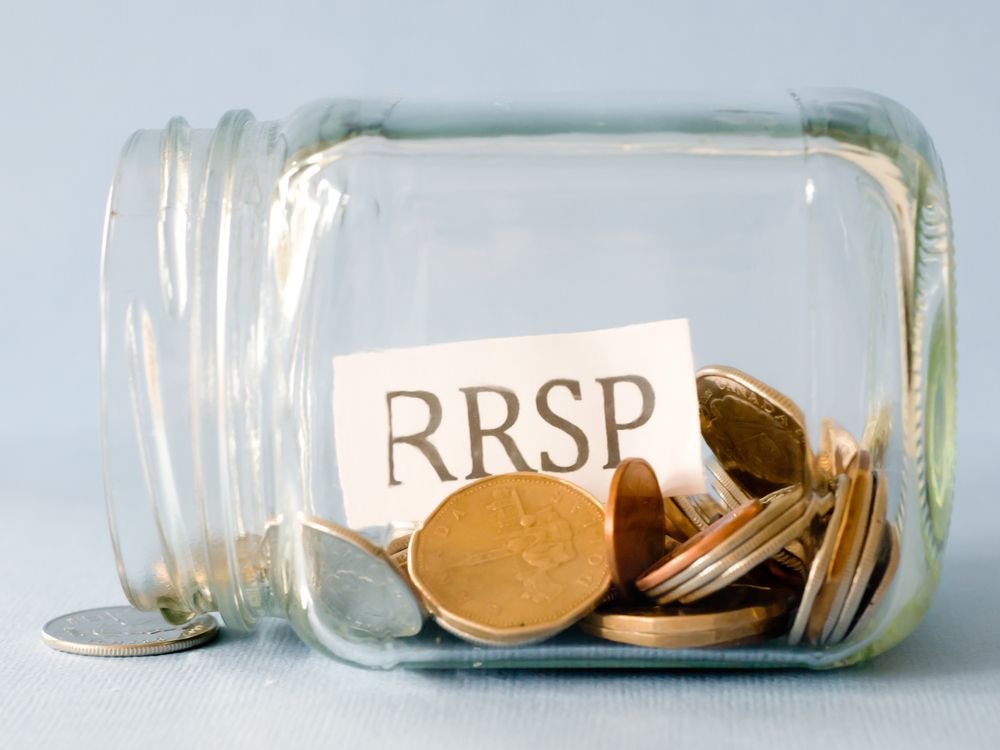
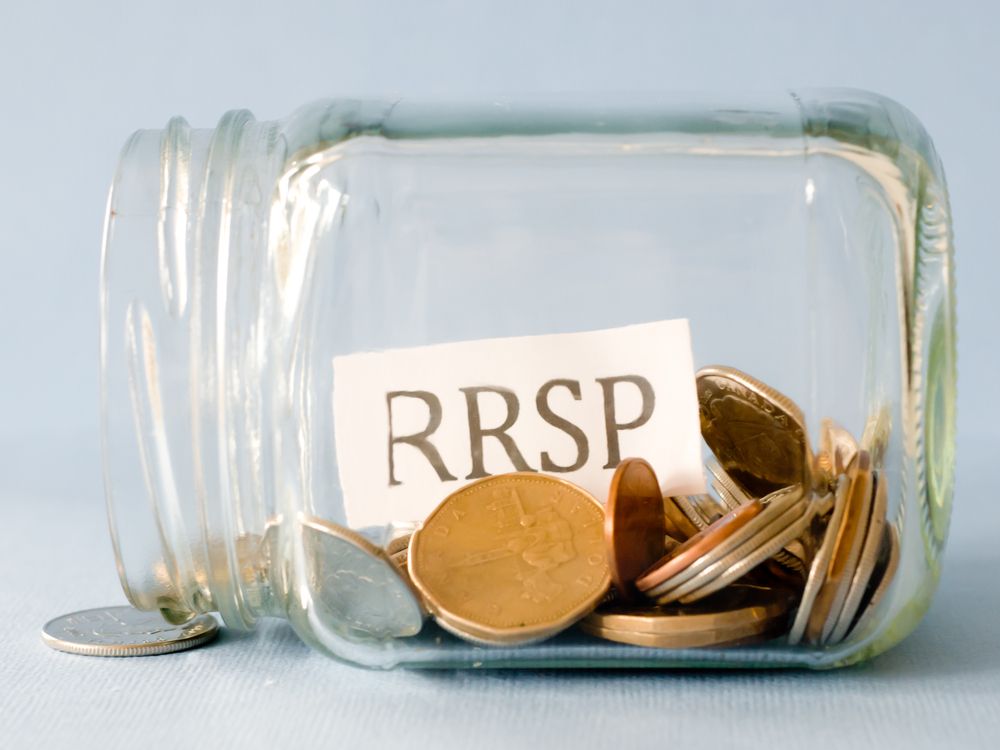
There is supposed to be no such thing as free lunch in this world, but an unnecessary number of Canadians will be a lot hungrier at retirement because they gave up that offer on a platter.
We spend endless hours looking for ways to maximize investments, but a guaranteed 100 per cent return through employers’ matching contributions is sitting right in front of some of us.
The single biggest mistake Canadians make, especially younger ones, isn’t picking the wrong investments; it’s leaving huge sums of employer-matching contributions on the table.

When your company offers to match your retirement investment, you’ve already won. Yet, roughly 10 to 20 per cent of Canadians look at that guaranteed win and turn it down, leaving those millions on the table.
A recent Sun Life Financial Inc. survey, conducted with Ipsos in the summer of 2025, examined Sun Life plan members with employer-sponsored savings plans and found that while 90 per cent of those surveyed took the full match, a stubborn minority still missed out.
The math is simple, even if the paperwork to join a plan is a chore. The maximum employee match in the survey was as much as 5.6 per cent. If you’re pulling in $100,000 a year and you tuck away $5,600 into your
retirement plan
and your company hands you another $5,600, you just doubled your money. Try making that bet at the track.
The online research study surveyed 1,981 members aged 25 to 75 in the summer of 2025.
Bernadette Chik, the leader of the defined contribution advisory business at Mercer Canada, a business of Marsh & McLennan Cos. Inc., said participation varies. The more generous the plan, the higher the participation, she said, but 80 to 90 per cent is the range.
“Even when we see some plans that default people into one at the full rate, people peel it back,” Chik said, noting that some employees try to opt out of the very programs designed to save them. “Getting to 100 per cent is very difficult.”
Why the hesitation? Some people just don’t expect to have a long tenure at the job, and saving for retirement doesn’t resonate. Toronto-Dominion Bank’s recent survey found that only 43 per cent of
generation Z
contribute to
RRSPs
, compared with 79 per cent of
baby boomers
and 68 per cent of
millennials
.
The retirement mindset doesn’t seem to be as strong in the younger demographic.
“Some employers are trying to be smarter with how the plan is communicated and moving away from calling it a retirement plan to a flexible savings plan,” Chik said. “Over the last 20 years, the rigidity of these programs has changed.”
There’s also the lingering fear that your money is locked away in a vault you can’t touch. While deferred profit sharing plans (DPSPs) generally restrict you from touching the employer’s portion until you leave the company, the
Canada Revenue Agency
has strict rules ensuring that money is yours eventually.
I’ll make my own confession here. Back in my early days at the National Post, I was almost one of those young holdouts. I wasn’t signed up for the company’s defined benefit plan until an “old-timer” columnist, who was roughly the age I am now, pulled me aside and asked, “What are you, an idiot?”
He explained that the company was essentially trying to hand me free cash, and I had my hands in my pockets.
Today, those gold-plated defined benefit plans are mostly a relic of the past in the private sector. They’ve been replaced by defined contribution plans where you, the employee, sometimes have to be proactive.
But regardless of type of plan, some employers still offer employer-matched group RRSPs: You check the box, you still get the cash.
Group RRSPs and DPSPs have become more popular with both employees and employers, with the idea that you can access your own money that you put into them, although you might face fees or withholding taxes. Some employers will even match a
TFSA
contribution.
Alex Jessop, a certified financial planner with Meridian Credit Union Ltd., said he has seen these “free money” accounts grow to $500,000 or even $1 million by the time someone retires.
“You would be surprised how many people don’t elect to sign up for it,” Jessop said. He admits he missed a few opportunities early in his career, when he was just out of university and strapped for cash.
And that is the crux of the issue. When you’re choosing between a retirement contribution and paying the rent or buying groceries, the long-term play feels like a luxury.
But Chik suggested a shift in perspective. A group RRSP can be marketed as a down payment tool. Under the Home Buyers’ Plan, you can pull out up to $60,000 from your RRSP for your first home. That’s your employer helping you get the keys to a front door.
Tannis Dawson, a vice-president and high-net-worth planner at TD Wealth, said she struggles to find a downside. Sure, you pay tax when the money comes out in your 60s, and you might have slightly less investment flexibility than a self-directed brokerage account, but you’re starting with a 100 per cent gain.
“Even in these good years that the market has had, it’s hard to make 100 per cent,” Dawson said.
I’d say impossible, unless you are taking an extreme risk. If you are one of the 10 or 20 per cent not taking advantage of this top-up, you will be crying at retirement.
Unless you are truly, desperately broke and facing high-interest debt, there is no financial justification for leaving an employer match on the table. If you’re one of the 10 or 20 per cent passing this up, you might not be starving at retirement, but you’ll be envious of some of the meal options others have.
• Email: gmarr@postmedia.com