
Table of Contents
A jury returns a guilty verdict, the judge imposes a sentence, and for most people the case closes there. For a small fraction of defendants, a second process begins. It has no jury, no witness stand, and usually no new evidence at all. Criminal appeals are decided on paper, on deadlines, and on one narrow question: did something go wrong in the legal process serious enough to have changed the outcome?
That question is much harder to answer in the defendant’s favour than television suggests. Roughly nine in ten criminal appeals fail. Understanding why requires knowing what an appellate court actually does, and what it refuses to do.
An Appeal Is Not a Second Trial
The most common misconception is that an appeal means gathering new witnesses and arguing the case again in front of a fresh jury. It doesn’t. An appellate court reviews the record of what already happened in the trial court. It reads transcripts, exhibits, and the filings the lawyers submitted at the time. It does not hear testimony, and it does not weigh credibility. If a witness lied on the stand, that alone is not an appealable issue; the jury was entitled to believe or disbelieve them.
The appellate court’s job is limited to legal error. Did the judge admit evidence that should have been excluded? Give the jury a faulty instruction? Allow a prosecutor to make an improper closing argument? Those are the kinds of questions appellate judges answer. The whole machinery that produced the conviction, from the first police contact onward, is documented in the record, which is why the earlier stages matter so much to what happens later.

The Deadline Is the First Real Obstacle
Appeals move on unforgiving clocks. In many state systems, a notice of appeal must be filed within 30 days of the judgment. In federal criminal cases, the window is 14 days under Rule 4(b) of the Federal Rules of Appellate Procedure. Miss it and the appeal is dead unless a court grants leave to file out of time, which is rare and requires a genuinely good excuse.
Two practical consequences follow. First, the trial lawyer is not automatically the appellate lawyer, and the clock does not pause while a new attorney gets up to speed. Second, for defendants who cannot afford counsel, the court typically appoints an appellate attorney, but that appointment has to be requested. People who assume someone is handling it often discover otherwise after the deadline has passed. Knowing what happens after an arrest helps explain why so many appeals founder on procedure rather than merit.
What Actually Counts as a Ground for Appeal
Appellate lawyers sift trial transcripts looking for preserved legal errors. The credible categories are fairly consistent:
- Evidentiary rulings. A judge admitting testimony or physical evidence over a valid objection, or excluding defence evidence that should have come in.
- Jury instructions. An instruction that misstates an element of the offence, or omits a required element entirely.
- Prosecutorial misconduct. Improper comments during closing argument, or withholding evidence that would have helped the defence, a constitutional violation under Brady v. Maryland.
- Ineffective assistance of counsel. Usually raised after the direct appeal, not during it, because it requires facts outside the trial record.
- Sentencing error. A miscalculated guideline range, reliance on improper factors, or a sentence exceeding the statutory maximum.
- Insufficient evidence. Legally possible, practically rare. The standard asks whether any rational jury could have convicted, not whether the appellate judges would have.
Notice what is missing: claims that the verdict was unfair, that the sentence feels harsh, or that new information has surfaced. Those belong to different proceedings, if they belong anywhere.
The Trial Record Is the Entire Universe
Appellate courts will not consider evidence that was never presented. A transcript that shows seven days of testimony is the whole world for the appeal. Anything the defence failed to object to at trial is generally waived, meaning the appellate court may decline to review it at all unless it qualifies as plain error.
That rule explains why trial strategy shapes appellate outcomes so heavily. A lawyer who objects in real time, requests specific instructions, and makes a clean record preserves issues for review. A lawyer who lets questionable testimony slide in without objection hands the appellate court a reason to say the issue was never raised. The burden the prosecution had to carry at trial, and whether the instructions accurately described it, is often the crux of the appellate argument.
Standards of Review, Explained Without the Jargon
Even a genuine mistake does not automatically win an appeal. Appellate courts apply different levels of scrutiny depending on the issue, and that framework decides most cases.
Harmless error
This is the prosecution’s most effective answer. Yes, the trial judge erred, but the error did not affect the verdict. Under Chapman v. California (1967), constitutional errors must be harmless beyond a reasonable doubt; non-constitutional ones face a lower bar. In a case with three eyewitnesses and a confession, excluding one piece of disputed evidence is usually harmless. In a thin case built on a single identification, it may not be.
Plain error
For issues never objected to at trial, the defendant must show an obvious error that affected substantial rights and seriously damaged the fairness of the proceeding. Courts describe this as a demanding standard, and they mean it.
Deference to the trial judge
Discretionary rulings, such as whether to admit evidence or grant a continuance, are reviewed for abuse of discretion. Appellate judges ask whether the trial judge acted within a range of reasonable choices, not whether they would have chosen the same one. The entire appeal plays out inside a narrow corridor between the arrest and the verdict, and the record made during that corridor is all that travels upward.
Briefs, Oral Argument, and How the Decision Gets Made
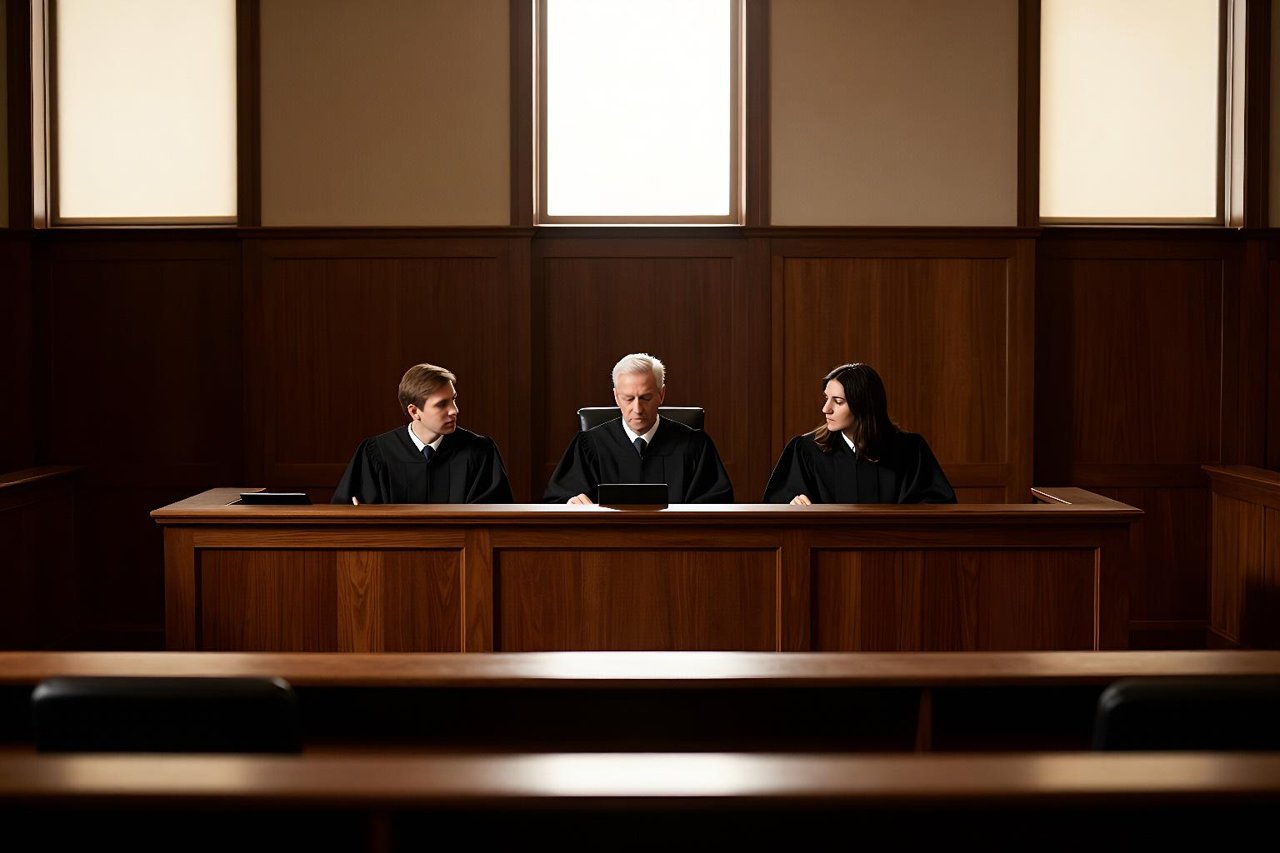
After the notice of appeal, the appellant’s lawyer orders the trial transcripts and files a written brief, typically 30 to 50 pages, laying out the legal errors and the authorities supporting them. The prosecution responds. The defence may file a reply. In many courts, a panel of three judges then decides whether oral argument adds anything, and often it is skipped entirely.
When argument does happen, each side usually gets 15 minutes, sometimes 10. Judges interrupt with questions, and the questions tend to telegraph what worries them. A decision may take weeks or many months. Total time from notice of appeal to ruling commonly runs 12 to 18 months in state systems and longer in federal ones.
The Possible Outcomes
Appellate relief comes in a few recognisable forms:
- Affirmance. The conviction and sentence stand. This is the result in the large majority of appeals.
- Reversal and remand for a new trial. The most meaningful win for a defendant, though the prosecution may retry the case or offer a plea.
- Remand for resentencing. Common when the sentencing calculation was wrong.
- Vacatur. The conviction is set aside outright, usually only where the evidence was legally insufficient.
- Remand for an evidentiary hearing. The appellate court sends the case back for factual findings on a specific claim.
For misdemeanour convictions with short jail terms, the practical value of an appeal is often limited, which is one reason appointed appellate counsel matters so much for people who cannot pay. Felony convictions carry consequences that outlast any sentence, so the calculus is different.
When the Direct Appeal Fails
A loss on direct appeal is not always the end. Collateral attacks, usually petitions for writ of habeas corpus, allow claims that depend on facts outside the trial record. Ineffective assistance of counsel is the classic example, tested under the two-part standard from Strickland v. Washington (1984): the lawyer’s performance fell below an objective standard of reasonableness, and there is a reasonable probability the result would have been different.
These proceedings carry their own brutal deadlines. Federal habeas petitions generally must be filed within one year of the conviction becoming final under the Antiterrorism and Effective Death Penalty Act. Newly discovered DNA evidence, recantations, and suppressed exculpatory material can still be raised, but the procedural maze is worse than the direct appeal.
Does the Sentence Wait While the Appeal Runs?
Filing an appeal does not automatically pause a sentence. A defendant seeking release during the appeal must apply for bail pending appeal, and the standard is steep: the court must find a substantial question of law or fact likely to result in reversal, a new trial, or a significantly reduced sentence. Most applications are denied, and most appellants serve their time while the briefs are being written.
What an appeal can do is correct a specific kind of error, and it does so with real regularity. The cases that succeed are the ones where the record shows a preserved, consequential mistake, argued by a lawyer who understands that the appellate court is not deciding guilt. It is deciding whether the process that produced the verdict held up.


