
Table of Contents
Ask ten cat owners about grooming and you’ll get two answers. Half will tell you their cat handles it fine as long as there’s a treat involved. The other half will describe a scene involving a towel, a bitten thumb, and a cat that hasn’t been brushed since 2021.
Both are normal. Cats are not small dogs, and a grooming session is really a negotiation. But the good news is that the negotiation gets easier every single time you practise it, and you genuinely do not need a professional setup to keep a cat clean, comfortable and mat-free. Here’s the routine that works.
Why Grooming Matters More Than Most People Think
Cats are fastidious self-groomers, which is exactly why so many owners skip the brushing altogether. But self-grooming has limits. A long-haired cat physically cannot keep up with its own undercoat. A senior cat with arthritis can’t reach its lower back. An overweight cat can’t reach much of anything past the shoulders.
Brushing does three jobs at once: it removes loose fur before it turns into a hairball, it prevents the pelted mats that pull on skin and hide sores, and it gives you ten minutes a week of hands-on checking. You’ll notice a new lump, a patch of flea dirt, a broken claw or a sore ear long before it becomes an expensive vet visit.

The Five Tools You Actually Need
Grooming aisles are absurd. You can spend a fortune on gadgets your cat will never tolerate. Start here instead:
- A metal-toothed comb (often sold as a greyhound comb) with medium and fine spacing. This is the single best tool for long-haired cats because it gets down to the skin instead of skating over the top coat.
- A rubber curry brush for short coats. It lifts loose hair without scratching skin and most cats treat it like a massage.
- Nail clippers, either the scissor style or the guillotine style. Whichever you can hold comfortably wins.
- Styptic powder, because you will eventually nick the quick and it stops the bleeding in seconds.
- Pet-safe wipes or a damp microfibre cloth for eyes, ears and the occasional spot clean.
Skip the slicker brush on very short coats, since it mostly scratches. And skip human shampoo entirely if you ever bathe, because cat skin has a different pH and most human products leave them itchy.
How Often Should You Groom a Cat?
Frequency depends almost entirely on coat type, and coat type is one of the reasons choosing the right cat breed deserves more thought than people give it. A British Shorthair and a Persian are not the same job.
- Short-haired cats: one 5-minute brush a week, nails every two to three weeks.
- Semi-longhair and longhair cats: 5 to 10 minutes three or four times a week, daily during spring and autumn shedding season.
- Seniors, arthritic cats and overweight cats: short daily sessions, even just 2 minutes, because they’re relying on you for the areas they can’t reach.
Shedding season catches people out every year. Around March and again in September, cats blow their undercoat in what looks like a small weather event on your carpet. Brushing more often during those six weeks saves you months of vacuuming. If fur is your main worry, this list of cat breeds that shed less is worth a look before you commit to a cat.
Brushing Technique: Slow, Short, and Stop Early
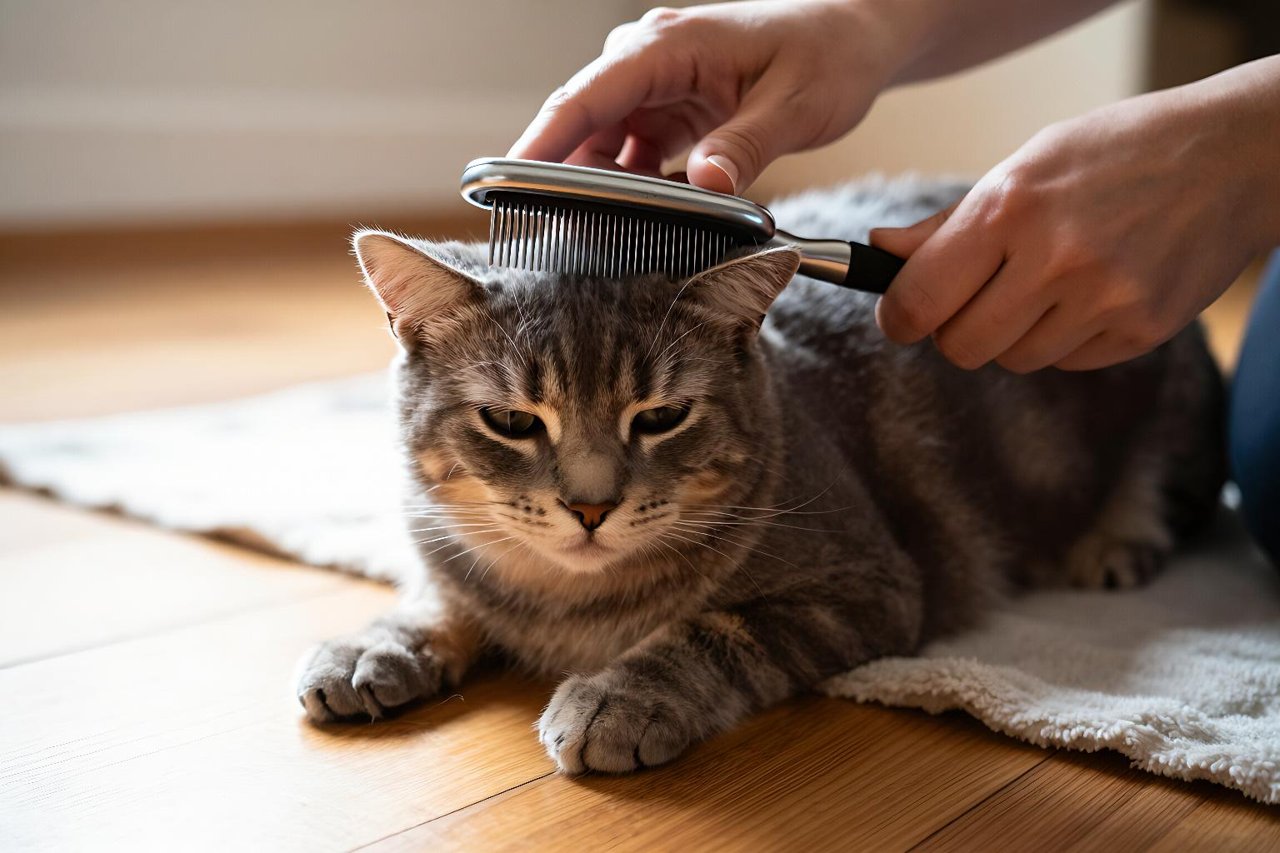
Most grooming fails on technique rather than frequency. Work in the direction the coat grows, in strokes no longer than your hand, and section the cat into zones: sides first, then chest, then back legs, then tail. Leave the belly for last and only if your cat is still relaxed.
Don’t dig at a mat. Pulling on a mat hurts, and a cat that gets hurt once remembers it for months. Small mats can be worked loose with your fingers and a pinch of cornstarch to give grip. Anything larger than a coin, especially flat against the skin, is a job for a groomer. Never cut a mat out with scissors, because cat skin is paper-thin and tents up inside the mat, which is how people accidentally slice their cat.
Watch the tail. A twitching tail tip means you have about thirty seconds left. A flicking tail means you’re done. Ending on a good note is worth more than finishing the job.
Nail Trimming Without Losing a Finger
Nails scare people more than they should. The trick is timing: catch your cat when they’re drowsy, after a meal, in a warm spot. Hold one paw gently, press the pad just behind the claw so it extends, and take off only the clear hooked tip. The quick, the pink blood supply inside the nail, is visible on most light-coloured cats. On black nails, take tiny slivers and stop as soon as you see a darker centre.
You don’t have to do all four paws at once. One paw a day is completely legitimate, and most cats accept it far better. Keep styptic powder within reach, and give a treat immediately after the last nail, not after the whole performance.
While you’re handling paws, it’s also a good moment to check your scratching posts, since decent scratching surfaces keep nails naturally blunted between trims. If your furniture is taking the hit instead, here’s how to stop a cat from scratching furniture without resorting to anything drastic.
Bathing: Rarely, and Only When There’s a Reason
Most cats will go their whole lives without needing a bath, and giving one unnecessarily is a great way to lose your cat’s trust. Bathe when there’s a specific reason: something toxic or greasy on the coat, a flea infestation, severe dander, or a long-haired senior who can no longer clean their back end.
Use a kitchen sink with a rubber mat so feet don’t slip, lukewarm water, and a cat-specific shampoo. Wet the body only, avoid the face entirely, and rinse thoroughly because leftover shampoo causes itching. Then towel dry with two towels and keep the cat in a warm room. Cats lose heat fast when wet, especially small or elderly ones.
Ears, Eyes and Teeth
Ears
Healthy cat ears are pale pink and mostly clean. If there’s visible gunk, wipe the outer flap with a cotton ball and a vet-approved ear cleaner. Never push a cotton bud into the ear canal. Dark, coffee-ground discharge or a cat shaking its head constantly means a vet visit, not a deeper clean.
Eyes
A daily wipe with a damp cloth handles the normal brown tear staining that flat-faced breeds get. Anything green, yellow, or accompanied by squinting is a vet issue.
Teeth
Ideally you’d brush with an enzymatic pet toothpaste three times a week. Realistically, most people manage a fingertip brush and a few back teeth. Dental wipes and veterinary dental chews are decent fallbacks for cats who flatly refuse. Never use human toothpaste.
If Your Cat Hates Being Handled
Some cats tolerate handling better than others, and the cats that seek out physical contact tend to be the ones who’ll sit through a nail trim. There’s a reason the most affectionate cat breeds are also the easiest to groom.
For the rest, build tolerance in tiny increments. Touch one paw for three seconds while your cat is eating, then stop. Leave the brush on the floor near their bed so it stops being a strange object. Do 30-second sessions and always quit before the cat pulls away, so the session ends on your terms rather than theirs.
If you’ve just adopted, don’t start grooming in week one. Give the cat time to settle first, which is the same principle behind introducing a new cat to your home properly. A stressed cat has no bandwidth for a comb.
Know When to Hand It Over
There’s no medal for doing everything yourself. Call a professional groomer or your vet if the coat is badly matted, if your cat panics to the point of injury, or if a senior cat with arthritis is clearly in pain during handling. Mobile groomers who come to your driveway are a genuinely good option for cats who hate car travel, and some vets will sedate a severely matted cat for a clip-down, which is kinder than weeks of tugging.
A Ten-Minute Sunday Routine That Sticks
Pick one recurring slot, same time each week, and build the whole routine around it. Put a specific towel on the sofa so the cat learns the cue. Brush for five minutes, checking skin and coat as you go. Trim one or two nails if they need it. Wipe eyes if needed. Then finish with a high-value treat, something better than the everyday kibble, and walk away.
Ten minutes, once a week, with a treat at the end. Do that consistently and within two months most cats will stop leaving the room when the comb comes out. The matted, stressed, vet-visit version of grooming never has to happen at all.


