
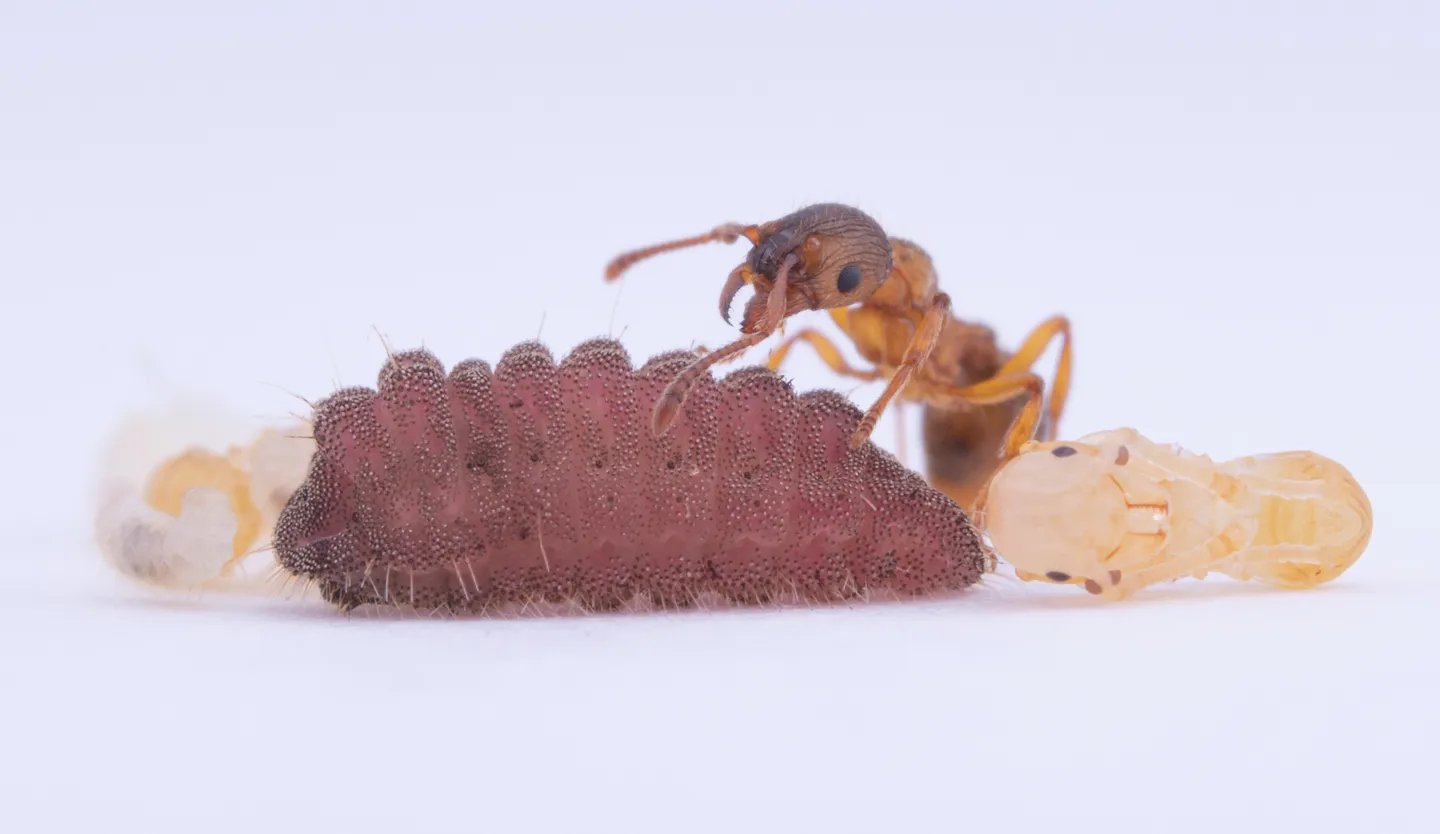
Some caterpillars speak ant by rocking to a beat.
By jiggling like a cellphone receiving a call while on vibrate, the caterpillars cozy up to ants, reaping benefits for them both. The findings, published February 25 in the Annals of the New York Academy of Sciences, suggest that the ability to keep a beat might be more widespread in the animal kingdom than researchers thought.
Many caterpillars in the gossamer-winged butterfly family are “myrmecophilous,” or ant-loving. These larvae have evolved close relationships with ants, including pavement ants, in the genus Tetramorium, and those in the genus Myrmica. The degree and type of relationship varies. Some caterpillars receive food or protection from ants; others are fully considered ant brood and adopted into the nest. These caterpillars can then exploit the nest, feeding on ant larvae.
The caterpillars sometimes mimic the ants’ chemical cues to befriend them, repaying their hosts with sugary excretions. But research had hinted that some caterpillars were copying the way ant queens vibrate to communicate with their colony, says Chiara De Gregorio, an ethologist at the University of Warwick in England.
This raised the possibility that these caterpillars “might be exploiting existing communication systems within the ant colony,” De Gregorio says.
She and her colleagues collected nine caterpillar species and the colonies of two ant species from across Northern Italy. The researchers categorized the caterpillars as ranging from no relationship with ants to highly myrmecophilous — a parasite totally reliant on ants for survival.
Using sensitive microphones, the team recorded and analyzed the tiny vibrations the caterpillars and ants made that traveled through materials such as dirt. That provided a close look at the tempo and regularity of the buzzing signals.
“Across many animal species, rhythm is increasingly recognized as an important component of communication,” says De Gregorio. “It’s not only what is communicated that matters, but also how.”
Both caterpillars and ants vibrated with a regular pattern, much like the ticking of a metronome, she says. But only the caterpillars most dependent upon ants could produce rhythmic patterns that matched the ants’ complexity — including keeping even pauses between pulses and an alternating pattern of long and short spaces. This precise rhythmic language may be important for forming a close partnership with the ants.
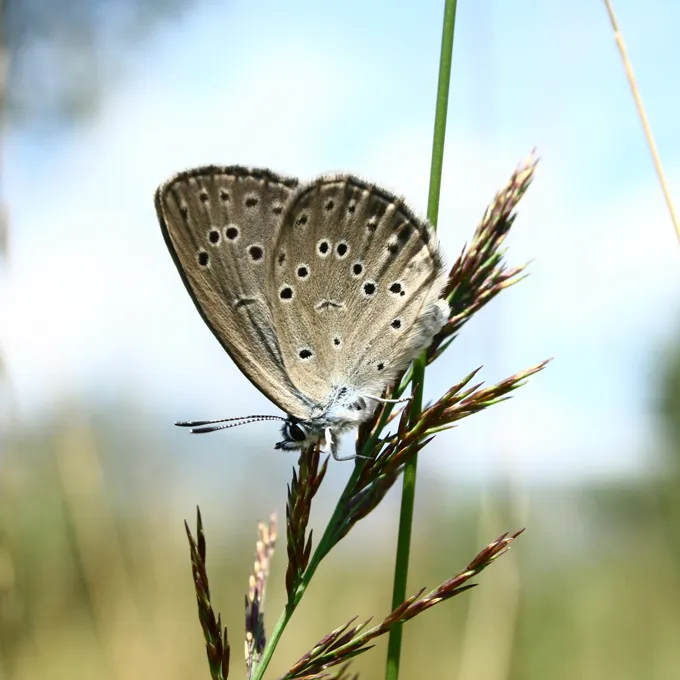
De Gregorio thinks the ants were already using these vibrations for their own communication needs. Caterpillars that could tap into that system “would receive more attention and care from the ants,” she says.
Luan Dias Lima, an entomologist at the University of São Paulo in Brazil, is interested in seeing a similar study on metalmark butterflies. Their caterpillars independently evolved close relationships with ants, so comparing the two butterfly families could reveal if there’s a “global universal rhythm” for ant-butterfly communications.
De Gregorio says that the degree of rhythmic complexity of this insect communication is particularly fascinating to her, especially as someone who studies primates. Primates have very sophisticated brains, yet the generation and recognition of rhythm is still rare among them, found only in a handful of species like humans, indri lemurs and gibbons. The butterfly findings may mean that keeping a beat could be something fundamental for communication and more widespread among animals than thought.
“Observing comparable levels of rhythmic organization in ants was genuinely mind-blowing,” she says.
Source link