
Table of Contents
Ask three people with three different skin tones about sunscreen and you’ll get three different answers. One tans easily and never burns, so she stopped bothering years ago. One gave up after every formula she tried turned her face chalky grey. One burns in fifteen minutes and owns six bottles, two of them in her handbag. Only one of those habits matches the actual risk.
Skin tone genuinely changes which sunscreen you will enjoy using, how it looks once it settles, and which side effects matter most. It does not change whether you need protection. Here is what really differs across the Fitzpatrick scale, and how to pick a formula you’ll still be wearing in July.
Melanin Is Not Built-In Sunscreen
Darker skin holds more eumelanin, the brown-black pigment that absorbs and scatters UV radiation. That gives real protection. On average, deeply pigmented skin behaves like roughly SPF 13 in terms of how long it takes to redden. Sounds respectable until you remember that dermatologists recommend SPF 30 to 50, reapplied through the day, and that melanin is far better at blocking UVB than UVA. UVA is the wavelength that drives photoaging, stubborn pigmentation and a good deal of drug-related photosensitivity.
Skin cancer in people with deeper skin tones is less common but is found later. Melanoma in Black patients shows up disproportionately on the palms, soles and under the nails, spots almost nobody photographs or checks. Five-year survival is markedly lower than in white patients, and delayed diagnosis explains much of that gap. A monthly look at your hands, feet and scalp is worth more than any product on this page.

Fair and Light Skin: Burns, Freckles and Early Lines
If you burn in under twenty minutes, your priority is straightforward: high SPF, broad spectrum, applied generously. Five or more blistering sunburns before age 20 roughly doubles lifetime melanoma risk, which is why childhood holidays matter decades later. Fair skin also collects actinic keratoses and basal cell carcinomas on the nose, ears, scalp and the back of the neck, all areas that get hit at an angle most people forget to coat.
Watch for medication. Doxycycline, some acne retinoids, certain blood pressure drugs and several antibiotics increase photosensitivity, and a face that suddenly stings in mild sun is often a chemical reaction rather than a burn. Switch to SPF 50 and reapply every 90 minutes until the course finishes.
Medium, Olive and Brown Skin: The Pigmentation Problem
For Fitzpatrick types III to V, the sun’s most visible damage is rarely a burn. It’s a dark spot that arrives after a spot of acne, a mosquito bite, a waxing appointment or a shaving nick, then refuses to fade. Post-inflammatory hyperpigmentation is more common and more persistent in medium and deeper skin, and UV exposure keeps topping it up. Melasma behaves the same way, spreading across cheeks and forehead in response to sunlight and, notably, to visible light.
This is where tinted sunscreens earn their price. Formulas containing iron oxides block visible light in the blue-violet range, which plain UV filters let straight through. Studies on melasma show that a tinted SPF 50 with iron oxides outperforms an untinted SPF 50 of the same UV rating over twelve weeks. If you are having laser skin resurfacing or a series of peels to even out tone, the sunscreen you use afterwards will influence your result more than the device settings do.
Deep and Dark Skin: White Cast and Late Diagnoses
The classic complaint is the grey mask. Zinc oxide and titanium dioxide are efficient, stable filters, but the particles scatter visible light, which reads as a pale film on rich brown skin. Micronised and coated versions reduce it; tinted versions hide it almost entirely. Many people with deeper skin simply prefer modern organic (chemical) filters such as Tinosorb S, Mexoryl 400 or bemotrizinol, which go on clear and cover long-wave UVA well.
There is a trade-off worth naming. Some older chemical filters sting the eyes and irritate sensitive skin, and a few are under scrutiny for coral reef impact. Patch test on the inner arm before committing to a full bottle, and give any new formula two weeks of daily wear before you decide.
How to Test a Sunscreen Before You Commit
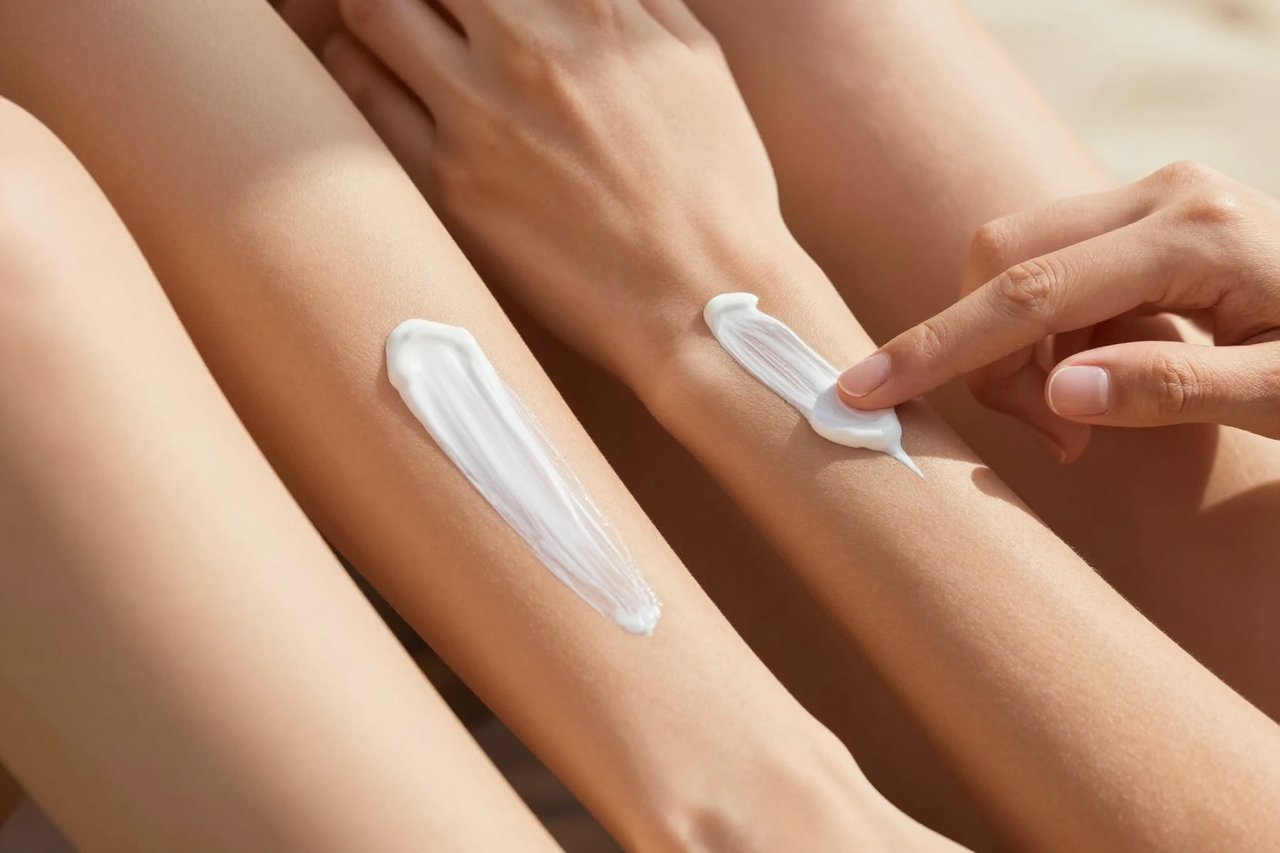
- Swatch a coin-sized amount on your inner forearm and wait 15 minutes in daylight.
- Check for a grey or ashy film rather than judging the cream on your hand in shop lighting.
- Apply a second layer under your usual foundation to see if it pills or slides.
- Wear it for a full day outdoors before buying the 200ml size.
Read the Label Like You Mean It
Numbers sell; ingredients inform. Here is what is worth checking before you pay.
- SPF 30 for daily wear, SPF 50 for long days outside. The jump from 30 to 50 is real but modest; application matters more than the number.
- Broad spectrum, with PA++++ or a circled UVA mark. SPF only measures UVB. UVA is the wavelength behind pigmentation and wrinkles.
- Iron oxides, if you have melasma or dark spots. Look for the words “tinted” plus iron oxides in the ingredient list.
- Water resistance of 40 or 80 minutes if you swim, run or sweat through your commute.
- A texture that suits your skin. Gels and fluids for oily skin, creams and lotions for dry or mature skin, milk formulas for humid weather.
Dose Beats Everything Else
Lab SPF ratings assume 2mg of product per square centimetre. Most people apply a quarter of that, which turns an SPF 50 into something closer to SPF 12. A teaspoon covers the face and neck properly, and a full shot glass is the body dose for an adult. Sprays are convenient but uneven, so spray until the skin visibly glistens and then spread with your hands.
Reapply every two hours outdoors, and after swimming or heavy sweating. Over makeup, a sunscreen stick glides on without disturbing foundation, and a tinted powder with SPF adds a top-up during the day. Makeup with SPF 15 in it is not a substitute for a proper base layer, because you would need seven times the usual amount of foundation to reach the stated protection.
The Habits That Compound With Your Sunscreen
A hat with a 7cm brim cuts facial UV exposure by roughly half, and tightly woven UPF 50 clothing does more for your shoulders and arms than any lotion. Shade helps most between 11am and 3pm, when UV index peaks, though it does not block reflected light from sand, water, snow or pale concrete. Car windows block UVB but not UVA, so the left side of a daily driver’s face ages faster than the right.
Altitude adds about 10% more UV per 1,000 metres, and snow reflects up to 80% back at your face, which explains spring skiing sunburn on the underside of the chin. Ten to fifteen minutes of midday sun on bare arms a couple of times a week usually covers vitamin D for lighter skin; deeper skin may need longer or a supplement, and a doctor can check your levels rather than you guessing.
The honest summary is that your skin tone decides your formula, your finish and your pigmentation risk, while the sun decides everything else. Find a texture you don’t mind wearing, buy the largest bottle of it you can afford, and keep it somewhere you’ll see it before you leave the house.


