
Table of Contents
Everyone knows the name. Mention it, and images of a great liner tilted against a starry sky spring to mind, as do the haunting notes of a string quartet and a door that still sparks debate a century later. The Titanic was not just a ship; it was the crowning achievement of an era, a monument to human confidence, and when she sank on 15 April 1912, she took 1,496 people with her. More than a hundred years on, the story still holds us in its grip.
A Floating Palace of Its Age
When the White Star Line launched the Titanic in 1911, they weren’t just building a ship. They were building a statement. At 882 feet and 9 inches long, she was the largest moving object ever created by humans. Her massive hull, divided into 16 watertight compartments, earned her the reputation of being virtually unsinkable – a claim that would prove tragically premature.
Inside, the luxury was staggering. First-class passengers dined on eleven-course meals, swam in a heated seawater pool, and rested in suites decorated with period panelling that mimicked the palaces of Europe. Even third class, known as steerage, was more comfortable than on many other liners, with private cabins and decent food. Thousands of emigrants paid £15 for a one-way ticket to a new life, while the wealthiest paid £4,350 for a suite – over a quarter-million pounds in today’s money.
But behind the opulence lay a crude social hierarchy that determined not only how people lived on board, but whether they survived its final hours.

The Numbers Behind the Giant
- Sheet steel hull plates around 2.5 centimetres thick
- 29 boilers, 6 furnaces, and a top speed of 23 knots
- Capacity for 3,547 passengers and crew
- Only 20 lifeboats, enough for about half of those on board
- 2,224 passengers and crew on her maiden voyage
The shortage of lifeboats was no oversight. The maritime authorities of the day required lifeboat capacity based on gross tonnage, not passenger numbers, and in an era when ships rarely sank, extra boats crowded the deck. The Titanic actually exceeded regulations – which shows exactly how outdated those regulations were.
A Maiden Voyage That Ended in Ice
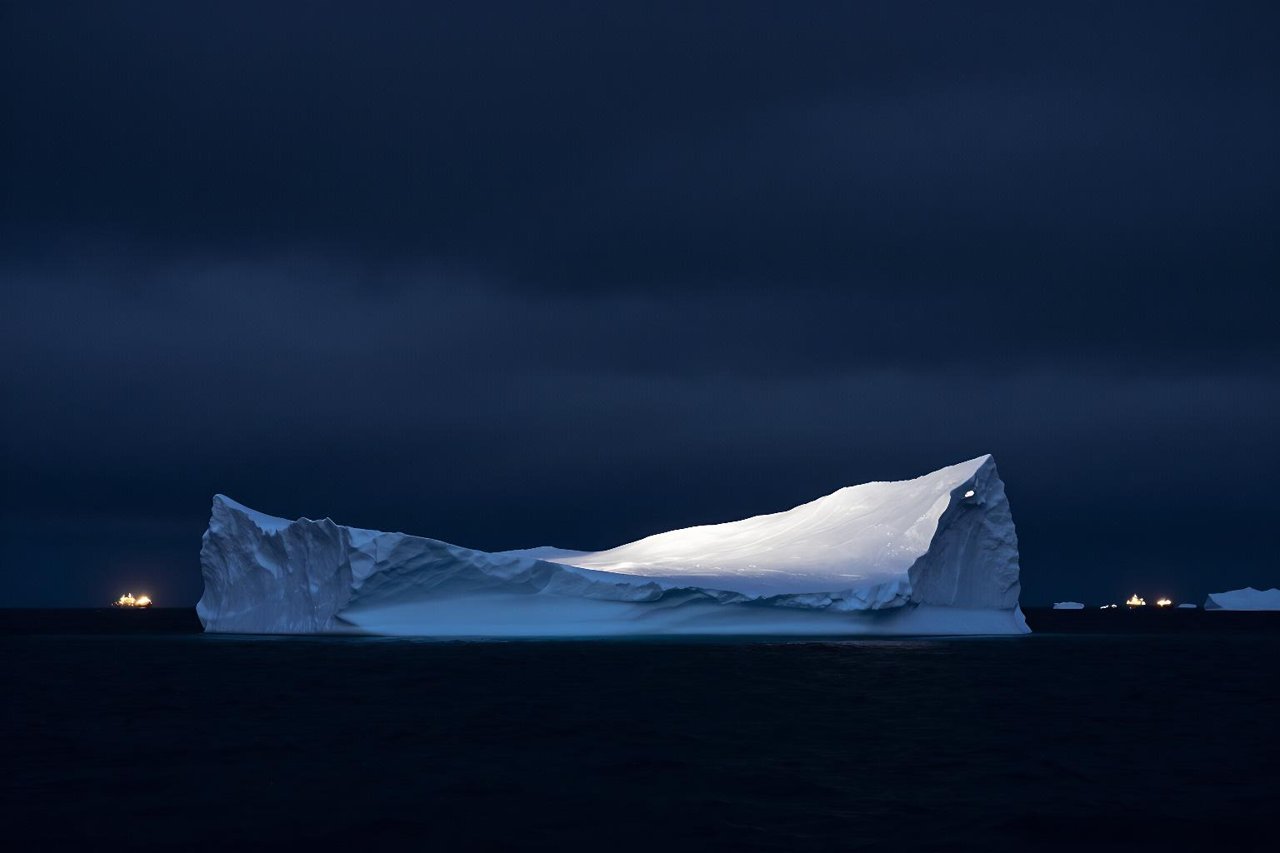
The Titanic slipped away from Southampton on 10 April 1912, bound for New York. By the third day, she was steaming across the North Atlantic at near full speed, despite warnings of ice floes and icebergs in the vicinity. The ship’s wireless operators received at least six personal iceberg messages from other liners, but only some reached the bridge. Others were set aside because they weren’t marked as urgent.
Captain Edward Smith later testified that he would have changed course if he’d had full knowledge of the danger, but that he felt the sea conditions made iceberg spotting possible. At 11:39 p.m. on 14 April, lookout Frederick Fleet saw a large shape directly ahead. He rang the bell three times and telephoned the bridge: “Iceberg right ahead.”
First Officer William Murdoch ordered the helm turned hard to port and the engines reversed. But turning a ship that large at 22 knots is like trying to stop a freight train in a fog. The starboard side scraped along the berg, and the ice opened a jagged gash below the waterline across six watertight compartments. The ship was designed to float with four flooded, but five were pierced. The British inquiry later inferred that the metal rivets in the bow may have been brittle from too much slag, but regardless of the metallurgy, the fate was sealed.
Within 2 hours and 40 minutes, the unsinkable ship was gone.
The Unequal Nature of Survival
If the Titanic were a movie script, the wealthy would be the heroes and the poor the victims. Reality is messier. Lifeboat loading followed order protocols that favoured first-class and, above all, women and children. But the rules weren’t absolute. Some boats left half-empty because passengers refused to board, believing they were safer on the “unsinkable” ship. Others launched with crew members ordered into the boats to keep them manned.
The result was a stark statistical divide. Of first-class women, 97% survived. Of third-class women, about 54% survived, partly because the third-class passengers were barricaded below decks by locked gates meant to keep them from mingling with the upper classes. That’s a hard truth to swallow.
The Carpathia Delays
The Cunard liner Carpathia, responding to the distress signals, arrived 4 hours later, rescuing 705 survivors from the lifeboats. But many of those saved had spent hours in freezing, bone-chilled conditions. One rescue ship, the Californian, lay nearby but failed to respond despite seeing mysterious white rockets in the sky. The subsequent inquiries would tear that crew apart, and the fate of the Californian’s captain remains one of the murkiest subplots of the disaster.
Notable passengers like John Jacob Astor IV, one of the richest men in America, and Isidor Straus, owner of Macy’s, perished. Straus refused a seat in a lifeboat, saying he would not take precedence over women and children – a gesture that has echoed through history.
The Wreck, Rediscovery, and Pop Culture
For over seven decades, the Titanic sank into legend. Many believed that locating the wreck at 3,800 metres below the surface was impossible. Then in 1985, Dr. Robert Ballard, using a submersible named Argo, discovered the scattered debris field and the bow, remarkably well-preserved. The images were eerie: a giant’s stern twisted into a mangled heap, a chandelier still hanging, shoes aligned on the seabed as if their owners had just stepped out.
The public’s imagination reignited. And in 1997, James Cameron turned it into the highest-grossing film of its time, catapulting the story into modern mythology. Cameron’s film, with its blend of historical detail and fictional romance, remained at the top of the box office charts for years, a title only dethroned by his own Avatar. The movie’s impact cannot be overstated: it turned the tragedy into a global cultural touchstone.
Today, the idea of crossing the Atlantic on a luxury liner still appeals to travellers seeking a romantic, unhurried journey. Of course, modern cruise ships come with far more lifeboats, radars, and satellite navigation. If you’re curious about what a transatlantic voyage looks like today, there are plenty of options for enduring the same crossing in comfort, with modern safety systems.
Safer Seas, Thanks to a Disaster
In the immediate aftermath, inquiries on both sides of the Atlantic demanded changes. The first was the International Convention for the Safety of Life at Sea, signed in 1914, which mandated enough lifeboats for every person on board, regular drills, and a 24-hour radio watch. The International Ice Patrol was also established, and it has monitored iceberg dangers in the North Atlantic ever since, using aircraft and satellite imagery to warn ships of drifting ice.
But safety isn’t just about cold steel and lifeboats; it’s about human judgment. The Titanic’s officers ignored warnings, sped into an icefield, and failed to properly train their crew for an emergency. Even today, human error remains a leading factor in maritime incidents. Modern technology aims to reduce that by making ship operations more intuitive and transparent. For instance, explainable AI for ship navigation gives bridge teams clear, reasoned guidance that helps them make better decisions under stress, rather than relying on gut instinct.
The lesson from the Titanic wasn’t just about building better ships; it was about building a culture of vigilance. In that sense, the disaster wasn’t a one-off tragedy. It was the catalyst for the entire modern framework of maritime safety. Every ship that sails the ocean today carries a legacy of that cold, terrible night – a reminder that the sea will always demand respect, no matter how clever we think we are.
The Titanic lies silent now, but her story continues to evolve. New expeditions, new forensic techniques, and new scientific questions bubble up each year, reshaping what we think we know. What remains constant is the human fascination: the image of a great ship, unknowable and proud, and the audacity of those who built her, sailed her, and died on her. There is something eternally instructive in that wreck, shining dimly on the ocean floor – a monument to our brilliant ambitions, and the discipline needed to make them last.


