
Table of Contents
It’s 11:40pm. You’re in bed with your phone an inch from your face, and your brain has chosen this exact moment to replay a conversation from Tuesday and draft three emails you will never send. Sound familiar?
A relaxing bedtime routine isn’t about whale music and a bath the size of a swimming pool. It’s a short, repeatable sequence of cues that tells your nervous system the day is over, so falling asleep doesn’t depend on willpower at the end of a wired evening. Get the sequence right and sleep stops being something you chase.
Here are the top 7 ways to create a more relaxing bedtime routine, with the specifics that actually move the needle.
1. Trade the Hard Bedtime for a Wind-Down Window
Most sleep advice tells you to pick a bedtime and stick to it. That helps, but it’s only half the job. The 60 minutes before lights out matter more than the clock time itself, because that’s when your body either starts producing melatonin or takes another hit of stimulation.

Try a 45-minute window instead of a strict minute. Want to be asleep by 11pm? The wind-down starts at 10:15. That’s it. The window is a buffer, not a countdown, which takes the pressure off the nights when you’re running late or the dishwasher still needs emptying.
What goes inside the window
- Anything physical and low effort: a shower, ten minutes of stretching, wiping down the kitchen counters.
- One screen-free activity you genuinely enjoy, like a paperback or a podcast on low volume.
- The dull admin of tomorrow: clothes out, bag packed, three tasks written down.
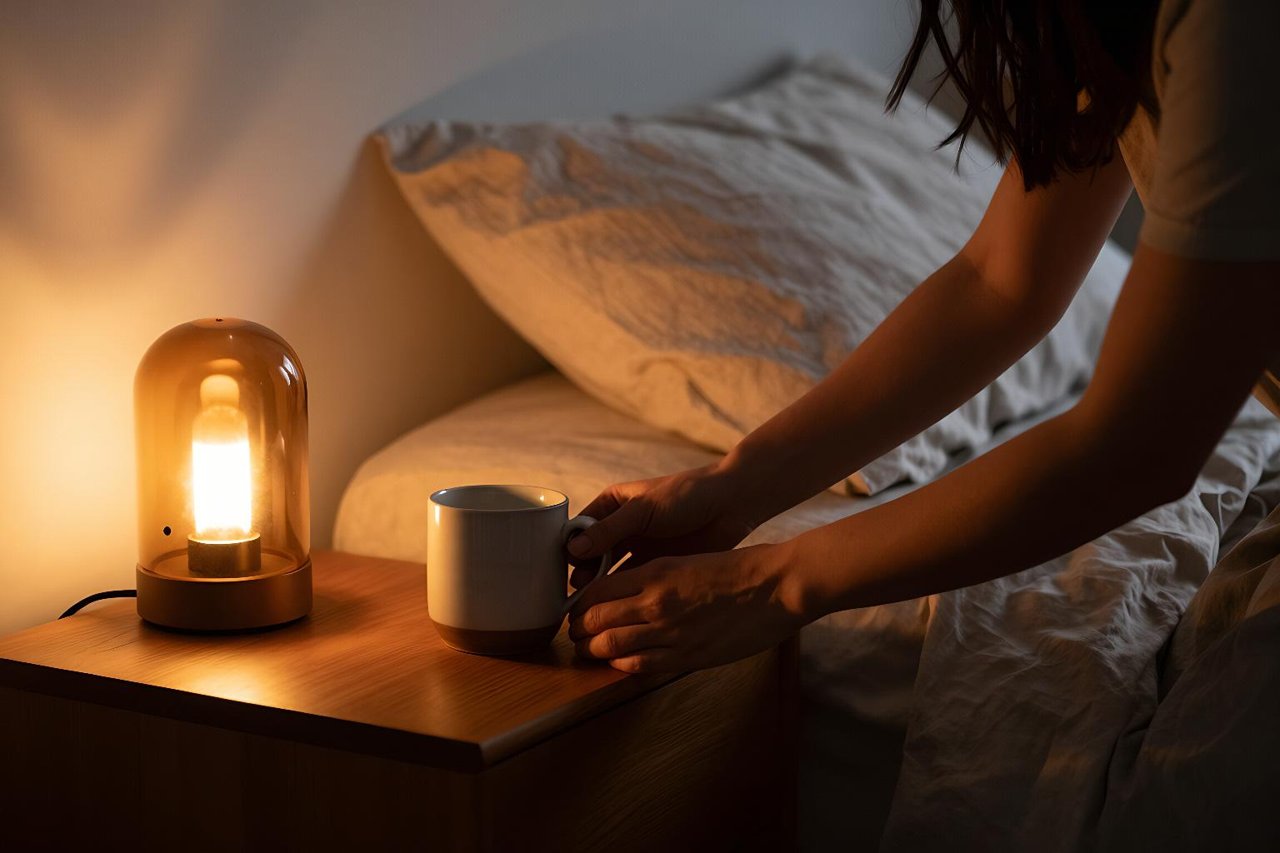
- A fixed cue that always means “sleep is coming”, such as the same lamp, the same mug of tea, the same page of a book.
2. Cool Your Body Down, Starting With a Warm Shower
Counterintuitive but well documented: a warm shower or bath 60 to 90 minutes before bed helps you fall asleep faster. The heat pulls blood to your skin, and as it dissipates your core temperature drops. That drop is one of the strongest signals your body uses to trigger sleep.
The second half of this is your bedroom. Aim for 18 to 20°C (65 to 68°F), which is cooler than most people keep their homes. If you can’t control one room efficiently, a fan pointed at the ceiling and a lighter duvet will do more for you than an expensive mattress topper.
One detail worth stealing from sleep researchers: warm hands and feet help you fall asleep because they release heat from your core. Socks in January are not a sign of defeat.
Light matters more than screens
Melatonin is suppressed by bright light of any kind, not just the blue glow of a phone. Swap the overhead bulb for a lamp or two after dinner and keep bedroom lighting warm. If you read on a device, drop the brightness right down and use a warm colour setting. The bigger problem with late-night scrolling usually isn’t the light anyway. It’s the arguing in comment threads.
3. Write Tomorrow Down So Your Brain Stops Holding It
Racing thoughts at bedtime are rarely about the present moment. They’re your brain trying to hold onto unfinished business until there’s a safe place to put it. So give it one.
Spend ten minutes with a notebook before your wind-down window opens. Write tomorrow’s list, the thing you’re quietly worried about, and one sentence on what you’ll do about it. Vague journalling is lovely, but the practical version is what quiets a busy head. There’s a first-hand account of what actually worked for me when the grand sleep plans fell apart and the boring habits stuck.
4. Eat and Drink With the Clock in Mind
Caffeine has a half-life of roughly five to six hours. A 4pm coffee still carries a quarter of its punch at 10pm, which is enough to make the difference between drowsy and wired. If you’re sensitive, your cutoff is early afternoon, not after dinner.
Alcohol is the sneaky one. A glass of wine can knock you out and then wreck the second half of your night by fragmenting REM sleep and waking you at 3am with a dry mouth and a thumping heart. If you drink, finish at least two hours before bed and match each glass with a glass of water.
Digestion matters too. Heavy, spicy or late meals keep your gut working when it should be resting, and if you regularly deal with bloating or cramps at night, it’s worth understanding what IBS is and how gut trouble can disturb your sleep. If you need a snack before bed, keep it small: a banana, a few almonds, oatcakes with butter.
5. Make the Last Hour Physically Quiet
Hard exercise within two or three hours of bed raises core temperature and adrenaline, and some people stay buzzy for hours afterwards. A gentle stretch is a different story. Ten minutes is plenty, and it doesn’t need to be a class.
- Cat-cow, eight slow rounds, breathing out as you round your spine.
- Seated forward fold held for a minute, knees softly bent.
- Legs up the wall for three minutes, which is strangely calming after a day on your feet.
- Neck rolls and shoulder shrugs, then jaw release. Most of us clench without noticing.
Breathing is the cheapest tool you own. Try 4-7-8: in through the nose for four, hold for seven, out slowly for eight. Six rounds, then stop counting. If your mind wanders, that’s normal. The point is the pace, not perfection.
6. Give Your Bedroom a Single Job
If your bed doubles as an office, a cinema and a dining table, your brain eventually stops linking it with sleep. Keep it for sleep and intimacy, and move the laptop to another room, or at least off the duvet.
Dark, cool and quiet is the boring formula that works. Blackout curtains, a fan or a white-noise app, and a weighted blanket if you find pressure soothing. If you’re shopping for someone who can’t switch off, the 2025 holiday gift guide has a handful of genuinely useful sleep-friendly picks.
One rule that surprises people: if you’re wide awake 20 minutes after lights out, get up. Read something dull under a low lamp until your eyelids feel heavy, then go back. Lying there frustrated teaches your body that bed is a place of mild panic.
7. Keep the Routine Boring and Repeatable
A routine only works if you can do it on a wet Tuesday when you’re shattered and dinner was late. That means small. Three or four steps, in the same order, at roughly the same time, most nights.
Resist the urge to track anything for the first two weeks. Just do it and see what changes. After a fortnight you’ll have a decent sense of whether you’re dropping off faster or waking less, and then you can adjust one variable, not five. Change everything at once and you learn nothing.
The people with the most restful evenings aren’t the ones with the most elaborate rituals. They’re the ones who’ve run the same quiet sequence for years without really thinking about it, which is precisely why it works.


