
Table of Contents
Walk into a Shotokan dojo on a Tuesday night and you’ll hear bare feet on hardwood, a count in Japanese, and the same five kata that have been practised since the 1930s. Ten minutes down the road, an MMA gym is running takedown drills against a chain-link cage to a beeping timer, and nobody bows to anyone. Both are martial arts. Both produce people who can handle themselves. They just disagree, quite fundamentally, about what training is for.
That disagreement is what the traditional martial arts vs. modern martial arts debate really comes down to. It isn’t about which is tougher or which is “real.” It’s about what each system optimises for, and whether that matches what you want from the next five years of your life.
Where the split actually comes from
Most people assume “traditional” means ancient. It rarely does. Gichin Funakoshi brought karate from Okinawa to mainland Japan in the 1920s and reshaped it for school curricula. Judo was founded in 1882 at the Kodokan. Kyokushin karate dates from 1964. These arts have deep roots, but the versions you’ll train tonight were largely packaged in the twentieth century.
Modern martial arts are just the next layer. When Royce Gracie won the first UFC in 1993 by taking down bigger men and strangling them, he didn’t invent anything. He exposed a gap. Within a decade, gyms were rebuilding their syllabuses around what held up against a resisting opponent, and the modern category was born: Brazilian jiu-jitsu, mixed martial arts, sport Muay Thai, combat sambo, and the pressure-tested branches of boxing and wrestling.

Traditional arts: what you’re actually signing up for
The kata question
A traditional syllabus leans heavily on pre-arranged forms. In karate that’s kata like Sanchin or the Pinan series. In taekwondo it’s poomsae. In kung fu it’s dozens of hand forms. Done well, these are mobile textbooks: they store technique, teach posture and breathing, and give you something to refine for decades without a partner. Done badly, they become choreography that nobody has ever tried against a person who didn’t want to be thrown.
The honest version of the case for kata is that it builds body mechanics and memory under low physical risk. A 55-year-old with two bad knees can train kata hard for years. She cannot eat leg kicks.
The grading ladder
Traditional arts sell progress in belts. A first dan in karate typically takes three to five years at two or three sessions a week. That structure keeps people in the room, which matters more than most instructors admit. It also creates the belt mill: schools where a grading fee every eight weeks is the actual business model and a black belt means you attended regularly, nothing more.
Modern martial arts: the clock and the resistance
Live resistance is the whole point
A modern class usually looks like this: a warm-up, technique drilling against a partly resisting partner, then rounds of sparring or positional work where the other person is genuinely trying to stop you. That last part changes everything. Technique that survives a resisting opponent gets kept. Technique that doesn’t gets quietly dropped, no matter how elegant it looked in the demonstration.
Competition as quality control
Modern arts have a feedback loop built in. If your gym’s jiu-jitsu is sloppy, someone turns up at a local open mat and gets tapped out by a white belt from another school. If your Muay Thai clinch is bad, a smoker in the next town exposes it. That external pressure keeps standards from drifting for too long. Traditional arts can have the same thing through open tournaments and cross-style events, but many don’t, and it shows in the quality of what’s taught.
The trade-off is wear and tear. Rolling five times a week puts shoulders and necks under load that kata never will. Concussion risk in full-contact striking is real and shouldn’t be waved away.
Self-defence: which one keeps you safer?
Street fights don’t resemble either discipline. They start close, with someone shouting, and there’s often a second person involved. A sport grappler who has never trained to handle a standing assault can get hurt. A traditional stylist who has never sparred above 30 percent will likely freeze when a stranger grabs their jacket.
The useful question is narrower. Does the school teach you to manage distance, stay on your feet under pressure, and recognise the moments to leave? A kata-only karate class scores badly on the first two. A sport BJJ class that starts every roll on the knees scores badly on the third. Both can be excellent, and both can leave a hole.
Fitness, age and the body you bring
Traditional training is generally easier to sustain for thirty years. There’s more solo work, more technical drilling, less impact, and a culture that expects older students to keep training with adjustments. Modern gyms skew younger and harder. That isn’t a flaw, but a 42-year-old who has never exercised shouldn’t walk into an advanced MMA class and expect a long career.
Age isn’t fixed either. Plenty of men and women in their fifties train BJJ four nights a week, choosing their partners carefully. Plenty of twenty-year-olds quit karate at green belt because they wanted contact and didn’t get any.
Culture: hierarchy, respect and the ego problem
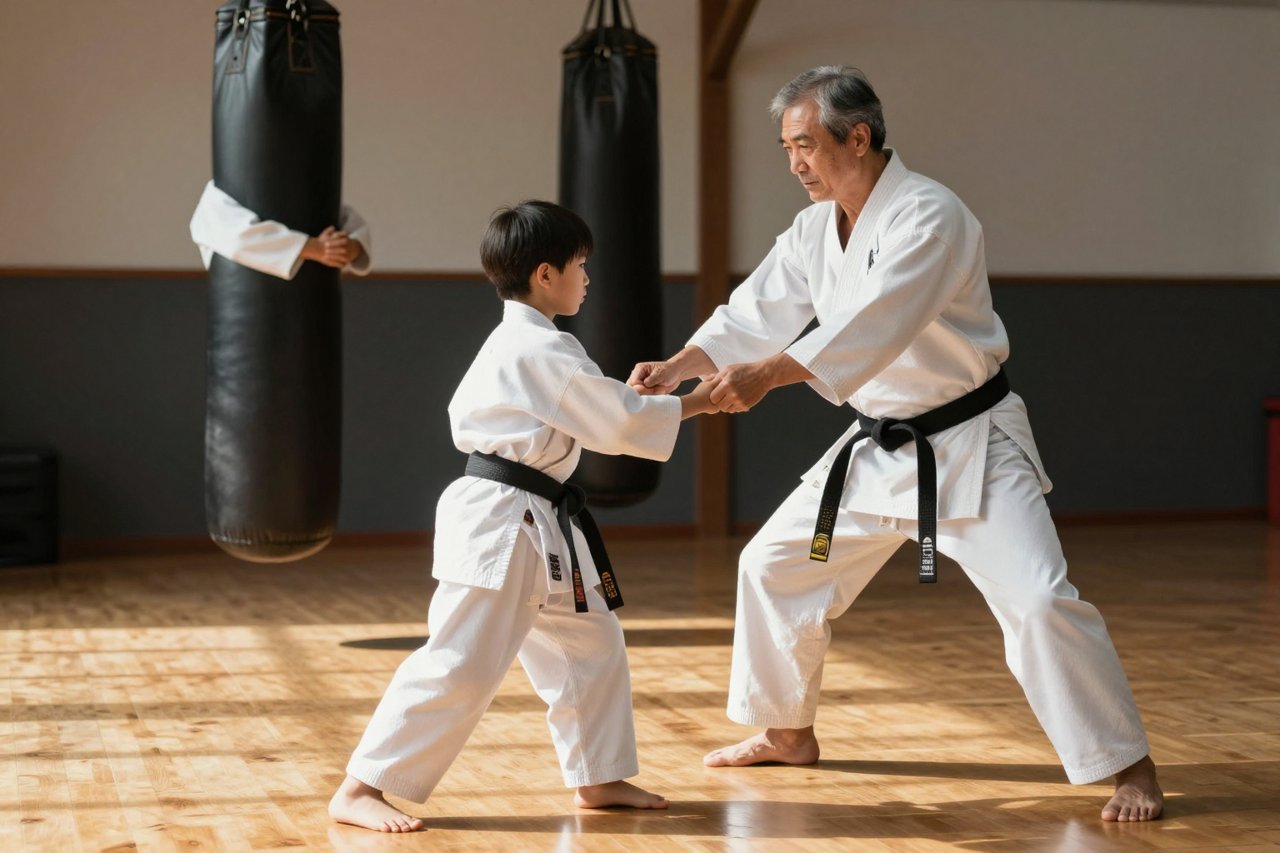
Traditional dojos carry ritual. Bow to the shrine, address the instructor as Sensei, line up by rank. Some people find that grounding; others find it stifling. Modern gyms swing the other way, with first names and a fend-for-yourself atmosphere. Neither is automatically healthier. The traditional school can breed deference to instructors who don’t deserve it. The modern one can produce a room where the loudest competitor sets the tone and beginners quietly stop coming.
What to check before you sign up
Rules apply to both camps. These questions sort good gyms from bad ones faster than any style label:
- Can I watch a class? Any school that won’t let you observe a full session, including sparring, is hiding something.
- How often do people spar or roll live, and at what intensity? Vague answers mean never.
- What are the contract terms? Twelve-month agreements with no exit are a warning. Month-to-month is the norm.
- Who teaches the beginners? If the head coach only appears for the advanced class, ask who is actually running your sessions.
- What happens at grading? A fee schedule tied to a new belt every two months tells you plenty.
- Are senior students allowed to teach and correct? A healthy room has people helping without needing a title.
The hybrid path most people drift into
After a few years, the traditional versus modern argument starts to feel like a false choice. The best training lives in the overlap. A karateka who adds two rounds of live sparring a week sharpens every technique she owns. A jiu-jitsu competitor who spends six months on a classical kata learns to move from the hips and stops relying on strength to escape bad positions. Judo has been doing this since 1882: formal forms on one side of the mat, hard randori on the other.
So pick based on what you want in twelve months, not what sounds tougher. Want structure, history, a clear curriculum and a training life you can still do at 60? Find a traditional school with a sparring culture and a coach who can explain why each technique works. Want a fast learning curve, honest feedback and people who compete? Find a modern gym with decent injury practices and beginners’ classes that aren’t an afterthought. Then stay long enough to get good at something. Style matters far less than the quality of the room you’re standing in and whether you keep showing up in February.


