
Key Points
- The United States Army briefly published and then removed new images of the Dark Eagle Long Range Hypersonic Weapon, which quickly spread online before any official explanation was provided.
- The Dark Eagle system is a mobile hypersonic boost-glide weapon designed to strike defended targets at speeds exceeding Mach 5 as part of the Army’s long-range precision fires modernization effort.
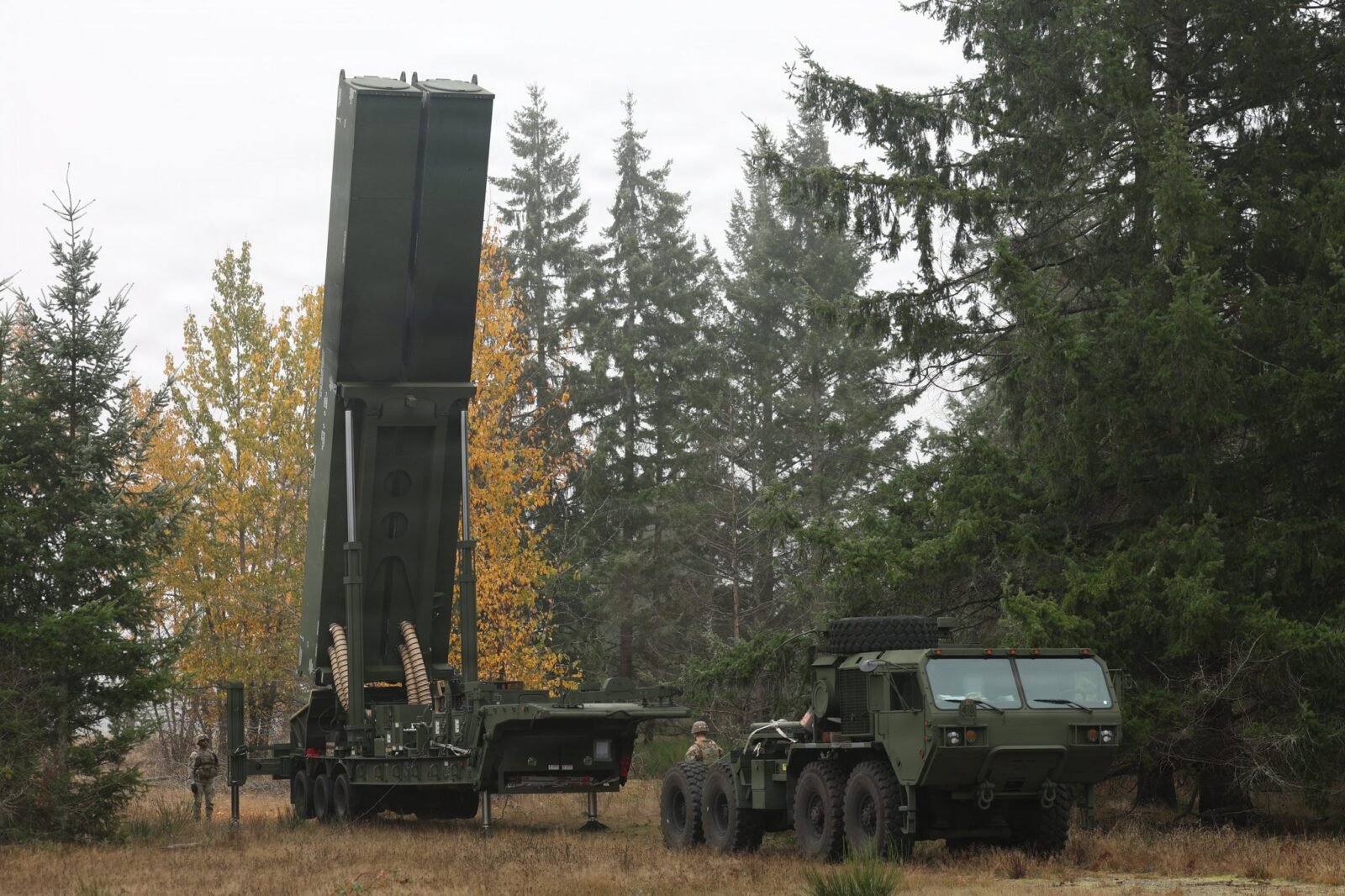
The United States Army briefly published new official images of its Dark Eagle hypersonic weapon system before removing them without explanation, with the photographs quickly spreading online after their deletion.
The images, released and then withdrawn within a short period, showed updated views of the Army’s Long Range Hypersonic Weapon (LRHW), a trailer-launched strategic strike system already undergoing fielding activities.
The incident drew attention because the Dark Eagle system represents one of the Army’s most advanced long-range strike capabilities, developed to engage heavily defended targets at extreme distances. The unexpected removal of the images has prompted discussion among defense observers, though Army officials have not publicly commented on the reason for the deletion.
– ADVERTISEMENT – CONTINUE READING BELOW –
The Dark Eagle system, also known as the Long Range Hypersonic Weapon, uses a hypersonic boost-glide vehicle capable of traveling at speeds exceeding Mach 5 while maneuvering within Earth’s atmosphere. Unlike traditional ballistic missiles that follow predictable trajectories, hypersonic boost-glide vehicles can alter their flight path during descent, complicating interception by existing air and missile defense systems.

According to previously released Army information, the system is launched from a mobile trailer-based platform, allowing deployment across dispersed operational areas. The weapon is designed to deliver rapid strikes against time-sensitive targets, including high-value military infrastructure protected by advanced defenses.
Although the Army did not provide a statement regarding the image removal, the photographs circulated widely across social media and defense-focused online communities shortly after their initial publication. The images appeared to show launcher components and system configurations associated with operational deployment preparations.
The Dark Eagle system is not new to public view. The platform has previously participated in multinational training activities, including Exercise Talisman Sabre 25, a major Australian–United States bilateral military exercise focused on high-end warfighting and allied interoperability. Its appearance during international exercises signaled growing integration of hypersonic capabilities into joint operational planning.

Lockheed Martin serves as the prime contractor responsible for developing the hypersonic missile component, while the United States Army manages system integration, testing, and fielding activities. The program represents a central element of the Army’s modernization effort aimed at expanding long-range precision fires capabilities.
Data from the U.S. Government Accountability Office estimates that the first operational Dark Eagle battery will cost approximately $2.7 billion, including missiles and associated equipment. The investment reflects the complexity of hypersonic technology, which combines rocket propulsion, advanced guidance systems, and heat-resistant materials capable of withstanding extreme aerodynamic stress during hypersonic flight.
In practical military terms, hypersonic weapons are designed to reduce response times against critical targets by combining speed, maneuverability, and altitude flexibility. Their ability to travel at more than five times the speed of sound while maneuvering makes detection, tracking, and interception more difficult compared with traditional missile systems.
The Army has previously emphasized that hypersonic systems are intended to provide rapid strike options against high-priority targets in contested environments. Mobile launch platforms also allow forces to reposition launchers, increasing survivability and operational flexibility.
The brief publication and removal of the images occurs amid broader international competition in hypersonic weapon development, as multiple countries continue testing and deploying similar capabilities. Public imagery related to advanced systems is often tightly controlled, particularly during transitions from testing to operational fielding phases.
While the Army has not clarified whether the removal resulted from operational security concerns or administrative error, the rapid spread of the images illustrates how official releases can quickly enter public circulation once published online.