
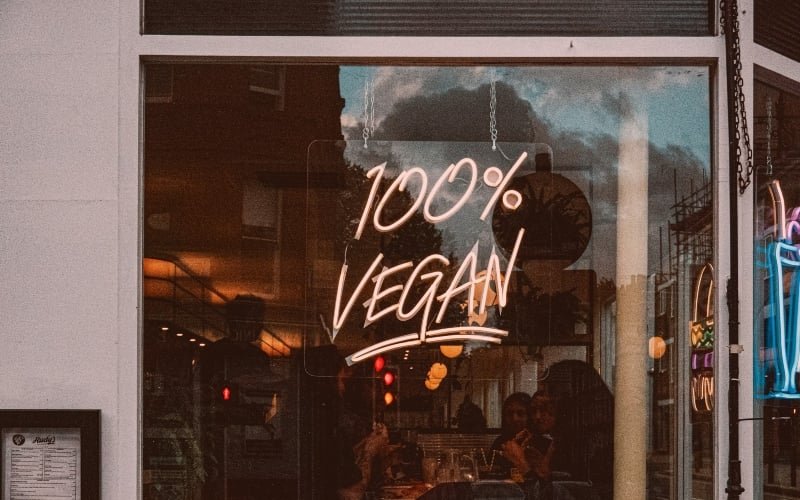


By Jessica Scott-Reid, Sentient
Millions of people around the world are once again taking part in Veganuary – the challenge that encourages consumers to try a vegan diet, at least for the first month of the new year. According to YouGov participation surveys commissioned by Veganuary and applied to population numbers in participating countries, nearly 26 million people participated in last year’s campaign.
The timing is not accidental. By scheduling the 31-day challenge for January, Veganuary attracts people resolving to change their eating habits in the new year, as well as the vegan-curious, those who may want to dip their toe in rather than commit to going vegan long-term.
Though the challenge is for just one month, the potential for impact is not insignificant – especially at a time when American culture and politics around meat-eating have shifted in favor of meat.
In 2020, University of Oxford environmental researcher Joseph Poore estimated that based on the 350,000 people who officially signed up for Veganuary that year, global carbon emissions were cut by about 45,000 tons of CO2 equivalent — akin to removing nearly 8,600 cars from the road for a year.
There is impact at the individual level too: going vegan for one month can save approximately 33,000 gallons of water, 1,200 pounds of grain, 900 square feet of forest, 600 pounds of CO2 and 30 animal lives. Full disclosure – Veganuary also helped the author of this story go vegan in 2017.
“Veganuary is a place to get your foot in the door and to lower those barriers of entry to plant based,” the CEO of Veganuary Wendy Matthews tells Sentient. “That might mean, in the beginning, just doing it for a month or trying smaller measures to make it feel more approachable.” The hope is that some people stick with it, of course, but what do the numbers show?
How Many People Stay Vegan After Veganuary?
At the end of the 31-day challenge, Veganuary sends out a survey to some of its participants. A total of 10,818 people responded in 2025, which is a relatively small number compared to the millions that participate, and the data is self-reported. Still, the results, such as they, are encouraging: 81% say they plan “to make significant long-term changes to their diet, reducing intake of animal products by at least half.”
After six months, the survey was sent out again, with just 2,115 people responding. Around 80% of those respondents said they were eating fewer animal products than before, with roughly one-third cutting their intake by more than 75% and another third reducing it by at least half.
Veganuary campaigns have also expanded globally into 20 countries, adding a new sister campaign in China called V-March, which takes place in February, the time of Chinese New Year. As China, a country with a population of around 1.4 billion, has dramatically increased its meat consumption since the early 1960s, there is a growing effort by environmental and animal advocacy groups to encourage people to eat less there.
“One part of our strategy whenever we move into a new region is first we seek a partner on the ground that’s already doing work there,” says Matthews. “We want to work with local groups that have the cultural contacts and have the touch points, and then empower them to use the Veganuary campaign if it’s useful to them,” she says.
By working with local partners to adapt its campaigns to different cultural contexts, Veganuary hopes it can stay relevant in different cultural contexts. The campaign also has room to grow in the U.S., where meat consumption is rising and the market for plant-based foods remains volatile.
Veganuary is not without its critics. Some argue that it focuses too much on short- rather than long-term commitments to sustainable dietary change and lifestyle choices, while others have criticized the organization’s corporate partnerships.
In a 2025 video, Jake Conroy, also known as The Cranky Vegan, praised some aspects of Veganuary — attracting new vegans and offering simple recipes and tips — but he questioned its efficacy. “The question remains is Veganuary reaching the masses, and more importantly, is it making vegans? And I think the answer is we don’t know,” he asked in the video, raising questions about the organization’s metrics.
Matthews concedes that the “plant based landscape is changing – I don’t think anyone could deny that.” But she hopes that by adapting and finding new ways to reach people where they’re at, Veganuary can continue to grow. “The value of trying plant based is still there. It’s still great for the planet, it’s still great for personal health, it’s still a huge win for animals. Nothing in the current culture changes that.”
This is an update to a story originally published January 8, 2025.
This article originally appeared in Sentient at https://sentientmedia.org/veganuary/.

—
This story was originally published by Sentient.
***


If you believe in the work we are doing here at The Good Men Project, please join us as a Premium Member today.
All Premium Members get to view The Good Men Project with NO ADS.
Need more info? A complete list of benefits is here.
—
Photo credit: unsplash