

Table of Contents
[ad_1]
I see e-commerce teams constantly trying to comprehend the changes in conversion rates, dips in bestseller sales categories, or a surge in cart abandonment cases. But instead of clear answers, they often end up juggling too many tools without enough clarity.
If you’re an e-commerce manager, growth marketer, or DTC founder, these challenges probably hit close to home.
It’s like walking into a crime scene where every witness tells a different story. One dashboard says Meta drove the sale. Another says it was an email. Shopify tells a whole different story. It’s exactly why the conversation around the best e-commerce analytics software keeps coming up, because getting clear answers shouldn’t feel this hard.
To make the choice easier, I looked closely at more than 15 best e-commerce analytics software based on real user reviews on G2. What I found was not just fragmented data but a wide range of expectations for what different e-commerce teams actually need from their analytics stack.
Whether you’re monitoring customer behavior, identifying customer drop-offs, visualizing data across different platforms, or making category decisions, this guide will help you find the best e-commerce analytics software and choose what fits your needs.
TL;DR: Based on my deep dive and G2 reviews, the 8 best e-commerce analytics software are Stackline, Glassbox, Luigi’s Box, Edrone, Fullstory, Decodo (formerly Smartproxy), Lucky Orange, and Hotjar.
8 best e-commerce analytics software for 2026: My top picks
-
Stackline: Best for unified market-share intelligence
Unifies marketplace sales, search, and shopper data for competitor benchmarking, SKU analysis, and retail media optimization. (Price available on request).
-
Glassbox: Best for visualizing user struggle points
Visualizes struggle points, funnel drop-offs, and technical issues through session replay and behavioral analytics. (Price available on request).
-
Luigi’s Box: Best for e-commerce site search relevance and flexible product discovery
Improves on-site search relevance and product discovery with customizable search, recommendations, and analytics. (Custom Pricing).
-
Edrone: Best for e-commerce exclusive marketing automation
Uses real-time behavioral and purchase data to power segmentation, product recommendations, and lifecycle automation. (Free up to 200 emails, SMS, WhatsApp, starts from $50/month).
-
Fullstory: Best for complete digital experience intelligence
Captures real-time user behavior to uncover root causes, journey drop-offs, and share insights across teams. (Price available on request).
-
Decodo (formerly Smartproxy): Best for AI-powered qualitative and behavioral e-commerce research
Combines qualitative and quantitative research with AI-assisted analysis, click tracking, eye tracking, sentiment analysis, and journey insights. (Starting from $2/GB, offers a traffic-based pricing model).
-
Lucky Orange: Best for real-time visitor behavior tracking
Uses live visitor tracking and chat tools to help teams spot friction, understand shopper behavior, and improve on-site experiences. (Starts from $32/month, free plan available).
-
Hotjar: Best for visual UX behavior insights
Uses heatmaps, session recordings, and feedback tools to reveal attention patterns, friction, and drop-off points. (Starts with $49 per month).
*These e-commerce analytics tools are top-rated in their category, according to G2’s Winter 2026 Grid Report. I’ve added their monthly pricing to make comparisons easier for you.
8 best e-commerce analytics software tools I recommend
The first thing that comes to my mind when I think about analytics (even for e-commerce) is clarity. Not the kind that comes from tracking more numbers, but accuracy that helps see the cause-and-effect relationship between your efforts and the sale. For e-commerce businesses, that can mean identifying which channels drive profitable conversions and what is contributing to cart abandonment.
With the best e-commerce analytics software, you can pull data from different tools and connect to one visual dashboard, helping teams connect activity to outcomes and make faster, more confident decisions.
Salesforce’s 2026 State of Data and Analytics found that 76% of business leaders are under growing pressure to generate business value from data, yet incomplete, outdated, or poor-quality data remains the biggest obstacle. For e-commerce businesses, that challenge can directly affect revenue, retention, and operational efficiency. With good e-commerce analytics software, teams can spend their budgets more effectively and catch issues before they affect sales.
The business impact is also reflected in buyer outcomes. According to G2 Grid Report data, e-commerce analytics software has an average user adoption rate of 65%, with an average estimated ROI timeline of 11 months. That suggests companies are not only adopting these tools, but also seeing measurable value in less than a year. For brands focused on improving efficiency, increasing customer lifetime value, and scaling ROI, investing in the best e-commerce analytics software is quickly becoming a business necessity.
How did I find and evaluate the best e-commerce analytics software?
Firstly, I started with G2’s Grid Report, where I had access to satisfaction scores and user feedback to gain a clear idea about the top players.
I focused on essential areas like cross-platform integration, real-time behavior tracking, and the ability to turn competitive benchmarks into actual growth.
I then used AI to analyze hundreds of G2 verified reviews. This gave me a picture of well-appreciated features and common struggles across platforms. Though I could not test these software products hands-on, I verified each claim and observation with reviews from G2.
Any screenshots referenced in the article come from G2 product listings and public product documentation.
What makes the best e-commerce analytics software: My criteria
I focused on prioritizing what adds value to e-commerce teams day to day to understand what’s happening across products, channels, campaigns, and customer behavior without living in spreadsheets.
From my research and review analysis, these are the criteria I kept coming back to:
- E-commerce-native KPIs: From what I have seen, most teams weren’t just looking for a dashboard tool. They wanted metrics that actually match how online retail works, like sales across channels, conversion rate, cart abandonment, repeat purchase rate, and cohort retention. I prioritized tools that treat these as first-class metrics, not custom calculations you have to rebuild from scratch.
- Integration quality with the tools e-commerce teams already run on: One important aspect while choosing the best e-commerce analytics platform is the possibility to connect to existing tools. This way, data can be in one place and actions can be taken on time. For this, I looked closely at how well tools plug into e-commerce platforms, marketing analytics platforms, CRM, and marketing tools.
- A clean, unified view of multi-channel performance: Based on what I have seen, the initial need to look for the best e-commerce analytics software stems from one common challenge: sales data lives in one place, marketing data in another, web behavior somewhere else, and finance has its own version of truth. Platforms that can unify performance across channels and let you compare fairly without spending weeks reconciling numbers are the ones on my list.
- Product and merchandising depth: E-commerce decisions often come down to products: what’s winning, what’s dragging, and what’s quietly leaking margin. So, it is essential to check tools that make it easy to drill from topline revenue into SKU or category performance, variants, bundles, and promo-driven changes, so merchandising teams can act on insights, not just observe them. This is where the best tools for combining e-commerce analytics with inventory data stand out, because they help teams connect product performance with stock and demand decisions.
- Marketing and promotion measurement that ties back to revenue: I have seen firsthand how complex and scattered data can take a toll on campaign decisions in marketing. Platforms that connect campaigns and promotions to actual order outcomes using practical mechanisms win.
- Deep behavior analytics: I could see that many teams hit a wall with sales reporting because it tells you what happened and not why it happened. Valuable tools are those that incorporate web analytics and on-site behavior in a way that’s actually actionable: funnels, drop-offs, customer journeys, and friction points, ideally tied back to conversion and revenue. This helps with safer experimentation. For brands trying to understand repeat orders, browsing patterns, cart abandonment, and retention signals, the best tools for analyzing customer purchase behavior are the ones that connect behavioral insights directly to revenue outcomes.
- Speed to insight for real operating cadence: In e-commerce, the reporting cycle isn’t quarterly, it’s daily, sometimes hourly (especially during promos). Tools that make it fast to spot trends, answer questions, and share findings are important.
- Flexible reporting for different audiences: The right view depends on who’s looking. Leaders want a clean pulse dashboard. Analysts want drill-downs. Marketers want campaign views. Ops wants fulfillment/inventory signals, so tools that support both quick stakeholder reporting and deeper exploration are preferred.
- Data accuracy, auditability, and metric consistency: This came up more than I expected. Teams don’t just want dashboards; they want trust. Platforms that make metric definitions clear, support consistent logic across reports, and provide enough transparency to debug discrepancies can help base decisions.
- Scalability across catalogs, channels, and complexity: What works for a small DTC shop can collapse under multi-storefront, multi-currency, or large SKU volumes. So, it’s efficient to look for tools that stay performant as data grows, and that can handle real-world complexity like multiple channels, messy promo calendars, or shifting attribution.
After researching more than 15 platforms, I finalized 8 e-commerce analytics tools that stood out across the areas that matter most to online retail teams. Some are stronger in shopper behavior and UX diagnostics, others in channel reporting, merchandising insight, or lifecycle marketing, but all of them bring more clarity to performance than generic reporting tools. This becomes especially important when evaluating the best platforms for integrating e-commerce data with marketing analytics, where campaign performance and revenue need to connect clearly.
The list below contains genuine user reviews from G2’s E-Commerce Analytics Software category. To be included in this category, a solution must:
- Provide KPIs and analytics that are specific to e-commerce
- Integrate with e-commerce software out of the box or through APIs
- Deliver dashboards that display e-commerce KPIs and analytics
- Analyze e-commerce sales on multiple channels
- Utilize web analytics to monitor user behavior
- Track the performance of campaigns and promotions
- Track retail performance and help identify top and low-performing products
*This data was pulled from G2 in 2026. Some reviews may have been edited for clarity.
1. Stackline: Best for unified market-share Intelligence
Stackline stood out to me for going beyond a basic dashboard. It gives brands visibility into market share movement, category performance, and competitor activity across retail marketplaces.
As I read through the reviews, I got the sense that Stackline helps teams understand their position clearly and act on it faster. A lot of that comes from Atlas, Stackline’s market intelligence and analytics layer. In G2 reviews, Atlas is often described as the part of the platform that teams rely on for sales trends, market share data, and competitive benchmarking. That context helps brands spot growth opportunities and understand how they compare with competitors.
That value also shows up in the satisfaction data. According to G2 Data, Stackline scores especially high for ease of admin at about 91%, ease of doing business with at about 92%, and quality of support at about 90%. That tells me teams do not just value the insights. They also feel supported while using the platform.
Another strength is scale. Stackline appears to handle large category sets well, which matters for brands managing broad portfolios and multiple product lines.
Beacon adds another layer to that. It is Stackline’s retail media optimization capability, built to help brands manage bids, monitor keyword activity, and respond to competitor ad behavior in real time. From what I saw in reviews, this makes it easier for teams to adjust bidding strategy, find keyword opportunities, and connect traffic with conversion performance. That makes Stackline useful not just for analysis but also for day-to-day execution.
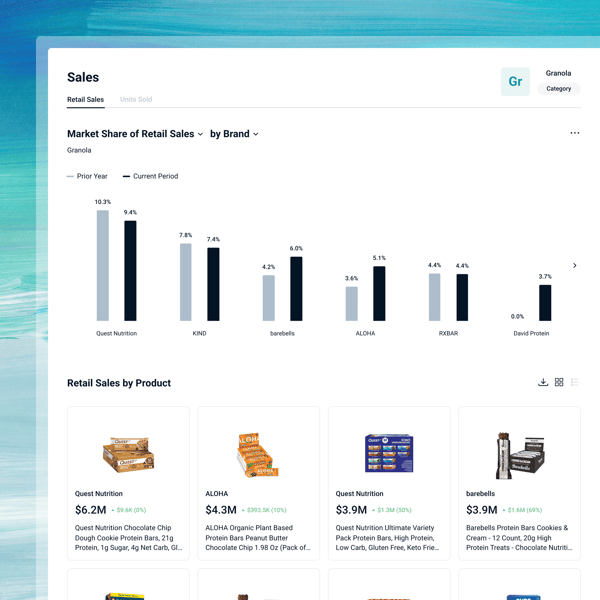
Cross-retailer attribution is another standout capability. Stackline helps brands measure how Amazon ads influence purchases across other major retailers. By linking ad exposure with verified transaction data across retailers, it gives teams a more credible view of cross-channel ROI. For omnichannel brands, this can make media planning much more grounded.
Another aspect I found useful is custom segmentation. Teams can create saved product groups based on the way they actually run the business. That could mean focusing on a subset of SKUs, excluding certain products, or tracking a specific part of a category over time. Once those segments are set up, performance analysis becomes much easier and more repeatable.
Pricing comes up as a concern in reviews, especially for smaller teams deciding how much platform depth they need. However, for brands that plan to use Stackline across analytics, market intelligence, and retail media, that broader scope can make the platform feel more worthwhile.
I also noticed reporting cadence in user feedback. Some reviewers note that the data can be about 1-2 weeks behind. Teams that work in faster sales cycles may simply want closer-to-real-time visibility, while for trend analysis and competitive benchmarking, it works well.
I’d recommend Stackline most to e-commerce and retail teams that need competitive context alongside internal reporting. It also stands out among the top platforms for multi-channel e-commerce analytics, especially for teams operating across marketplaces like Amazon and Walmart.
For teams that want both market intelligence and retail media support in one platform, Stackline feels especially well-suited.
What I like about Stackline:
- Stackline helps teams see market share movement, category-level performance, and competitor behavior across retail marketplaces, so decisions aren’t made in isolation.
- Stackline’s cross-retailer attribution strengthens omni-retailer planning. It links ad exposure to verified purchase data across major retailers, giving teams a clearer and more trustworthy view of cross-channel ROI.
What G2 users like about Stackline:
“Weekly updates with comprehensive analysis – ability to slice into ASINs / Categories / Trends of Traffic + Sales + Promotions + ASPs. The UX is extremely easy to navigate and the immediate ability to click out to a specific ASINs Amazon PDP is unmatched. When our org paid for the Stackline Advisor it was the single best AI product in the market. Extremely knowledgeable – useful – timely & insightful for a multitude of projects. Stackline customer team support is unmatched & extremely responsive.”
– Stackline review, Michael B.
What I dislike about Stackline:
- Pricing comes up often. From what I gathered, smaller teams may find it expensive, but the cost reflects its all-in-one scope and the breadth of data it provides.
- Across G2 reviewers, Stackline’s depth is a double-edged sword as it unlocks advanced insights, but new users often say they need time to learn the platform, especially if they’re not already comfortable with advanced analytics or Amazon-specific metrics.
What G2 users dislike about Stackline:
“One area for improvement is the user experience for new users. The platform has a steep learning curve, especially for those unfamiliar with advanced analytics or Amazon-specific metrics.”
– Stackline review, Juan Felipe P.
2. Glassbox: Best for visualizing user struggle points
When I first looked at Glassbox, I was impressed by its 4.9 rating on G2. But more than that, I was awed at the satisfaction score of 99, with a whopping 100 in almost all categories.
According to G2 Data, about 85% of its customers are enterprise teams, and that fits the way the platform shows up in reviews. Teams seem to rely on it for session replay, customer journey analytics, and digital experience monitoring.
I noticed that session replay is one of the strongest themes that is discussed. Reviewers often describe recordings as the fastest way to get clarity. Instead of debating what a user might have done, teams can replay the session and see the experience in context. That leads to faster investigations and fewer assumptions, especially when support, product, and engineering are all looking into the same issue.
For e-commerce teams, visibility into struggle and error is a primary aspect. Reviewers describe using Glassbox to pinpoint friction points and identify where users are actually getting stuck. That helps teams focus on the issues that need attention rather than treating every drop-off the same way. It also makes optimization work more precise, because teams can prioritize fixes based on actual user friction rather than surface-level metrics alone.
Glassbox is also makes it easier to quickly validate issues. Reviews suggest that, instead of relying on partial reports or trying to recreate the problem, teams can use session evidence to confirm what happened and move straight into problem-solving. The practical outcome is fewer dead-end investigations and faster handoffs to the team that needs to act.
It is also effective when it comes to funnels and journey analysis. What stood out to me is how clearly these features seem to work together. Funnels help teams see where users drop off, and session replay helps explain why. That combination makes it easier to turn insight into action and focus on the steps that need improvement most.
Users also point to the ability to measure impact over time, not just spot an issue, but understand how many users were affected. Another is the session-level technical context, such as device and environment details, which can facilitate diagnosis. For cross-functional teams, dashboards and reporting also seem to help bring findings together in a way that supports clearer decisions.
Some reviewers mention that Glassbox can take a little time to get fully comfortable with at first. That seems tied to the platform’s depth more than anything else. Once teams get familiar with it, that same depth appears to be part of what makes the platform valuable for more detailed investigation.
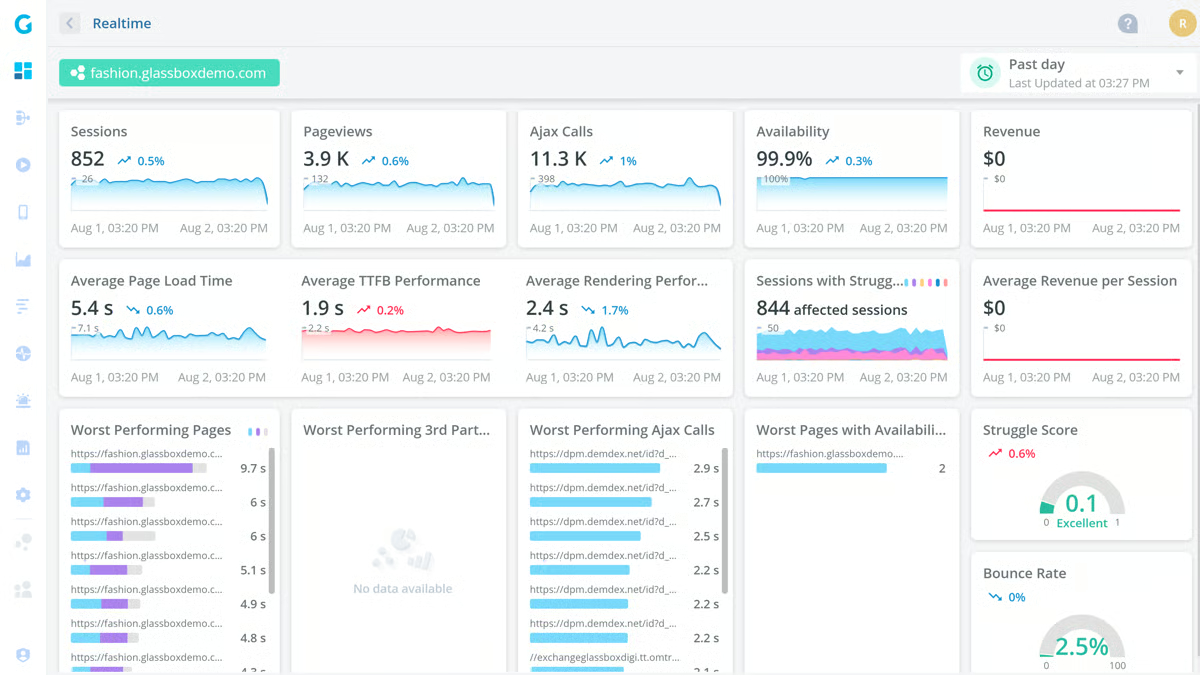
Session history is another point that comes up in reviews. For teams that need to revisit older incidents or compare behavior over longer periods, the available retention window can matter quite a bit. At the same time, for teams focused on recent journeys and active troubleshooting, the visibility Glassbox provides still seems highly valuable.
And it trickles down to one question. Would I recommend it? I’d recommend Glassbox most to teams that need proof-level visibility into digital journeys, not just what users did in aggregate, but what happened in real sessions, where friction shows up, and how to make investigations and fixes more decisive.
What I like about Glassbox:
- Struggle and error visibility come up repeatedly as a way to spot where users get stuck or where an experience breaks. It helps with more targeted fixes focused on the highest-friction points.
- Funnels and journey analysis are frequently mentioned as a way to pinpoint where drop-offs happen across steps.
What G2 users like about Glassbox:
“I use Glassbox to see how users use the website or app, which helps me understand where users face problems and where they leave. I also love using it to watch session replays and improve the user experience. It helps me find where users face issues and where they drop off, and lets me see real user sessions to understand problems better. I like the session replay feature the most because it helps me see what exactly users are doing and assist them where they face issues. It is easy to understand and very helpful. Session replays help me see exactly what users do step by step, making it easy to understand where they get stuck or face issues, which helps fix problems faster.”
– Glassbox review, Verified User in Consulting.
What I dislike about Glassbox:
- While the tool is powerful, the interface can feel a bit complex for beginners. I can see how teams might need to dedicate time to the initial learning curve to set up advanced, high-performing workflows.
- Another aspect that comes up in the reviews is how far back you can look in session history. I can see how retention windows can become a real constraint for teams that need to revisit older incidents or compare behavior over time, because once sessions roll off, you lose the ability to validate what actually happened.
What G2 users dislike about Glassbox:
“The interface could be improved. It would be helpful to have a step-by-step system to better understand how everything works.”
– Glassbox review, Jashanpreet S.
3. Luigi’s Box: Best for e-commerce site search relevance and flexible product discovery
Luigi’s Box came across to me as a product discovery platform built to make on-site search faster, more relevant, and easier to adapt to the way a real catalog behaves. That impression also shows up in its G2 scores. It rates especially high for quality of support at about 99%, ease of use at about 91%, and ease of doing business with at about 96%. For a tool that touches search and conversion, those scores matter. Teams need something they can work with easily and keep improving over time.
Its feature ratings reinforce that as well. Reports and analytics score about 95%, campaign tracking about 92%, and web analytics about 94%. So the value is not just that the search works. It also lets teams see what is happening, measure performance, and keep tuning the experience.
In the reviews, search quality comes through as the clearest strength. Users repeatedly mention relevance, better results, and a smoother path to the right product. That impact feels practical rather than abstract. Shoppers find what they need faster, search feels less frustrating, and the buying journey becomes easier to complete.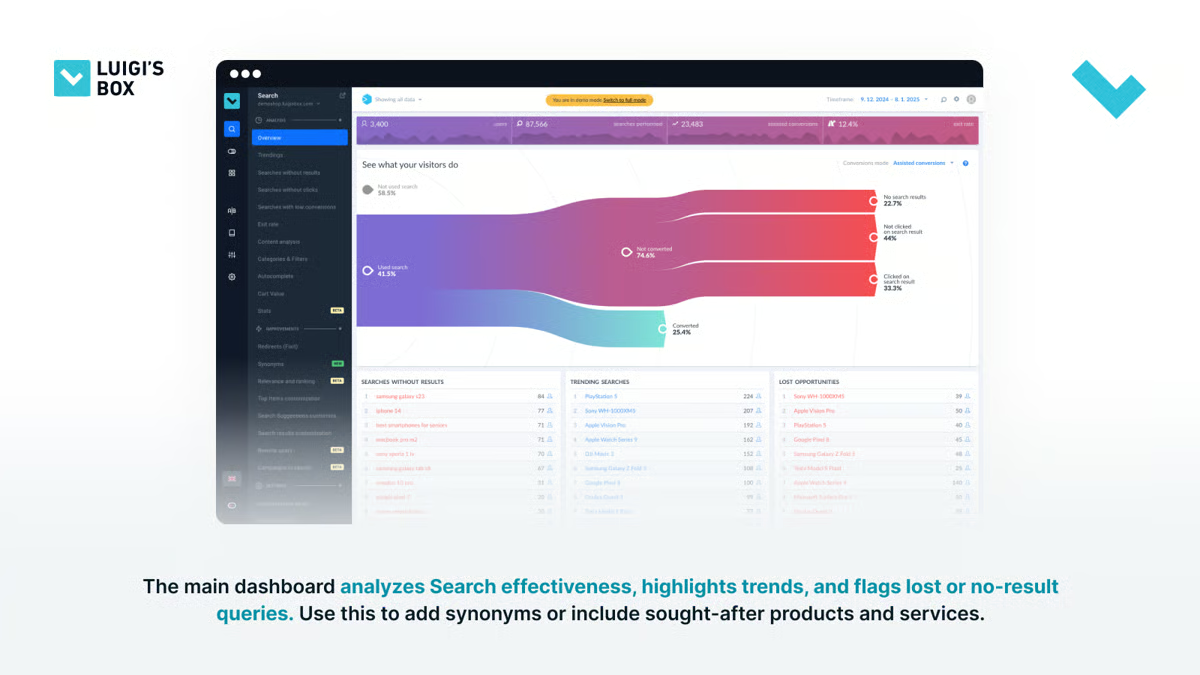
I found customization to be a strong theme. Reviewers often talk about adjusting ranking, fine-tuning rules, and shaping discovery around their own catalog logic. That flexibility feels especially important for e-commerce teams that do not want a one-size-fits-all search experience. Luigi’s Box seems to stand out because teams can make search reflect how their products are actually organized and how customers actually browse.
Recommendations also come up often in the reviews. They seem to add another layer to discovery, especially when shoppers are browsing loosely or not searching in exact terms. Analytics matters here, too. Teams use it to understand search behavior, identify weak points, and improve the experience over time.
Another area that stands out is implementation. Setup and support get a lot of credit for helping teams configure and tune the platform. Even in more custom environments, the overall impression still feels accommodating, which says a lot for a tool that sits so close to both catalog structure and customer experience.
Pricing is one area that can feel dependent on needs, especially for smaller teams weighing whether the cost is justified. That said, when search relevance is closely tied to revenue, teams often frame the investment as easier to defend because the impact shows up in product discovery performance.
Setup can also look a little different depending on the environment. In more custom setups, teams may spend more time getting everything configured the way they want. The encouraging part is that many users still describe implementation as smooth overall, with support playing a big role in helping them get value from the platform.
Overall, I’d recommend Luigi’s Box to e-commerce teams that care deeply about search relevance, want more control over discovery, and value responsive support. It feels especially well-suited for brands focused on improving product findability and making shopping journeys easier to complete.
What I like about Luigi’s Box:
- Users frequently highlight how the tool adapts to customer behavior in real-time, automatically optimizing search results and product recommendations to drive higher conversions and average order value.
- Luigi’s Box excels at category management; users love the ability to manage all products within a single app, using features like automated sorting, product boosting, and “top product” highlighting to ensure the most relevant items are always visible to shoppers.
What G2 users like about Luigi’s Box:
“What I like most is the clear and intuitive dashboard, easy-to-use features, and the simple yet effective approach to data presentation and analytics. Even someone with no prior experience can quickly and easily learn to use the Luigi tool. I also rate the onboarding and support process very highly.”
– Luigi’s Box review, Ariel N.
What I dislike about Luigi’s Box
- While the core features are intuitive, some users pointed out that the setup for more advanced features can be complex and less intuitive for non-technical users, sometimes requiring a longer learning curve.
- Pricing is a concern, particularly from smaller teams, and it’s usually framed as a value check — teams need to check whether the cost is justified based on how much search depth, customization, and ongoing optimization they actually need.
What G2 users dislike about Luigi’s Box:
“The initial configuration and tuning takes some time to get it right. Better onboarding documentation would help new users get up to speed faster.”
– Luigi’s Box review, Lukáš I.
4. Edrone: Best for e-commerce exclusive marketing automation
Edrone came across in G2 reviews as a retention-focused marketing automation platform for e-commerce teams. It seems built for turning browsing intent into completed purchases through lifecycle messaging and behavior-based campaigns.
It has a 4.8 rating on G2, with particularly strong scores for support quality at 99%, ease of setup at 90%, and ease of doing business with at 96%. It also stands out for analytics, with 93% across reports, dashboards, and web analytics.
As I looked through the reviews, automation came through as one of Edrone’s clearest strengths. A lot of that seems to center on the workflow builder. Reviewers often describe setting up automations there first and then using those flows to trigger messages based on customer behavior. That makes Edrone feel like more than just an email tool. The workflows seem to drive ongoing campaigns and customer communication.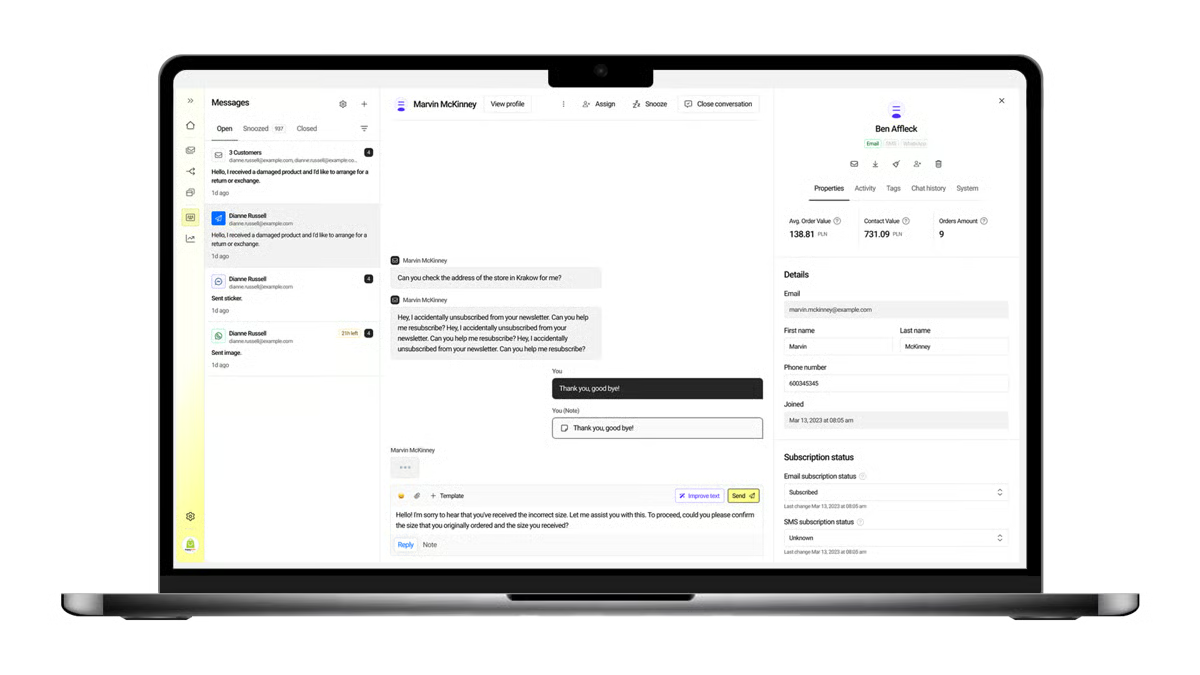
Ease of use is another strong theme. The impression I got is that, even as teams build automations and launch campaigns, the platform still feels approachable. That matters because it lowers the barrier to actually using more of the tool, not just the basics.
That becomes especially clear in conversion-focused use cases. Reviewers repeatedly connect Edrone’s behavior-based workflows with cart recovery and funnel recovery. The value there is simple: teams can bring shoppers back and reduce missed conversions.
Another area that is highly appreciated is support. Reviewers don’t just say it’s good in passing, they frame it as responsive and genuinely helpful when they hit roadblocks, especially during onboarding and early setup. That kind of support matters with marketing automation tools, because teams usually don’t struggle with sending emails; they struggle with getting the logic, data, and workflows right. This impressed me the most as Edrone’s team helps shorten that time-to-value.
Segmentation and personalization also come up often in reviews. Users talk about targeting specific customer groups and tailoring communication more precisely. That seems to be one of the ways teams make Edrone useful beyond one-off campaigns and build more relevant customer journeys over time.
Along with this, integrations also show up as a practical advantage. A number of reviewers mention that connecting Edrone into their existing environment has benefited them, making the automation feel usable long-term. Once the connections are in place, teams can rely on Edrone as a consistent system for running customer communication, rather than something that only works well in isolated campaigns.
Some reviewers mention that the interface can take a little time to get used to, especially when teams move from basic sends into more advanced automation flows. At the same time, the platform still seems to be seen as accessible overall, which suggests teams are able to grow into that depth as they use it more.
Initial setup also appears in reviews, especially around integrations and advanced configuration. That upfront work seems to matter most when teams want more precise segmentation and better use of customer data from the start. Once that foundation is in place, it appears to support more tailored automation over the long run. Additionally, customer support assists throughout the process, making it less daunting.
For teams comparing the best platforms for connecting e-commerce data with marketing analytics, Edrone stands out for turning customer behavior, purchase activity, and campaign data into usable segments and automated workflows.
What I like about Edrone:
- It provides sophisticated, autonomous marketing automation flows that handle everything from abandoned cart recovery to personalized product recommendations without requiring manual effort.
- The platform’s specialized focus on e-commerce means its automation triggers are based on real-time behavioral data, allowing teams to scale sales through highly relevant, automated customer journeys.
What G2 users like about Edrone:
“Edrone is an incredibly intuitive and powerful platform tailored perfectly for e-commerce businesses. I appreciate its user-friendly interface and comprehensive suite of tools, which allow us to automate email campaigns, personalize customer journeys, and analyze customer behaviors effectively. The system integrates seamlessly with our online store, enabling us to boost customer engagement and retention. Their customer support is also excellent – responsive and always ready to assist with any questions.”
– Edrone review, Marcin C.
What I dislike about Edrone:
- Some reviewers mention the platform can feel complex at first, but the overall sentiment still leans toward it being approachable once teams get familiar with the workflows.
- The initial integration and the configuration of advanced features require a thoughtful time investment during the onboarding phase, but this slow start is actually a reflection of the tool’s precision.
What G2 users dislike about Edrone:
“The interface can feel a bit complex at first, and setting up advanced workflows takes some learning. Reporting could also be more flexible in certain areas.”
– Edrone review, Saurabh B.
5. Fullstory: Best for complete digital experience intelligence
Fullstory is known for going beyond basic analytics. It gives teams a direct view of user behavior, making it easier to troubleshoot issues, validate UX assumptions, and understand what is actually happening in the product.
It has a 4.5 rating on G2, with particularly strong scores for ease of doing business (91%) and quality of support (90%).
As I read through the reviews, the clearest strength was debugging and troubleshooting. Many reviewers describe Fullstory as a practical way to get to the root cause faster, especially when a bug report, customer complaint, or conversion drop is hard to reproduce. That fits well with the product’s core appeal: helping teams see the ‘full story’ before making decisions.

What stood out to me is how often Fullstory seems to replace guesswork with direct observation. Instead of piecing together support tickets, logs, and secondhand explanations, teams can watch what actually happened and move faster from issue to answer.
Reviewers repeatedly point to how Fullstory helps teams align faster because everyone can work from the same replay-based evidence. That shared context reduces back-and-forth, speeds up handoffs between product, design, engineering, and support, and helps teams move more confidently.
Another strength that many people commented on is the user journey insight. Fullstory can spot friction points, hesitation, and drop-offs across key flows. That makes it useful not only for reacting to problems, but also for improving the experience before issues grow.
Session replay is the feature that makes this possible. Reviewers often describe the usual scenario as watching a replay and quickly understanding why a user could not complete a task. That shared visibility also helps teams stay aligned. Product, design, engineering, and support can all use the same evidence rather than interpret charts in different ways.
With this, collaboration is another area that sets the platform apart. Users frequently mention how easy it is to share replays and findings with teammates. That makes Fullstory feel less like a standalone analytics tool and more like something teams regularly use in their workflows.
Some reviewers also mention that Fullstory takes a little time to get fully comfortable with, especially because the platform offers a lot of depth. The upside is that teams seem to value that depth once they settle into it, particularly when using advanced filters and segmentation to investigate issues more precisely.
For more specific UI elements or actions, reviewers note that Fullstory may need additional instrumentation to capture everything they want. The platform delivers strong visibility out of the box, but when teams need highly tailored tracking for components that are not automatically indexed. They may need developers to add and maintain custom event names in the code, which introduces extra effort and coordination. That said, once teams standardize this as part of their release process, it tends to pay off by giving them more precise, consistent visibility into the interactions they care about most.
Overall, I’d recommend Fullstory most to teams that need clear visibility into user experience. It is especially well-suited for debugging, journey analysis, and faster cross-functional alignment. For teams that want direct evidence instead of assumptions, the platform feels like a strong fit.
What I like about Fullstory:
- A major theme across the reviews is debugging and troubleshooting — reviewers describe it as a practical way to get to the root cause faster, especially when bugs, customer complaints, or conversion drops don’t reproduce cleanly.
- Reviewers also consistently highlight user journey insights, helping teams spot where users struggle, hesitate, or abandon flows, and turn that into product and UX improvements.
What G2 users like about Fullstory:
“The session replay quality and filtering capabilities are excellent. Being able to watch actual customer behaviour at scale rather than relying on aggregated metrics has fundamentally changed how we approach UX research. The search functionality lets us quickly isolate specific user segments or problematic journeys, which is invaluable for both understanding friction points and reproducing bugs that customers report.”
– Fullstory review, Lee A.
What I dislike about Fullstory:
- One of the major aspects discussed is the initial learning curve as new users often report feeling overwhelmed and needing time to learn advanced search filters and segmentation, but it shows how the platform offers deep data and functionality.
- Another recurring concern is the dependency on custom event tagging to get the most out of the tool, especially for tracking very specific UI components or behaviors that aren’t automatically indexed.
What G2 users dislike about Fullstory:
“I would say the only learning curve for our company was the need for custom events in our case to track many elements that we’re gathering data on. That being said, it has now been added into our product process of assigning custom event names to each component we’d like to track in the code, so it will be ready to be properly tracked in Fullstory from day 1 of our release, and we don’t have to worry about a lack of retroactive data. ”
– Fullstory review, Andrew Z.
6. Decodo (formerly Smartproxy): Best for AI-powered qualitative and behavioral e-commerce research
Decodo (formerly Smartproxy) feels like one of those platforms that stand out when you need more than surface-level feedback. From the reviews I read, it seems like a research platform built to help teams understand not just what customers say, but also how they behave, react, and engage.
That positioning feels even clearer when you look at who is using it. Nearly all of its users come from small businesses, at 97% according to G2 Data. So the platform feels especially relevant for leaner teams that want deeper consumer insight without stitching together several separate research tools.
That value shows up in the satisfaction data too. Ease of doing business with sits at 95%, quality of support is also at 95%, and dashboard scores 91%. Those numbers fit well with the review themes, where users consistently talk about depth, flexibility, and a support experience that helps them make the most of the platform.
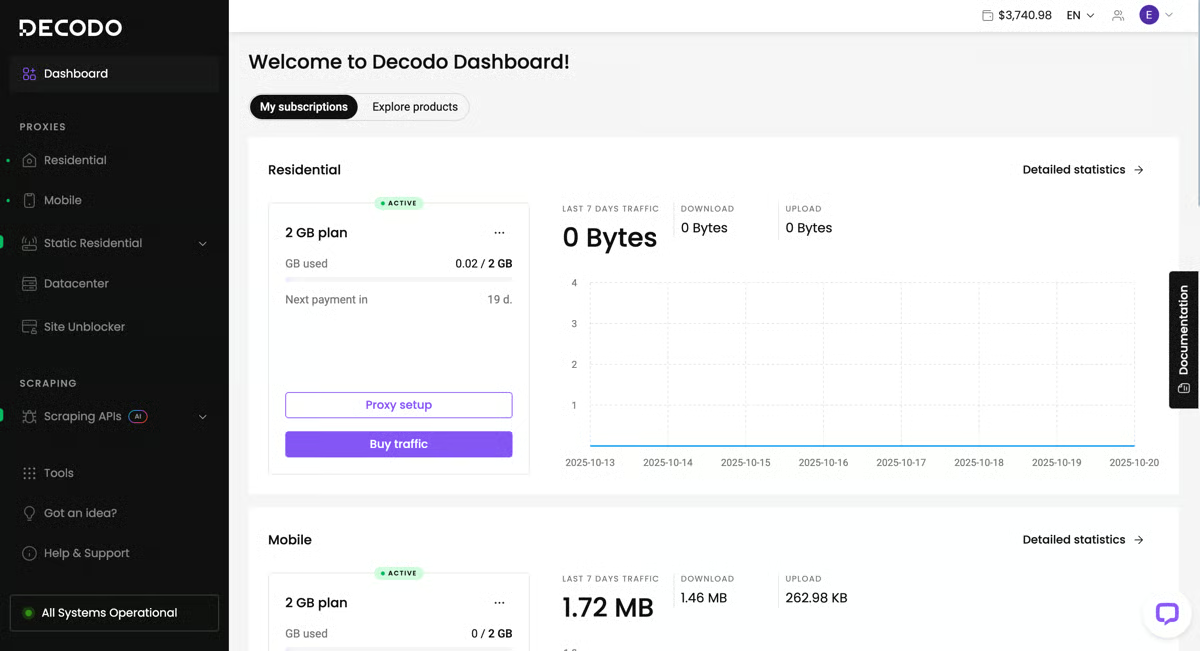
What stood out to me is the range of research methods available in one place. Users repeatedly called out features like eye tracking, facial coding, sentiment analysis, click tracking, heatmaps, journey paths, and behavior AI as some of the most useful parts of Decodo. They liked being able to run different kinds of studies, from concept and copy testing to live website testing and customer experience research, all within the same environment.
I also noticed that several reviews praised Decodo for helping teams move faster. With AI-powered features, automated insight extraction, and tools for interpreting interviews, it reduced manual effort and sped up analysis. That makes Decodo feel more like a broader research workspace.
As a marketer, I appreciate having multiple research workflows in a single platform. Decodo acts as a consolidated workspace that helps keep research organized and easier to manage, instead of relying on separate tools for behavioral tracking, qualitative feedback, and analysis. This makes it a reliable option.
Another theme that came through clearly is flexibility. Reviewers liked being able to combine moderated and unmoderated research, run both qualitative and quantitative studies, and collect feedback through formats like images, video, and voice recordings. Some even highlighted templates and real-time feedback as especially useful for keeping projects moving.
Some reviewers do mention that there is a lot to take in at first, especially because the platform includes so many features and advanced capabilities. But that point usually feels tied to the same thing people value about it: depth. Once teams get familiar with the platform, that range of functionality seems to become one of its biggest strengths.
A similar pattern shows up around customization. A few reviewers wanted more flexibility in dashboards, reports, or workflow setup. At the same time, the broader sentiment still points to a platform that gives teams a strong set of tools to work with, especially when they want rich insight rather than a lighter, more limited experience.
Overall, Decodo feels best suited for teams that want a single platform for rich consumer insight work, especially when behavioral signals, qualitative feedback, and AI-assisted analysis all matter. Given the review mix and the G2 data, I’d especially recommend it for small businesses that want robust research capabilities and strong product support.
What I like about Decodo (formerly Smartproxy):
- From the reviews, it’s clear that users really value how much research can be done in one platform, especially across both qualitative and quantitative studies.
- I also noticed a lot of appreciation for features like eye tracking, click tracking, heatmaps, sentiment analysis, and AI-assisted insight generation, which seem to help teams get deeper findings faster.
What G2 users like about Decodo (formerly Smartproxy):
Decodo has some of the best customer service I’ve experienced. Their AI assistant is very well-trained and has helped me resolve numerous questions. For anything the AI couldn’t answer, I was transferred to a human agent within seconds. It has never taken longer than 30 seconds for me to reach human support, and they always seem to be available.
– Decodo (formerly Smartproxy) review, Christopher H.
What I dislike about Decodo (formerly Smartproxy):
- The biggest drawback in the reviews is the learning curve. Many users said the platform can feel feature-dense at first, especially for new users.
- I also saw repeated feedback that the interface, onboarding, setup flow, and report customization could be more intuitive and easier to manage.
What G2 users dislike about Decodo (formerly Smartproxy):
“One drawback is that not all IPs perform equally well right from the start, so it takes some time to test them and figure out which ones work best. This initial filtering can be a bit time-consuming, especially if you need consistent performance immediately.”
– Decodo (formerly Smartproxy) review, Miguel Andres D.
7. Lucky Orange: Best for real-time visitor behavior tracking
According to G2 Data, Lucky Orange stands out as a website behavior analytics tool that helps teams see what visitors are actually doing in real time. It comes across as especially useful for making customer journeys more visible, so teams can identify friction, understand engagement, and act on it faster.
Heatmaps and session recordings are the clearest strengths in the feedback. Reviewers mention them repeatedly as some of the most useful parts of the platform, especially for understanding where users click, where they hesitate, and where they drop off. That visual layer seems to make analysis feel much more concrete, because teams can see behavior instead of relying only on assumptions.
Another feature that comes through strongly in reviews is real-time visitor tracking. I see it helpful for watching behavior as it happens, which gives teams a more immediate view of friction on the site. That seems especially valuable for teams that want to catch issues in the moment instead of waiting to piece them together from historical data later.
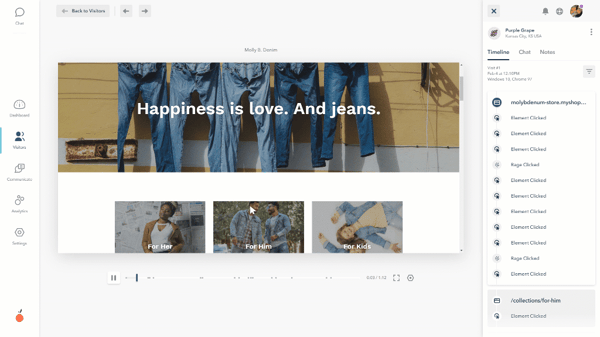
Live chat also gets positive attention. Reviewers seem to value having chat and behavior tracking in the same platform, since it gives them a direct way to connect with customers while also understanding what those customers are doing on the site. That overlap makes the platform feel more practical for day-to-day use, not just analysis after the fact.
Another strong theme is customer journey visibility. Reviewers often talk about using Lucky Orange to understand where visitors get stuck, which pages hold attention, and where they abandon the experience. That makes the platform feel useful not just for observing behavior, but also for clarifying the next optimization step.
Ease of setup is a consistent highlight. Several reviewers describe the tool as easy to install and quick to get up and running, which aligns with its strong G2 Ease of Setup score of 91%. That makes Lucky Orange feel especially approachable for smaller businesses that want fast insight without a heavy implementation process.
Usability also adds to that appeal. Many reviewers describe the platform as user-friendly, intuitive, or straightforward once installed, which lines up with its 92% score for ease of doing business. For smaller teams in particular, that combination of accessibility and practical insight seems to be a big part of the value.
At the same time, because users seem to get a lot of value from the platform early on, some reviews suggest that teams would welcome more room to scale across pricing tiers, especially around session limits and plan restrictions. That feedback still comes across in the context of active use, which says a lot about how engaged users are with the product.
I also came across reviews showing that some teams would like the experience across dashboards, heatmaps, and recordings to feel even smoother, with a few mentions of live tracking, loading, reporting, or aggregation behaving inconsistently at times. Even with that, the overall sentiment still points to a platform that users find genuinely useful for understanding visitor behavior and improving website experience.
Overall, I’d recommend Lucky Orange to teams that want fast, practical visibility into how visitors behave on their site. It feels especially well-suited for smaller businesses looking for an approachable way to understand journeys, spot friction, and make website improvements with more confidence.
What I like about Lucky Orange:
- From the reviews I read, the biggest standout is how often people mention heatmaps and session recordings for understanding where visitors click, where they get confused, and where they drop off.
- I also noticed a lot of positive feedback around how easy Lucky Orange is to set up and use, with some reviewers specifically calling out live visitor tracking and chat as especially useful.
What G2 users like about Lucky Orange:
“What I like most about Lucky Orange is how clearly it shows real customer behavior. The session recordings and heatmaps make it easy to see where shoppers get confused, where they click, and where they drop off. As a small Shopify business owner, the insights are practical, easy to understand, and actually actionable without needing advanced analytics knowledge.”
– Lucky Orange review, Stephanie M.
What I dislike about Lucky Orange:
- From what I saw in the reviews, pricing is one of the most given feedback, especially when users talk about free plan limitations, lower-tier restrictions, or hitting session limits.
- A few users feel the interface can be a little difficult when navigating between heatmaps, recordings, and dashboards, but the core features themselves still come across as useful and practical once users get familiar with where everything lives.
What G2 users dislike about Lucky Orange:
“There’s no horizontal scroll bar to enable me to scroll right and left to see all the info on a customer’s visit. I am obliged to zoom in/out continuously to be able to get the full picture. This is very inconvenient! Also, the Search function is unnecessarily complicated. I don’t understand why I can’t type a simple search term to get what I want immediately. Most of the time, I have to experiment with various terms, asterisks, etc., and spend a few minutes until I am able to get what I need (at last…).”
– Lucky Orange review, Verified User in Apparel & Fashion.
8. Hotjar: Best for visual UX behavior insights
According to G2 reviews, Hotjar is used as a behavior-first UX insight tool that helps teams make user journeys more visible and easier to act on. It comes across as a platform that turns website behavior into something teams can actually see, discuss, and improve with more confidence.
One of the clearest strengths in the reviews is how quickly Hotjar starts delivering value. Users often describe it as easy to do business with (97%) and immediately useful, especially for teams trying to understand why a page or flow is not performing as expected. That ease makes it feel approachable, even for teams that do not want a heavy setup.
Heatmaps are by far the strongest recurring theme. Reviewers repeatedly point to them as the fastest way to understand engagement at a glance, from where users click to what they ignore and how far they scroll. That visual clarity seems to make a real difference across teams. Instead of debating opinions about a layout, people can look at the same behavior and make decisions from a shared point of reference.
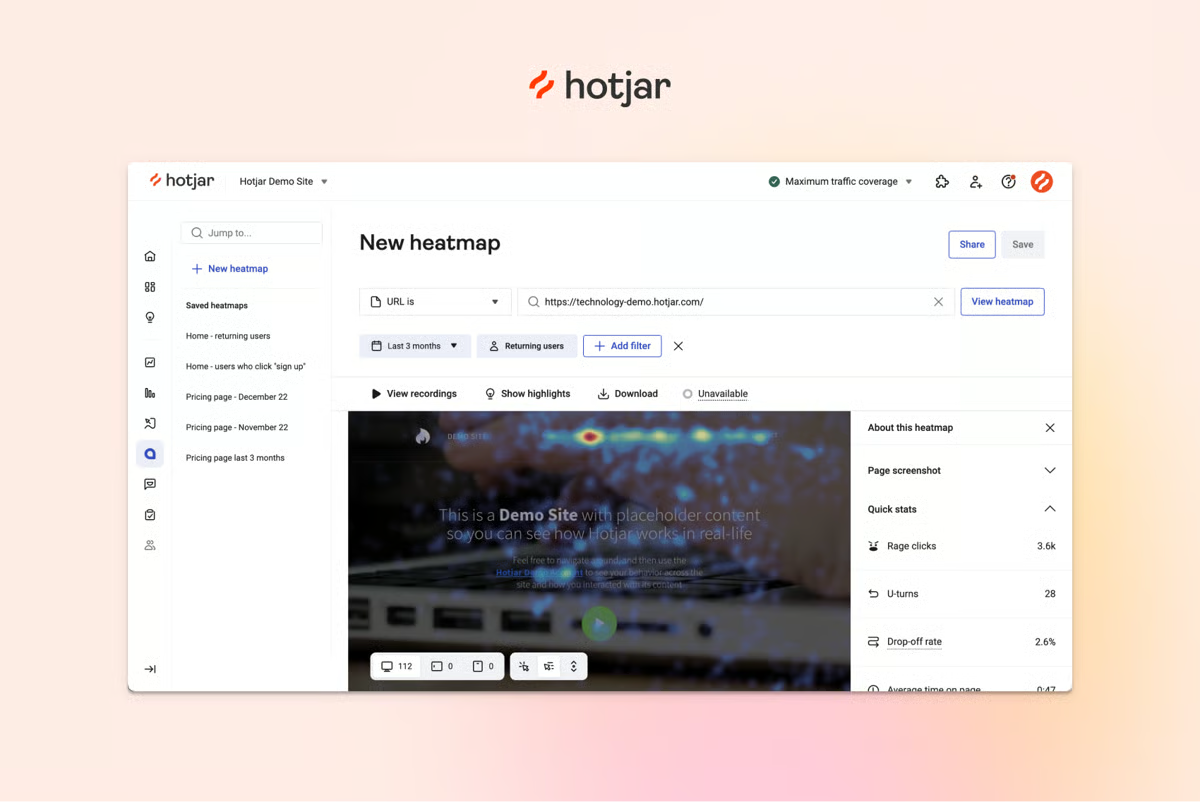
Session recordings are another major strength. Users often describe them as the feature that explains the why behind poor performance or unexpected behavior. Rather than just seeing that a user dropped off, teams can watch hesitation, confusion, repeated clicks, or missed steps unfold in context. That makes the insight feel much more actionable, especially when teams are trying to fix friction in key flows.
Reviewers also mention surveys and feedback collection. They describe them as a helpful complement to heatmaps and recordings, especially when teams want direct customer input alongside observed behavior. That combination seems to make prioritization easier, because teams are not just seeing where friction exists, but also hearing how users experience it.
Hotjar plays an important role in improving conversion paths and reducing drop-offs. Reviewers often describe a workflow that feels very practical: observe behavior, identify friction, refine the page or journey, and then measure whether the experience improves. That gives Hotjar a strong day-to-day value for teams working on optimization, not just observation.
The best part of Hotjar is that it creates clear, visual proof that teams can align around. These don’t just generate data; they make behavior visible in a way that even non-technical teammates can interpret, which helps teams move faster from debate to decision when prioritizing UX fixes and funnel improvements.
At the same time, Hotjar’s session limits can feel constraining for higher-traffic websites, especially when teams want broader coverage across multiple pages, flows, or user segments. But even with those limits, reviewers still suggest the captured sessions deliver enough behavioral detail to spot the most meaningful friction points and prioritize fixes that improve the overall experience.
I also came across feedback showing that recordings can take a little time to load for some users. That said, the broader sentiment still points to recordings as one of Hotjar’s most useful strengths, especially for spotting friction and understanding drop-offs more clearly.
Overall, I’d recommend Hotjar to teams that want practical visibility into user experience. It feels especially well-suited for product, UX, marketing, and growth teams working to improve pages, journeys, and conversion paths. For teams that want to turn user behavior into clearer decisions and faster improvements, Hotjar comes across as a strong fit.
What I like about Hotjar:
- Many users appreciate how the tool centralizes multiple research methods like surveys, feedback, and behavioral tracking into one platform, which streamlines the analysis workflow significantly.
- Hotjar has the ability to visualize user behavior through heatmaps and recordings makes UX improvements feel practical and evidence-based rather than experimental.
What G2 users like about Hotjar:
“Hotjar makes it easy to understand how users actually interact with site through clear heatmaps and session recordings. Everything is simple to setup and the insights are genuinely userful for improving user experiene quickly.”
– Hotjar review, Kanti G.
What I dislike about Hotjar:
- Based on G2 feedback, Hotjar’s session limits can feel constraining for higher-traffic websites, but captured sessions deliver enough behavioral detail to spot the most meaningful friction points.
- Based on the G2 reviews, session recordings can take time to load for some users, but the same reviewers still rely on recordings because they help pinpoint UX friction and drop-offs quickly.
What G2 users dislike about Hotjar:
“The tool has a learning curve but is definitely one that can be learned quickly. Advanced features require more advanced skills and can deter users from adopting initially.”
– Hotjar review, Eric M.
Frequently asked questions about the best e-commerce analytics software
Have more questions? Find more answers below.
Q1. Which platform is best for tracking conversion rate optimization?
Glassbox is the best platform for tracking conversion rate optimization because of its conversion funnels, session replay, and real-time capture of digital interactions.
Hotjar is also widely recognized as the best platform for tracking conversion rate optimization. According to user reviews, its combination of heatmaps, session recordings, and conversion funnel analysis allows businesses to visualize exactly where users drop off. By identifying confusing sections and optimizing the flow based on real user data rather than assumptions, companies can significantly improve their conversion rates.
Q2. Which is the best e-commerce analytics platform for online retailers?
Stackline, Glassbox, Luigi Box, and Fullstory are top-tier choices for retailers needing specialized insights into marketplace competition, search optimization, and user friction. While Stackline provides essential market share data, Luigi Box excels at search-driven conversions, and Glassbox and Fullstory offer deep session-level visibility to fix technical site issues. Other comprehensive options like Edrone and Hotjar are also widely used for marketing automation and general heatmapping to drive retail growth.
Q3. Which e-commerce analytics software offers predictive insights?
Edrone offers predictive insights through its specialized AI-driven recommendation engine and automated RFM modeling. Glassbox offers e-commerce teams AI-driven Struggle Scores (a digital analytic metric indicating the likelihood a user faced issues on a website, with higher scores reflecting greater difficulty) and behavioral pattern recognition to provide predictive insights into customer frustration and potential churn.
Q4. Which e-commerce analytics tool offers real-time sales tracking?
Stackline is the go-to for monitoring real-time advertising performance and sales trends across competitive marketplace landscapes. For on-site behavior, Glassbox captures every digital interaction in real time, allowing teams to visualize live user activity, while Fullstory monitors live sessions to provide immediate alerts on conversion bottlenecks. Together, these tools enable e-commerce managers to react to live data and optimize the customer journey as it happens.
Q5. Which e-commerce analytics platform offers the best ROI?
Stackline offers the best ROI for e-commerce teams that need market share and competitive visibility. It combines market intelligence for category trends and benchmarking with retail media support for optimizing campaigns. It can also support cross-retailer attribution.
Q6. What is the best e-commerce software for performance analytics?
Stackline and Hotjar are the best e-commerce software for performance analytics. Stackline’s Atlas platform is the premier choice for deep marketplace intelligence, offering granular market share data and competitive benchmarking to drive sales growth on platforms like Amazon and Walmart. Conversely, Hotjar focuses on the performance of the user experience, using behavioral data to identify the specific design and functional flaws that impact a site’s overall conversion performance.
Q7. What are the top tools for tracking online store performance?
Fullstory is one of the top tools for tracking online store performance because it combines session replay with customer journey visibility, helping ecommerce teams quickly spot checkout friction, drop-offs, and UX issues by seeing exactly what shoppers did and where they got stuck.
Q8. What are the top-rated e-commerce analytics platforms for Shopify stores?
For Shopify brands, some of the top-rated e-commerce analytics platforms for Shopify stores in this list include Hotjar, Fullstory, Luigi’s Box, and Edrone, depending on what you need most. Hotjar and Fullstory are strong for behavioral analytics and conversion optimization; Luigi’s Box is a good fit for improving on-site search and product discovery; and Edrone stands out for lifecycle marketing and customer retention.
Better decisions with the right tools
Over the years, I have observed that the e-commerce industry has become significantly more challenging to sustain. To keep up with the growing competition and fickle customer loyalty, it is essential to go beyond archaic methods to improve customer experience and retention. For this, investing in the best e-commerce analytics software is non-negotiable. It helps you understand how buyers behave across the journey, which channels are pulling their weight, and what your SKU performance really looks like.
And that’s the real shift: analytics is about reducing uncertainty. The best tools help teams answer the questions that matter fastest — why did conversion dip, where are customers dropping off, and what should we do next? When those answers are clear, marketing can optimize spend with confidence, merchandising can make smarter category calls, and leadership can align decisions across teams without getting stuck in spreadsheet chaos.
I evaluated tools based on diverse criteria so that you can pick what suits your e-commerce business. Now, it just requires you to compare these tools and match them with your team’s needs.
Once you’ve narrowed down analytics options, you can take it further by exploring customer data platforms on G2, especially if your biggest challenge is unifying customer data across channels.
[ad_2]
Source link


