
[ad_1]

Last week we talked about assembling a small, versatile collection of gloves – in terms of colours, materials and details like linings. That piece can be found here, and should be read very much in combination with this one.
Today, we’re going to talk about the rest of it – primarily how much it’s worth spending on gloves, and the best places to get them.
It’ll be presented in a Q&A format, because the last one was fun. It’s also just an easy, digestible way to find one particular piece of information.

What makes a quality glove?
Well, it’s primarily about materials rather than the way the gloves are put together. Think of it more like a leather bag than a suit, for example.
Bags can be made better, but the quality of the material makes more of a difference to how it looks, functions and ages. With a suit, by contrast, things like the canvas and handwork are more significant, certainly when you go into high-end tailoring and bespoke.
OK so what materials are best?
We talked about the different options – leather, suede, wool – in the first article. That’s worth a review if you want more background.
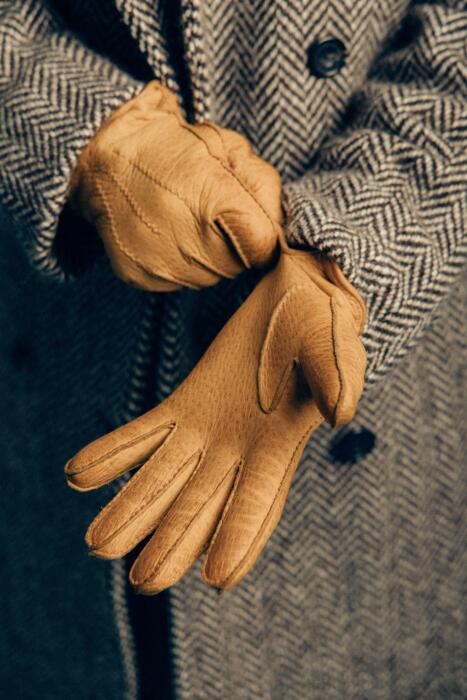
Leather will age best and is worth spending the money on if you can afford it. The king of leathers is peccary (below), as it’s both very soft and very strong.
After that, generally more expensive leathers and suedes will be better quality, and as long as you’re not comparing very different companies (say, a big brand like Hermes to a small maker like Merola) you’ll get more for your money.
The exception is when you’re choosing between finer leathers and thicker, coarser ones. Tough gloves don’t have to be expensive because those thick materials are not expensive themselves; conversely, if you want a fine, smart leather glove you’ll probably have to spend more to get good quality.
This is also why when you look at the most expensive suedes or leathers, they will often be fine and a little delicate. That’s part of what you’re getting for your money, and if you don’t want that you don’t have to pay for it.
You said better leathers will age better. What do you mean by that?
They mould to your hands but don’t lose shape; the material is less likely to crack or rip; and they’ll get a nice patina if they’re anything lighter than black.
The patina is basically just dirt and oil, but it does look nice in the same way as on a leather bag or jacket. And it’s personal – it shows how long you’ve had your gloves and how you use them. There’s something particularly nice about the way peccary darkens, highlighting the texture of the skin created by the hair follicles.
You mentioned cracking and ripping. Do I need to do anything to look after these gloves well?
With leather, not that much. If they get dirty the best thing to do is wipe them down with a soft cloth and a little water – perhaps some saddle soap if you need to, but you usually won’t.
If they do get too dirty or smelly, wash them gently in warm water with saddle soap and leave them to dry flat, away from heat sources like radiators. When they’re dry, use a little leather balm to moisturise them again and put the oils back.
That balm or cream (Saphir does good ones) can also stop ripping/cracking, but we’re talking years or them sitting around not being used. Suedes are harder to clean and will need dry cleaning if they really get dirty.
So aside from the materials, what else contributes to the quality?
Hand sewing is nice, and a particularly nice detail on the ‘points’ of the glove (the three lines on the back, intended to reinforce the glove when you pull it on). But it doesn’t make much functional difference.
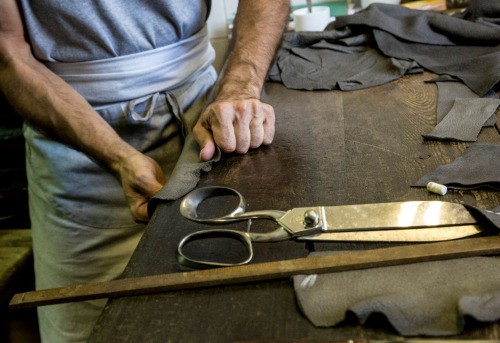
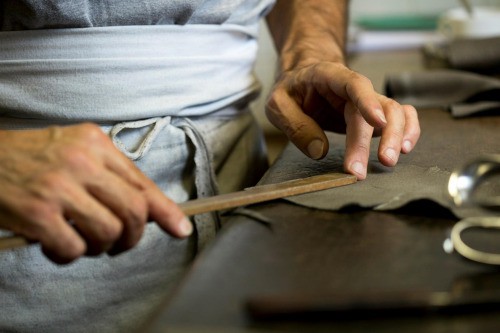
More important is the precision and neatness of sewing. Cheaper gloves tend to have thicker seams, more noticeable when the seams are on the outside. Although even here, this is mostly aesthetic rather than functional, and worth noting largely to indicate the care taken generally – such as the precision cutting, shown above.
Anything else to watch out for?
Good gloves don’t have a seam on the outside of the forefinger – the leather is one piece, folded for back and front. But most decent ones have that.
Some higher-end gloves have an extra little triangle, a gusset, in between the fingers as well as the panel that’s already there. These are known as quirks, and do add a little to the manoeuvrability.
OK now give me some brand options – from cheap to expensive.
Well, in the same way as accessories like belts and scarves, the first place to look is often brands or multibrand stores, rather than specialist makers. In London, for example, someone like Trunk has a solid range under its own name, all cashmere lined (from £145).
And brands often bring a taste level that some of the manufacturers lack, such as the beautiful range of colours at Anderson & Sheppard of suede and shearling gloves (£170 and £325 respectively) or the small range at Rubato (from £240).
Most traditional outfitters in London will have some kind of glove range, and that is something we’re spoiled for over here – Budd, for example, or Cordings.
Why go to a maker then?
If you know the style you’re looking for, a maker will often be slightly better value and give access to different levels of craftsmanship.
In the UK, Dent’s still has a heritage collection that is made in Warminster (starting around £150) and they’re worth supporting – the other big UK maker, Chester Jefferies, closed in 2022 so Dent’s are the only one left.
In Europe, Hestra are about the same quality level and are stocked in many menswear stores as well as having their own e-commerce. They also have a wide range, including ski gloves and more technical styles.
And in Italy, Merola in Rome is a good option, with actually some quite fine makes at the top end. Omega in Naples are also good. Italy is one of the few countries in the world where you will commonly find local makers and small local shops still, particularly in areas like Florence that works a lot with leather, or Naples where the labour is cheaper.
Interestingly, northern and southern European glovemakers tend to have a different default shape, with southern Europeans cutting a smaller palm size relative to the length of the fingers. So if you have long fingers, an Italian like Merola might be better for you, whereas for shorter fingers a northern European like Hestra or Thomas Riehmer might be better.
Who’s at the top end?
Thomas Riemer is certainly very good and we’d recommend them (also love the fact the Germans call gloves ‘hand shoes’). Mazzoleni are one of the best Italian makers.
Unfortunately, one of our favourite makers, Lavabre Cadet, is no longer in business, though Camille Fournet still has some for sale. Like Chester Jefferies, with many of these makers the issue is partly the demand, but even more so the lack of skilled workers.
Hello, I’m in America? Like almost half of your readers?
Sorry, as in many areas the US has a lack of quality makers of gloves compared to Europe. You can buy some of these brands, but they will be a little more expensive – the Armoury stocks Hestra for example and No Man Walks Alone has some Merola. One US maker recommended by a reader is Sullivan Gloves, but they tend towards more workwear styles.
J Press has some decent leather ones ($150) and Paul Stuart has a good range (from £295). Bergdorf Goodman has some Hestra and a handful under its own name, but the US has suffered more than most from the collapse of the real departments in department stories, which used to be the best standard option for accessories like gloves, belts and scarves.
If any US readers – or indeed any readers around the world – have any local recommendations though, please do let us know in the comments.
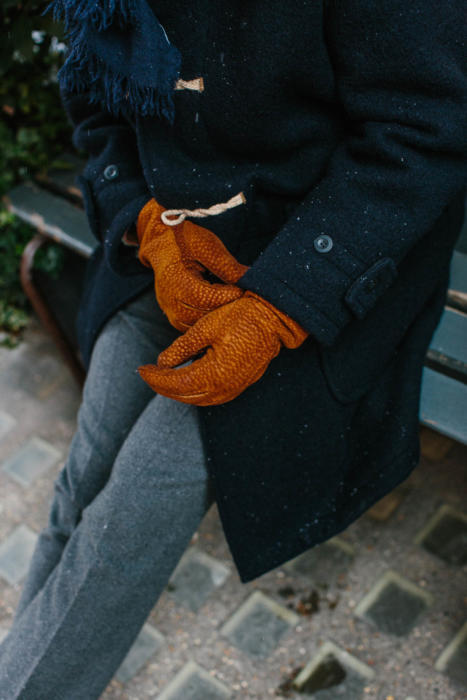
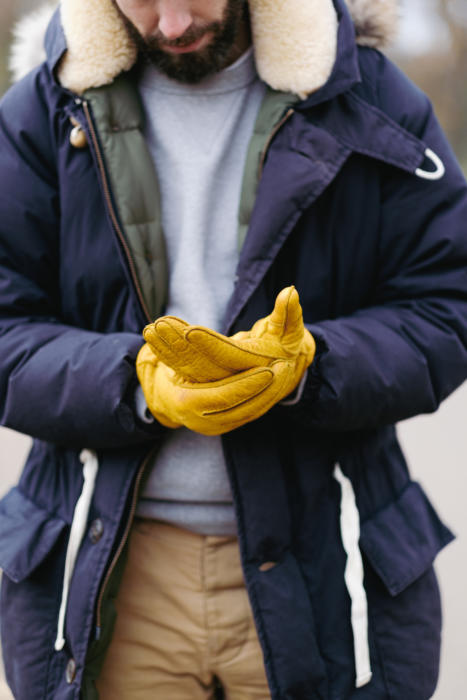
Gloves pictured, top to bottom:
- Tan suede from Merola, cashmere lined
- Black tumbled-leather gloves from Trunk, unlined
- Tan Merola again
- Yellow peccary gloves from Mazzoleni, cashmere lined (colour not accurate!)
- Tan capybara gloves from Thomas Riemer, cashmere lined
- Yellow Mazzoleni again (see?)
- Brown suede from Trunk

[ad_2]
Source link


