
[ad_1]

Watch Episode 51 of The Pawsitive Post in Conversation on Youtube or below, listen wherever you get your podcasts (Apple, Spotify) or below, or scroll down for the show notes.
An interview with Patricia McConnell, PhD, about her new book Away to Me
This page contains affiliate links which means I may earn a commission on qualifying purchases at no cost to you.
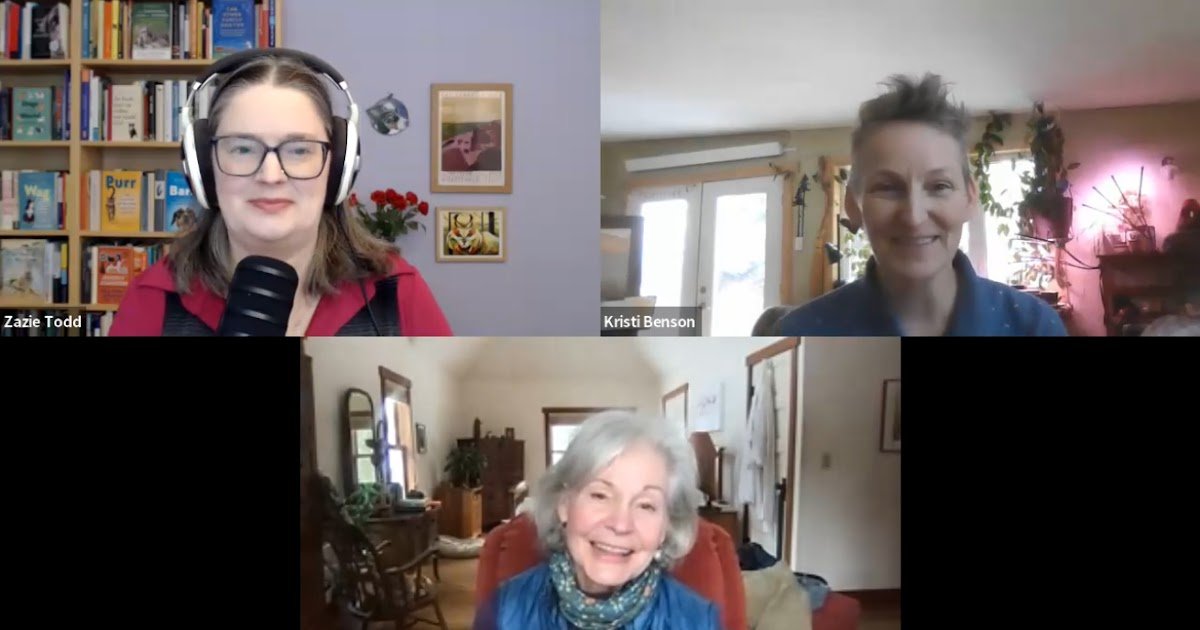
Away to Me is Patricia McConnell PhD’s first mystery novel, and it’s gorgeous. I fell in love with the main character, Maddie, and all of the dogs in the book, and I know you will too. Kristi and I chatted with Patricia to learn more about the book and why she decided to write fiction set in the dog world.
We talk about:
- What made Patricia decide to write a mystery novel
- The main character, Maddie McGowan
- Whether it was fun to be writing dogs as characters
- How she wrote about the dogs as real characters & without turning the interactions into negative/aversive ones.
- The many different dog training cases that appear as secondary characters in the book
- Patricia has previously written many wonderful non-fiction books, including her memoir, The Education of Will. What’s different about writing fiction?
- The power and importance of friendships and how dogs are one of the ways that many people can find a community?
- What motivates her to write, and will we see more of Maddie after this?

Away to Me will be published on Feb 24th and is available for pre-order wherever books are sold, including Bookshop, which supports independent bookstores in the US.
Also mentioned:
The book Patricia recommend is The Salt Stones by Helen Whybrow.

Patricia McConnell PhD is an internationally-renowned applied animal behaviourist who has dedicated her life to improving the relationship between people and animals. Amongst her many treasured dog training books, The Other End of the Leash draws our attention to the human side of dog training. Her memoir, The Education of Will, is a beautifully-written and uplifting account of how to reclaim life after trauma, for both humans and dogs. Her first mystery novel, Away to Me, publishes on 24 Feb 2026.
Learn more about Patricia and her book, Away to Me, on her website.
 |
| Patricia McConnell first told us about the book at Bark! Fest |
Highlights of the conversation with Patricia McConnell, PhD
Z: We first heard about Away to Me when we interviewed Dr. McConnell at Bark! Fest. And I don’t know about you, Kristi, but I’ve been on tenterhooks since.
K: Yeah, same. Because I love dogs, obviously, and I love people who write about dogs. But I also adore mystery novels. So it was just like, oh, it’s so nice when everything comes together.
And it’s also really nice, I think, as someone who loves dogs and loves reading, to know going in that there’s not going to be, you know, like the dog’s not going to die or there’s not going to be something where someone’s like, well, I’m his master or something like that.
That just makes you kind of, it takes you out of the story, you know. So, yeah, I was very excited.
P: I should just tell you that I had a thing with my editor. She was distraught that I making a point to let people know that no dog dies in the making of this novel. And I understand it. She was like, you’re giving away the plot.
And I said like, no, no, no, I’m allowing people to read it because if people think, you know, going to be dog dying it, they’re not going to read it.
Which by the way, really interesting issue. You know, you can kill off the good guys, you can kill off the bad guys, you can, you know, you can kill off Aunt Margaret, you can kill off your lover, but you cannot kill off a dog.
And isn’t it interesting? I mean, I just think that’s fascinating. So that’s a whole other essay that I’m planning on writing but it is something interesting for us to think about, isn’t it?
Z: Well, I agree. I think it was good going in, knowing that the dog was not going to die and that we were in safe hands there.
So what made you decide to write a mystery novel?
P: Yeah, you know, I’m an old lady now, and I was getting older and retiring from doing this and doing that.
But I love to write. You know, I love writing my nonfiction books. And some of my favorite parts of writing were the scenes, you know, so I would tell a story and use that story to describe some aspect of our relationship or canine behavior. I love that part.
And Kristi, like you and I think maybe Zazie, I love mysteries. I love reading them. I love fiction. I love good writing. I just, I adore it.
So I thought, you know, I’m just gonna play at writing fiction. And I had a scene in my head that just literally sort of cropped up like a piece of toast of a man getting shot at a sheepdog trial, which is chapter one.
I’m not giving anything away. It’s in the flap cover, not giving away the plot.
And I just had this scene in my head and I just started, literally for the hell of it, I just started like, I’m just gonna do this for fun.
And I started pairing up with a brilliant writer, Cat Warren. I know you know who she is. Brilliant book. What the Dog Knows. New York Times bestseller. She taught writing. Turns out we sort of ran into each other, and she also decided to start writing fiction for the first time.
So we wrote stuff, a chapter here and there and would send it to each other. We actually talked to each other once a month for the last at least four years, as we continue to do anyway. So it just started as sort of fun.
And then I got really into how to be a good fiction writer because it’s a craft and it’s really easy to write bad fiction and really hard to write good fiction. And I just got really into it, you know, how do you do this?
And that was my primary intention, writing this book, is to write a good story. And that was really,
Z: It was very well written.
P: That was my hope.
K: I think you achieved it.
P: Thanks.
K: What can you tell us about your main character, Maddie McGowan?
P: Oh, Maddie McGowan. You know, the first thing I want to say is I knew the logistics. I knew Maddie McGowan would be in her mid-40s and she lived on a small farm. And because I was following the, write what you know, you know, because so much of what I was doing, I didn’t know.
I don’t know how to write fiction. It’s really hard. I don’t know anything, I am really happy to say, about murder. I don’t know a lot about law enforcement and how they handle murder. So I thought, you know, I’ll just, I’ll write what I know.
So Maddie lives on a small farm. She competes in sheepdog trials as a hobby. She’s an animal behavior. She has a border collie and a sheep guarding dog named Bo Peep.
Maddie stay keeps things close to her vest. The farm is basically a safe house for her. She doesn’t talk very much about what happened in New Mexico, but she clearly needs the farm as a kind of a safe house.
And she’s short, a little pudgy, feels defensive about being an animal behaviorist and a short woman, puts glasses on to be taken seriously.
But she is absolutely devoted to dogs and ends up risking her life in order to save one. And you know, if I may, the one cool thing I just wanted to tell you about writing fiction and Maddie is, as I said, I had the description on paper, right. Of who Maddie was.
But as I worked through this novel, as I wrote about it more and more, and as I was more like, okay, what would Maddie do here? Because the thing about fiction is anything that happened at any given moment, which is wonderful and a nightmare because you have to decide.
So I was always like, well, what would Maddie do? And so as I was writing this novel, Maddie, it was like, I don’t know if you’ve ever been in a dark room and watched a photograph develop. Maddie became like a developing photograph. She just got richer and clearer and more and more colorful.
And I just, I really like her. I’m very fond of her now. I really feel like I really know her rather than, okay, she’s this person and she’s that person, you know, And I hope, I hope readers fall in love with her too, because she’s really cool. She’s a really cool woman.
Z: I think they will fall in love with her because I certainly did.
P: Oh, cool.
Z: She’s wonderful. So the book is set in the dog world and your love of dogs and of people, actually, I think it really comes through in the writing. Was it fun to be writing dogs as characters?
P: Yes, yes, it was in a way that was sort of the easy part in that, you know, because of what we do and so many of your listeners do, you know, that’s the part I know. You know, write what you know.
And so it was so fun to create these characters. You know, her border collie is Jack and her sheep guarding dog is Bo Peep. And Clementine is her little rescue terrier who’s very, very old and mostly sleeps a lot.
And Cisco is a dog she ends up fostering, a German shepherd.
So I feel about them like I do about Maddie is. I’m just, I’m so fond of them. And I could never kill them off. I’m just ruining all the plots for the rest of the time!
Dogs die of old age, right? You know, eventually. So I can’t say that would never happen. But yeah, I really like him. I really like him.
Jack is smart and obnoxious. I mean, he’s just a classic border collie. He’s smart and just pushy and always playful and worried about things and anyway. I don’t know, what did you think of the dogs?
What do you guys think?
K: Well, I think sort of leads us into the next thing we wanted to talk about is because I think one of the things that I liked about this book and I went into it feeling comfortable that this was gonna happen, is that you’re able to write them as characters, as realized organisms that sometimes annoy the humans, but without it ever becoming like an interaction that makes me worried. Do you know what I’m saying?
So it’s like the main character could, you know, could feel exasperated with her dog without me going, oh God, is she going to mistreat the dogs? And as a positive reinforcement trainer, you’re always kind of putting out this messaging, right?
Like we’re not going to harm dogs. Dogs are okay. It’s okay for dogs to be dogs, you know, we’re not, we can’t expect them to be something that they’re not, et cetera, et cetera. So just being able to be like, it is, it is okay to be exasperated by your dog’s behavior when they do something. Xyz.
So I loved that component. It was a very real relationship, I thought.
P: Kristi, I love that you said that, because I just wrote a blog post on the other end of the leash about giving ourselves grace.
Because, because we are human, you know, dogs are dogs and we are humans, you know, And I don’t know many people who have never not like, gotten frustrated at some point. Right.
How you handle it, right? And what you do about it. But that doesn’t mean, you know, internally, you know, you’re not like, oh, for the love of God, you know, stop barking. Right?
K: Or when, when my 150 pound livestock guardian dog gets up on my bed and I’m like, I think you do actually smell of cow dung. So that’s a thing.
P: Well, and I think especially positive reinforcement trainers need to give, we need to give ourselves a lot of grace. We really, really do, because we can be very hard on ourselves.
Some, some positive reinforcement trainers can be very, very hard on other people with a certain amount of positive punishments. Right.
So it was really important to me to be realistic. You know, I didn’t want to set Maddie up as this sort of paragon of perfection because that just wouldn’t be believable. No, it’s human, you know.
K: So I think one of the other things that came sort of forth a lot in the book was you have these sort of like secondary characters, but they’re actually dog cases that you bring in, as the cases themselves are secondary characters.
And there’s, there’s quite a few of them that we sort of like, you know, learn about as the story goes on. And I was wondering, did you pull them in on purpose to move the plot along or is it just something of interest or, you know, where did these come from?
Yeah, where did they come from?
P: They came, I think they came in part quite a bit to help you get to know Maddie, you know, and to get to put you in her world, you know?
It was really important to me to create a book in which you were immersed in the setting, in terms of the natural setting, you know, the trees and the woods and the birdsong.
And people have said nice things about that aspect of my writing which just makes my heart sing, because it’s really important to me as a reader and a writer.
But who is Maddie? You know, what is Maddie’s life? I mean, I love. And this is very much a sort of a side effect. I love letting people have a window onto what is life like as an animal behaviorist, you know.
It helped move the plot along. It taught you some about Maddie, but certainly not intentionally sort of as a primary intention. But I love. I mean, one of the things I think a lot of people love, at least I’ve read this about fiction, is that you often learn about something you know nothing about because it’s just woven into the plot, right?
I mean, we’ve all learned all kinds of things. You know, Agatha Christie. I mean, we learned about, you know, Egyptian archeology. I mean, right.
So I love sort of this side channel. The side effect of people learning what it’s like to be an animal behavior is because I think so much based on the comments I get, and I suspect you have the same feelings, is I’ve always described as if people imagine us running through fields of daisies with golden retriever puppies, right?
You know, we tell people at the airport what we do, which we don’t do anymore because we’re not stupid, right?
But so many people say, oh, I’ve always wanted to do what you do. And, and I’m sitting there thinking, I just saw a couple sobbing their eyes out or fighting or getting divorced because their dog bit the face of the neighbor kid. You know, it’s just not always puppies and daisies.
So I love that people would get an idea of what it’s like to be an animal behaviorist. And, and also, again, who Maddie is.
And also, you know, it’s a murder mystery, but you can’t have a murder every other page, right?
And the other thing about, about this, I love that you call them secondary characters because every one of my clients in the book. My clients. Huh? Every one of them is based on a client. Although I always change it.
I always kept people’s privacy. But, they were all based on maybe a combination of clients I had. I mean, my favorite are Larry and Darryl and the other brother Darryl. They’re based on these guys I saw who had a dog a lot like Harpo, and they became some of my favorite people.
And they will, by the way, they will be a continuing character, you know.
K: Oh, wait. Oh, are you releasing a detail right now to us?
P: They will be continuing in the next book, which I. Yes.
K: And I know this wasn’t amongst our released question list, but Zazie and I were talking about this earlier. And you touched on it, so permission given. One of the things that I liked, and I wonder if this is because we’re both farmers, is how you often set a scene or you sort of evoke a scene by using bird sound. And I think it was really effective to me as I think it’s. It almost like it. It sets the scene very quickly and it gives you, you know, the whole idea.
You get a whole body sort of, oh, I know what that feels like. Because that bird sound is attached to so many other, you know, like, night and. And, you know, the air is. Is. Is heavy with humidity.
Was that on purpose? Or is that just something that you sort of did. Did you do that on purpose?
P: It’s very much on purpose. And I mean, granted, I love. I love birds. I do. I absolutely adore them. I have, like seven bird feeders out right now.
But one of the things I learned about writing fiction that really puts people there, you know? Cause that’s what I love about fiction is they’re escapes. I mean, they’re just, you know, we all need to get immersed in a story.
Stories is, in my belief, part of a big part of what makes us human. It’s not just language, language, it’s stories. We are a species of stories. And so to tell a good story, you need to put the listener, the reader in that place, right?
And one of the things I learned is just is you need to include all of the senses. Because so much of what we do, primates that we are people, describe what things look like. And you start reading now, you’ll read all kinds of descriptions of, there was a red shed, and there was a tin roof, and there was an elm tree, and. And.
But you need sound and you need scent, and, you know, and whenever applicable, you need touch. So it was very intentional.
And, you know, some of the wording. I mean, one of the things I love about writing good fiction is that you word craft every word. I mean, every page of that novel was way more than my nonfiction was edited literally hundreds of times.
So Away to Me, the title is indeed. It’s a signal to send a sheepdog counterclockwise. But Away to me is also a metaphor for Maddie because she’s like, stay away. Oh, come to me, please. Stay away. Oh, come to me, please.
And Lonely Owl Farm is another metaphor for Maddie because owls aren’t lonely. Owls are solitary. Maddie is solitary, but she’s also lonely. So, you know, so sort of using birds sometimes as metaphors was just really, really fun. It was fun.
Z: Awesome. And I wanted to ask you another question about writing because you’re talking already about what it’s like writing fiction. And of course, you’ve written so many highly acclaimed books already that are nonfiction, including your memoir, the Education of Will.
So I wanted to ask really how many of those skills translated across to writing fiction? What was different?
P: Yeah, it is much harder than it looks to write good fiction. And you know, as I said earlier, it’s great that you have this freedom. You know, at any point in time, anything could happen. Anything could happen. I could make it all up. I could make it all up.
And you can’t do that in nonfiction. Right. The problem is anything could happen. And that means every single sentence, you are making choices. And you have to make big choices at the beginning about character development.
And you have to learn to write dialogue, which is really hard to do well.
And you know, you have to create the overarching, you know, sort of hero’s journey plot, but then you have to figure out exactly everything that happens.
So I. I mean, many people who write fiction, even though I’m a first time fiction writer, I know this is really common is you write a draft and then you throw those chapters out. And then you add that chapter, and then you throw that chapter out, and then you add two more chapters, then you get rid of that character, then you change that character then.
And so I didn’t quite do it that way. What I did is the slowest way possible to write a mystery, which you’re never supposed to do, is I literally just started writing.
I started working with this wonderful woman, Susannah Daniels, at Madison Writers Studio.
And I would just write some stuff and then we’d go over it. And she was like, don’t, you know, don’t worry about the whole plot. Just start writing. Well, you really do need to know to be efficient, the whole plot of the movie.
Cause you need the movie, the whole plot of the book. If it’s a murder mystery, a mystery. Cause you need to be seen. You know, you need to be throwing breadcrumbs out there, you need to go where you’re going.
So I was way slower at writing this book than hopefully I will be next time, because I didn’t have, you know, you’re supposed to start with a really good detailed outline of everything that’s gonna happen. I didn’t know what the heck was gonna happen on chapter four.
I had no idea. So I was a very inefficient novel writer, but I learned a lot. You know, I learned a ton by doing it.
K: One of the things that I appreciate about the book was just how much of a focus there was on friendships.
I think it’s like a wonderful thread running through the book and also as like a little side tangent. I think one of the reasons why I’m delighted to hear you’re writing another book is because there’s something that’s almost like a quasi friendship about long running characters and serialized novels.
You know, like you. You feel like you can go back and get that friendship hit, but it’s without the effort of a real friendship.
I know a lot of people, a lot of adults struggle to find friendship, you know, especially as adults once we’re out of school. I think there’s a lot of sort of barriers to it, and dogs are one way that I know a lot of people do find friends.
So was this on purpose? Did you, did you sit down and think, like, I really want to write a book that showcases friendship?
P: I didn’t. And I love that you asked that question. No, I never had that intention.
But it’s so important to me that somehow it just came out anyway. I mean, you know, what do we. I mean, we are so social, you know, we are such a social species.
And I’m an extroverted introvert. I can be thrilled, you know, giving a talk somewhere and then I go, you know, and then I go back and like pull my head under a pillow in the hotel room. Right. Cause I’m so tired.
But just what is more important than our connections, you know, than our connections to people?
And Maddie was a bit cut off. Because she had such a difficult experience that she thought she’d gotten over, but obviously turns out she hadn’t. But she had two incredibly good human friends. One, George, dies in the first chapter, and Dorothy is her border collie, you know, girlfriend.
But again, as you’re saying, Kristi, it’s like many of her best friends were her dogs, right? So, you know, Jack is like absolutely one of her best friends, and Cisco becomes one of those. And I am,
I again, I Mean, I’m so not objective, it’s ridiculous. I am so fond of these dogs, it’s crazy.
And I’m really excited about expanding those friendships. And I’ll just say now, if I may, that theoretically, this is going to be a trilogy. I will remind listeners that I’m 77 and I have three and a half chapters written for Come By.
So the theory is there’s a way to me, and then there’s Come By, which is send your dog clockwise. And then there’s That’ll Do, which of course means come back to me, dog. Your work is done.
So can I pull that off at my age? I don’t know. I don’t know. But I’m.
K: Yes. Yes, you can.
Z: I think so. You have to!
P: It was really fun doing this publicity for the book. And the best part of it is, like, talking to people like you. I mean, it’s really, really fun, especially people who know the dog world and who know writing.
I mean, Zazie, your books are just astoundingly great. You know how much I love [them].
Z: Thank you.
P: So that makes it extra fun. So it’s incredibly joyous to talk to you and to do other podcasts, but I am hungry to get back to working on Come By, because they’re going to be continuations of old relationships, but there’s going to be some new relationships.
And I will just tell you, Maddie. You know, Maddie stays pretty much in her lane, but there’s some new characters who are going to come in to Come By, and I’ll just say there’s some interesting men.
I’ll just leave it as that.
K: Interesting.
Z: I am thrilled to hear that this is the first in a trilogy. That’s amazing news.
And I feel like, to some extent, you’re talking about what motivates you already, because obviously, your love of the characters and of the story, the characters, Maddie and the dogs is obviously part of what motivates you, but someone in your position could have just chosen to retire. You didn’t have to choose to start writing fiction.
So what made you, you know, what motivates you to keep, to write and to keep writing fiction?
P: Yeah. Oh, boy. You know, I mean, I’m not even completely sure I can tell you that superficially,
I knew I needed to retire from seeing clients. I just, I literally felt too slow. I just felt too slow and, and too old. And it was getting really hard on me.
I had some medical adventures, so it was getting really hard to me to travel around and sort of do big seminars. So I needed to retire from that.
I retired from teaching at the university, which I love doing, but was tremendous amount of work the way I designed the class. Although I just, again, I love doing it, but as they said, I love to write.
And I just. I wasn’t ready. And I’m pausing because I want to say, like, is that cause I have adhd? I don’t know. I don’t know. I just. I wasn’t ready to do nothing.
And I loved to write. And I just. I literally took this up. Honestly, as I said, this was just fun. I was going to do this, you know, I just sit down and I’m just going to do this for a while. And then I got really into it.
And then speaking of ADHD, I got really into it.
And then it got harder, but more challenging and harder, but more fun. And then I just got swept away. I just really got swept away.
This transcript has been lightly edited for content and style.
As an Amazon Associate, I earn from qualifying purchases.
Disclosure: If you buy books linked to our site, we may earn a commission from Bookshop.org, which supports independent bookstores.
[ad_2]
Source link


