
Table of Contents
[ad_1]
If you wake up tired despite eight hours in bed, if your workouts leave you depleted instead of energized, if you feel like you’re running on fumes no matter how well you eat — your stress response is likely stuck in overdrive. This pattern has a name in traditional medicine. For centuries, Ayurvedic practitioners recognized it as a state of depletion requiring restoration, not more effort.
The remedy they reached for was ashwagandha, a root classified as an adaptogen, meaning it helps your body adapt to stress by restoring balance rather than forcing a response in one direction. Unlike stimulants that push energy or sedatives that suppress it, adaptogens support equilibrium. That ancient intuition now has modern validation.
Stress is woven into daily life in ways that are easy to normalize and hard to escape. Long work hours, irregular sleep, and relentless mental load quietly shift your body into chronic strain. Over time, that strain shows up as poor sleep, unstable energy, slower recovery, and a feeling that your body doesn’t fully reset — symptoms often ignored until performance, health, or motivation starts to slide.
Athletic training magnifies this problem rather than offsetting it. Physical effort demands recovery, and when stress stays elevated, recovery remains incomplete. Picture someone who trains four days a week, eats clean, and still can’t shake the brain fog or build the muscle they expect. They assume they need to train harder or find a new diet.
But when stress hormones run constantly high, the body treats every workout as another threat to survive rather than a stimulus to adapt to. No amount of effort overcomes that biochemical roadblock.
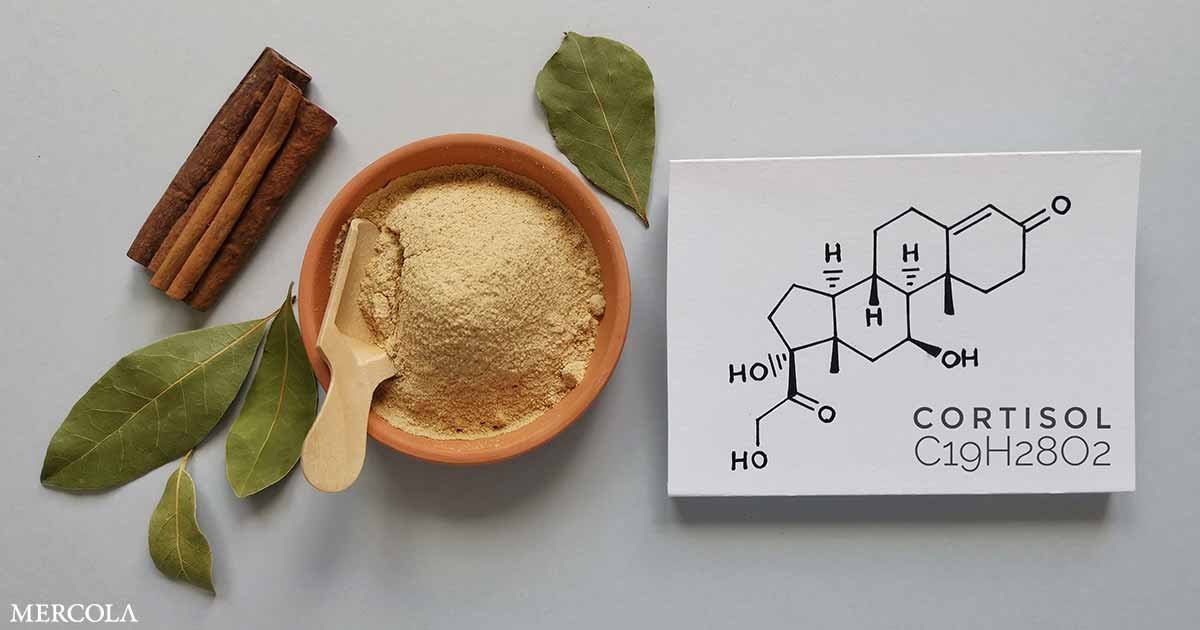
At the center of this connection sits the hypothalamic-pituitary-adrenal axis, or HPA axis, your body’s stress thermostat. When it’s working properly, it ramps up cortisol to meet a challenge, then dials back down once the threat passes. Chronic stress miscalibrates this thermostat, leaving it stuck in the “on” position, pumping cortisol even when there’s no real threat.
Ashwagandha helps recalibrate this system so your body recognizes when it’s actually safe to rest and repair. Its active compounds, called withanolides, modulate stress signaling, support calming neurotransmitter activity, and provide antioxidant protection. Understanding these connections sets the stage for examining why ashwagandha has become a focus of serious scientific interest and what the research shows when stress regulation moves back in the right direction.
Ashwagandha Improves Stress, Hormones, and Recovery in Active Adults
A paper published in the Journal of Education, Health and Sport analyzed human clinical trials that examined ashwagandha supplementation in relation to cortisol control, testosterone balance, and physical recovery outcomes.1
The researchers focused on randomized, placebo-controlled studies conducted in adults between 2010 and 2025, prioritizing trials that measured objective markers such as blood hormones, aerobic capacity, and recovery indices. The goal was to determine whether ashwagandha meaningfully improves how the body handles stress and rebounds from physical demand.
• Ashwagandha benefits adults under psychological or physical strain — The review highlighted consistent benefits in chronically stressed adults, physically active individuals, and athletes exposed to demanding training loads. These groups showed measurable reductions in stress markers alongside improvements in perceived stress, anxiety scores, and physical readiness.
This matters because stress-related fatigue and stalled recovery often share the same root: excessive cortisol signaling.
• Cortisol dropped at a rate that clearly separated ashwagandha from placebo — One standout trial gave stressed adults 300 milligrams (mg) of ashwagandha root extract twice daily for 60 days. Their cortisol dropped 27.9% — nearly four times the reduction seen in the placebo group. That gap represents a meaningful shift from chronic stress physiology toward recovery physiology.
For someone running on stress hormones, a 28% drop in cortisol could mean finally sleeping through the night, waking up without an alarm, or noticing that afternoon slump disappears. Cortisol drives muscle breakdown, sleep disruption, and hormonal suppression when it stays elevated. So, lower cortisol shifts your body out of constant defense mode and back into repair.
• Multiple stress-related outcomes improved at the same time — Beyond cortisol, participants reported lower perceived stress scores and improved emotional stability across several trials. Anxiety ratings dropped, sleep quality improved, and subjective fatigue declined.
These outcomes cascade: lower stress hormones enable deeper sleep, deeper sleep accelerates recovery, faster recovery unlocks training gains. One improvement sets the next in motion. Rather than forcing performance, the herb supported the HPA axis, helping the body respond appropriately instead of overreacting.
• Hormonal balance shifted in a favorable direction — The review reported repeated findings of increased testosterone and DHEA-S levels, especially in physically active men and older adults with lower baseline hormone levels. Testosterone supports muscle repair, strength development, and motivation.
DHEA-S is a precursor hormone, a building block your body uses to make testosterone and estrogen. When chronic stress depletes it, your hormonal reserves run low. Restoring DHEA-S helps replenish that reserve tank. Importantly, these increases appeared alongside cortisol reductions, not through overstimulation.
Cortisol and testosterone have an inverse relationship — when one rises, the other tends to fall. This is why chronically stressed men often experience low testosterone symptoms (fatigue, reduced motivation, slow recovery) even when their levels test “normal.” By reducing cortisol, ashwagandha creates hormonal room for testosterone to rise naturally.
• Physical performance and recovery showed objective gains — Trials summarized in the review demonstrated improvements in VO2 max, a measure of how efficiently your body uses oxygen during exertion. A higher VO2 max means you can climb stairs, finish a workout, or keep up with your children without gasping for air. It’s the difference between feeling winded and feeling capable.
Participants also showed improved recovery and lower post-exercise fatigue scores, meaning they bounced back faster between training sessions.
Chronically elevated cortisol breaks down muscle tissue for fuel, impairs glycogen replenishment, and delays tissue repair. When cortisol normalizes, your body can finally use the protein you eat for building rather than burning, store carbohydrates efficiently in muscle, and repair micro-damage from training. The performance gains aren’t from stimulation — they’re from removing the brake that was preventing adaptation.
Most positive outcomes emerged after eight weeks or longer of daily supplementation. Short-term dosing produced smaller effects, while sustained use aligned with larger cortisol reductions and performance gains.
Why Ashwagandha’s Benefits Show Up Across Sleep, Metabolism, and Performance
These findings raised an obvious question: why does lowering cortisol produce such wide-ranging benefits? A review in Nutrition & Metabolism attempted to untangle the mechanisms.2 Rather than asking whether outcomes occur, this study focused on why they occur.
The review covered healthy adults, people under chronic psychological stress, recreational and trained athletes, and older adults experiencing fatigue or metabolic decline. Across these groups, improvements clustered around sleep quality, metabolic markers, and physical and mental performance.
• Sleep quality emerged as a primary driver of downstream benefits — Multiple randomized trials showed improvements in sleep onset time, total sleep duration, and sleep efficiency, especially at doses of 600 mg per day or higher over eight weeks or more. Sleep efficiency simply means how much time in bed you actually spend asleep.
Better sleep improves recovery, hormone balance, and next-day energy, which explains why performance metrics improve. The review detailed ashwagandha’s interaction with GABA receptors in the brain, which helps quiet overactive neural signaling tied to poor sleep and anxiety. GABA acts like the brain’s “off switch” for racing thoughts. When ashwagandha enhances GABA activity, it’s easier for your mind to quiet down at night instead of replaying the day’s stressors on a loop.
• Stress markers improved alongside sleep — The review reported consistent reductions in morning cortisol paired with better subjective stress scores and quality-of-life ratings. Morning cortisol reflects how hard your stress system runs at baseline. Lower values signal a calmer starting point each day, which supports steadier energy and emotional control.
• Metabolic health showed measurable improvement in several trials — Ashwagandha supplementation was linked to reductions in fasting blood glucose, insulin, and LDL cholesterol in adults. Lower insulin and glucose mean your cells handle fuel more efficiently. That efficiency supports endurance, reduces energy crashes, and speeds recovery between workouts.
• Body composition shifted in a favorable direction when paired with training — Trials summarized in the review showed greater muscle gains and fat reduction in participants who combined resistance training with ashwagandha supplementation compared to training alone. These changes tracked with improved sleep and lower stress hormones, not appetite suppression.
• Antioxidant and anti-inflammatory pathways played a role — Human trials showed reductions in markers of oxidative stress along with increases in antioxidant defenses. Oxidative stress is like rust accumulating inside your cells. Intense exercise, poor sleep, and chronic stress all accelerate this “rusting.” Ashwagandha helps your body produce more of its natural rust-proofing compounds. Lowering oxidative stress protects muscles, nerves, and mitochondria during repeated training.
This creates a virtuous cycle: lower cortisol enables deeper sleep. Deeper sleep enhances growth hormone release and tissue repair. Better recovery allows more productive training. More productive training builds fitness and resilience. Ashwagandha doesn’t create this cycle — it removes the cortisol block that was preventing it from turning.
Most benefits emerged after four to 12 weeks, with stronger outcomes at eight weeks or longer. Shorter trials showed smaller shifts. Across dozens of trials using 300 to 600 mg daily for up to 12 weeks, researchers reported no meaningful changes in blood counts, thyroid markers, or vital signs. Mild side effects occurred at similar rates in placebo groups. Rare liver injury cases resolved after stopping supplementation, reinforcing the importance of appropriate dosing and quality control.
How to Lower Stress Load and Recover Faster on Purpose
When your body feels stuck in survival mode, pushing harder rarely fixes the problem. High stress keeps cortisol elevated, which interferes with sleep, recovery, and training progress. The goal here is to calm the stress-response system first, then build habits that help your body repair and regain momentum instead of spinning its wheels.
1. Lower daily stress signals — If you wake up tired, feel on edge during the day, or notice that workouts leave you wiped out instead of energized, your nervous system is under constant pressure. Start with simple changes. Anchor your sleep with consistency: same bedtime, same wake time, even on weekends.
Dim lights after sunset, since bright screens tell your brain it’s still daytime. Treat the last hour before bed as a decompression zone, not a time to catch up on email. These habits reduce baseline cortisol and make ashwagandha far more effective instead of asking it to fight constant stress noise on its own.
2. Use ashwagandha to calm your system, not to push harder — When stress hormones stay high, adding stimulants or training intensity makes things worse. Ashwagandha works best as a steady, daily support that helps quiet stress signaling. If you’re mentally overloaded, training often, or sleeping lightly, consistency matters more than timing tricks. The real benefit comes when your body finally gets the message that it doesn’t need to stay on high alert.
3. Match your workouts to what your body can actually recover from — Too much intense exercise causes more harm than good. Long, exhausting sessions drive cortisol even higher and slow recovery. Moderate-intensity workouts, like walking, combined with shorter, focused workouts and real rest days protects recovery hormones. When stress drops, ashwagandha supports adaptation instead of acting as damage control.
4. Keep your blood sugar steady to avoid hidden stress spikes — Energy crashes act like stress to your body. If you feel shaky, irritable, or drained between meals, cortisol rises to fill the gap. Regular meals with enough carbohydrates and protein help keep energy steady throughout the day.
When blood sugar crashes, your body releases cortisol to compensate — it’s an emergency fuel system. Preventing those crashes with regular, balanced meals keeps cortisol from spiking unnecessarily. Start by aiming for 250 grams of carbs per day, which supports sustained metabolic health and ensures that your mitochondria function efficiently.
Prioritize easy-to-digest options like fruit and white rice. When your gut is ready, meaning no bloating and no irregular bowel movements, gradually add in root vegetables, then legumes, additional vegetables, and well-tolerated whole grains.
5. Give your body enough time to reset — Stress doesn’t unwind overnight. If you’re coming out of burnout, heavy training, or long-term pressure, your nervous system needs repeated signals that things are safe again. Staying consistent with sleep, nutrition, recovery-focused training, and daily ashwagandha use for at least eight weeks allows cortisol to settle, sleep to deepen, and energy to return.
Performance improves as a result, not by forcing it. If you are an athlete, a busy professional, or someone who simply feels run down, this approach helps your body stop fighting itself and start rebuilding again.
6. Choose a quality ashwagandha extract and use it consistently — Not all ashwagandha products are equal. Look for root extract (not leaf) standardized to contain a consistent percentage of withanolides, the active compounds responsible for stress-lowering effects. Capsules offer convenience; powders can be mixed into smoothies or warm milk (a traditional Ayurvedic preparation).
Aim for 300 to 600 mg daily, taken morning or evening — some prefer evening due to the calming effects. Plan for at least eight weeks of consistent use before evaluating results. The benefits build gradually as your stress signaling recalibrates.
Signs ashwagandha is working often appear gradually: falling asleep faster, waking feeling more refreshed, steadier energy without caffeine dependence, better workout recovery, and a general sense of feeling less “wired but tired.” Consider keeping a simple journal of sleep quality and energy levels for the first eight weeks.
Those with autoimmune thyroid conditions should consult their doctor, as ashwagandha stimulates thyroid function. Pregnant and breastfeeding women should avoid it due to insufficient safety data. If you take sedatives, thyroid medications, or immunosuppressants, check with your health care provider first.
FAQs About Ashwagandha
Q: What does ashwagandha actually help with?
A: Ashwagandha helps lower chronic stress by reducing cortisol, which supports better sleep, steadier energy, hormonal balance, and faster physical recovery. When stress signaling calms down, your body shifts out of breakdown mode and back into repair.
Q: Who benefits the most from using ashwagandha?
A: The higher your baseline stress, the more room there is for improvement. Someone already sleeping well with low anxiety may notice little change. Someone running on fumes, sleeping poorly, and feeling constantly on edge often notices significant shifts within weeks. This includes athletes, highly active adults, busy professionals, and anyone dealing with poor sleep, fatigue, or slow recovery.
Q: How long does it take to notice results?
A: Most clinical benefits show up after consistent daily use for at least eight weeks. Shorter use produces smaller effects, while longer, steady use aligns with deeper cortisol reduction, improved sleep quality, and better recovery.
Q: Does ashwagandha work on its own, or does lifestyle still matter?
A: Ashwagandha works best when stressors are reduced at the same time. Consistent sleep schedules, appropriate exercise intensity, and stable blood sugar allow the herb to reinforce calm stress signaling instead of fighting constant overload.
Q: Is ashwagandha safe when used correctly?
A: Clinical trials using standard doses for up to 12 weeks report no meaningful changes in blood markers or vital signs, with mild side effects occurring at rates similar to placebo. Using appropriate doses and high-quality preparations supports safe, predictable results.
[ad_2]
Source link


