
[ad_1]
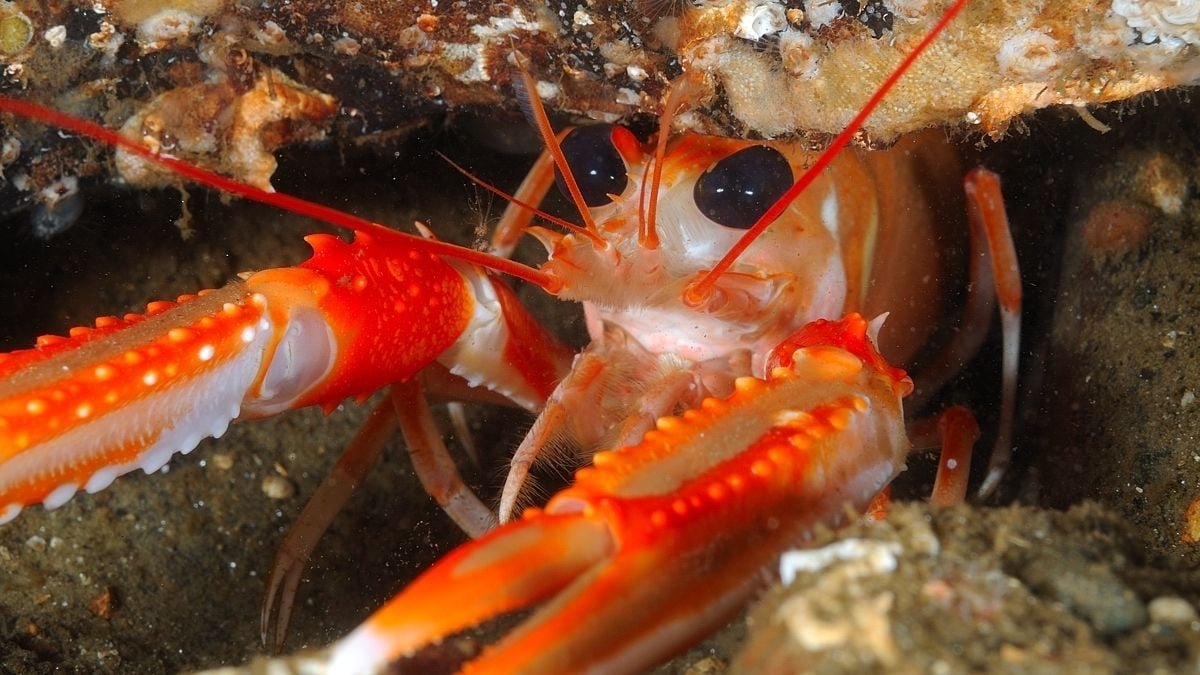
Common human painkillers significantly change the way Norway lobsters respond to an unpleasant stimulus, scientists have found.
Administering an analgesic drug to Nephrops norvegicus lobsters before delivering a mild electric shock reduced the amount of tail flipping – an escape behavior – exhibited by those crustaceans.
The finding is the result of a careful, rigorous study, and adds another compelling piece of evidence to the pile that crustaceans such as lobsters experience nociception – the physical detection of harm and one of the criteria that defines animal pain.
“There is already evidence that decapod crustaceans exhibit signs of discomfort and stress, when exposed to injuries such as forced removal of a claw,” says zoophysiologist Lynne Sneddon of the University of Gothenburg in Sweden.
“Our latest experiments show that Norway lobsters react adversely to electric shocks, which are painful to humans.”
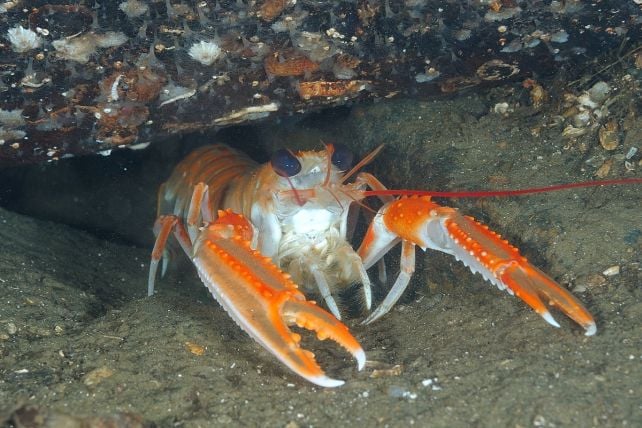
Lobsters and other crustaceans are considered by many cultures to be a delicacy, and the idea that these animals are incapable of feeling pain is perhaps what enabled preparation techniques such as boiling them alive.
This practice has now been outlawed as animal cruelty in many parts of the world, and the UK government has officially recognized lobsters, octopuses, and crabs as sentient.
However, establishing whether an animal can feel pain or experience nociception – especially a crustacean – remains a challenge.
It’s basically impossible to determine whether an animal feels pain. We cannot communicate with animals in a meaningful enough way to establish whether their response to harm involves an emotional component.
This reflects why the International Association for the Study of Pain recently updated its definition of pain, defining it as an “unpleasant sensory and emotional experience associated with, or resembling that associated with, actual or potential tissue damage”.
Nociception is another matter: the “neural process of encoding noxious stimuli”. That means the nervous system detects a stimulus that may cause harm and transmits that information to the central nervous system so it can respond accordingly, whether it’s a yelping dog or a recoiling snail.
Electric shocks – which have been proposed as a “humane” method of killing lobsters before cooking them – appear to trigger a strong escape response in the animals, according to the new study.
The researchers placed their Norway lobsters in controlled tank conditions, and tested this by applying a mild current to the water for about 10 seconds.

The researchers also handled some of the lobsters without shocking them – picking them up and moving them from tank to tank, which was stressful without being harmful. This ‘sham’ group acted as a control to show that the response to being shocked was indeed a reaction to the stimulus rather than just what happens when a lobster is stressed.
Some groups of lobsters were administered painkillers before visiting the shock tank or being handled. Some were injected with aspirin, and some were placed in water in which lidocaine had been dissolved.
Lobsters were filmed before and after the experimental regime to gauge their behavior. The researchers also took small samples of hemolymph – the lobster equivalent of blood – to measure stress-related chemicals, and later examined gene activity in nervous system tissue after the animals were euthanized.
Lobsters in the shock tank almost uniformly responded by rapidly flipping their tails in an attempt to escape. However, if painkillers were administered beforehand, the tail flipping either decreased or disappeared entirely.
Related: Fish Suffer Up to 22 Minutes of Intense Pain When Taken Out of Water
The changes in the blood chemistry and gene activity of the shocked lobsters also showed an elevated stress response – demonstrating that the effect is real and that the lobsters have a physiological reaction to harmful stimuli.
“The fact that painkillers developed for humans also work on Norway lobsters shows how similar we function,” Sneddon says.
“That’s why it’s important to care about how we treat and kill crustaceans, just as we do with chickens and cows.”
The results, the researchers say, suggest that more work needs to be done to reduce potential suffering in animals that humans have a history of using with little regard for welfare, both in culinary and laboratory settings.
“By demonstrating both the potential for nociception caused by electric shock and the mitigating effects of analgesics,” the researchers write, “this study provides a foundation for improving welfare standards for decapods in research, aquaculture, and fisheries.”
The findings have been published in Scientific Reports.
[ad_2]
Source link


