
[ad_1]
Key Points
- Rotron Aerospace successfully fired its SkyLance long-range one-way effector, validating propulsion and system performance following the company’s acquisition by Nasdaq-listed Ondas Inc.
- The SkyLance is designed for GPS-denied and electronically contested environments, with onboard autonomy for navigation and targeting in long-range precision strike missions.
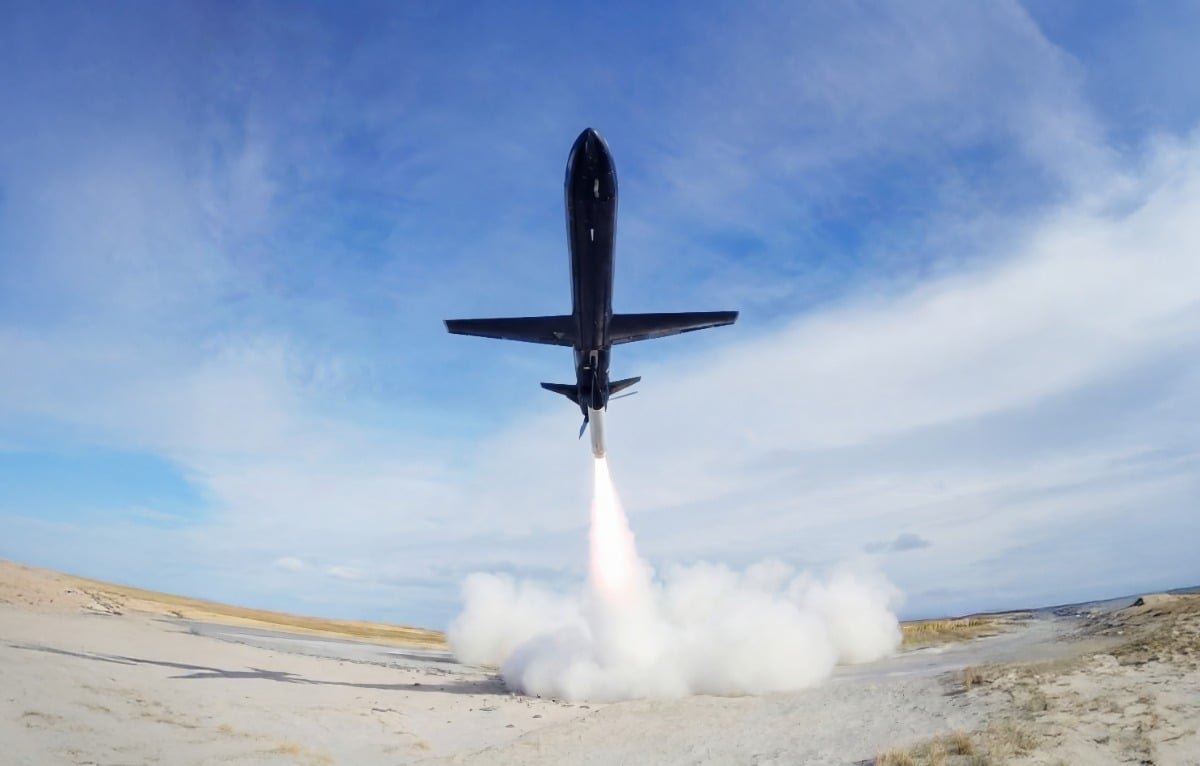
British aerospace company Rotron has successfully fired its SkyLance long-range one-way effector, validating the propulsion and system performance of a loitering munition platform that its new American parent company Ondas Inc. is positioning as a sovereign UK strike capability for NATO’s eastern flank and allied export markets.
The firing milestone, announced by Rotron Aerospace, follows the company’s recent acquisition by Ondas Inc., a Nasdaq-listed technology holding company that has committed to significant long-term investment in UK operations as part of the deal. Alex Head, CEO of Rotron, described the demonstration in straightforward terms. “The successful demonstration of SkyLance validates our ability to deliver long-range, cost-effective capability for modern operational environments,” Head said in the company’s announcement. “We are focused on providing defence forces with scalable systems that can be deployed at volume, and through our partnership with Ondas, we are accelerating development, production, and delivery to meet growing demand across the UK and allied markets.”
The SkyLance is a long-range autonomous strike platform, a one-way effector in the industry terminology that has replaced “kamikaze drone” in formal defense procurement language, designed to deliver precision payloads at extended distances in GPS-denied and electronically contested environments. At the core of the system is Rotron’s proprietary UK-developed propulsion technology, which the company claims provides significant improvement in range, endurance, and efficiency compared to conventional turbine and piston-engine systems, enabling missions at substantially greater distances while maintaining what the press release describes as a low-cost, attritable profile. The specific range figures, payload capacity, and propulsion system type were not disclosed in the source material, and those specifications remain unconfirmed.
– ADVERTISEMENT – CONTINUE READING BELOW –
In current defense acquisition language, an attritable system is one cheap enough to lose in combat without catastrophic program or financial consequences, a weapon that can be fired in quantity, accepted as expendable at the individual unit level, and replaced through high-volume production rather than treated as a precious asset to be preserved. That cost posture is precisely what the loitering munition and one-way effector market has been building toward since Ukraine demonstrated that the ability to sustain large-scale drone strike operations depends on production economics as much as individual system performance. A long-range system that is also affordable enough to deploy in volume occupies a capability niche that shorter-range, cheaper commercial-derived drones cannot fill and that expensive cruise missiles overshoot from a cost perspective.
The GPS-denied and electronically contested operation capability that Rotron describes for SkyLance addresses the most operationally urgent technical requirement in the current one-way effector market. Russian electronic warfare systems operating in Ukraine have demonstrated a consistent ability to degrade GPS-dependent drone guidance, forcing Ukrainian drone operators and their Western industrial partners to develop navigation architectures that maintain target prosecution without satellite navigation.
SkyLance’s onboard autonomy for navigation and targeting in denied environments, as described by Rotron, positions it for exactly the operational conditions that European defense planners are designing against as they build out long-range strike capability along NATO’s eastern flank.
[ad_2]
Source link