
Table of Contents
[ad_1]
Women who averaged about seven hours of sedentary time per day instead of more than ten, and spent more time in light activity, experienced substantially lower risks of adverse pregnancy outcomes, highlighting a potentially practical strategy beyond traditional exercise recommendations.
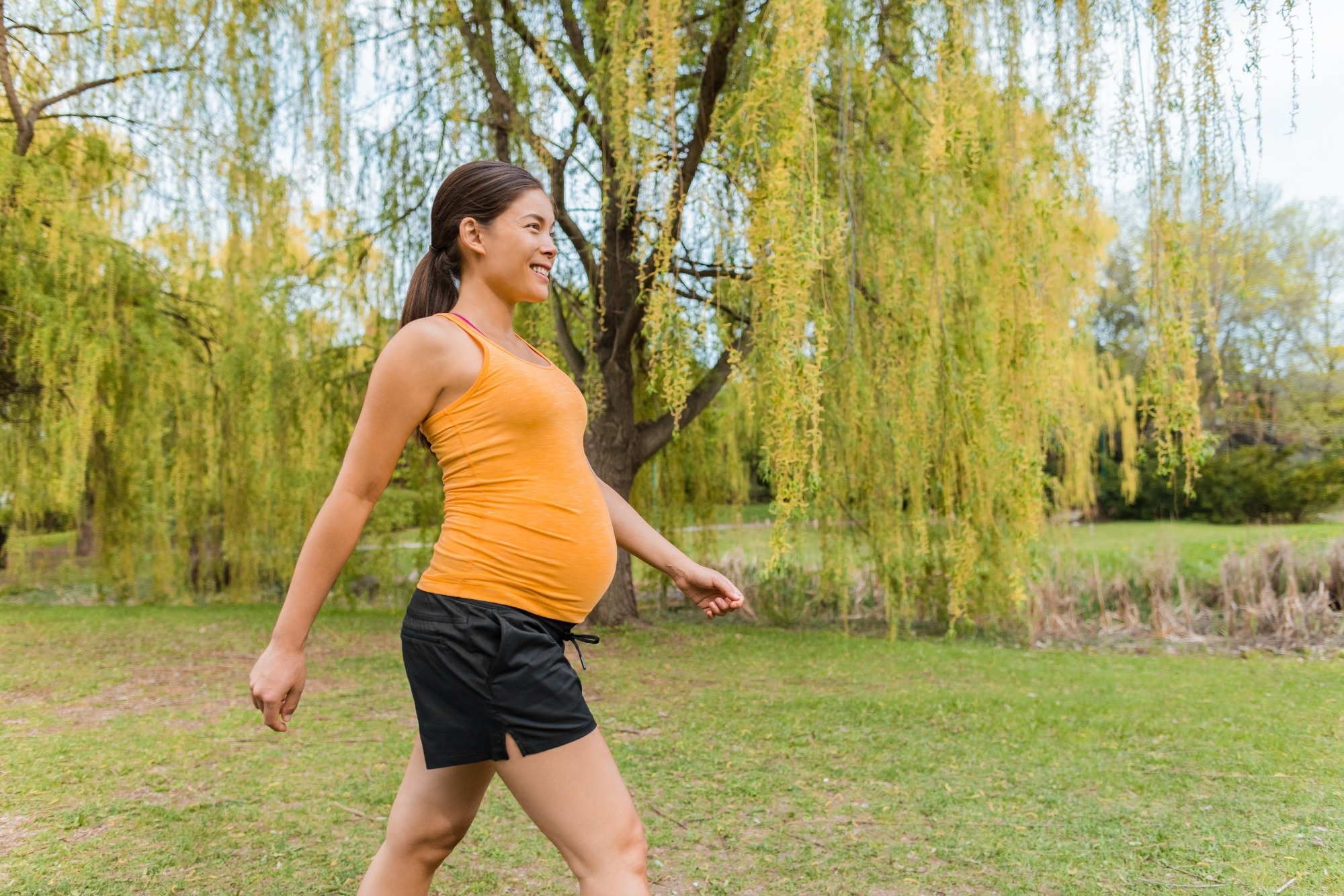 Study: Adverse Pregnancy Outcomes and Sedentary Behavior, Light-Intensity Physical Activity, and Daily Steps. Image credit: Maridav/Shutterstock.com
A recent study published in JAMA found that pregnant women who replaced several hours of daily sedentary time with light physical activity were less likely to experience adverse pregnancy outcomes.
How daily movement may shape pregnancy health
Adverse pregnancy outcomes (APOs) such as hypertensive disorders of pregnancy (HDP), gestational diabetes, preterm birth, and small for gestational age (SGA) affect roughly one in five pregnancies and can have both immediate and long-term health consequences for both mother and child.
While current evidence-based guidelines recommend moderate-to-vigorous physical activity during pregnancy, the role of lower-intensity activities such as standing, light movement, and walking remains unclear. Pregnant women are often tired or discouraged from engaging in such activity, with as few as one in four actually meeting such guidelines.
More recently, these recommendations have been supplemented with guidance to move more and sit less throughout the day, in addition to the 30 minutes of moderate-to-vigorous physical activity daily. This means less sedentary and more active time. Another recommendation is to walk 8,000-10,000 steps daily, promoting activity over the whole day and including light physical activity as well.
The researchers sought to determine whether spending less time sedentary and more time in light activity throughout pregnancy could reduce the risk of these complications overall, and specifically hypertensive disorders of pregnancy (this being the only disorder with adequate prevalence in this sample).
Measuring sitting, standing, and daily steps
The study followed 470 pregnant women (mean age 31 years) recruited during the first trimester from university-affiliated medical centers in Iowa, Pennsylvania, and West Virginia. Participants wore a thigh-mounted activity monitor for seven days during each trimester, allowing researchers to measure sedentary time, light-intensity physical activity (LPA), and daily steps.
Sedentary time was classified as total, short (less than 60 minutes of sitting at a time), and long (60 minutes or more of sitting at a time). Similarly, light physical activity was stratified into total, standing, and ambulatory.
Pregnancy outcomes were later verified from medical records. About 37% had an adverse pregnancy outcome, with 18% developing hypertensive disorders of pregnancy.
On average, all participants spent 10.1 hours per day sitting or reclining, 4.6 hours per day in light activity, and averaged 6,783 steps per day. Women who were more sedentary tended to be heavier, have had fewer past deliveries, be less likely to engage in any physical activity, and have a lower daily step count.
Prolonged sitting linked to adverse outcomes
Women with sedentary behavior exceeding about 10 hours per day had approximately twice the risk of adverse pregnancy outcomes compared with those who averaged about seven hours per day of sedentary time. This pattern persisted after adjusting for baseline body mass index (BMI) and moderate-to-vigorous activity.
After adjustment for age, parity, and socioeconomic status, the absolute risk of an adverse pregnancy outcome was 19% among women with low sedentary time, 42.3% among those with high sedentary time, and 41.6% among those with very high sedentary time.
Similar increases in risk were observed from low to high sedentary time when only long sedentary time was specified. Short sedentary periods were not associated with changes in outcomes.
More daily movement tied to healthier pregnancies
High activity levels were most common, at 36.6%, but very high levels were found in only 10.6%. Women with higher levels of light-intensity physical activity were more likely to have had more previous deliveries, to have a lower body mass index (BMI), to be less sedentary, and to take more daily steps and engage in moderate-to-vigorous physical activity.
A very high level of light activity was associated with a 48% reduction in the risk of adverse pregnancy outcomes relative to a low activity level. The absolute risk was 21% among women with very high light activity and 40.3% among those with low activity levels.
Standing light activity was most clearly associated with a lower risk of hypertensive disorders of pregnancy. The adjusted absolute risk of HDP was 29.0% among those with low standing light activity, 16.5% with high standing light activity, and 10.8% with very high standing light activity.
This corresponds to a 43% and 63% lower risk of these disorders for high or very high levels, compared to low standing activity, respectively.
Daily walking patterns predict pregnancy outcomes
Higher daily step counts were also associated with a lower risk of adverse pregnancy outcomes. The adjusted risk declined from 47.7% among women with low step counts to 36.2% among those with moderate step counts and 32.2% among those with high step counts.
The same pattern of lower risk was observed for hypertensive disorders of pregnancy, with women in the high-step group experiencing about a 54% lower risk than those in the low-step group. Long uninterrupted periods of sitting were similarly associated with poorer outcomes, while standing light activity was most clearly associated with lower risk of hypertensive disorders of pregnancy.
There was no difference in risk when only ambulatory light activity or short sedentary time was analyzed.
Standing and moving matter throughout pregnancy
Specific patterns of lower-intensity activities, including less SED [sedentary time] (especially when prolonged), more LPA [light physical activity] (especially standing), and more daily steps, were associated with clinically meaningful reductions in the risks of adverse pregnancy outcomes.
The associations remained largely unchanged even after accounting for moderate-to-vigorous exercise levels.
Strengths and limitations
A strength of the study is the use of objective activity measurements prospectively collected throughout pregnancy. Notably, the use of thigh-attached activity monitors allowed researchers to distinguish standing light physical activity from sedentary time, and was performed in a population with varied socioeconomic status and both urban and rural participants. It corroborates the results of earlier, smaller studies.
The study was observational and therefore cannot provide causal evidence that reduced sitting improves pregnancy outcomes. Most participants were White and healthy pregnant women, limiting generalizability to other ethnic groups and high-risk pregnancies.
Mechanistic research would help understand the plausibility of this finding. More testing and development of such interventions compared with moderate-to-vigorous physical activity are required to validate this approach.
“Sit less, move more” during pregnancy
The findings suggest that the “sit less, move more” strategy was associated with a lower risk of adverse pregnancy outcomes, particularly hypertensive disorders of pregnancy. Optimized activity patterns require future development and testing as a practical way to improve pregnancy outcomes.
[ad_2]
Source link


