
Table of Contents
When we think of NASA, images of rocket launches, astronauts floating in space, and the iconic blue marble of Earth often come to mind. But behind those visuals lies a relentless pursuit of knowledge that has fundamentally altered how we view our place in the cosmos. NASA discoveries have touched every corner of astronomy and planetary science, from the surface of Mars to the edge of the observable universe. Here are some of the most transformative findings from the agency that continues to push the boundaries of human exploration.
Water on Mars: The Red Planet Was Once Blue
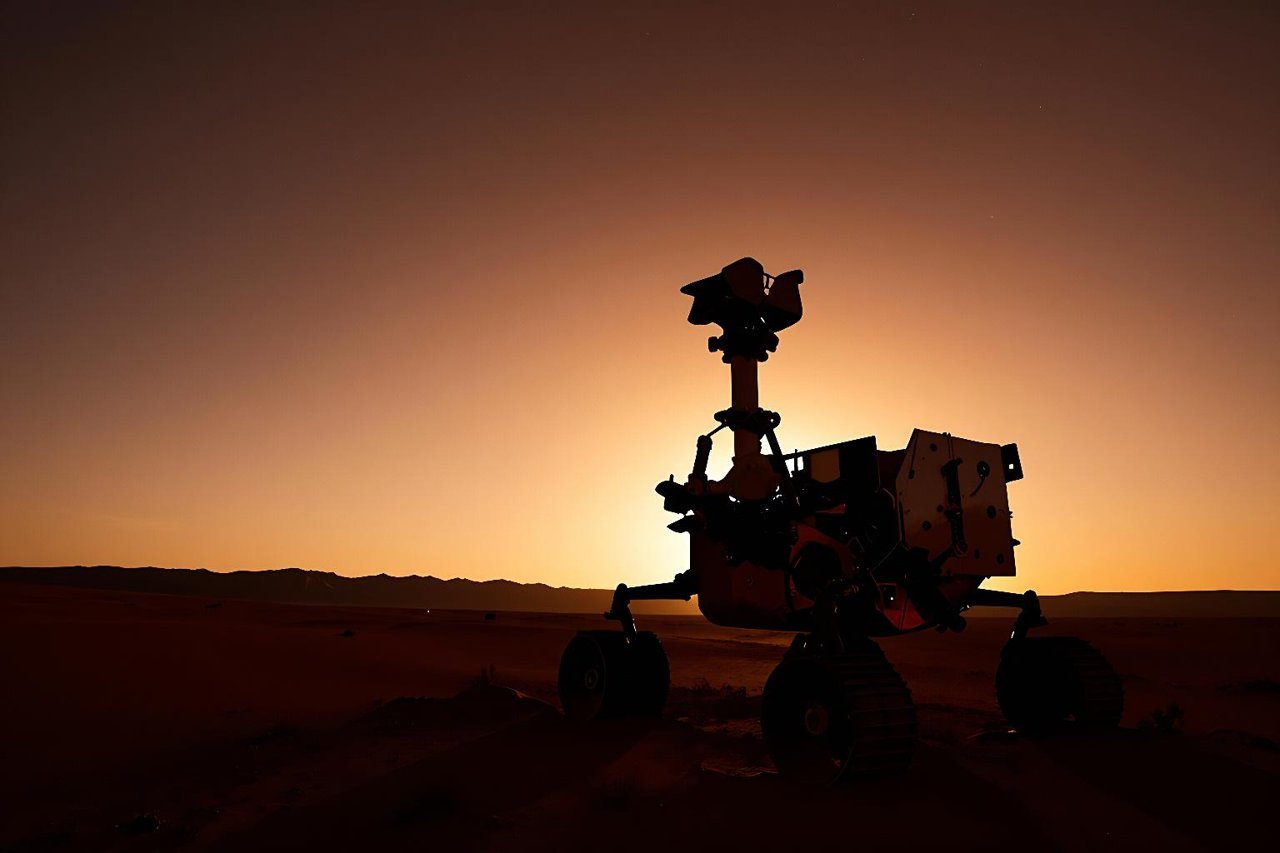
For decades, Mars seemed like a dry, dusty world. But NASA’s rovers and orbiters have painted a very different picture. In 2015, the Mars Reconnaissance Orbiter detected hydrated salts—evidence of liquid water flowing on the surface during warm seasons. Then, in 2018, the Mars Express spacecraft confirmed a large underground lake of liquid water beneath the planet’s south pole.
These findings hint that Mars may have once harbored microbial life. The Curiosity rover has also found organic molecules in ancient rocks, suggesting that the building blocks of life were present billions of years ago. Each new NASA mission brings us closer to answering whether we are alone in the solar system.
Key Missions That Revealed Martian Water
- Mars Reconnaissance Orbiter (2006–present) – Imaged recurring slope lineae, dark streaks that appear to be salty water flows.
- Curiosity Rover (2012–present) – Analyzed rocks and found evidence of ancient lakebeds and organic compounds.
- Mars Express (2003–present) – Radar data indicated a 20-km-wide subglacial lake.
- Perseverance Rover (2021–present) – Sampling rocks from an ancient river delta, searching for biosignatures.
Exoplanets: Thousands of New Worlds
Before 1995, we didn’t know if planets existed beyond our solar system. Today, thanks largely to NASA’s Kepler Space Telescope, we have confirmed over 5,000 exoplanets. Kepler stared at a single patch of sky for years, watching for tiny dips in starlight caused by planets crossing their stars. The results were staggering.

Among the most exciting are rocky, Earth-sized planets in the habitable zone—where liquid water could exist. The TRAPPIST-1 system, discovered in 2017, contains seven Earth-sized planets, three of which orbit in the habitable zone. The James Webb Space Telescope is now studying their atmospheres for signs of water, methane, and oxygen.
Notable Exoplanet Discoveries
- Kepler-186f – First Earth-sized planet found in a star’s habitable zone (2014).
- TRAPPIST-1e – Most promising candidate for habitability among the seven planets (2017).
- TOI-700 d – Discovered by TESS, an Earth-sized world in the habitable zone of a small, cool star (2020).
The Cosmic Microwave Background: Echo of the Big Bang
In 1965, two radio astronomers at Bell Labs accidentally discovered a faint glow across the entire sky—the cosmic microwave background (CMB). This was the afterglow of the Big Bang, but its precise patterns remained blurry. Enter NASA’s COBE satellite (1989), which mapped the CMB with exquisite detail, confirming that the universe is nearly uniform but with tiny fluctuations that seeded galaxies.
The WMAP mission (2001) and Planck satellite (2009) refined these measurements, giving us the age of the universe (13.8 billion years) and its composition: 5% ordinary matter, 27% dark matter, and 68% dark energy. Without NASA’s space-based observatories, we would still be guessing at these fundamental numbers.
Dark Energy and the Accelerating Universe
In 1998, two teams—one led by Saul Perlmutter and another by Brian Schmidt—used NASA’s Hubble Space Telescope to observe distant supernovae. They expected to see the universe’s expansion slowing down due to gravity. Instead, they found it was speeding up. This shocking discovery earned them the Nobel Prize and introduced dark energy, a mysterious force driving cosmic acceleration.
NASA’s Hubble and Chandra X-ray Observatory continue to probe dark energy by studying galaxy clusters and supernovae. The upcoming Nancy Grace Roman Space Telescope will map billions of galaxies to understand how dark energy has evolved over time.
New Horizons at Pluto: A World of Surprises
For decades, Pluto was just a fuzzy dot. In 2015, NASA’s New Horizons spacecraft flew past it, revealing a complex world with ice mountains, glaciers of nitrogen, and a huge heart-shaped plain. Pluto had active geology, a thin atmosphere, and even possible cryovolcanoes. The mission completely overturned our view of the outer solar system.
New Horizons then flew past Arrokoth, a Kuiper Belt object, in 2019, showing that such ancient bodies are pristine building blocks of planets. These discoveries have reshaped our understanding of how the solar system formed.
Search for Life: From Microbes to Intelligence
NASA’s astrobiology efforts span many fields. The Viking landers in 1976 conducted the first life-detection experiments on Mars, though results were inconclusive. Today, the Perseverance rover is caching rock samples for future return to Earth, where they can be analyzed for signs of past microbial life.
Beyond Mars, NASA’s Cassini mission found that Saturn’s moon Enceladus shoots plumes of water vapor from a subsurface ocean. The Europa Clipper, launching in 2024, will investigate Jupiter’s moon Europa, which likely harbors a global ocean beneath its icy crust. These ocean worlds are some of the best places to search for extraterrestrial life.
Other Groundbreaking NASA Discoveries
- Hubble Deep Field (1995) – A single image revealed thousands of galaxies, some from when the universe was only a few hundred million years old.
- Gravitational Waves (2015) – Though detected by LIGO, NASA’s Fermi telescope spotted gamma rays from the same neutron star merger, linking gravitational waves to electromagnetic signals.
- Ozone Hole (1985) – NASA satellite data helped identify the Antarctic ozone hole, leading to the Montreal Protocol and global ban on CFCs.
- Earth as a Pale Blue Dot (1990) – Voyager 1’s iconic image, taken at Carl Sagan’s request, showed Earth as a tiny speck against the vastness of space.
The James Webb Space Telescope: A New Era
Launched in December 2021, JWST is the most powerful space telescope ever built. Its first images, released in July 2022, revealed galaxies that formed just 300 million years after the Big Bang—earlier than expected. Webb’s infrared eyes can see through dust clouds where stars and planets are born. It has already captured the atmosphere of exoplanet WASP-96b, finding water vapor and clouds.
In 2023, Webb detected carbon dioxide in the atmosphere of an exoplanet for the first time, a key ingredient for life. The telescope is also studying the atmospheres of the TRAPPIST-1 planets, searching for biosignatures. Expect many more NASA discoveries from Webb in the coming years.
From the first footprints on the Moon to the deepest views of the cosmos, NASA’s string of discoveries shows no sign of slowing down. Each mission builds on the last, answering old questions while raising new ones. The next big find could come from the Perseverance rover’s cached rocks, the Europa Clipper’s flybys, or the Roman Space Telescope’s wide-field surveys. One thing is certain: the more we explore, the more we realize how much we have yet to learn.


