
Table of Contents
When people talk about the largest ship ever built, they often imagine a single vessel that dwarfs all others. But the title actually belongs to several ships, depending on how you measure: length, weight, or capacity. In this article, we’ll explore the true giants of the sea—from the longest oil tanker to the biggest container ship and the most massive cruise liner—and uncover what makes each of them extraordinary.
The Reigning Champion: Seawise Giant
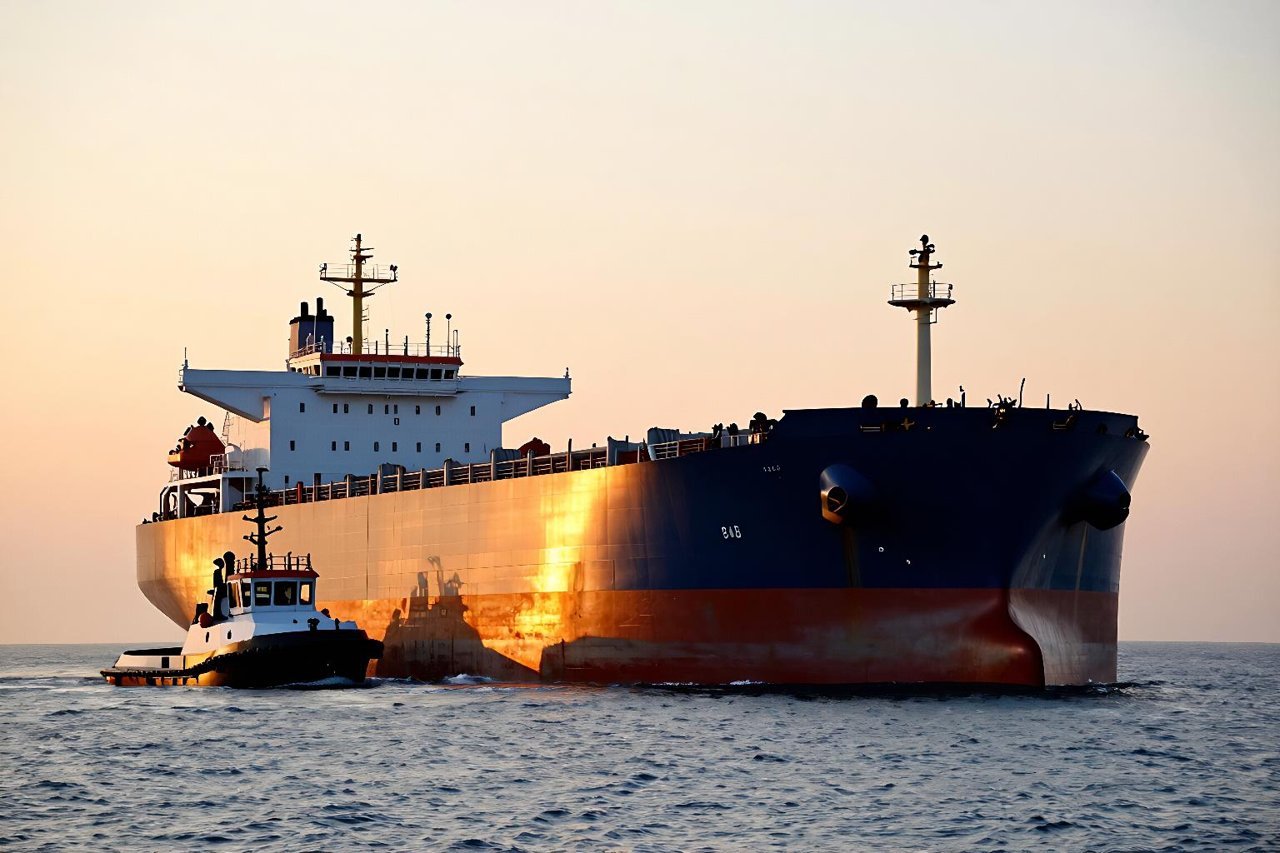
By sheer size, the Seawise Giant (later renamed Happy Giant, Jahre Viking, and Knock Nevis) remains the largest ship ever constructed. Launched in 1979, this ultra-large crude carrier measured 458.45 meters (1,504 feet) in length—longer than the Empire State Building is tall. Its deadweight tonnage (DWT) exceeded 564,000 tons, meaning it could carry roughly 650,000 cubic meters of crude oil.
The Seawise Giant was so massive that it could not navigate the English Channel, the Suez Canal, or the Panama Canal. It spent most of its career shuttling oil between the Middle East and the United States around the Cape of Good Hope. After being damaged during the Iran-Iraq war, it was repaired and served until 2009, when it was scrapped in India.
Key Specifications of the Seawise Giant
- Length: 458.45 m (1,504 ft)
- Beam (width): 68.8 m (226 ft)
- Draft: 24.6 m (81 ft)
- DWT: 564,763 tons
- Propulsion: Steam turbine, 50,000 hp
- Speed: 16.5 knots (30.6 km/h)
No ship since has matched its combined length and deadweight, making it the undisputed king of size.

The Largest Container Ships: MSC Irina and Ever Ace
While the Seawise Giant holds the all-time record, the largest ship currently in service belongs to the container ship category. The MSC Irina, launched in 2023, has a capacity of 24,346 TEU (twenty-foot equivalent units). It measures 399.9 meters in length and 61.3 meters in beam—just under the maximum size allowed through the Suez Canal.
Before MSC Irina, the Ever Ace (2021) held the record with 23,992 TEU. These ships are part of a new generation of ultra-large container vessels (ULCVs) that transport goods across global trade routes. They are so big that only a few ports worldwide can accommodate them. Their size allows shipping lines to achieve economies of scale, reducing the cost per container.
How Container Ships Compare
- MSC Irina: 24,346 TEU, 399.9 m LOA, 61.3 m beam
- Ever Ace: 23,992 TEU, 399.9 m LOA, 61.5 m beam
- MSC Gülsün (2019): 23,756 TEU, 399.9 m LOA
These ships are longer than the Eiffel Tower is tall and would require 10 football fields to park end to end.
Largest Cruise Ship: Icon of the Seas
In the world of passenger vessels, the Icon of the Seas, operated by Royal Caribbean, dethroned all previous records when it entered service in January 2024. It measures 365 meters (1,198 feet) in length and 365,000 gross tons (GT)—making it not just the largest cruise ship, but the largest passenger ship ever built.
Icon of the Seas can accommodate up to 7,600 passengers and 2,350 crew. It features 20 decks, seven swimming pools, and a 5.5-meter (18-foot) waterfall. The ship is powered by liquefied natural gas (LNG) and fuel cells, making it one of the most environmentally friendly cruise ships despite its size.
Why Size Matters for Cruise Ships
Bigger cruise ships offer more amenities: multiple dining venues, entertainment theaters, water parks, and even ice-skating rinks. However, they also face limitations—they cannot dock at smaller ports and must use deep-water harbors. Icon of the Seas primarily sails from Miami to the Caribbean.
The Longest Ship Ever: Prelude FLNG
When it comes to length alone, the Prelude FLNG (Floating Liquefied Natural Gas facility) takes the crown. At 488 meters (1,601 feet) from bow to stern, it is about 30 meters longer than the Seawise Giant. Built for Shell, the Prelude operates offshore Western Australia, processing natural gas at sea.
However, the Prelude is not a ship in the traditional sense—it is a floating production unit that is towed to its location and remains stationary for decades. It has no propulsion system. So while it is the longest floating structure, it is rarely counted as the largest ship because it cannot move under its own power.
Heaviest Ship: The Battle of Tonnage
If we measure by displacement (total weight), the Pioneering Spirit (formerly Pieter Schelte) is the heaviest self-propelled vessel. It displaces about 900,000 tons when fully loaded. This ship is a heavy-lift vessel designed to install and remove offshore oil platforms. Its unique catamaran design allows it to lift entire topsides of platforms weighing up to 48,000 tons.
Another contender is the Nimitz-class aircraft carriers, which displace about 100,000 tons—but that’s only about one-ninth of the Pioneering Spirit’s displacement. However, the Seawise Giant had a loaded displacement of around 657,000 tons, which is less than the Pioneering Spirit’s 900,000, but the Seawise Giant was much longer and had a higher DWT.
The Evolution of Giant Ships
The race to build the largest ship has been driven by economics and technology. In the 20th century, oil tankers grew to staggering sizes to reduce transport costs. The 1970s energy crisis spurred the construction of ULCCs (ultra-large crude carriers) like the Seawise Giant. However, after the 1980s, the tanker market contracted, and many giants were scrapped.
Today, container ships dominate the size race, driven by global trade. The largest container ships are near the limits of the Suez Canal and major port infrastructure. Cruise ships have also ballooned, but their growth is limited by passenger demand and port accessibility.
Future Trends: What’s Next?
Shipbuilders are exploring ways to increase capacity while reducing emissions. The next generation of container ships may exceed 25,000 TEU, but they will require upgrades to ports and canals. Meanwhile, LNG-powered vessels like the Icon of the Seas point toward a greener future. Some designers are even envisioning nuclear-powered cargo ships, which could allow for even larger sizes without the need for frequent refueling.
How to See These Giants Yourself
If you want to witness the largest ship in action, head to major ports like Rotterdam, Shanghai, or Singapore. The Port of Rotterdam, Europe’s largest, regularly hosts ULCVs. You can also take a cruise on the Icon of the Seas or visit the Queen Mary 2 in Southampton, though the latter is no longer the largest. For a glimpse of the Prelude FLNG, you’d need to fly over the Browse Basin in Australia—but satellite images are far easier.
For maritime enthusiasts, the size of these ships is a testament to human ingenuity. They are floating cities, factories, and transport hubs that keep our world connected. Whether it’s a tanker carrying oil, a container ship full of electronics, or a cruise liner filled with vacationers, each giant has a story to tell.


