
Table of Contents
Flying commercially has its place—but when time is tight, privacy matters, or you need to reach an off-grid airport, private jet rental becomes a serious option. Once the domain of billionaires and celebrities, private aviation is now accessible to a wider range of travelers. This guide covers the real costs, the booking process, and what to expect, so you can decide if chartering a jet makes sense for your next trip.
What Is Private Jet Rental?
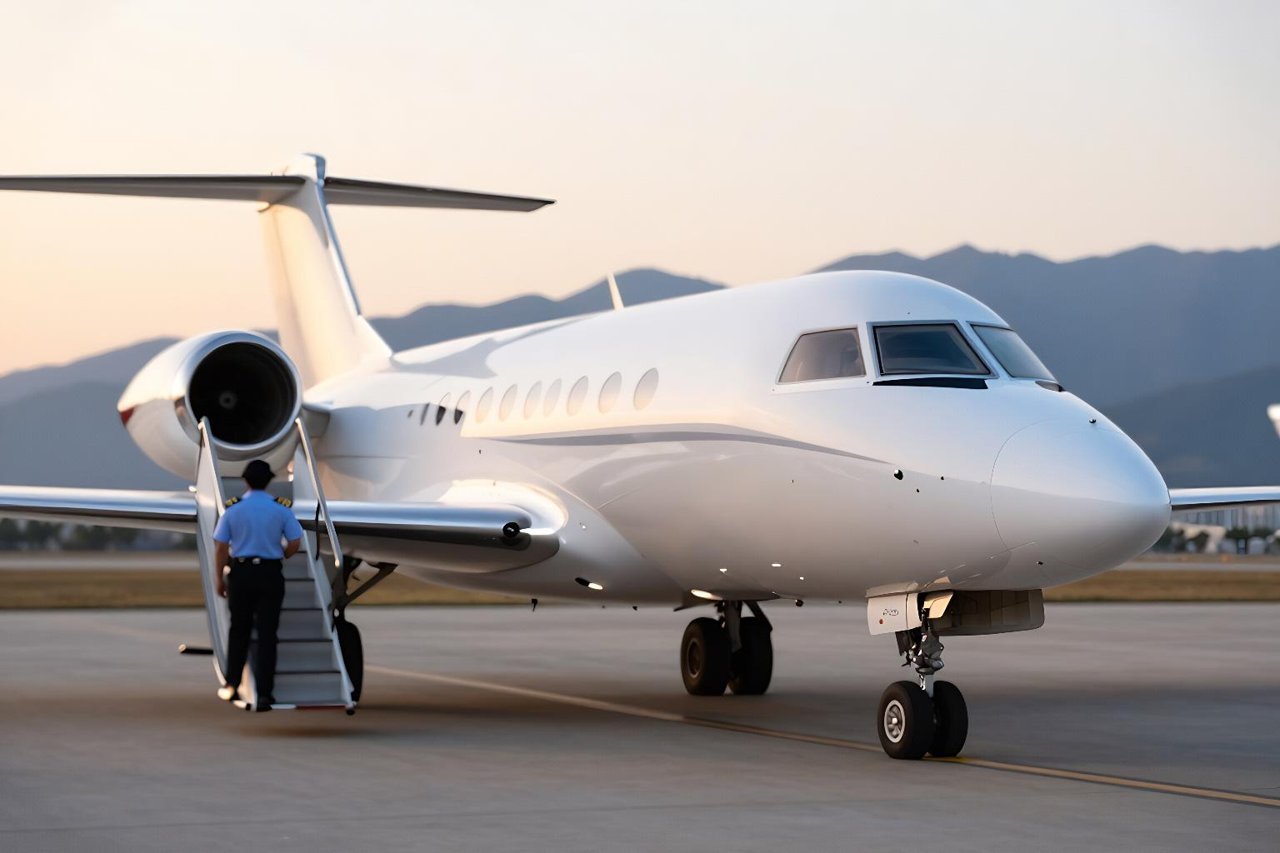
Private jet rental, also called charter, means you hire an entire aircraft for your trip. You pay for the flight hours, crew, fuel, and airport fees. Unlike fractional ownership or jet cards, you don’t commit to a long-term contract. You book one flight at a time, often with as little as a few hours’ notice.
Charter operators range from large fleets like NetJets and Flexjet to local companies with a handful of planes. The market is fragmented, which means prices vary widely depending on the aircraft type, route, and season.
How Much Does It Cost?
Cost is the first question most people ask. A typical one-way private charter in the U.S. starts around $2,000 for a very light jet on a short hop (e.g., New York to Boston) and can exceed $20,000 for a heavy jet coast-to-coast. Hourly rates are the standard metric:

- Very Light Jet (e.g., Eclipse 550, Phenom 100): $2,500–$3,500 per hour. Seats 4–6 passengers.
- Light Jet (e.g., Citation CJ3, Learjet 45): $3,500–$5,000 per hour. Seats 6–8.
- Midsize Jet (e.g., Hawker 800, Citation XLS): $5,000–$8,000 per hour. Stand-up cabin, good range.
- Super Midsize Jet (e.g., Challenger 300, Gulfstream G200): $6,500–$10,000 per hour. Transcontinental range.
- Heavy Jet (e.g., Gulfstream G550, Global 6000): $10,000–$16,000 per hour. Seats 12–16, full galley, lie-flat seats.
Additional fees include landing fees ($100–$500), de-icing ($500–$2,000), catering (your choice), and repositioning costs if the aircraft must fly empty to pick you up. Always ask for a total price quote, not just the hourly rate.
Empty Leg Flights: The Discount Option
An empty leg is a one-way flight where the jet returns empty after dropping off a passenger. Operators sell these at steep discounts—often 50% to 75% off. For example, a New York to Miami charter might normally cost $15,000, but an empty leg on the same route could be $5,000. The catch: you must be flexible on timing and departure city. Websites like JetSmarter and FlyBlade list empty legs, but they sell out fast.
Key Benefits Over Commercial Flying
Private jet rental isn’t just about luxury. The practical advantages can be significant for business travelers, families, or anyone with a tight schedule.
- Time savings: Arrive at the airport 15 minutes before departure. No TSA lines, no boarding gates. You drive to the private terminal, park steps from the plane, and take off.
- Flexible schedules: You choose the departure time. If a meeting runs long, the pilot waits. No missed flights or rebooking hassles.
- Access to more airports: Commercial airlines serve about 500 airports in the U.S. Private jets can use over 5,000. You can land close to your final destination—Aspen, Nantucket, or a remote airstrip.
- Privacy and productivity: No noise, no interruptions. Hold confidential meetings, work on sensitive documents, or just sleep. Some jets have Wi-Fi and satellite phone.
How to Book a Private Jet
Booking is simpler than you might think. Here’s the typical process:
- Get quotes: Contact multiple charter brokers or operators. Provide the number of passengers, departure and arrival airports, desired date/time, and any preferences (catering, Wi-Fi, pets).
- Compare aircraft: Ask for specific tail numbers and their age. Newer planes are more reliable and quieter. Check safety records—every charter operator must hold a Part 135 certificate from the FAA.
- Review the contract: The charter agreement should list the aircraft type, schedule, total price, payment terms, cancellation policy, and operator’s insurance details.
- Confirm and pay: Most require wire transfer or credit card. Once paid, the flight is locked in. You’ll receive a trip itinerary and contact info for the pilot.
Broker vs. Direct Operator
A broker acts as a middleman, sourcing aircraft from multiple operators. A direct operator owns its fleet. Brokers often get better deals because they buy in bulk, but you pay a markup. Direct operators may offer lower prices if you book directly with them. For a first-time renter, a reputable broker adds safety oversight and simplifies comparisons.
Who Rents Private Jets?
It’s not just the ultra-wealthy. Common use cases include:
- Corporate teams traveling to multiple cities in one day. A light jet can make three stops in six hours—impossible with commercial.
- Medical emergencies where a patient needs to reach a specialist quickly. Some operators offer stretcher-equipped planes.
- Family vacations with pets, lots of luggage, or special needs. No baggage limits, no cargo holds.
- Sports or entertainment groups with tight schedules. Bands, sports teams, and speakers often charter to maintain energy and privacy.
Safety and What to Look For
Safety should be your top priority. All U.S. charter operators must comply with FAA Part 135 regulations, which require regular maintenance, pilot training, and drug testing. But you can do more:
- Check the operator’s safety record with the FAA’s Aviation Safety Information Analysis and Sharing (ASIAS) database.
- Ask if they are Wyvern or ARGUS rated. These independent audits go above Part 135 standards.
- Request the pilot’s experience level. A good charter will have pilots with 3,000+ flight hours.
- Look at the aircraft’s maintenance logs. Operators should provide them on request.
Comparing Private Jet Rental to Alternatives
If you fly frequently, alternatives like jet cards or fractional ownership might be cheaper per hour. A jet card, for example, pre-purchases a set number of hours (typically 25) at a fixed rate. Fractional ownership buys a share of an aircraft (e.g., 1/16 of a Citation) and you pay monthly management fees plus hourly charges. For infrequent flyers (fewer than 50 hours per year), charter remains the most cost-effective.
Commercial first class is another comparison. A first-class transcontinental ticket can cost $2,000–$5,000, but you still deal with airport queues. Private charter for a group of four might cost $20,000 round-trip—$5,000 per person, which is competitive for the convenience.
Tips for a Smooth Experience
- Book early for peak seasons (holidays, ski season, summer weekends). Prices can double.
- Be flexible on aircraft type. If you need a specific model, you might pay a premium.
- Plan catering in advance. Most operators offer menus from local restaurants, but you can also bring your own food.
- Arrive with ID. Even though there’s no TSA, the crew must verify your identity for security.
- Understand the luggage limits. Light jets have small cargo holds—typically 300–500 lbs total. Heavy jets can carry 2,000+ lbs.
The Future of Private Jet Rental
The industry is evolving. New players like Wheels Up and Surf Air offer membership models that blend charter with subscription. Electric and hybrid-electric jets are in development, promising lower costs and emissions. For now, private jet rental remains the most flexible way to fly on your own terms—a tool that saves time and expands possibilities for those who need it.


