
Table of Contents
Every year, scientists formally describe thousands of species that have never been seen before. In 2025 alone, researchers have already catalogued over 150 new species, from a deep-sea snailfish that glows in the dark to a frog so small it could sit on a thumbnail. These discoveries reshape what we know about life on Earth—and remind us how much remains hidden. Here are some of the most remarkable new species discovered this year, along with a look at how such finds happen.
The Year’s Most Striking New Species
Taxonomists—biologists who name and classify organisms—work in rainforests, ocean trenches, museums, and even urban backyards. Their work often begins with an unusual specimen that doesn’t match any known species. In 2025, several finds stood out for their strangeness or beauty.
A Bioluminescent Snailfish from the Atacama Trench
In the deep Pacific, over 7,000 meters down, a team from the Woods Hole Oceanographic Institution captured a small, translucent fish with a glowing belly. Officially named Pseudoliparis bioluminosa, it is the first snailfish known to produce its own light. The fish likely uses its bioluminescence to attract prey or communicate in the perpetual dark. Only three specimens have been collected, all from baited traps. This discovery adds to the growing list of mysterious creatures caught on camera in the deep sea.
A Miniature Frog from Madagascar
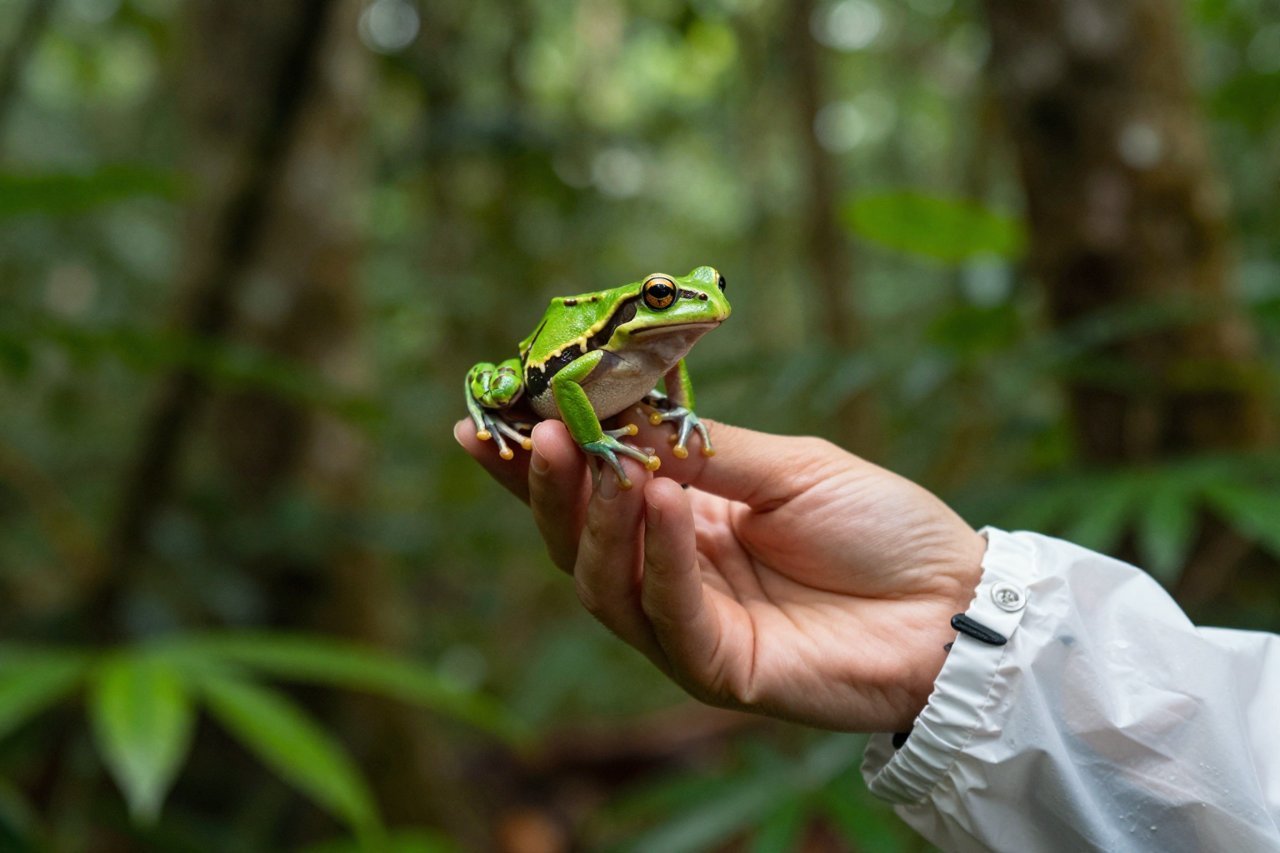
Madagascar remains a hotspot for new amphibians. This year, herpetologists described Mini mum, a frog with an adult body length of just 8.7 millimetres. It lives among leaf litter in the Tsingy de Bemaraha National Park. Its tiny size makes it one of the smallest vertebrates on Earth. The frog’s high-pitched call is barely audible to human ears. Its discovery highlights how many tiny species still elude detection, even in protected areas.

A Giant Isopod from the Gulf of Mexico
Not all new species are small. Researchers trawling off the coast of Texas pulled up a massive isopod—a crustacean related to pill bugs—that measured nearly 50 centimetres long. Named Bathynomus giganteus texanus, it is one of the largest isopods ever recorded. Unlike its deep-sea relatives, this species was found at a relatively shallow depth of 300 metres. Its enormous size may be an adaptation to scarce food resources. The creature’s eerie appearance earned it a spot on lists of the ugliest creatures ever existed.
How New Species Are Discovered
Finding a new species is rarely a single eureka moment. It usually involves years of fieldwork, specimen preparation, genetic analysis, and comparison with existing collections. Here’s a typical process:
- Field collection: Scientists often set traps, use nets, or simply walk transects in under-explored habitats. Deep-sea expeditions use remotely operated vehicles (ROVs) or baited landers.
- Morphological examination: Back in the lab, researchers measure body parts, count scales or bristles, and note colour patterns. Subtle differences can separate one species from another.
- DNA barcoding: A short genetic sequence—usually the COI gene in animals—is compared against databases like GenBank. If the sequence differs by more than a few percent, it’s a candidate new species.
- Peer review and publication: The formal description must be published in a scientific journal, along with a type specimen deposited in a museum. The species then receives its official Latin name.
Some discoveries happen by accident. In 2024, a curator at the Natural History Museum in London found an unknown beetle in a box of specimens collected in the 1800s. This kind of “museum discovery” is surprisingly common. In fact, many archaeology news stories involve similar re-examinations of old collections.
Why New Species Matter
Describing a new species is not just an academic exercise. It has real-world implications for conservation, medicine, and our understanding of evolution.
Conservation and Biodiversity
You can’t protect what you don’t know. Many newly described species are already endangered. The miniature frog from Madagascar, for instance, lives in a habitat threatened by slash-and-burn agriculture. Formal recognition gives it a name—and a stronger case for conservation funding. Similarly, deep-sea species may be at risk from mining and trawling. Cataloguing them is the first step toward regulation.
Evolutionary Insights
Every new species fills a gap in the tree of life. The bioluminescent snailfish, for example, offers clues about how deep-sea fish adapt to extreme pressure and darkness. Its light-producing organ, or photophore, is unlike that of any other snailfish. Studying its genetics may reveal how bioluminescence evolves independently in different lineages. This connects to broader questions about human evolution and the mechanisms of adaptation.
Potential Benefits for Humans
New species sometimes yield useful compounds. Deep-sea organisms produce unique enzymes and toxins that could lead to new drugs. The giant isopod’s blood contains a special oxygen-carrying protein that might inspire artificial blood substitutes. Even tiny frogs can secrete antimicrobial peptides. By documenting biodiversity, we keep the door open to future discoveries that could benefit medicine, agriculture, or materials science.
Where to Find the Next New Species
Biologists estimate that only about 20% of Earth’s species have been described. The rest await discovery in the most inaccessible places. Here are the current hotspots:
- The deep ocean: Over 80% of the ocean floor remains unmapped. Each ROV dive brings back unknown creatures. The hadal zone—trenches deeper than 6,000 metres—is especially promising.
- Tropical rainforests: The Amazon, Congo, and Southeast Asian forests continue to yield new plants, insects, and amphibians. Many are lost to deforestation before they are named.
- Caves: Subterranean ecosystems are isolated and often contain relict species. New blind fish, shrimp, and spiders are described every year.
- Museum collections: As genetic techniques improve, scientists find cryptic species—those that look identical but are genetically distinct—in old jars and drawers.
Even urban areas can surprise. In 2023, a new species of orchid was discovered growing on a traffic island in Tokyo. The lesson: keep your eyes open.
Challenges in Describing New Species
Despite the excitement, the process is slow and underfunded. It takes an average of 21 years between a species being collected and formally described. Many taxonomists are retired or near retirement, and funding for taxonomy is scarce. Meanwhile, species are going extinct faster than they are named. This is sometimes called the “Linnaean shortfall.”
Technology is helping. DNA barcoding can identify species quickly, and citizen science platforms like iNaturalist allow anyone to upload photos that may lead to new discoveries. Machine learning algorithms can now classify images and flag potential new species. Still, a human expert must confirm each find.
The giant isopod described this year took five years from collection to publication because the researchers had to compare it with specimens from around the world. That kind of meticulous work is irreplaceable.
What the Future Holds
The pace of discovery is accelerating. In the last decade, more new species were described than in any previous decade. International initiatives like the Global Biodiversity Information Facility (GBIF) and the Earth BioGenome Project aim to sequence all eukaryotic life within ten years. That will likely reveal many more new species—and raise urgent questions about how to protect them.
As we push into the deep sea and the canopy, we are also cataloguing a world that is vanishing. Every new species is a reminder of the planet’s creativity and fragility. The bioluminescent snailfish, the thumbnail frog, the giant isopod: they are not just curiosities. They are threads in a fabric we are only beginning to understand.


