
Table of Contents
There’s a small bottle on your bathroom shelf that promises shinier, stronger hair. But if you’re like most people, you’re not quite sure how to use it. Hair oil isn’t a complicated product, yet the countless types and contradictory advice make it feel that way. This guide breaks down exactly what hair oil can and can’t do, how to pick the one for your hair, and the application technique dermatologists actually recommend. No hype, just the facts.
What Hair Oil Can Actually Do for Your Hair
Hair oil does three things: reduces frizz, adds shine, and protects against environmental damage. It rarely fixes split ends or stimulates growth on its own. The right oil can reduce protein loss in damaged hair. In a 2015 study published in the Journal of Cosmetic Science, coconut oil applied to hair before combing significantly reduced protein loss compared to untreated hair. But benefits depend on molecular size and your hair’s porosity. A heavy oil like castor coats the strand without penetrating, while a lighter oil like jojoba mimics your scalp’s natural sebum.
Which Hair Oil Is Right for Your Hair Type?
Dry, thick, or curly hair
Thirsty strands need heavier oils like coconut, avocado, or olive oil. These sink into coarse hair and lock in moisture. Apply from mid-length to ends, and skip the scalp unless it’s painfully dry. Coconut oil builds up quickly, so alternate with a lighter oil every other wash.
Fine, straight hair
Fine hair doesn’t mean thin hair. You might have plenty of strands, but each one is narrow. Heavy oils will weigh it down and leave a greasy residue. Reach for argan, grapeseed, or a lightweight blend. Use one or two droplets, rubbed between palms and patted onto the ends.

Oily scalp
If your scalp over-produces sebum, keep oil away from the roots entirely. Focus on the lengths. A few drops of jojoba oil can actually balance oil production when massaged into the scalp 30 minutes before washing. Massage for two minutes, then wash normally.
Sensitive or flaky scalp
Tea tree oil is the workhorse here. Its anti-inflammatory compounds calm itch, while the antimicrobial properties help regulate scalp bacteria. For step-by-step instructions, our guide on how to use tea tree oil for hair growth and scalp health covers dilution ratios and application frequency.
The Best Oils at a Glance (and What They’re Actually Good For)
Not all oils are created equal. Here’s a quick reference:
- Coconut oil: The only oil shown to reduce protein loss. Best for thick, dry hair, but it can build up fast.
- Argan oil: Packed with vitamin E and fatty acids. Smooths frizz without greasiness, so it works for fine to medium hair.
- Jojoba oil: Chemically similar to human sebum. Ideal for scalp massage and fine or combination hair.
- Castor oil: Heavy and thick, rich in ricinoleic acid. Use it sparingly as an occasional scalp treatment, mixed with a lighter oil.
- Rosemary oil: Clinical trials show it can improve hair growth as effectively as minoxidil in some people. Always dilute it; undiluted, it can irritate the skin.
- Rosehip or grapeseed oil: Lightweight and high in linoleic acid. Great for fine hair and for those who wash every day.
How to Apply Hair Oil the Right Way
Most people apply oil to dry hair and then wonder why it looks like a deep-fryer. These steps will change the outcome.
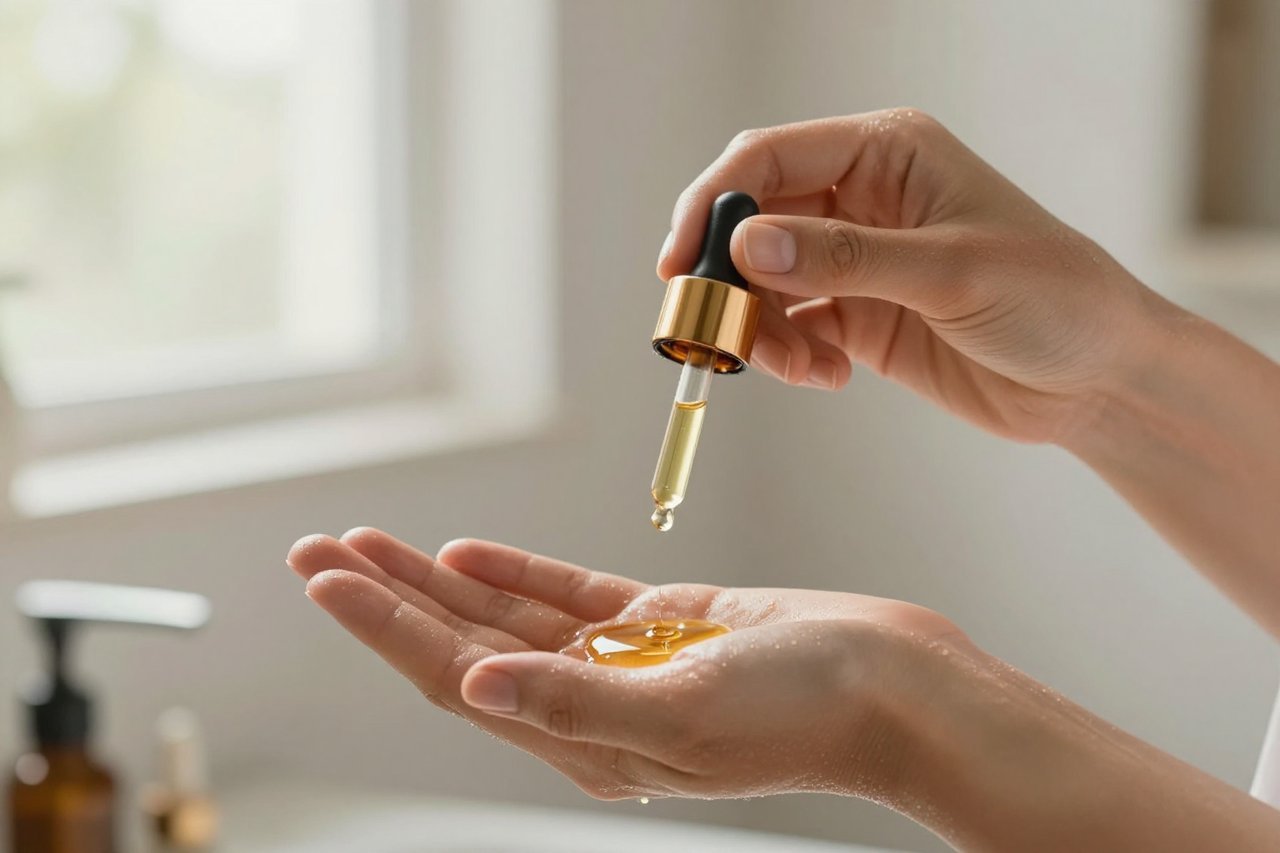
- Start with damp hair, not wet or dry. Warm a few drops between your palms. Damp hair lets the oil spread evenly and locks in water.
- Work from the ends up. Don’t pat oil on the crown. Focus mid-length to ends, using a wide-tooth comb to distribute it.
- Time it correctly. For a pre-shampoo treatment, apply to dry hair 20 minutes before jumping in the shower, concentrating on the lower half. For a leave-in, wait until hair is about 70% dry, then apply 3-4 drops for fine hair, 6-8 for medium, and 10-12 for thick or curly hair.
- Don’t ignore the underside. When you tuck hair into a bun or ponytail, the nape and sides dry out faster. Add a drop and work it up.
- Remove excess properly. If you went overboard, wash twice with a gentle shampoo. Do a clarifying wash once a week to prevent buildup.
How to Use Hair Oil With Leave-In Conditioner
Oils seal and conditioners hydrate, so order matters. Apply a water-based leave-in first, then a drop of oil to seal the ends. That pairing works better than either product alone. Our guide to leave-in conditioner and hair oil explains the layering order in more detail.
Three Mistakes That Are Making Your Hair Oil Useless
You could be sabotaging your results without knowing it. Here are the most common culprits:
- Using way too much. More oil doesn’t equal more shine. It equals product buildup, a dusty finish, and wasted money.
- Applying to dirty hair. Oil isn’t a cleanser. On dirty hair, it seals in sebum and dirt, which can clog follicles and trigger breakouts around your hairline.
- Believing any oil alone makes hair grow. Growth happens in the follicle, beneath the scalp. Oils like rosemary improve scalp conditions that support growth, but they don’t act directly on the follicle. If you want proven growth ingredients, this guide to hair growth serums will walk you through the options. For a broader perspective, our straightforward guide to the hair growth products that work might change your shopping list.
What to Look for in a Store-Bought Hair Oil
If you’re not mixing your own, the label matters. A truly effective hair oil doesn’t need to be expensive, but it should be honest.
- Ingredients in order. The first two should be an actual oil, not a silicone or a fragrance.
- Avoid heavy silicones. Dimethicone can give temporary shine but blocks moisture and leads to dryness over time.
- Expiration date. Natural oils oxidize quickly. If it smells rancid or turns cloudy, throw it out.
- Specificity. A product that claims to be for “all hair types” is often watered down. Choose one built for your density.
Also consider the packaging. Oils in clear bottles degrade faster; amber or blue glass protects the blend.
Should You Make Your Own Hair Oil Blend?
Homemade blends give you full control over ingredients, but they also require careful dilution and the discipline to use them within a few months. If you’d rather experiment, start with one carrier oil and a few drops of an essential oil that matches your scalp’s needs. A complete system with strong foundation is our homemade coconut oil hair spray with rosemary volumizing powder. It’s a scalp-friendly duo that’s easy to master. If DIY isn’t your thing, choose a ready-made hair oil that lists its ingredients transparently and patch-tests on your arm first.
That’s the whole picture. Hair oil is a simple tool, but only when it matches your hair’s density, texture, and washing routine. Test one oil at a time, document the results for three weeks, and adjust. The right oil is out there. Don’t settle for greasy guesswork.


