
Table of Contents
Wednesday, 8:40pm. You have thirty free minutes and three browser tabs open. One says meal prep. One says twenty minutes of easy cardio. One says be asleep by ten. Doing all three is arithmetically impossible, and that’s before the dog has been walked.
Most healthy lifestyle tips fail not because they’re wrong, but because nobody tells you what they cost. So here’s the six main families of advice, judged on four things: how fast they pay off, what they demand in time and money, how they usually break, and who should skip them altogether.
Food-first: the biggest lever, the slowest feedback
Change what you eat and almost everything downstream shifts. Weight, blood pressure, resting heart rate, the 3pm slump, even the quality of your sleep.
Where it wins
A 500-calorie daily deficit moves the scales at roughly half a kilo a week, and that becomes visible in four to six weeks. Blood markers are slower but more convincing: HbA1c and triglycerides often shift noticeably across an eight to twelve week window. There’s also a financial side effect people don’t expect. Cooking six dinners a week instead of ordering them usually saves more than a gym membership costs.

Protein needs climb with age, which is where the trade-offs between the four routes for healthy aging, each with its own trade-offs, start to bite. A 45-year-old and a 70-year-old can follow near-identical advice and get very different results from it.
Where it bites
The feedback is slow and the social cost is immediate. Declining birthday cake, eating before a restaurant dinner, packing lunch every single day. Restrictive versions have the highest abandonment rate of anything on this list: two disciplined weeks of chicken and broccoli, then a Friday night that undoes the fortnight.
Food-first suits people who like detail, cook at least a few nights a week, and can tolerate waiting a month for evidence that it’s working.
Movement-first: fastest mood payoff, highest injury tax
Exercise is the most reliable mood and sleep intervention available, and it’s the only one where you can feel the difference inside a week.
Where it wins
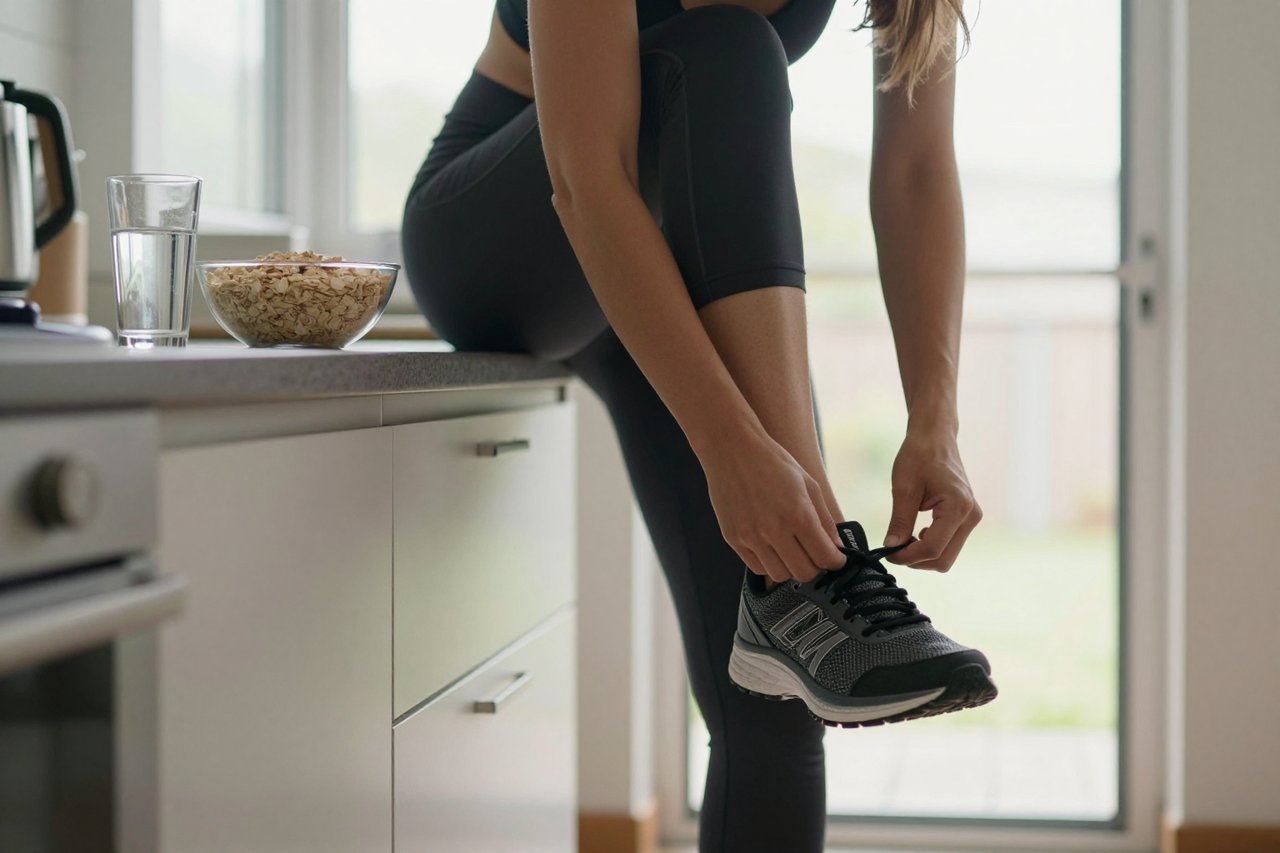
A brisk 20-minute walk after dinner blunts the post-meal glucose rise, which matters if you’re watching blood sugar. Beginners who walk most days often see resting heart rate drop five to ten beats per minute within six to eight weeks. Stairs stop being an event. The equipment cost is a pair of shoes, and the dose scales down cleanly: ten minutes still counts for something.
That’s the case for starting with a short walk rather than a 5k plan, and it’s why these seven steps you can start this week are ordered the way they are.
Where it bites
Going from 2,000 steps a day to 10,000 over one weekend is how people end up with shin splints and plantar fasciitis. There’s a time tax beyond the session itself: changing, showering, laundry, travel to and from a gym. And it plateaus. The same 5k three times a week stops producing change after a few months, at which point you need progressive overload, which is exactly where most people quietly stop.
Sleep and recovery: cheapest leverage, least flexible
Sleep sits upstream of almost everything else. After a week at five to six hours a night, ghrelin (hunger) rises and leptin (fullness) falls, and studies consistently show people eat a few hundred extra calories the next day, mostly from carbohydrates.
Where it wins
Cost: nothing. A fixed wake time, seven days a week, makes portion control, training consistency and mood regulation markedly easier, because you’re not fighting a tired brain at 9pm. If your mornings are chaotic, comparing six morning routine styles, compared may be a better starting point than any bedtime rule.
Where it bites
Flexibility is close to zero if you have a newborn, work nights or share a house with a shift worker. You also can’t out-sleep a bad diet; eight perfect hours won’t offset 900 calories of late-night snacking. And tracking sleep scores can create its own problem, a loop of anxiety known as orthosomnia, where chasing a number keeps you awake.
Habit-stacking and micro-tips: unbeatable when motivation is zero, capped at small wins
Attach the new behaviour to something you already do. Floss after brushing. Fill the water bottle while the kettle boils. Take vitamins with the morning coffee. The activation energy is near zero, which is why this approach survives bad weeks when nothing else does.
The ceiling is low, though. Flossing won’t lower your blood pressure, and a shelf full of two-minute habits can create the feeling of progress without much physiological change. These healthy lifestyle tips that stick work best as scaffolding around one bigger commitment, not as a replacement for it.
Measured and tracked approaches: personal and expensive, occasionally obsessive
Continuous glucose monitors, wearables, annual blood panels. The appeal is real: generic advice becomes yours. Plenty of people discover their supposedly healthy porridge spikes them harder than a biscuit does, and swap breakfast accordingly.
The costs add up. A CGM runs $50 to $100 a month, a decent watch £150 to £300, a private blood panel £100 to £300. It’s also worth knowing that 10,000 steps a day isn’t a research finding. It came from a 1965 Japanese pedometer marketed around the 1964 Tokyo Olympics, and the number was chosen because the character for 10,000 resembles a walking figure.
Social and environmental tips: the ones that work without you
A walking group, a run club, keeping biscuits out of the house until guests visit. The Framingham social network studies showed that behaviours, including weight, spread through friendship ties over decades. You are, measurably, influenced by the people around you.
This category does work without willpower, which is its whole advantage. It’s also slow, dependent on other people’s schedules, and brittle if you move city or the group changes its meeting time.
How the six compare on the things that actually matter
- Fastest visible payoff: movement-first, often within two to three weeks.
- Cheapest to run: sleep and habit-stacking, both effectively free.
- Best for long-term disease risk: food-first paired with regular movement, no serious contest.
- Highest injury risk: movement-first, particularly when people skip the ramp-up.
- Least dependent on willpower: social and environmental changes.
- Most likely to cause anxiety: tracked approaches, if you check the data more than once a day.
- Hardest to start, easiest to keep: environment changes, once they’re set up.
Pairing two beats perfecting one
If you take one thing from this comparison, take the pairing rule. Choose an anchor that runs on a schedule and a small habit that runs on a cue. Fixed wake time, plus a fifteen-minute walk after dinner, plus protein at breakfast. That covers three of the six categories for roughly 35 minutes of daily effort, and each piece props up the others.
Then plan for the collapse, because it’s coming. When motivation goes, keep the floor and drop the ceiling. The walk shrinks to five minutes. Meal prep becomes pre-washed greens and a rotisserie chicken. What you’re protecting isn’t the volume, it’s the identity of being someone who does this at all.
At the eight-week mark, check one marker and only one: waist measurement, resting heart rate, or how you sleep. If it hasn’t budged, you picked the wrong anchor and should swap it. If it has, add ten minutes or one extra protein serving rather than a whole new habit. This is the same logic behind the five main approaches to staying healthy: the goal isn’t finding the single best method, it’s choosing the one you’ll still be doing in March.


