
Table of Contents
Fatty liver is one of the most common liver conditions in the world, yet most people don’t know they have it until a routine blood test comes back with elevated liver enzymes. The name sounds alarming, but here’s the thing: diet can make a real difference. In fact, for people with nonalcoholic fatty liver disease (NAFLD), changing what you eat is often the most effective treatment. And it doesn’t have to be complicated. This guide breaks down the best foods for fatty liver, which ones to skip, and how to put it all together without overhauling your life.
How Food Actually Affects Fatty Liver
Your liver is your body’s main fat-processing organ. When you eat more sugar, refined carbs, and unhealthy fats than your metabolism can handle, the liver stores the excess as fat. Over time, this fat accumulation triggers inflammation and can scar the liver. But that process works in reverse, too. Certain foods reduce the inflow of fat, boost the liver’s ability to break it down, and calm the inflammation that causes damage.
The Best Foods for Fatty Liver, Backed by Evidence
No single superfood will rescue your liver. The evidence points to an overall pattern: high in fiber, rich in antioxidants and healthy fats, and low in added sugar. Still, some foods stand out in clinical research. Here’s a list of the most helpful ones to build your meals around.
- Coffee
- Green tea
- Leafy greens (spinach, kale, arugula)
- Cruciferous vegetables (broccoli, cauliflower, Brussels sprouts)
- Fatty fish (salmon, sardines, mackerel)
- Extra virgin olive oil
- Nuts, especially walnuts and almonds
- Seeds (chia, flax, pumpkin)
- Whole grains (oats, barley, quinoa)
- Legumes (lentils, chickpeas, black beans)
- Berries (blueberries, strawberries, raspberries)
Why Coffee and Green Tea Work So Well
Coffee is one of the most studied drinks for liver health. In people with fatty liver, regular coffee consumption is linked to slower progression of fibrosis and a lower risk of cirrhosis. The exact mechanism isn’t fully understood, but it likely involves coffee’s polyphenols and their anti-inflammatory effects. Green tea offers a similar benefit through catechins, a type of antioxidant that has been shown to reduce fat accumulation in animal studies. Aim for two to three cups a day, but be careful with cream and sugar; the benefits largely disappear if you add loads of both.

Leafy Greens and Cruciferous Vegetables: Your Liver’s Cleanup Crew
Dark leafy greens like spinach, kale, and arugula are packed with folate and antioxidants that support liver function. Cruciferous vegetables such as broccoli and Brussels sprouts contain a compound called sulforaphane, which activates a protective pathway in liver cells. A 2016 study found that mice fed broccoli had lower liver fat and fewer signs of nonalcoholic fatty liver disease. The fiber in these vegetables also feeds your gut bacteria, creating beneficial short-chain fatty acids. That’s one reason why foods for gut health can also help your liver.
Healthy Fats That Help Instead of Hurt
It might sound counterintuitive to eat fat when your liver is fatty, but there’s a big difference between harmful trans fats and refined seed oils, and the healthy monounsaturated and omega-3 fats found in fatty fish, olive oil, and nuts. Omega-3s reduce triglyceride levels and inflammation, and a meta-analysis of 34 studies found that they reduce liver fat and improve liver enzyme levels. A simple way to incorporate them is to eat salmon or sardines twice a week, use olive oil as your main cooking fat, and keep a small handful of walnuts for snacks. If your cholesterol is also a concern, many of the same foods appear in this list of foods that lower cholesterol, so you can tackle both at once.
Carbohydrates: Choose Ones That Release Energy Slowly
The biggest driver of liver fat is often not fat, but sugar. Fructose, in particular, is metabolized mainly by the liver and easily converted into fat when eaten in excess. Sugary drinks, desserts, and refined grains are the main culprits. Replacing them with whole grains and legumes slows digestion and prevents blood sugar spikes. A 2021 randomized trial found that a diet rich in legumes, such as beans and lentils, led to greater reductions in liver fat than a standard low-fat diet. Quinoa, barley, and oats are also excellent choices.
Foods to Limit or Avoid with Fatty Liver
As important as adding the right foods is cutting back on the ones that feed liver fat. Here’s what the research is clearest on:
- Added sugars, especially from soda, fruit juice, and sweetened coffee drinks
- Refined grains like white bread, white rice, and regular pasta
- Fried foods and heavily processed snacks
- Red meat and processed meats like bacon and sausages
- Alcohol, which is directly toxic to liver cells and accelerates disease progression
You don’t need to eliminate everything you love. The idea is to reduce these foods to occasional treats rather than daily staples. If you have any doubts about alcohol, talk to your doctor; even moderate amounts may be too much for an already struggling liver.
A Simple Daily Eating Pattern for Fatty Liver
Rather than a rigid meal plan, the structure below offers a flexible template. Use it as a starting point and adjust portions to your hunger and activity level.
Breakfast
A bowl of oatmeal topped with berries and a tablespoon of ground flaxseed. Or if you prefer savory, a two-egg omelet with spinach and a slice of whole-grain toast.
Lunch
A large salad with mixed greens, cherry tomatoes, cucumber, chickpeas, and grilled chicken drizzled with olive oil and lemon. Or a lentil soup with a side of quinoa.
Dinner
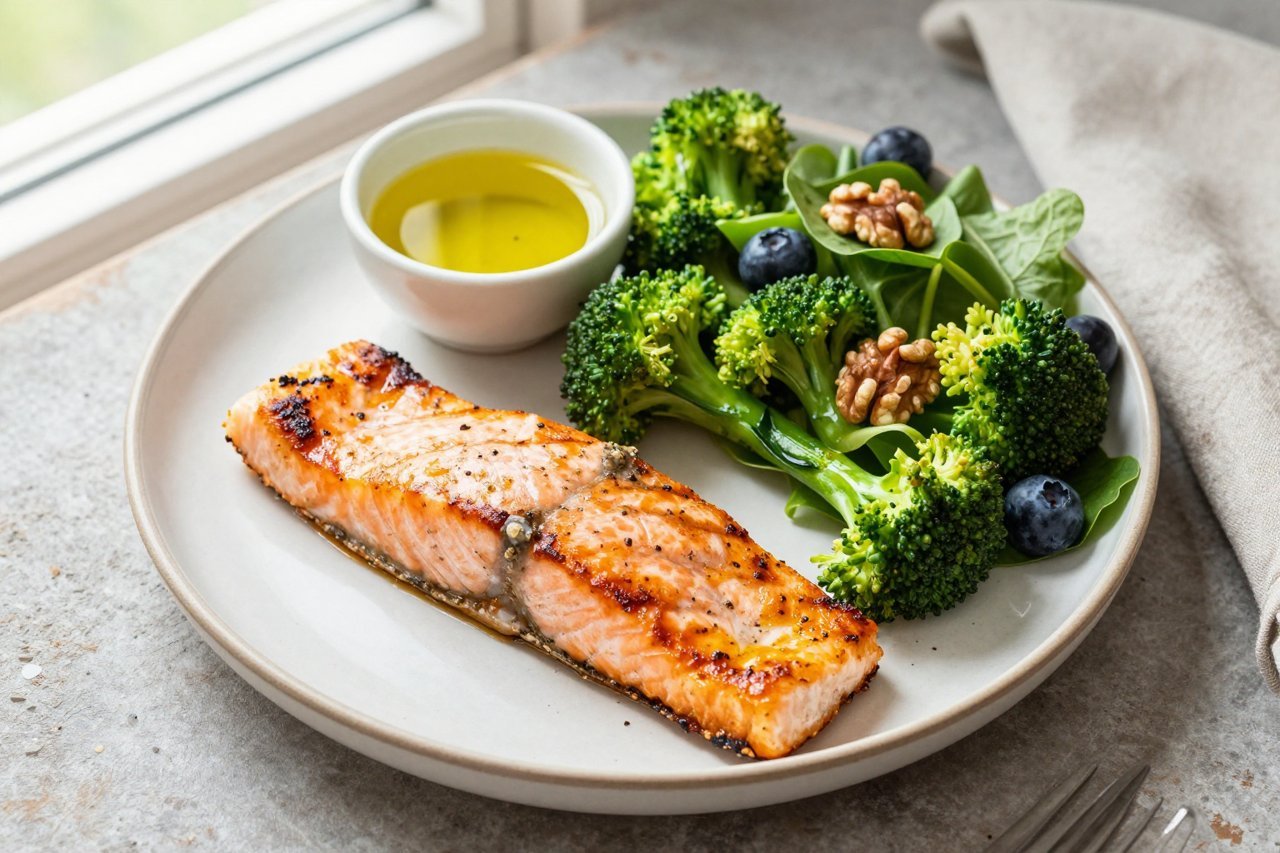
Baked salmon with steamed broccoli and a small sweet potato. For a plant-based option, try a tofu and vegetable stir-fry with brown rice.
Snacks
An apple with a spoonful of almond butter, or a small handful of walnuts and a square of dark chocolate (at least 70% cocoa).
The Role of Weight Loss
If you’re carrying extra weight, losing some of it is arguably the most powerful thing you can do for your liver. Studies show that losing 7% to 10% of your body weight can significantly reduce liver fat and inflammation, and even reverse early-stage damage. The good news is that the foods listed above naturally support weight loss because they’re filling and lower in calorie density. But if you want a more structured plan, you can check out this practical guide to foods for weight loss that actually work.
Beyond Food: Other Habits That Support Your Liver
Diet is the foundation, but it’s not the whole story. Simple lifestyle changes can amplify what your food is doing. A 15-minute walk after meals helps regulate blood sugar. Getting seven to eight hours of sleep supports your body’s overnight repair processes. And because fatty liver often coexists with high blood pressure and elevated cholesterol, taking care of your cardiovascular system matters, too. A diet built around heart healthy foods is a smart two-for-one. And since inflammation is at the root of fatty liver, you might want to add some anti-inflammatory foods to your rotation as well.
How to Track Progress Without Obsessing Over the Scale
Reversing fatty liver takes time, and your doctor is the best judge of whether it’s working. Liver enzyme levels can improve in a few weeks, but imaging changes like a reduced fat percentage usually take several months. Ask your doctor to check your blood work every three to six months. In the meantime, pay attention to how you feel. Many people report more energy, better digestion, and clearer skin before their scans change. Don’t let a weekly weigh-in dictate your mood; focus on consistency, not perfection. Build your plate around the foods above, cut the obvious offenders, and your liver will respond.


