
Table of Contents
If you’ve been told your LDL cholesterol is creeping up, you don’t have to wait for a prescription to start making changes. The food on your plate right now can shift your numbers in a meaningful way. In fact, research suggests that combining several cholesterol-lowering foods can reduce LDL by 10–15%, which is comparable to the effect of a low-dose statin. The challenge is knowing which foods actually deliver and how to eat them without overthinking every meal.
This guide breaks down the evidence-backed foods that lower cholesterol, why they work, and exactly how to fit them into your routine. For a broader look at eating for heart health, you can use my practical guide to heart-healthy foods as your nutrition compass.
Why Diet Matters More Than You Think
Your liver makes about 80% of the cholesterol in your body, but the other 20% comes from food. More importantly, certain foods change how much cholesterol your gut absorbs and how much LDL your liver clears from the blood.
Three main mechanisms are at play:

- Soluble fiber forms a gel in your intestines, trapping cholesterol and excreting it before it enters your bloodstream.
- Plant sterols and stanols compete with cholesterol for absorption in the digestive tract.
- Unsaturated fats replace saturated fats and help improve your LDL-to-HDL ratio.
You don’t need to understand every biochemical detail. You just need to put the right things on your plate consistently.
12 Foods That Lower Cholesterol (And How to Eat Them)
These picks are backed by clinical trials, not Instagram trends. Rotate them through your week for the biggest impact.
1. Oats and Oat Bran
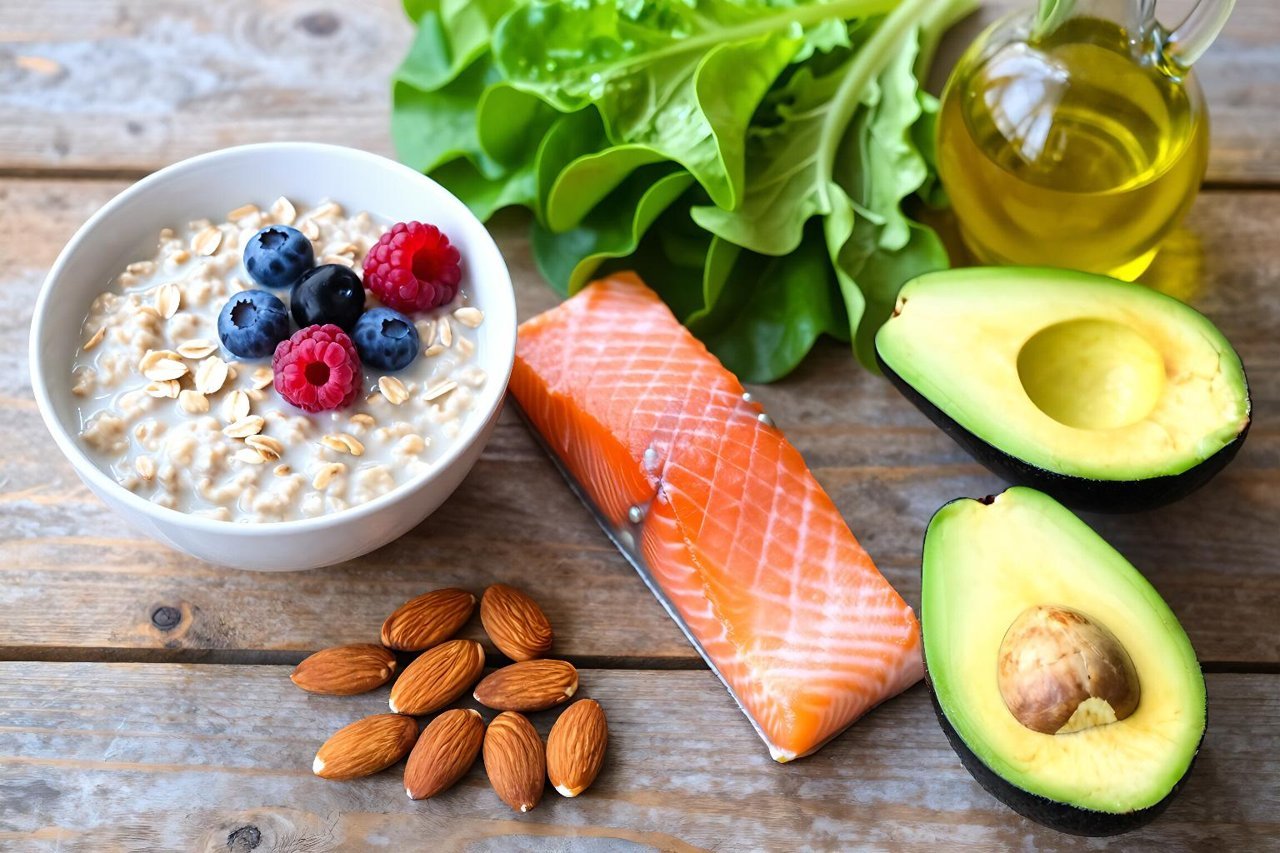
Oats are rich in beta-glucan, a type of soluble fiber that has been shown to lower LDL by around 5–10% when eaten regularly. A bowl of cooked oatmeal in the morning is the easiest place to start, but don’t stop there. Add oat bran to smoothies or use it in baking. Aim for at least 3 grams of beta-glucan per day, which is roughly a cup of dry rolled oats.
2. Barley and Other Whole Grains
Barley contains the same beta-glucan as oats, yet it’s often overlooked. In one study, participants who ate barley for eight weeks saw their LDL drop by 14%. Swap rice for barley in soups and stir-fries, or try farro and quinoa, which offer similar benefits. For a deep dive into fiber, check out the complete guide to eating more fiber without the bloat.
3. Beans and Lentils
One cup of cooked black beans delivers about 5 grams of soluble fiber. Lentils aren’t far behind. A 2014 meta-analysis found that eating a daily serving of legumes reduced LDL by about 5 points. They’re also a cheap, versatile protein source. Use them in salads, curries, or blended into a dip.
4. Nuts: Almonds, Walnuts, and More
A handful of almonds (about 23 nuts) or walnuts (about 14 halves) can lower LDL by up to 7% when eaten daily. Nuts are calorie-dense, so portion control matters. Use them as a snack, sprinkled over yogurt, or crushed as a coating for chicken. Keep them in the fridge to prevent rancidity.
5. Fatty Fish
Salmon, mackerel, sardines, and trout provide omega-3 fatty acids, which lower triglycerides and can slightly reduce LDL. The American Heart Association recommends two servings of fatty fish per week. A 150-gram serving of salmon gives you about 1.5 grams of EPA and DHA. Grill it, bake it, or add it to salads. If you’re not a fish fan, consider an omega-3 supplement, but food sources are best.
6. Avocado
Avocados are rich in monounsaturated fats and plant sterols. A 2015 study found that eating one avocado per day reduced LDL by about 8.5 mg/dL in overweight adults. Mash it on toast, slice it into salads, or blend it into a smoothie to add creaminess without dairy.
7. Apples, Grapes, and Citrus Fruits
These fruits are packed with pectin, a type of soluble fiber that lowers cholesterol by reducing reabsorption in the gut. Eating an apple a day has been linked to a 6–8% reduction in LDL. Citrus pectin is particularly effective. Don’t peel the apple—the pectin is concentrated in the skin. Slice them into your oatmeal or keep them in a fruit bowl for a grab-and-go snack.
8. Soy Foods
Tofu, edamame, and soy milk contain soy protein and plant sterols. The FDA officially allows soy products to claim that 25 grams of soy protein per day may reduce heart disease risk. Replacing meat with soy is a natural way to lower saturated fat intake and improve cholesterol. Add extra-firm tofu to stir-fries or blend silken tofu into soups for protein.
9. Eggplant and Okra
These vegetables are potent sources of soluble fiber with almost no calories. A study from Peru found that consuming eggplant lowered LDL by 16% after two weeks. Okra, often used in soups and stews, works similarly. Roast eggplant slices with olive oil and garlic, or simmer okra in a tomato-based stew.
10. Dark Leafy Greens
Spinach, kale, collard greens, and Swiss chard are rich in lutein and other carotenoids that block cholesterol from attaching to artery walls. They also add dietary fiber and antioxidants. Sauté them with olive oil, toss them into smoothies, or chop them into grain bowls. The key is to eat them regularly rather than only when you remember.
11. Extra Virgin Olive Oil
The cornerstone of the Mediterranean diet, extra virgin olive oil (EVOO) is full of heart-healthy monounsaturated fats and polyphenols. A 2020 review found that replacing saturated fats with EVOO lowered LDL and increased HDL. Use it as your primary cooking oil and drizzle it over salads. The stronger and more peppery the taste, the higher the polyphenol content.
12. Chia and Flax Seeds
Two tablespoons of ground flaxseed provide about 3 grams of fiber and a plant-based form of omega-3s. Chia seeds are also excellent. A study showed that eating flaxseed daily reduced LDL by 9–15%. Both seeds are easy to add to smoothies, oatmeal, or yogurt. Store them in the fridge and grind flaxseeds just before eating for maximum nutrient absorption.
Making These Foods a Habit, Not a Chore
Knowing which foods work is only half the battle. The other half is building a routine that doesn’t require a nutrition degree.
The 2-3 Grams of Soluble Fiber Target
Try to hit 2–3 grams of soluble fiber at each meal. A bowl of oatmeal offers 2.5 grams. A slice of whole wheat toast with avocado adds 2 grams. A serving of soup with barley and beans can easily give you 4 grams. If you spread it through the day, you’ll get to the recommended 10–20 grams without feeling stuffed.
Swap, Don’t Just Add
Adding these foods while keeping saturated fats from red meat and full-fat dairy means you’ll miss the full benefit. For example, replace bacon at breakfast with smoked salmon, or use mashed avocado as a sandwich spread instead of mayonnaise. Small swaps add up quickly.
If weight loss is part of your plan, many of these foods are also on the list of weight loss foods that keep you full for hours. That’s a double win for your cholesterol and your waistline.
Foods to Limit When Your LDL Is High
You don’t have to eliminate anything forever, but you should cut back on:
- Red meat (beef, pork, lamb) — enjoy it once a week or less.
- Full-fat dairy — try 2% or 1% milk instead of whole.
- Trans fats — these are now banned in most places, but avoid anything with ‘partially hydrogenated oil’ on the label.
- Fried foods — the oil adds saturated and trans fats that raise LDL.
The goal isn’t perfection. It’s improving your average weekly intake.
A Sample Day of Cholesterol-Lowering Eating
Putting it all together is easier with a concrete example:
- Breakfast: Oatmeal topped with half a sliced banana, a tablespoon of chopped walnuts, and a sprinkle of chia seeds.
- Lunch: Lentil soup with a side of kale salad drizzled with olive oil and lemon.
- Snack: Half an avocado on a slice of whole grain toast.
- Dinner: Baked salmon with roasted eggplant and a side of barley pilaf.
- Dessert: A juicy pear or an apple.
This day gives you roughly 15 grams of soluble fiber, 2 servings of fatty fish, and almost no saturated fat.
How Food Can Do More Than Just Lower Cholesterol
Better cholesterol is just one benefit. The same eating pattern supports brain function and mental clarity. Research shows that diets rich in unsaturated fats, antioxidants, and fiber are strongly linked to slower cognitive decline. As you’re planning your next grocery run, keep in mind that these are also some of the best foods for brain health, so you’re protecting two vital organs at once.
How Long Until You See Results?
Most people see measurable changes in LDL within 4–12 weeks of making consistent dietary changes. Studies showing the biggest effects typically last at least 8 weeks. You might see a 5–10% reduction by your next check-up if you’re faithful to the swaps above. Don’t be discouraged if your numbers don’t change overnight. Cholesterol responds slowly to diet, but it does respond.
If you want to monitor your progress, have your blood tested again after 3 months. If you’re also taking medication, keep taking it until your doctor says otherwise. Food is a powerful tool, but it works hand in hand with medical care.


