
Table of Contents
Let’s be honest: the phrase “anti-aging foods” sounds a bit like marketing hype. But the science of nutrition and longevity is not about magic berries or exotic powders. It’s about giving your cells the right fuel to withstand time, repair damage, and keep inflammation under control. The foods you eat on a regular basis can either speed up the aging process or slow it down. This guide breaks down the specific foods that research shows can make a real difference, along with how to put them on your plate every day.
What Does Aging Actually Look Like at a Cellular Level?
Inside every cell, your body constantly battles damage from environmental stressors and natural metabolic processes. Free radicals can steal electrons from other molecules, causing a chain reaction of cellular damage called oxidative stress. Over time, this accumulates and accelerates aging. Chronic inflammation, driven partly by a diet high in ultra-processed foods, is another force that speeds up age-related decline. Meanwhile, your telomeres, the protective caps at the ends of your chromosomes, shorten with every cell division, and stress can shorten them faster.
The good news is that certain plant compounds and healthy fats act as shields. They neutralize free radicals, quiet inflammation, and support your cells’ natural repair mechanisms. If you’re curious to see how your lifestyle is affecting your body on a deeper level, you might consider biological age tests, which measure markers like telomere length and DNA methylation to provide a more accurate picture than your birth certificate.
The Best Anti-Aging Foods, Backed by Science
No single food will stop the clock, but certain foods appear again and again in longevity research. Here are the ones worth making a regular part of your diet.

Leafy Greens and Cruciferous Vegetables
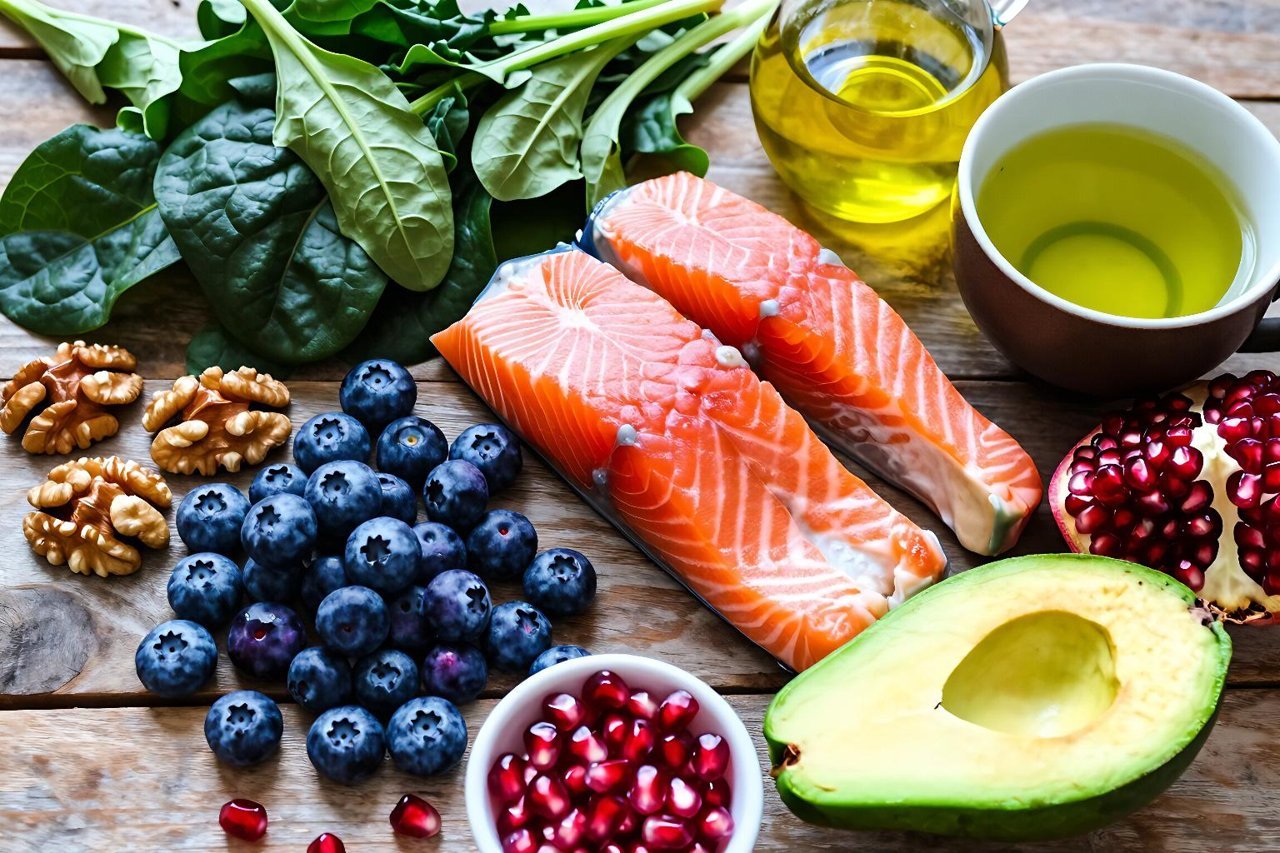
Dark leafy greens like spinach, kale, and Swiss chard are rich in folate, vitamin K, and carotenoids. Cruciferous vegetables, including broccoli, cauliflower and Brussels sprouts, contain sulforaphane, a compound that activates a cellular pathway known as Nrf2, which triggers your body’s own antioxidant defenses. In a 2021 study from the University of Milan, older adults who ate two cups of leafy greens per day had significantly lower levels of IL-6, a key inflammatory marker linked to faster aging.
Berries and Other High-Antioxidant Fruits
Blueberries, strawberries, blackberries, and raspberries are loaded with anthocyanins, the pigments that give them their deep colours. These compounds protect your skin from collagen degradation and support brain function. A 2019 trial published in the American Journal of Clinical Nutrition found that daily blueberry intake improved memory performance in older adults after 12 weeks. Pomegranates deserve a special mention for their high levels of ellagic acid, which has been studied for its ability to stimulate cellular renewal. If glowing skin is one of your goals, these fruits are one of the science-backed approaches to maintain youthful skin from the inside out.
Fatty Fish and Omega-3s
Salmon, mackerel, sardines, and anchovies are some of the best dietary sources of omega-3 fatty acids, specifically EPA and DHA. These fats are essential for maintaining the flexibility of your cell membranes, allowing nutrients in and waste out. They also support brain health and help regulate inflammation. A 2020 study in the Journal of Nutrition found that people with higher blood levels of omega-3s had a 20% lower risk of age-related diseases. Aim for two servings per week, and opt for wild-caught sardines or salmon to minimise mercury exposure.
Olive Oil, Avocados, and Nuts
Monounsaturated fats are the cornerstone of the Mediterranean diet, which is repeatedly linked to longer telomeres. Extra-virgin olive oil, in particular, contains polyphenols like hydroxytyrosol that fight inflammation and protect your blood vessels. A 2019 study in the Journal of the American College of Cardiology found that eating at least 30 grams of walnuts per day was associated with a 25% lower risk of cardiovascular disease and improvements in blood cholesterol. Avocados, with their high vitamin E content, also help protect your skin from UV damage.
Turmeric, Ginger, and Other Spices
Spices are a low-calorie way to add serious anti-aging power to your meals. Turmeric contains curcumin, which has been shown to modulate more than 100 biological pathways, including the inflammatory NF-kB pathway. A 2023 review in Aging and Disease highlighted curcumin’s potential to delay age-related cognitive decline. Ginger helps reduce muscle pain and soreness, while cinnamon can improve insulin sensitivity. A teaspoon of turmeric in soup or a dash of cinnamon in coffee is an easy daily habit.
Fermented Foods for a Younger Gut
Your gut microbiome influences everything from immunity to mood, and on a cellular level it can determine how fast you age. Fermented foods like sauerkraut, kimchi, kefir, and plain yogurt introduce beneficial bacteria that help crowd out problematic strains and produce short-chain fatty acids like butyrate. A 2022 review in Nutrients called the gut microbiome the “central regulator of aging”. Including at least one serving of fermented food per day is a simple way to keep that system in balance.
Build an Anti-Aging Plate: A Sample Day
Here’s how to translate those principles into actual meals. Start your morning with a smoothie made with spinach, frozen berries, flaxseed, and unsweetened kefir. That single meal contains prebiotic fibre, probiotics, and a wallop of antioxidant pigments.
For lunch, make a base of massaged kale, top it with grilled sardines or salmon, a quarter of an avocado, a handful of walnuts, and a generous drizzle of extra-virgin olive oil. Add some roasted sweet potato for a source of beta-carotene.
Snack on a cup of blueberries and a square of dark chocolate (at least 70% cacao). The cacao bean is also rich in polyphenols.
For dinner, cook a lentil and vegetable stew with turmeric, ginger, garlic, and a pinch of black pepper. Black pepper helps your body absorb curcumin nearly 2,000% better, so don’t skip it.
The Foods You Avoid Matter as Much as the Foods You Eat
Anti-aging isn’t just about adding foods. It’s also about limiting the ones that accelerate damage. Ultra-processed snacks, sugary drinks, and refined carbohydrates drive insulin resistance, inflammation, and glycation, a process where sugar molecules attach to proteins and compromise their function. Glycation is a major contributor to wrinkled skin and stiff joints. Cutting back on these foods doesn’t mean you have to be perfect, but reducing your weekly intake of sweetened beverages and processed meats can have a measurable effect on biomarkers like blood sugar and triglycerides.
Anti-Aging Is a Lifestyle, Not a Shopping List
A diet full of anti-aging foods is a powerful tool, but it works best when paired with other healthy habits. Sleep is when your body performs most of its cellular repair, and chronic stress raises cortisol, which degrades collagen and accelerates cellular aging. Exercise and strength training are equally crucial for maintaining muscle mass and metabolic health. In fact, research suggests the foods you eat can only do so much if you’re not also moving your body and managing stress. The gap between how long you live and how well you feel is a growing concern, especially for women, so take a closer look at the latest findings on healthspan vs. lifespan to see why a holistic approach matters.


