
Table of Contents
Two trolleys in the same supermarket queue tell a fairly complete story. One holds dried lentils, a cabbage, a block of cheddar, a whole chicken and a bag of carrots. The other holds cereal bars, a chilled ready meal, flavoured yoghurt drinks and a family bag of crisps. Both cost roughly the same. Only one of them keeps a household full until dinner.
That is the practical version of the whole foods vs. processed foods question. It isn’t a moral contest between “clean” and “dirty” eating. It’s a question about what your body does with what you hand it, and how much you have to eat to get the nutrients you were actually after.
What Actually Counts as a Whole Food
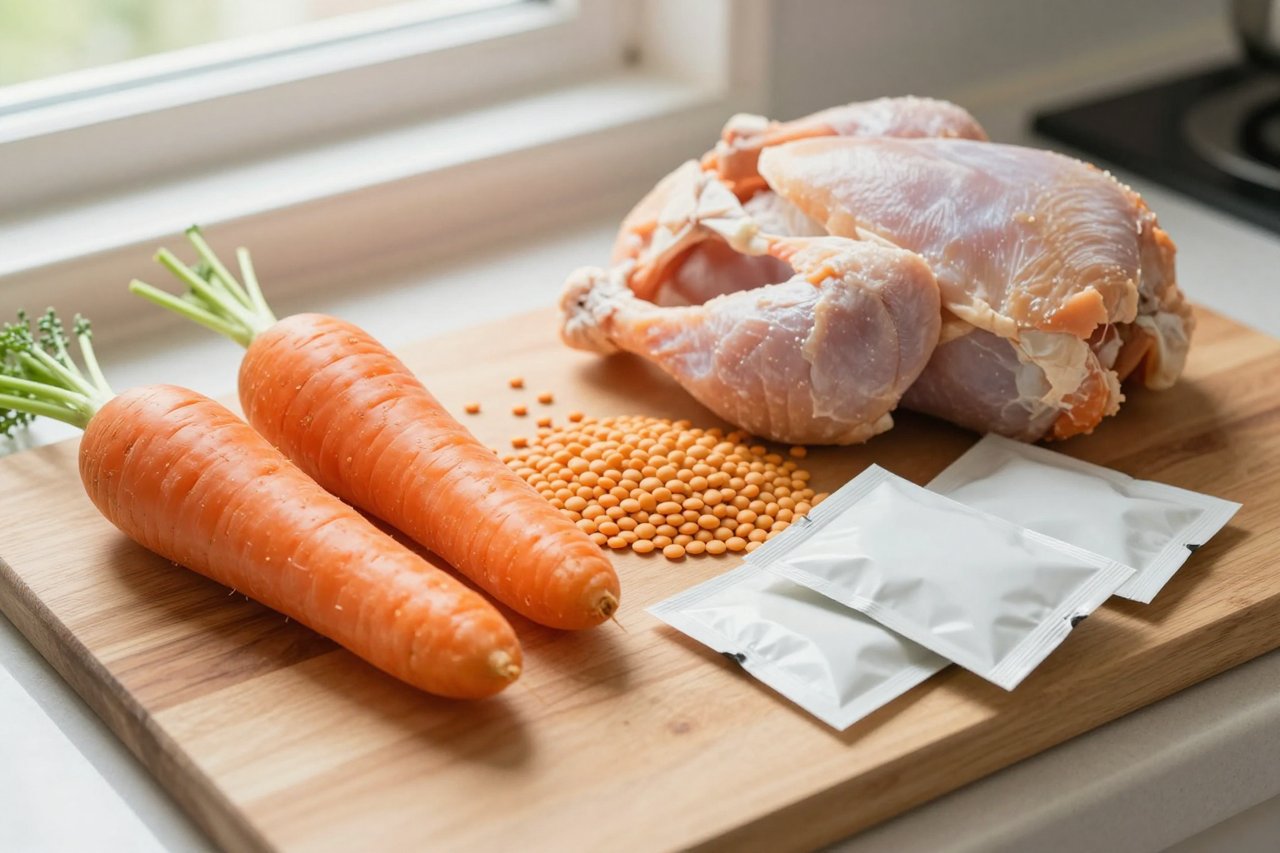
A whole food is close to the state it left the ground or the animal in. Carrots, lentils, eggs, whole fish, brown rice, apples, plain milk. Nothing added, nothing valuable stripped out.
Nutrition researchers usually work with the NOVA classification, which sorts everything into four buckets: unprocessed or minimally processed foods, processed culinary ingredients such as oil, butter, salt and sugar, processed foods such as cheese, tinned fish and sourdough, and ultra-processed foods such as soft drinks, packaged snacks, reconstituted meat and most breakfast cereals.

The line worth watching sits between the first bucket and the fourth. Canned tomatoes, plain yoghurt, wholemeal bread and frozen peas are all “processed” in a technical sense and all perfectly good food. A snack bar with 27 ingredients and a three-year shelf life is a different category of object. If you’ve read about eating closer to how our ancestors did, this paleo diet guide covers the reasoning behind that instinct in more depth.
The Nutrition Gap Is Bigger Than a Vitamin Count
Compare 100 grams of boiled potato with 100 grams of potato crisps. Same starting ingredient, completely different experience for your body. The potato arrives with water, potassium and a few grams of fibre. The crisps arrive with most of the water gone, a third of the weight in added fat, and a salt load that keeps you eating after the bag is empty.
That pattern repeats across the supermarket. Processing removes water, which concentrates calories. It removes fibre, which removes fullness. It adds salt, sugar and fat in combinations that rarely occur in nature and that the brain responds to hard. You end up eating more food to extract the same nutrients, and the surplus is usually refined starch and oil. The broader shifts in modern living that reshaped our health run along the same track.
Why Ultra-Processed Food Makes You Eat More
The clearest evidence came from a 2019 study at the National Institutes of Health, run by Kevin Hall’s team. Twenty adults lived in a metabolic ward for four weeks and were given either an ultra-processed or an unprocessed diet, matched for calories, sugar, fat, fibre and sodium as served. They ate as much or as little as they liked.
On the ultra-processed diet, people ate about 500 extra calories a day and gained roughly a kilo in two weeks. On the unprocessed diet, they lost a similar amount. Same nutrients on paper, opposite result in the body.
The likely reasons are mundane. Ultra-processed food is softer, so it goes down faster and the gut has less time to signal fullness. It’s more energy dense, so a plate holds more calories. It’s more rewarding, so you finish the packet. None of that is a character flaw. It’s a design feature.
Three Label Clues That Give Processed Food Away
You don’t need an app or a nutrition degree. The back of the packet does most of the work.
- Length of the ingredient list. Four or five recognisable items is a good sign. Fifteen items, several of which sound like laboratory reagents, is not. Maltodextrin, modified starch, soy protein isolate and vague “flavouring” are markers of heavy industrial formulation.
- Sugar wearing different names. Glucose-fructose syrup, malt extract, dextrose, invert sugar, fruit juice concentrate and rice syrup are all sugar for practical purposes. Manufacturers split them up so no single one lands near the top of the list.
- Sodium hiding behind flavour. Yeast extract, stock powder, soy sauce powder and “seasoning” all push salt up without the word salt appearing first. Bread and breakfast cereal are the quiet offenders most people miss.
Not All Processing Is the Villain
Frozen vegetables are picked and frozen within hours, which often locks in more vitamin C than a “fresh” courgette that spent a week in transit. Tinned beans, tomatoes and fish are cheap, shelf-stable and nutritionally sound. Plain oats, plain yoghurt and decent bread are processed foods that earn their place in a kitchen.
Fats deserve a specific mention because they’re still unfairly blamed. The type of fat you cook with matters more than the fact that it has been bottled, and this comparison of olive oil, vegetable oil and butter is a useful place to get that choice right.
Shifting the Ratio Without Rebuilding Your Life
Very few people go from a fully processed diet to a whole-food one and stay there. The shift that holds is made of swaps, not amputations.
Swap rather than quit
Flavoured yoghurt becomes plain yoghurt with fruit. Sugary cereal becomes oats with nuts. Crisps become roasted chickpeas. Instant noodles become frozen edamame with chilli oil. Each swap keeps the slot in your day and changes what fills it.
Keep one base you can build meals on
A pot of lentils, a tray of roasted vegetables, a batch of rice. Having something ready in the fridge is the biggest single predictor of whether you cook or order out. If you want a structured starting point, this guide to low carb eating shows how to organise meals around a protein and a vegetable rather than a packet.
Make the whole food the easy option
Washed fruit on the counter, chopped carrots at eye level, nuts in a bowl. Anything that needs three cupboards and a bag opened will lose to the thing that doesn’t.
Read the first three ingredients
They’re listed in descending order by weight, so the top three tell you what the product mostly is. If sugar, refined flour or palm oil leads, you know exactly what you’re buying.
Where Whole-Food Eating Goes Wrong
It turns into a personality. People cut entire food groups on the strength of a podcast, spend more on one bottle of cold-pressed juice than on a week of vegetables, and feel guilty about a slice of birthday cake. Extreme resets and cleanse protocols deserve scepticism, as this comparison of juice cleanses, fasting and whole-food resets sets out plainly.
Cost is the other trap. Whole foods aren’t automatically expensive, but the marketing around them is. Dried lentils, seasonal vegetables, eggs, tinned fish and frozen produce are among the cheapest calories in the shop. The premium attaches to the branding, not the nutrition.
A Rule That Survives Real Life
Aim for roughly 80 percent of what you eat to come from whole or minimally processed sources, and leave the other 20 percent alone. That ratio makes room for a Friday takeaway, a decent glass of wine, and the biscuits someone brought into the office.
Then anchor it with one habit: before anything goes in the trolley, glance at the first three ingredients. You’ll learn faster from that than from any diet book, and within a fortnight the processed versions tend to stop tasting like much at all.


