
Table of Contents
Commercial auto insurance exists because a personal auto policy and business use rarely line up. If your vehicle is a rolling toolbox, mobile office, delivery van, or shuttle, work changes the risk before the ignition turns. The downside of guessing wrong is not a shrug and a refund. It is a denied claim or a liability suit that threatens assets you didn’t list on an application.
A roofing contractor in my city learned this lesson when he pulled out of a parking lot in his personal pickup and hit a sedan. He was hauling a trailer loaded with shingles. The claim representative asked one question that mattered more than the accident itself: was this trip for business? The personal auto policy denied the claim because the trailer and cargo made the work use obvious.
What Counts as Business Use?
Business exposure isn’t only for delivery fleets. You also trigger it when you use a car for chores that support your company. Common triggers include:
- Traveling between two job sites with equipment loaded.
- Delivering or transporting goods for a fee.
- Hauling materials, tools, or samples, even if the vehicle is unmarked.
- Carrying employees, clients, patrons, students, or patients.
- Renting a vehicle while your own work van is in the shop.
- Using a personal car for regular errands such as bank deposits or supply pickups.
The most overlooked trigger is an employee running a personal vehicle for company errands. If they cause an injury, your company can be pulled into the lawsuit. The employee’s personal auto policy may exclude business use, and that is when your own commercial protection needs to step in.

What a Commercial Auto Policy Covers
While policy forms vary, a standard commercial auto policy bundles these protection blocks:
- Bodily injury and property damage liability: pays for injuries and damage you cause to other people with your vehicle.
- Medical payments or personal injury protection: covers medical bills for you and your passengers after a crash, regardless of fault.
- Uninsured and underinsured motorist: protects you when the other at-fault driver doesn’t have enough insurance.
- Collision: repairs your vehicle after an impact with another vehicle or object.
- Comprehensive: covers theft, fire, vandalism, glass, hail, and animal strikes.
- Hired and non-owned liability: covers rental vehicles and vehicles your employees use for company business.
The most important section for most businesses is liability. When your driver causes an accident and someone else is hurt, liability pays for their medical treatment, lost wages, vehicle repairs, legal fees, and possibly more. Those costs add quickly, which is why state minimum limits often leave a business exposed. If you want to see exactly where liability insurance starts and stops, this guide to liability insurance coverage and its blind spots will prevent you from building a policy around weak limits.
Collision and Comprehensive: Keep the Names Straight
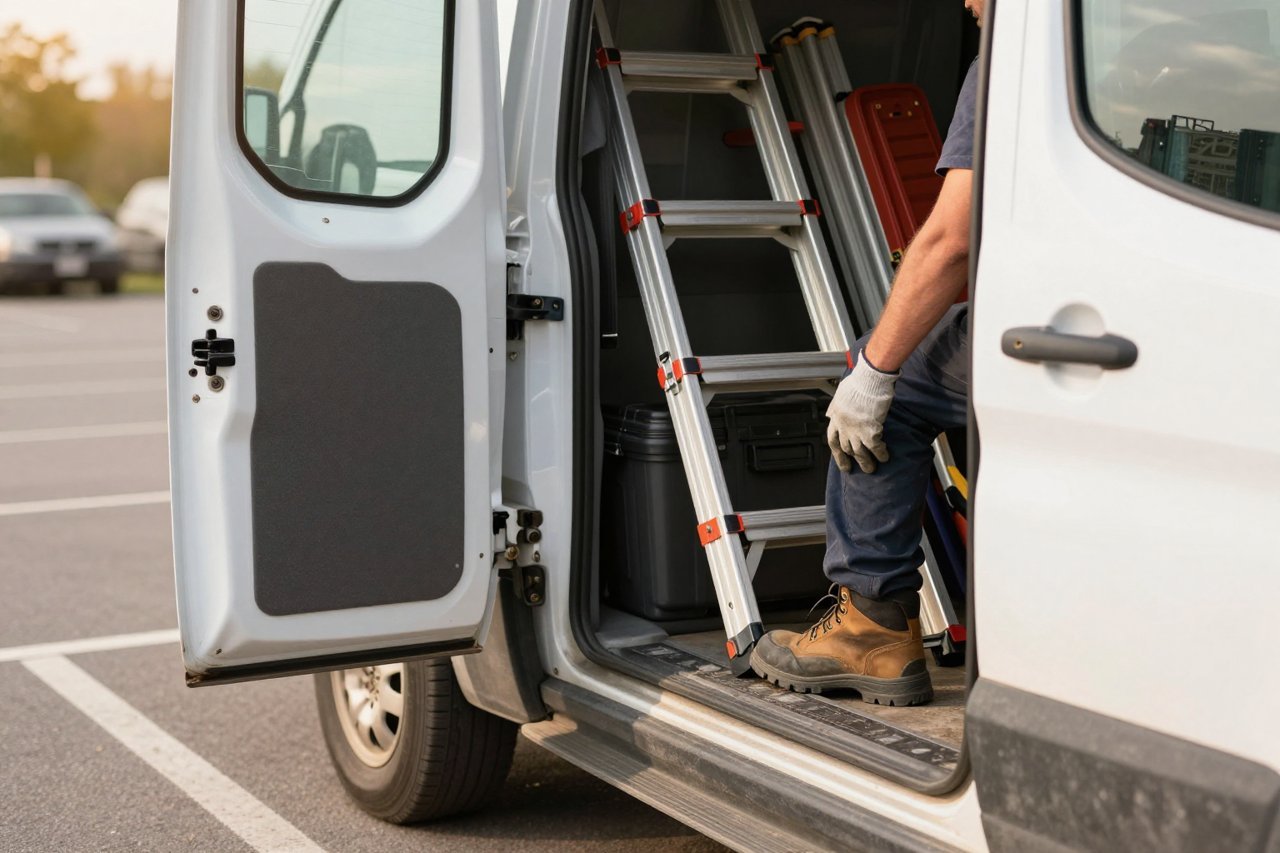
Collision pays when your vehicle hits a streetlight or another car. Comprehensive pays for theft, fire, falling trees, hail, and accidental animal contact. On a commercial vehicle, both values need to reflect custom fittings and the cost to replace the truck or van. If you carry a ladder rack, a lift gate, removable shelving, or expensive permanently attached equipment, the adjuster needs to know about it. The real difference between comprehensive car insurance and collision becomes even more important when a work vehicle is new or financed.
The Gaps That Show Up After a Claim
Even an excellent commercial auto policy is still a vehicle policy. It is not a tool policy, and it is not a catch-all liability program. The most common gaps are:
- Expecting tools, cargo, or inventory to be covered under comprehensive coverage. They rarely are.
- Assuming employees are protected when they use their own cars for company tasks.
- Skipping rental vehicle protection while the main vehicle is being repaired.
- Forgetting trailers, which often need to be scheduled separately from the tow vehicle.
Tools and portable equipment belong on an inland marine or equipment floater. An employee’s personal car used for company errands needs hired and non-owned auto liability. A rental box truck needs the same policy extension if the policy doesn’t automatically apply. If your quote does not mention those risks, ask for them in writing before you accept anything.
The situation gets more complicated when an employee is hurt while driving for work. Workers compensation normally handles the employee’s medical bills and wage loss, while the commercial auto policy handles damage to other people and their property. This overlap confuses a lot of small business owners. The article on workers compensation costs and the mistakes to avoid explains why both policies matter even when a business owns only one vehicle.
What Drives Commercial Auto Insurance Prices
Commercial auto isn’t priced with a single state tariff, but the underwriter is comparing your operation to similar businesses. The biggest rate drivers are:
- The primary business use of the vehicle.
- Gross vehicle weight rating and vehicle class.
- How far from the home base the vehicle travels.
- Annual mileage and road conditions.
- The driving record of everyone scheduled on the policy.
- Your business claims history.
- Where the vehicles are parked at night.
A delivery truck that runs an 800-mile route each week will cost far more than a pickup that stays within a few miles of the workshop. One at-fault claim can also push your renewal higher for three years. For a standard work van, annual commercial auto premiums commonly run between $1,200 and $2,900, and deductibles, liability limits, and driver history can move that number in either direction.
The coverage never exists in a vacuum, especially for a newer business. A complete package may include property, general liability, and crime coverage in addition to auto. If you are starting from scratch, a small business insurance overview can help you see where commercial auto fits and where you might already have overlapping coverage.
How to Cut Premiums Without Cutting Away Protection
You don’t need to strip your policy down to the legal minimum to save money. Start with the moves that affect the price without shrinking your safety net:
- Run motor vehicle reports before quoting. A driver with a suspended license or multiple DUIs can change the entire quote.
- Raise collision and comprehensive deductibles. If the vehicle is older, a $2,500 deductible can save hundreds while still protecting you from a catastrophic loss.
- Enroll in a usage-based insurance program. Telematics devices that measure hard braking, speeding, and idle time often unlock discounts for commercial fleets.
- Match the policy to actual use. If you only cover a 25-mile radius, don’t blindly quote a policy rated for unlimited highway travel.
- Pay the annual premium in full. Monthly installments often carry fees and interest-like charges.
- Send every new hire through a safety review. Driving records change, and a claim from an unreviewed driver hurts your loss ratio.
A Smarter Way to Compare Commercial Auto Quotes
Start by getting three or four quotes, but force every quote to start from the same assumptions. If one agent quotes 8,000 annual miles and another quotes 25,000, you are not comparing the same policy. Write down your actual annual mileage, the driving radius, the number of scheduled drivers, and the coverage limits you want before you contact anyone.
Pay close attention to whether the quote uses a combined single liability limit or split limits. A $1 million combined single limit can look similar to a $250,000 per person limit until you are facing a serious injury claim. Check for rental reimbursement, roadside assistance, and whether medical payments are included or sold separately. If you need a proven process, the same technique used to compare car insurance quotes without sacrificing actual protection applies here too. The difference is that your agent should specialize in commercial lines and understand the exact state regulations for your vehicle type.
Questions to Ask Before You Sign
The final step is not to sign just because the number looks reasonable. Set up a short call with the agent and ask these questions:
- Are the vehicles covered on a replacement cost basis or actual cash value?
- Does the policy automatically cover a newly hired employee, or do I need to notify you before they drive?
- Are tools and equipment covered under any part of this policy, or do I need to add an inland marine floater?
- Does the policy extend to rental vehicles, or do I need to add hired auto coverage?
- What happens when a driver uses a company van for personal errands after hours?
- If I add a trailer later, will it be covered in the same quote?
Ask those questions before you sign, because the best commercial auto insurance policy is the one that matches what you actually do with a vehicle. A policy can be affordable by the thousand-mile route, but the real price is measured when a claim happens.


