
Table of Contents
If you’ve ever financed a car, you’ve likely been told to carry comprehensive car insurance. But many drivers misunderstand what this coverage does. They think it’s a catch-all that pays for every dent, scratch, and fender bender. The truth is more specific, and understanding the details can save you hundreds of dollars a year, or protect you from a devastating out-of-pocket loss.
Comprehensive insurance is often called “other than collision” coverage. It steps in when your car is damaged by something that isn’t a crash with another vehicle or object. That includes theft, hail, falling branches, fire, vandalism, and hitting a deer. You buy it as part of a full coverage policy, and lenders usually require it until your loan is paid off.
But what exactly do you get for your premium? And when does comprehensive coverage become a waste of money? Let’s break it down.
What Comprehensive Car Insurance Actually Covers
Comprehensive coverage pays to repair or replace your vehicle when it’s damaged by an event outside of a collision. In simple terms, it handles the unpredictable things that happen while your car is parked, sitting in your driveway, or moving when a deer leaps out of the woods.

A standard comprehensive policy covers:
- Theft of your entire vehicle, plus damage from a break-in
- Vandalism such as keyed doors, slashed tires, or smashed windows
- Fire damage, whether from an engine fire or an external wild fire
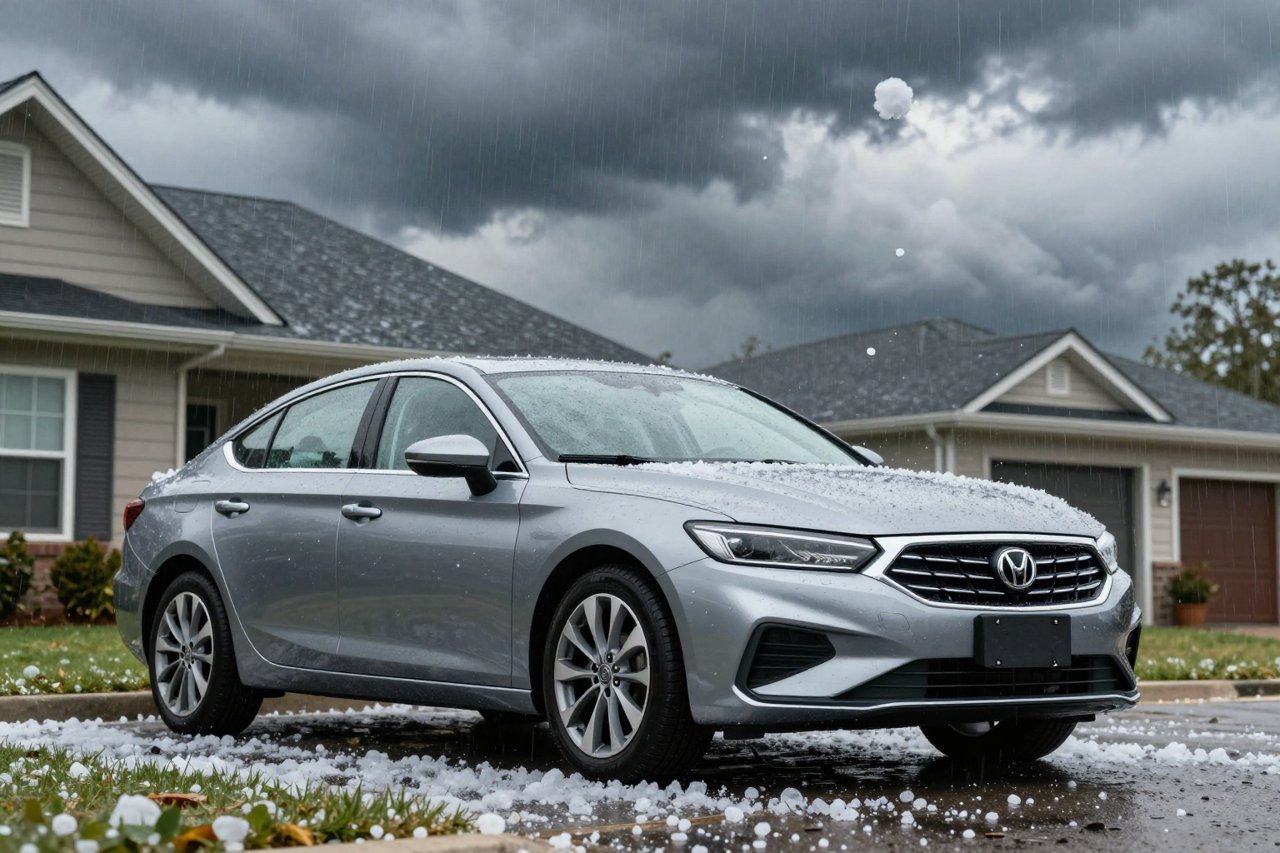
- Weather events including hail, tornadoes, and flooding
- Falling objects like tree branches, ice, or debris
- Animal strikes such as hitting a deer, moose, or even a large bird
- Glass breakage including your windshield, often with no deductible on the glass claim itself (depending on your policy)
- Civil disturbances like riots that result in damage
If your car is stolen and not recovered, comprehensive insurance pays you the actual cash value of the vehicle, minus your deductible. If a tree lands on your roof during a storm, the repair shop sends the bill to the insurance company, and you cover the deductible amount.
What Comprehensive Coverage Doesn’t Include
Here is where many policyholders get burned. Comprehensive car insurance does not cover damage from a collision with another car. It also won’t pay for the other driver’s medical bills or car repairs. Those costs are handled by your collision coverage and liability insurance.
Imagine you’re driving through an intersection and run a red light, smashing into an SUV. Your comprehensive policy will say no. The repairs to your own car go through collision coverage. The other driver’s vehicle and injuries are paid by your liability coverage. Comprehensive only looks at non-driving incidents.
Common exclusions also include:
- Mechanical breakdown regardless of cause
- Normal wear and tear
- Damage from hitting a pothole (that’s a collision claim)
- Personal belongings stolen from inside your car. Your laptop and golf clubs are protected by your renters or homeowners insurance instead
- Rental cars. If you drive a rental, you need that company’s coverage or a provisional endorsement on your own policy
Another overlooked gap involves aftermarket parts. If you installed a custom sound system or expensive rims, a base comprehensive policy typically won’t cover the added value. You need an endorsement that lists those modifications specifically.
How Comprehensive Coverage Is Priced
The average cost of comprehensive car insurance in the United States is around $200 to $400 per year, but your premium depends on several factors that you control or can influence.
Your deductible has the biggest immediate impact. A higher deductible lowers your annual premium dramatically. For example, if you raise your comprehensive deductible from $250 to $1,000, you might save 25 to 35 percent on that portion of your coverage. That’s meaningful for most households.
Your vehicle’s age and value matter too. A 2023 electric SUV costs more to replace than a 2010 sedan. Insurance companies price comprehensive based on the potential payout, so the more your car is worth, the more you pay.
Location also plays a role. Drivers in urban areas face higher theft and vandalism rates, while rural drivers may encounter more animal collisions. If you live in a hail-prone region like Texas or Oklahoma, your comprehensive premium will be higher than in areas with milder weather.
Your claim history affects it as well. If you’ve filed two windshield claims in the past three years, the insurer may raise your comprehensive rate just like they would with an at-fault accident.
Comprehensive vs. Collision: Why You Usually Need Both
When insurers talk about “full coverage,” they’re usually referring to a policy that bundles comprehensive and collision together with state minimum liability. Collision coverage pays for damage to your own car when you hit another car, a telephone pole, a guardrail, or even a deep pothole. It makes no difference whose fault it is.
Comprehensive and collision are priced separately. You can carry a $500 deductible on one and a $1,000 deductible on the other. Some drivers choose to lower their comprehensive deductible because weather events and broken windshields happen more often than accidents, while others raise collision deductibles to keep monthly payments down.
The problem arises when drivers drop one to save money without understanding what can go wrong. Imagine your car is parked on the street and a drunk driver swerves into it at 3 a.m. The other driver has no insurance and flees. Your uninsured motorist property damage coverage might only kick in if your policy specifically includes it. Otherwise, you’re looking at collision coverage to repair your car, and if your lender required comprehensive but not collision, you could end up holding the bill.
How Much Comprehensive Coverage Do You Actually Need?
Comprehensive insurance is not mandatory in any state. Lenders require it while you have an active loan or lease, but once the car is paid off, you can drop it whenever you want. The deciding factor should be your car’s current value.
A simple rule of thumb works well: look up your car’s trade-in or private sale value. If it is less than about $2,000, comprehensive coverage often isn’t worth the annual premium. Paying $300 per year to protect a car worth $1,800 makes little financial sense, especially with a $500 deductible. The maximum payout you’d receive is just $1,300 after the deductible, and you’d collect that only if the car is totaled.
On the other hand, if your car is worth $8,000 or more, dropping comprehensive insurance is a risky gamble. A single hailstorm in the Midwest routinely causes $4,000 to $7,000 in body damage. Compare that to the two or three years of premiums you’d save by dropping the coverage, and it’s clear why many drivers keep it.
For newer vehicles, comprehensive is a no-brainer. A stolen 2025 SUV could set you back $45,000 if you didn’t have coverage and couldn’t recover it. The annual comprehensive premium, usually less than $600, looks like a bargain in that context.
If your vehicle is paid off and you’re considering deleting it, take a closer look at the actual numbers. Ask your insurer for a breakdown of what you’d save each month. Then set that exact amount aside in a dedicated car repair fund. That strategy works well for disciplined savers, but if you’re likely to spend the money elsewhere, keep the coverage.
How to Save on Comprehensive Car Insurance Without Cutting Corners
You don’t have to drop valuable coverage to reduce your premium. Several legitimate discounts and adjustments can lower your bill while keeping your protection intact.
Bundling your auto policy with your home or renters insurance routinely earns a multi-policy discount of 10 to 20 percent. That’s one of the simplest moves you can make. If you run a small business, check whether your small business insurance package offers any vehicle-related savings when you keep commercial and personal policies separate.
Increasing your deductible from $500 to $1,000 is the most effective single technique. A higher deductible reduces the risk the insurer carries, and they reward you for it with a lower rate. Just make sure the amount is sitting in your savings account before you make the change.
Ask about safety features. If your car has an anti-theft system, a telematics device, or even a dashcam, some insurers offer equipment discounts. Older vehicles without modern security systems can sometimes justify a small investment in a steering wheel lock or a GPS tracker, which may qualify for a discount.
Check your policy for duplicate coverage. If you have roadside assistance through another membership, your insurer’s version may be redundant. Removing it could shave a few dollars off your bill.
Comparison shopping remains the most effective tactic. Your premium can vary by hundreds of dollars between providers for the exact same coverage, particularly for drivers in their 30s with clean records. When you get a quote, make sure the deductibles and coverage limits match your current policy so you’re comparing apples to apples. As you explore options, pay attention to how insurers handle claims. A low rate is meaningless if the company refuses to pay for legitimate windshield damage or drags out a total loss settlement. Reading reviews and talking to other policyholders in your area helps you avoid that headache.
Also consider switching your loyalty. Many drivers stick with the same auto insurer for a decade, never realizing that new customers receive better rates. If you’ve had the same policy for years and your premium keeps creeping up, quote the same coverage with competitors. You can also review how major companies stack up, for example a State Farm Car Insurance comparison for 2026 might reveal features you won’t find elsewhere.
Finally, bundle your strategy with your driving habits. Drivers who can prove low annual mileage through an app often get a low-mileage discount. If you’ve switched to remote work and no longer commute daily, you could be leaving that saving on the table. For more ways to trim your expenses, this real world guide to cheap auto insurance walks through which money-saving tactics actually hold up and which ones are gimmicks that backfire.
Comprehensive coverage exists for the unexpected, and deciding whether to carry it is a personal risk calculation. When your vehicle has real value, the premium buys peace of mind. When it doesn’t, you’re better off pocketing the cost and becoming your own insurer. Run the numbers for your car today, and you’ll know exactly which side of that line you stand on.


