
Table of Contents
There’s probably a jar of coconut oil in your kitchen right now, and you’ve almost certainly read that it will transform your hair. Half the internet swears by it. The other half insists it wrecked their hair. Both camps are telling the truth, and the deciding factor is rarely the oil itself. It’s technique.
Most of the frustration people hit with coconut oil comes from a handful of quiet mistakes that get copied from post to post and video to video. Fix those and the stuff starts behaving the way everyone promised it would.
Leaving It In Overnight, Every Single Night
Coconut oil is unusual among plant oils because it genuinely penetrates the hair shaft. Its lauric acid molecules are small enough to slip under the cuticle, and research shows it can reduce the amount of protein hair loses during washing. That part is real. The idea that more time equals more benefit is not.
Thirty minutes before a wash gets you most of what coconut oil has to offer. An overnight treatment once a week is fine for most people. Doing it nightly starts causing problems:

- Congested scalp. Coconut oil is comedogenic, which means it can plug follicles. A nightly layer sitting on your scalp for eight hours is a reliable way to end up with itching and small bumps along the hairline.
- Flare-ups of flaking. This one is genuinely contested. Lauric acid has antifungal activity against Malassezia in lab studies, yet the yeast is also lipid-dependent, so plenty of dermatologists warn that heavy oils can feed it. In practice, some people with dandruff find coconut oil soothing and others find their flakes double within a week.
- Stiff, snapping strands. Fine, low-porosity hair tends to go crunchy with constant oiling. If your hair snaps instead of stretching when you tug a strand, you’ve overshot.
If your hair feels brittle after a treatment, cut back to once a week rather than quitting altogether.
Assuming It Grows Hair
Coconut oil does not stimulate follicles. It has no mechanism for that. What it does is reduce breakage, which means the hair you grow actually survives long enough to add length. That’s a meaningful difference, and it’s why someone with breakage-heavy hair can gain several inches over a year of consistent oiling while someone with a thinning crown sees nothing change.
If your actual concern is shedding or a widening part, oil isn’t the tool. Looking at how minoxidil, natural actives and peptide serums compare will give you a far more honest picture of what each can and can’t do.
Grabbing Whatever Jar Is Cheapest
The label matters more than people expect. Virgin coconut oil is unrefined, keeps its coconut smell and retains the polyphenols and vitamin E that make it worth using. Refined versions are bleached and deodorised, so they’re milder on scent but stripped of most of the extras. Fractionated coconut oil, sometimes sold as MCT oil, has had the long-chain fats removed so it stays liquid at room temperature. It absorbs quickly and never goes solid in your hair, but it’s a different product with a different job.
There’s a proper breakdown of refined, virgin and fractionated coconut oil if you want to match the type to your hair rather than guessing. Short version: virgin for pre-wash treatments, fractionated for leave-in finishing on fine hair.
Using Way, Way Too Much
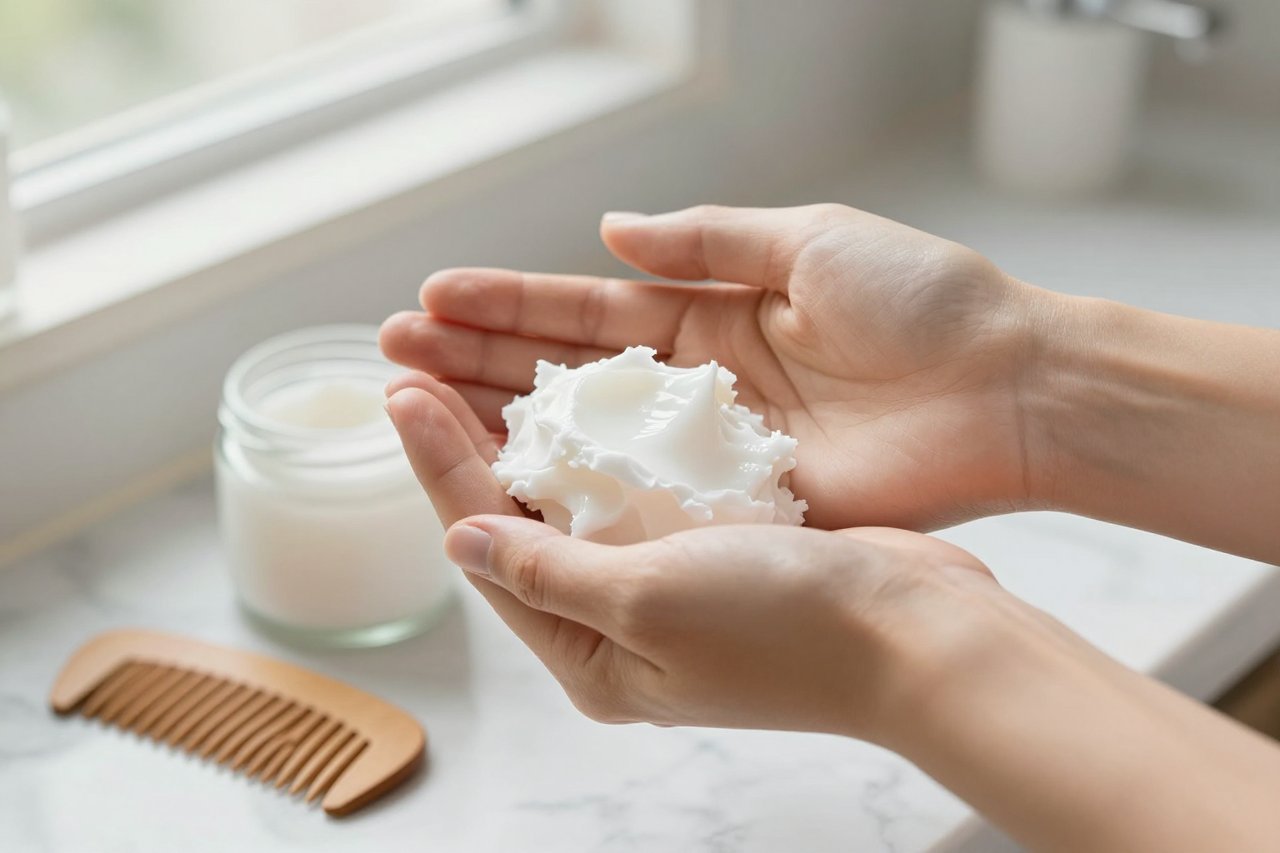
Two tablespoons is not a serving size. For shoulder-length hair, start with a teaspoon, warm it between your palms until it’s fully liquid, and work from mid-length to ends. If you’ve applied enough that your hair looks wet and dark, you’ve used roughly three times what you needed, and you’ll spend the next two washes trying to get it out.
A wide-tooth comb distributes it far better than a brush. Brushing wet, oiled hair is also how people snap strands at the root, so keep the brush out of the equation entirely.
Treating It as Heat Protection
This myth refuses to die. Coconut oil does not protect hair from a 200°C straightener. Unrefined coconut oil starts smoking around 175°C, which means a hot tool can effectively cook it on your strands. Coating your hair in oil and then flat-ironing it is one of the fastest routes to fried, brittle ends. Use an actual heat protectant, and save the oil for before or after styling.
Not Washing It Out Properly
Coconut oil does not rinse out with water, and a gentle sulphate-free cleanser often won’t shift a heavy treatment either. You need a proper shampoo, and on a saturated head of hair that usually means lathering twice: once to break the oil, once to actually clean the scalp. Leaving residue behind is the number one reason people complain that coconut oil made their hair flat and greasy.
If you’re already dealing with thinning or reactiveness, the shampoo you use for the wash-out step is worth choosing deliberately. There’s a useful comparison of the main shampoo types for hair loss that covers what each formula does well and where it falls short.
Only Using It One Way
Most people pick a single method and stick to it. Coconut oil is more useful when you split it into two jobs. As a pre-wash treatment on dry hair, it has time to work its way under the cuticle. As a finishing step, one or two drops on damp ends seals in moisture without weighing the rest of your hair down. Doing both, at the right amounts, gets you noticeably better results than either alone.
There’s a full sequence for this in this step-by-step coconut oil routine, and if you like a lighter delivery for mid-week touch-ups, a DIY coconut oil hair spray with rosemary covers fine hair without the heaviness.
Cold Weather Surprises
Virgin coconut oil solidifies below about 24°C. If your bathroom is chilly, you’re not applying a liquid, you’re dragging solid fat through your hair, which sits on the surface instead of absorbing and leaves white flecks behind. Scoop it out, warm it in your palms until it’s completely clear, then apply.
Expecting It to Fix Split Ends
Nothing repairs a split end. Coconut oil can coat the damage and make ends look smoother and less frizzy for a day, which is genuinely useful, but the split itself is still there and will keep travelling up the strand until you cut it. Two or three weeks of oiling a head full of splits just delays the trim you needed.
Who Should Skip Coconut Oil Altogether
Coconut oil suits medium to thick hair with some porosity, and it’s close to ideal for hair that’s been bleached or chemically straightened, since damaged cuticles soak it up. It’s a poor match for a few groups:
- Very fine, low-porosity hair that sits flat no matter what you do. The oil tends to coat rather than absorb, and you get limp roots within an hour.
- Active seborrheic dermatitis or fungal scalp issues, where adding oil to the scalp is a gamble you don’t need to take.
- Anyone with a coconut allergy, including contact reactions to the fruit itself, which show up as itching and redness along the hairline.
- Protein-sensitive hair that already feels straw-like and snaps easily. Coconut oil’s protein-preserving effect can push that further.
If you fall into one of those groups, lighter oils like squalane, jojoba or fractionated coconut oil will do a similar surface job without the weight or the scalp risk. Use it on your ends only, wash it out fully, and skip the scalp entirely. That alone solves a large share of the coconut oil complaints you’ll read about, and it costs nothing to try.


