
Table of Contents
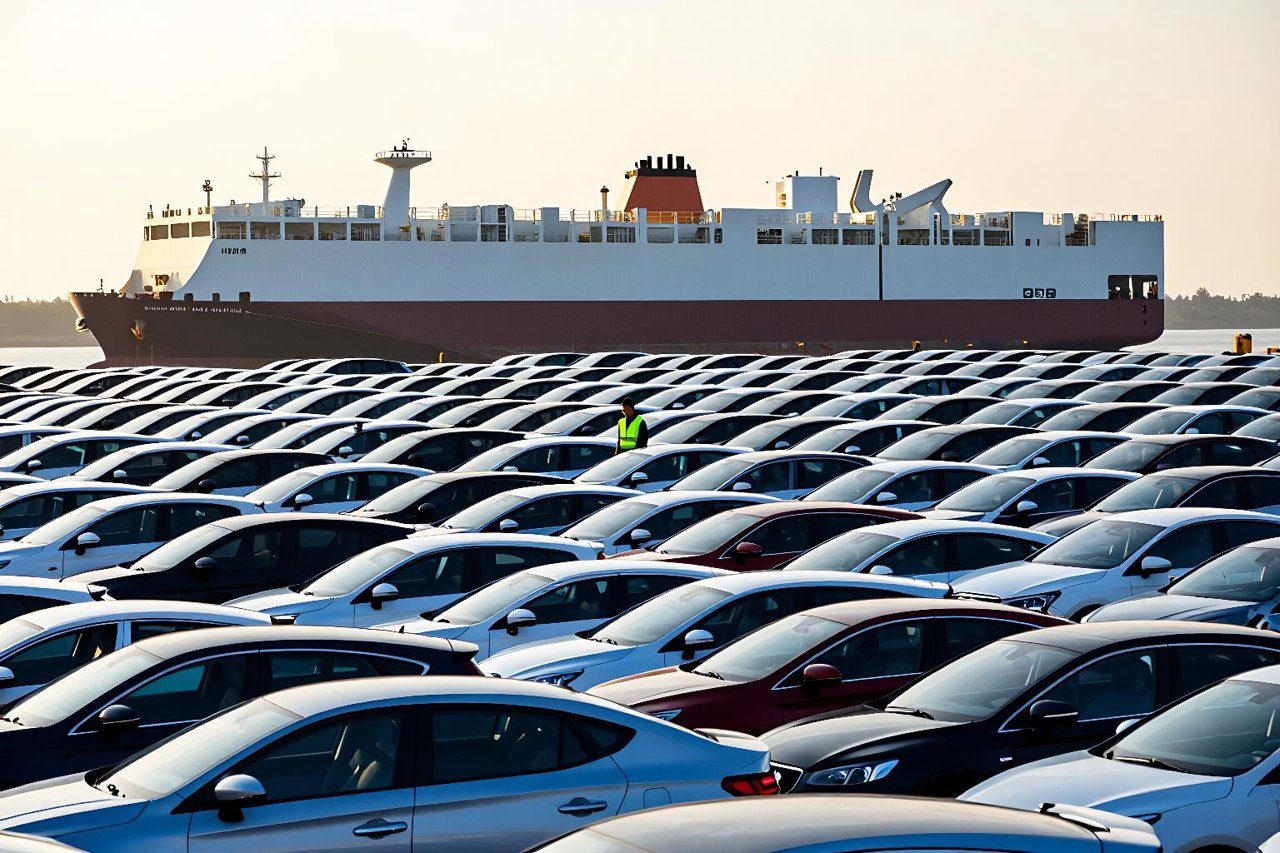
In April 2025, a car carrier docking at the Port of Los Angeles unloaded thousands of vehicles that had just become 25% more expensive to bring ashore. Nobody at the terminal was confused about what had happened. Everyone in the industry was arguing about who would end up paying for it. That argument is the whole story of automotive tariffs, and it matters beyond the dock, because the answer eventually lands on a dealership window sticker near you.
What an automotive tariff actually is
A tariff is a tax collected at the border on goods entering a country. Customs authorities charge it, the importer of record writes the cheque, and the money goes into the national treasury. The exporting country doesn’t pay it, despite what plenty of political rhetoric implies. A tariff is a domestic tax on imported things, and the question of who ultimately absorbs the cost has a name in economics: tax incidence. For cars, that cost travels down a chain running from manufacturer to distributor to dealer, and finally to whoever signs the finance agreement.
Most automotive tariffs are ad valorem, meaning a percentage of the declared value. A 25% tariff on a car invoiced at $30,000 adds $7,500 before the vehicle clears customs. Some countries use specific tariffs instead, charging a flat amount per vehicle or per engine capacity. A few use both at once, which is where the maths starts to get ugly.
The rates are wildly uneven, and that’s half the story
“Tariff” without a number and a product code attached is a meaningless word. The same vehicle can face 2.5% entering the United States and 10% entering the European Union, purely because of the customs category it happens to fall into.

Real rates on the books
- United States, passenger cars: 2.5% for decades, until the 2025 round of measures pushed it to 25% on imported vehicles.
- United States, light trucks: 25%, courtesy of the “chicken tax” introduced in 1964 and never repealed.
- European Union: 10% on cars, and 22% on some commercial vehicles.
- China: 15% on imported cars, with additional levies that shift with the political weather.
- India: up to 100% on imported cars, one of the steepest walls in the world.
That light truck line explains a small mystery of the American car market. Pickups are among the most profitable vehicles on sale, and almost every one sold in the US is built in North America. It isn’t patriotism. It’s a six-decade-old tax on imported trucks that made local assembly the only commercially sensible option.
Parts are a bigger headache than finished cars
Tariffs on complete vehicles get the headlines. Tariffs on components cause more chaos, because automotive supply chains are not linear. A single part can cross a border several times before it ends up in a finished car. A metal stamping might be pressed in Ohio, machined in Ontario, wired into a harness in Mexico, and finally bolted into a vehicle in Michigan.
Each of those crossings is technically a taxable event. Trade agreements exist to stop the tax stacking up, and the US-Mexico-Canada Agreement does it through rules of origin: a vehicle needs roughly 75% of its value to originate within the region to qualify for duty-free treatment. When the 2025 US tariffs arrived, the administration built in an offset so that USMCA-compliant vehicles paid duty only on their non-US content. That sounds generous until you consider the paperwork involved in calculating it, component by component, across millions of vehicles.
Who actually pays
The importer of record pays the government, and that is where the certainty ends. Whether the cost is absorbed, passed on, or split depends on three things: how much margin the manufacturer has, how much pricing power the brand has, and how long the tariff is expected to last.
A halo-model supercar can carry a tariff increase with a shrug. A budget hatchback competing on a $2,000 price gap to the next model up cannot. In practice, most automakers did a bit of everything in 2025: absorbed part of the hit, cut incentives, trimmed production of low-margin models, and raised prices on the rest. Investors reacted accordingly, and the most valuable automotive companies in the world didn’t all move in the same direction. Firms with a heavy import mix took harder hits than those with large domestic footprints.
Where it lands: the car lot and the repair shop
New car prices are only the first channel. Tariffs also push up used car values, because buyers priced out of the new market bid up the second-hand supply. They raise collision repair costs, since replacement panels, sensors and glass are often imported, and insurers quietly fold the increase into premiums. Fleets get stung twice, once on vehicle purchase and again on parts.
The effect isn’t always a clean percentage either. A tariff on a $90,000 luxury SUV is $22,500, but the manufacturer might instead trim standard equipment to keep the sticker under a psychological threshold. Buyers see the same price and get less car. That’s a tariff as well, just less visible.
Why carmakers build where they sell
Tariffs are the main reason the global car industry looks the way it does. BMW builds SUVs in South Carolina, Toyota builds pickups in Texas and Kentucky, and Hyundai opened a $7.6 billion plant in Georgia partly to shorten supply lines into its biggest market. Factories get sited to dodge borders, not simply to chase cheap labour.
This is also why the league table of global production is so sticky. Relocating a plant takes three to five years and a billion dollars, so a tariff announcement today shapes where cars are built in 2030. You can see the footprint clearly in the largest car manufacturers in the world, where a handful of groups dominate largely because they spent decades localising assembly market by market.
The retaliation problem
Tariffs rarely stay one-sided. When the US raised duties on steel and aluminium in 2018, the EU responded with levies on motorcycles, denim and bourbon. Harley-Davidson shifted some production to Europe to escape them. The pattern repeats: the exporting side picks goods that are politically visible and concentrated in electorally sensitive regions.
Car tariffs invite the same response, and it hits exporters hardest. A country that taxes vehicle imports risks having its own vehicle exports taxed in return, often at a higher rate. For an industry with thin margins and long capital cycles, the uncertainty is as damaging as the tax. Manufacturers delay plant decisions, dealers run down inventory, and buyers wait to see what happens next.
How to read the next tariff headline without getting whiplash
Coverage of automotive tariffs tends to swing between “prices will soar” and “nothing will change”. Four questions cut through most of it.
- What’s the rate, and against whom? A 25% duty is a different animal from a 10% one, and a country-specific rate hits a very different set of nameplates.
- Which product codes are covered? Finished vehicles, parts, batteries, steel and semiconductors are all separate battles. A “car tariff” that excludes parts is not the same policy as one that includes them.
- What’s exempt, and under what rule? Rules of origin and offset mechanisms decide whether a tariff is a paper tiger or a genuine cost.
- How long is it meant to last? Measures announced as negotiating leverage often get traded away within months. Ones written into statute tend to stick around.
Getting those four answers tells you more about the eventual price of a car than any press conference will. A tariff is a tax with a political purpose, and the number that matters is the one still standing after the negotiation ends.


