
Table of Contents
Ask a room of adults what they remember from history class and the answers come back almost identical: Henry VIII had six wives, the Romans built straight roads, and 1066 is a year worth remembering. Fair enough. But the subject most of us sat through was a trimmed-down version of the past, shaped by exam boards, page limits and the need to cover four centuries before half term.
Which is why the top 7 historical facts most people never learned in school tend to land like small shocks. They aren’t obscure trivia. They’re documented, sourced, and often stranger than anything a novelist would dare invent.
1. Oxford University Was Teaching Before the Aztec Empire Existed
There are records of teachers lecturing at Oxford from around 1096. The Aztec capital of Tenochtitlan, built on an island in Lake Texcoco under what is now Mexico City, was founded in 1325. That’s a gap of more than two centuries, and it widens the more you look. Machu Picchu was raised around 1450. The first printing press in England arrived in 1476, by which point Oxford’s oldest colleges were already several hundred years old.
Two worlds running in parallel
A student at Oxford in 1250 could have read Aristotle, calculated the date of Easter and argued about theology. He would have had no idea that a city of perhaps 200,000 people existed on a lake in central Mexico. The two civilisations ran side by side for generations without a single shared word. History taught as one straight timeline hides that entirely.

2. The Shortest War in History Lasted About 38 Minutes
On 27 August 1896, the Sultan of Zanzibar died and his cousin, Khalid bin Barghash, took the throne without British approval. Britain issued an ultimatum demanding he stand down. He refused, barricaded himself in the palace with around 2,800 supporters, and pointed a handful of ageing cannons at the harbour.
At 9:02 a.m., British warships opened fire. At 9:40, the palace flag was struck. Around 500 Zanzibaris were killed, mostly inside the palace walls, while one British sailor was injured. The Sultan fled to German East Africa and the affair was over in under three quarters of an hour, which makes the Anglo-Zanzibar War the shortest conflict on record.
3. Vikings Never Wore Horned Helmets
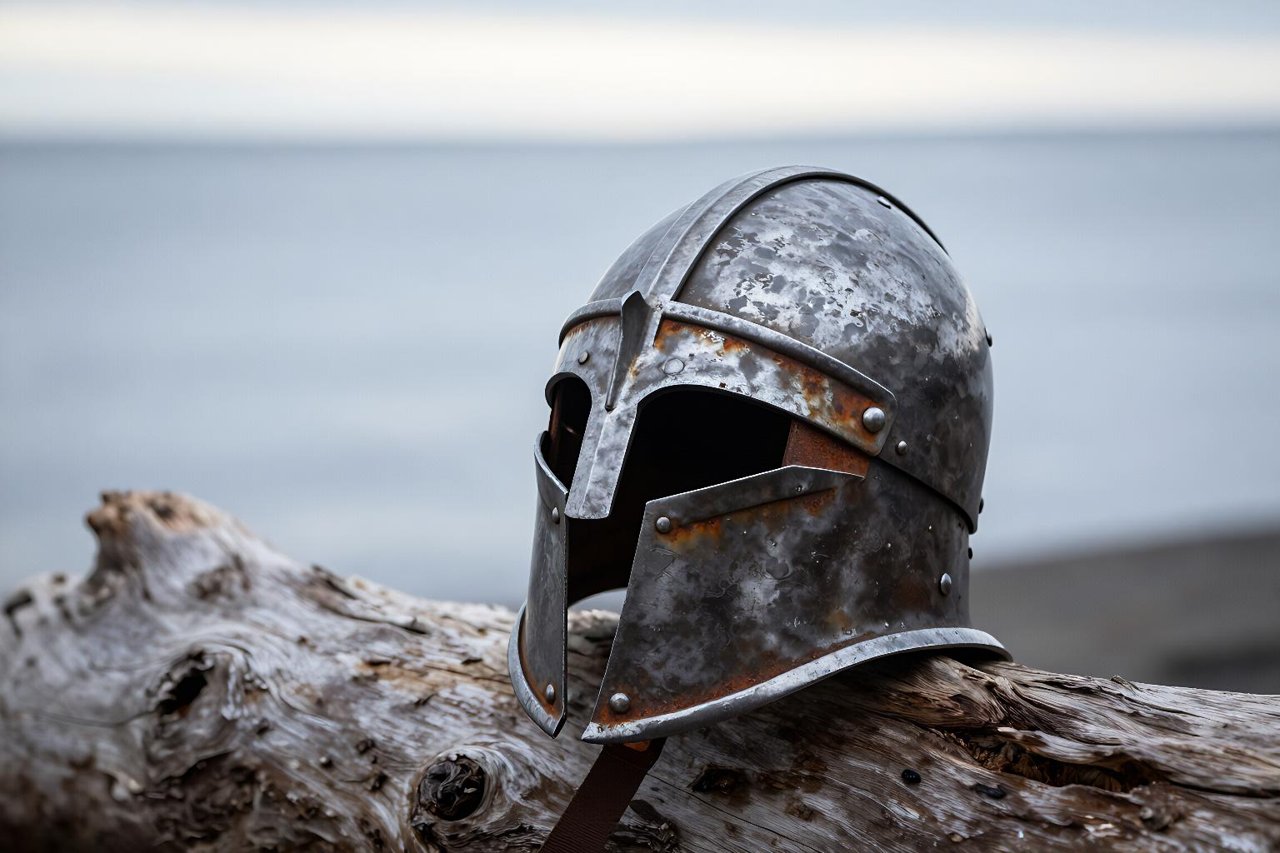
The horned helmet is a piece of nineteenth-century theatre. In 1876 Richard Wagner staged his Ring Cycle and costume designer Carl Emil Doepler gave the chorus of Vikings two horns apiece. Opera houses spread the image, and it never left.
Real Viking Age helmets were working equipment: an iron bowl with a spectacle guard over the eyes and, often, a mail curtain protecting the neck. The best surviving example, dug up at Gjermundbu in Norway, dates to the tenth century and has no horns at all. Only a few complete helmets from the period have ever been found. On a battlefield, a horn is a handle for the other man’s axe.
Victorian stagecraft bent other eras the same way. The Romans got marble-white statues and clean togas; the originals were painted in loud colours and the army smelled of garum. If you enjoy the gap between the costume and the reality, there’s plenty more in the weird, brutal and brilliant side of ancient Rome.
4. Boston Was Flooded by Molasses in 1919
On 15 January 1919, a steel tank belonging to the Purity Distilling Company split open in Boston’s North End. Inside were roughly 2.3 million gallons of molasses, about 14,000 tonnes. Witnesses described a wave up to 25 feet high moving through the streets at something close to 35 miles an hour. Twenty-one people died and around 150 were injured. The noise carried for miles.
The resulting lawsuit ran for six years and drew some 3,000 witnesses. Damages came to $628,000, worth roughly $10 million today, and Boston rewrote its building code. The tank had been leaking since the day it was filled, and neighbours were scooping free molasses off the walls. Nobody had thought to check whether a steel vessel could hold that weight.
5. In 1518, Hundreds of People Danced Until They Collapsed
In July 1518, a woman in Strasbourg later remembered as Frau Troffea stepped into the street and started dancing. She kept going for days. Within a week dozens had joined her. By August, chroniclers counted up to 400 people dancing, some for so long that their feet bled. The city responded by hiring musicians and building a stage, on the theory that the dancers simply needed to finish.
Nobody knows why it happened. Ergot poisoning from mouldy rye is the popular theory, though the dancers moved in rhythm rather than jerking with convulsions. Mass psychogenic illness fits the record better. Strasbourg in 1518 was a city of famine, disease and fear of the dead returning, and the Rhine valley had seen similar outbreaks in 1374. Several people reportedly died of exhaustion or stroke.
6. Mansa Musa Accidentally Wrecked the Price of Gold in Cairo
In 1324 the emperor of Mali set out on pilgrimage to Mecca with a caravan of thousands and around a hundred camels loaded with gold. Passing through Cairo, he gave the metal away to officials, beggars and holy men with such generosity that its value collapsed. Egyptian chroniclers claimed the market took more than a decade to recover.
Mali at the time supplied a large share of the world’s gold, so this wasn’t a rich man being flashy so much as an economy arriving in person. Musa went home and commissioned the Djinguereber Mosque in Timbuktu, turning the city into a centre of scholarship. A Catalan mapmaker drew him in 1375, seated and holding a gold nugget, as one of the most important rulers on Earth.
7. France Was Still Using the Guillotine in 1977
The last execution by guillotine in France took place on 10 September 1977, in Marseille. In the same year, Star Wars opened in cinemas, the first Apple II computers went on sale, and Voyager 2 left Earth. France abolished capital punishment four years later, in 1981. The last public execution had happened back in 1939, outside a prison in Versailles, after which the device was kept behind walls.
That compression of time is easy to miss. A single lifetime now covers the moon landings and the age of the guillotine, the invention of the aeroplane and the abolition of the death penalty across most of Europe.
Why These Stories Never Make the Syllabus
None of this is hidden. Every fact above sits in a newspaper archive, a court record, a letter or a museum catalogue. They get dropped for structural reasons: a term has a fixed number of hours, textbooks favour broad trends over specific scenes, and exams reward causes and dates more than texture. The result is a version of history that is accurate but bloodless, and therefore easy to forget by the following June.
The odd detail is what makes the rest stick. The argument about what schools should actually deliver, the one that produced this discussion of educating a new generation of workers, tends to focus on jobs and skills. Memory is a skill too, and it runs on specifics.
If you want more of these than the textbook gave you, a few habits do most of the work:
- Read one primary source per topic. A diary entry, a court transcript, a shop ledger. They’re shorter than you expect and far more vivid.
- Follow the numbers. Gallons, minutes and casualties turn a vague story into something you can picture. Thirty-eight minutes is a lunch break.
- Stand where it happened. Landscapes keep receipts. The bunkers at Pointe du Hoc still sit at the bottom of craters, and a practical D-Day beaches itinerary through Normandy will show you what the maps leave out.
History reads better when it feels like a place you could visit rather than a list you have to memorise. A war that ended before the coffee went cold, a city sliding down a street in molasses, four hundred people dancing in a year of famine: these aren’t party tricks. They’re evidence that the past was as improvised and strange as the present, and that what we got in school was only ever a sample of it.


