
Table of Contents
A restaurant meal isn’t a willpower test. That’s worth unlearning first. Most people who eat well while dining out aren’t white-knuckling their way past the bread basket. They’ve simply made a few small calls before the food lands on the table: what they’re ordering, how it’s cooked, and what they’re happy to leave behind.
A typical sit-down entrée in the US runs somewhere between 1,000 and 1,500 calories, and that’s before the appetizer or the second drink. But calories are only part of the story, and turning every menu into a math problem ruins dinner. What follows is the practical version of eating healthier when dining out, without becoming the person who interrogates the server about cooking oil.
Decide before you’re hungry
Almost every restaurant posts its menu online, and reading it at 4pm is the single highest-leverage habit in this whole article. Hunger is a bad negotiator. So is a loud room and the smell of garlic coming out of the kitchen.
Don’t hunt for the lowest-calorie dish. Find two or three things you’d genuinely be pleased to eat, then let the decision be finished before you sit down. Nutritionists call this pre-commitment; anyone who’s ordered a $26 plate of regret at 8:45pm calls it common sense.

Choosing the restaurant itself matters just as much as the order. The same logic that’s led travelers to plan trips around how they want to feel rather than what they want to see works on a Tuesday night. Want to feel light and sharp afterwards? A steakhouse and a noodle bar will produce very different Wednesdays. Pick the restaurant for the feeling, then order inside that choice.
Build a plate, not a dish
Restaurant food is engineered as a complete, indulgent unit. You’re allowed to treat it as components instead.
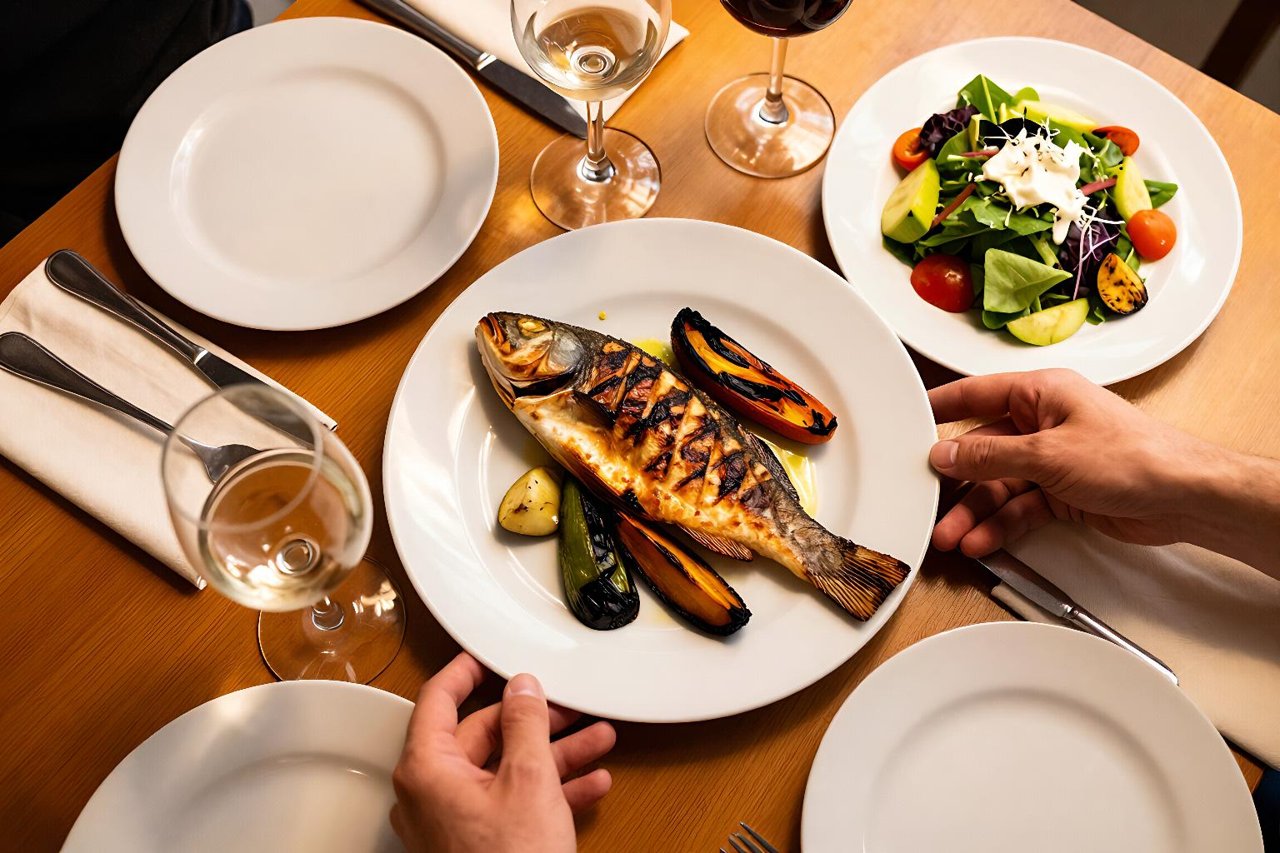
Mentally divide the plate into three: something protein-rich, something vegetable-heavy, and a starch you actually want. A grilled salmon fillet with a double order of greens and a baked potato beats the fish and chips by a mile. Two chicken skewers and a Greek salad beats the chicken Alfredo. Steak frites works fine if you ask for the fries to share and add a side of green beans.
The trick is ordering the vegetable deliberately. Most sides are an afterthought for restaurants and an afterthought for diners. A salad, a bowl of broccolini, roasted carrots, or sautéed spinach added to any entrée changes the whole composition of the meal for three or four dollars.
The menu words that tell you almost everything
You can predict how a dish is cooked before you ask a single question. The vocabulary is remarkably consistent.
Green flags
Grilled, roasted, steamed, poached, braised, charred, broiled, “market vegetables”, “in its own broth”, vinegar- or citrus-based dressings, marinara, salsa verde, chimichurri, kimchi, cabbage slaw, anything described as coming with a salad by default.
Words worth pausing on
Crispy, crunchy, glazed, smothered, loaded, stuffed, battered, tempura, pan-fried, creamy, “truffle” (usually oil, always calories), caramelised, and anything with aïoli, hollandaise, or ranch in the name. None of these are off-limits. They’re just markers that a dish has fat added in volume rather than arriving naturally.
A useful swap list for the moment you’re staring at the menu:
- Ask for sauces and dressings on the side, then use about a third of what arrives
- Order the grilled protein version instead of the fried one (most kitchens do this without a surcharge)
- Trade fries for vegetables, salad, or rice; it’s rarely an issue
- Choose tomato-based curries and stews over coconut or cream-based versions
- Start with soup or a side salad instead of fried appetizers, and share the bread
- Ask for the lunch portion at dinner time; plenty of places will say yes
Just ask
Servers hear requests all day. Sauce on the side, no cheese, grilled instead of breaded, double vegetables instead of fries, dressing separately, half the portion boxed before it comes out. None of this is diva behaviour, and kitchens build flexibility into most dishes anyway.
The one thing worth saying out loud: cheese, butter, and oil are where a lot of restaurant calories quietly live. A dish can read as healthy on the page and still arrive glossed in a quarter-cup of fat. Asking for light oil or no butter on the vegetables is a normal, unremarkable request.
Handling the situations that actually trip people up
The buffet or all-inclusive resort
Buffets punish grazing and reward structure. Do a full lap before you pick up a plate and decide what you’re having. Then fill half the plate with vegetables and protein and leave the rest for the food you’re genuinely excited about. Use a smaller plate if there is one. Sit down to eat, and go back only if you’re still hungry rather than because the plate is empty. If you’re weighing up a cheap all-inclusive vacation package, it helps to know in advance that the buffet will be the centre of your week, and that two well-built plates beat five laps of the dessert station.
The set menu or business dinner
Fixed menus are where people panic-order. If there’s a choice, take the fish or chicken over the risotto or the pasta, and skip the bread basket by moving it to the far end of the table. If there’s no choice at all, eat the protein and vegetables and leave the starch. Nobody notices, nobody comments.
The exhausted, decision-fatigued evening
A forty-item menu at the end of a hard week is not a fair fight. If your brain is running on fumes, the slide toward burnout tends to show up first in exactly these small decisions, and ordering the fried thing is often less about hunger than about being done making choices. Have a default. Two or three reliable orders you can place without thinking, at restaurants you already know. That’s not boring; that’s a system.
The drinks count more than you think
A margarita can carry 300 to 400 calories, and a pint of IPA sits around 200. Two of either and you’ve effectively eaten a second dinner without noticing, plus a lower chance of caring what you order.
Practical moves: sparkling water with lime alongside your first drink, a wine spritzer instead of a second glass of wine, spirits with soda rather than sugary mixers, and a glass of water between rounds. You still get the evening. You just don’t wake up at 3am wondering why you’re thirsty.
Order the dessert you actually want
Restaurant desserts are usually the least satisfying calories on the table because they arrive by default. The bread pudding you didn’t plan for is never as good as the thing you saved room for.
So decide on purpose. If there’s a dessert worth having, order it, share it, and enjoy it properly. If there isn’t, order an espresso and skip the ritual entirely. Leaving a restaurant feeling good, rather than heavy and slightly regretful, is a far better marker of a successful meal than a clean plate. Eat the food you came for, eat it slowly enough to taste it, and let the rest of the table order whatever they like.


