
Table of Contents
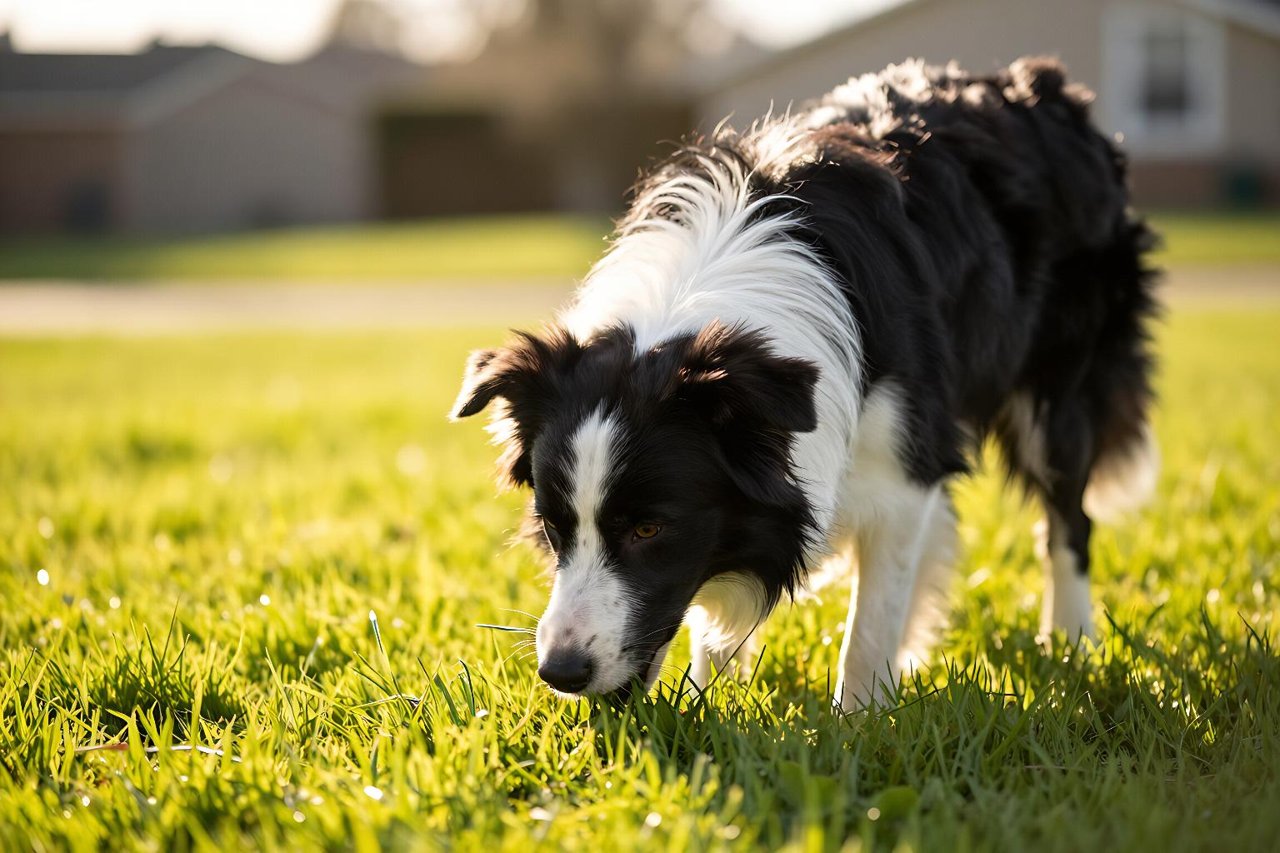
Your dog has been in the garden for four minutes. You glance out and their head is down, jaws working with the slow, deliberate rhythm usually saved for dinner. Grass. Again.
It’s one of the most searched dog behaviours there is, and most owners arrive at the same tidy explanation: the dog’s stomach is off and they’re trying to make themselves sick. That story gets repeated so often it’s treated as settled fact. The research doesn’t back it up nearly as neatly as you’d assume.
How Many Dogs Actually Eat Grass?
Far more than most people realise. The most-cited study on the subject, published in 2007 by researchers at the University of California, Davis, surveyed 1,571 dog owners and found that roughly 68% of dogs ate plants regularly, with grass topping the list by a wide margin.
Then came the part that surprised everyone. Only 8% of those dogs showed any sign of illness before eating plants, and fewer than a quarter vomited afterwards. Later surveys have found similar patterns.

Look at those numbers again. If grass were a self-prescribed medicine for a dodgy stomach, you’d expect most dogs to look unwell beforehand and bring it back up afterwards. Instead, the vast majority grazed while feeling completely normal, then kept it down and went back to chasing a fly.
The Stomach Upset Theory Is Half True at Best
Here’s where the myth gets its legs. Grass is mostly cellulose, and dogs lack the enzymes to break that down. When a dog bolts a large amount of it, the tough blades physically irritate the stomach lining, and up it comes. So owners see grass going in, vomit coming out, and draw a straight line between the two.
The cause and effect are backwards. The grass didn’t settle a bad stomach. It irritated a normal one.
Watch how your dog eats it. A dog genuinely trying to vomit tends to gulp frantically, swallow whole blades in a rush, and be sick within minutes. A dog eating grass for other reasons grazes. It picks, chews, moves along the lawn like a small ruminant. That difference in style tells you quite a lot.
Boredom, Restlessness and the Need to Chew
Ask any behaviourist what the single biggest driver of odd repetitive eating is, and you’ll usually hear the same word: boredom. A dog left in a yard for six hours with nothing to do will find something to do. Grass moves. It crunches. It smells of fox, of next door’s cat, of everything that passed through overnight.
Puppies are a special case. Between four and eight months they’re teething, and chewing soothes sore gums. Grass is free, plentiful and always available, which makes it an obvious target.
Some dogs are simply more easily wound up than others. The question of whether dogs can have ADHD gets asked constantly by owners of dogs who can’t settle, and while the label is borrowed from human medicine, the underlying pattern of restlessness and a short attention span is real enough. Those dogs tend to eat more grass, chew more furniture, and generally need more structured exercise than a single walk around the block.
Young Spring Grass Tastes Genuinely Good
Dogs are not strict carnivores in the way cats are. Wolves, their closest relatives, eat grass and plant matter regularly, often the stomach contents of prey. Domestic dogs are opportunistic omnivores with a sweet tooth for fresh growth.
New shoots in April and May are sweet, high in water content, and tender enough to tear easily. By August the same lawn is dry, fibrous and bitter. If your dog’s grass habit comes and goes with the seasons, taste is probably a bigger factor than anything medical.
The Diet Question: Fibre and Complete Food
Some dogs on low-fibre diets do seem to seek out roughage. Grass is almost pure fibre, so the theory isn’t mad, though studies haven’t confirmed a clear link and many grass-eaters are already on excellent food.
What’s worth doing is checking the label properly. A complete diet with a sensible crude fibre figure and a named protein at the top removes most diet-related guesswork. This breakdown of the best puppy foods for Bernese Mountain Dogs is a useful example of how to read those numbers on a large-breed formula, and the same principles apply to any size of dog.
What’s Actually Growing in Your Lawn
Toxicity is the part most owners overlook. The grass itself is harmless. The stuff on it often isn’t.
- Weed killers and fertiliser. Most labels advise keeping dogs off treated turf for 24 to 48 hours, and some granular products longer. Read the packet rather than guessing.
- Cocoa mulch. Made from cocoa shells, it contains theobromine, the same compound that makes chocolate dangerous. A dog who grazes near a mulched border is at real risk.
- Toxic garden plants. Azaleas, oleander, lily of the valley, autumn crocus and yew are all common and all poisonous to dogs.
- Parasites. Fox mess, snail trails and damp soil can carry roundworm eggs and lungworm, particularly in wet weather.
- Slug pellets. Metaldehyde bait is one of the more common poisonings vets treat, and it’s scattered exactly where dogs graze.
Fleas are the other garden souvenir worth planning for. If your puppy comes in scratching after a session in the long grass, this guide to safe puppy flea treatment covers which products are appropriate by age and weight.
When Grass Eating Deserves a Vet Call
Occasional grazing in an otherwise bright, hungry, normal dog is not a problem. Sudden changes are.
Book an appointment if you notice repeated vomiting over more than a day, grass eaten in frantic handfuls followed by retching and nothing coming up, weight loss, ongoing loose stools, pale gums, or a dog who has started eating grass, soil, stones and fabric all at once. That last pattern is closer to pica, and it’s worth investigating properly. In an older dog, a brand-new grass habit with no obvious trigger is also worth mentioning, especially alongside other odd signs such as a persistent head tilt, which points to an ear or neurological issue rather than a stomach one.
Practical Ways to Cut the Habit Down
You won’t train a dog out of instinct, and you don’t need to. What you can do is remove the reasons it’s happening and make the lawn less appealing.
- Feed a proper meal before yard time. A hungry dog grazes; a full one usually doesn’t.
- Add a food puzzle or a long-lasting chew to the garden routine so there’s a better option than turf.
- Increase sniffing walks. Twenty minutes of nose-down wandering tires a dog out more than an hour of lead-pulling.
- Keep the grass shorter in high-traffic areas and clear any fallen fruit.
- Grow a tray of oat grass or wheatgrass indoors. It gives a determined grazer a safe, clean supply and takes about ten days to sprout on a windowsill.
One last thing worth doing: keep a short note for a fortnight. Jot down the time, whether it was before or after a meal, and what happened next. Owners who do this usually spot a pattern fast, whether it’s the boring stretch between 2pm and 4pm, or a sudden interest in a newly treated patch of lawn. That little log is far more useful to your vet than a description from memory, and it tells you straight away whether you’re dealing with a habit, a hungry dog, or something that needs a proper look.


