
Table of Contents
You’ve seen the photos. The same waterfall in Iceland, the same swing in Bali, the same row of tripods jostling for the same sunset. Beautiful, no argument. Also crowded enough that you start measuring a place in queue-minutes rather than scenery.
This list goes the other way. These seven are among the top 7 most beautiful places that few tourists visit — real landscapes where you can walk for a whole day without hearing another accent, and where the closest thing to a hotel might be a family guesthouse, a tent, or a Soviet-era lodge with one working shower.
None of them are easy to reach. That’s the point, and it’s also what keeps them worth reaching. One caveat before you start booking: a couple of these sit in regions where travel advisories shift, so check your government’s current guidance and your insurance cover before you commit.
1. Socotra, Yemen
The dragon’s blood trees on the Dixam plateau look like something designed by a person who had heard trees described over the phone. Umbrella-shaped, bleeding red sap, and found nowhere else on the planet. Roughly a third of Socotra’s plant life is endemic, which is why UNESCO listed the archipelago in 2008.

Beyond the trees there’s Detwah Lagoon, where the sand is white enough to hurt and the water shifts between turquoise and deep blue as the tide moves, plus limestone caves and empty beaches along the north coast.
Getting there means a weekly flight from Abu Dhabi with a licensed operator who also arranges your visa — independent travel isn’t really a thing here. Expect to camp or stay in basic guesthouses, and expect the logistics to cost more than a week in Greece. The mainland war is 400 km away and not a factor on the island itself, but insurance providers don’t always see it that way.
2. Gheralta, Ethiopia
Ethiopia’s Tigray region hides around 120 rock-hewn churches, some cut into cliff faces 1,600 years ago by hand. The landscape around them is a set of sandstone towers and flat-topped mesas that glow orange from about 4pm.
The one that gets your heart rate up
Abuna Yemata Guh is the famous one: a 45-minute scramble up bare rock, a shimmy along a ledge with a 250-metre drop, then a chapel barely wide enough for a dozen people, its ceiling painted with nine apostles who’ve been watching over the void since the 5th century. The priest does the climb in sandals. You will not.
Base yourself in Hawzien, where a decent guesthouse runs $20–30 a night, and hire a local guide — the routes aren’t marked and a few of the holds are non-obvious. Flights go to Mekelle or Axum. The region is still recovering from the 2020–22 conflict and tourism is only partly back, so verify conditions with an operator on the ground rather than a blog post written three years ago.
3. The Wakhan Corridor, Tajikistan
A skinny panhandle of Tajikistan pinned between the Panj River and the Hindu Kush, with Afghanistan visible across the water. You drive along a gravel track for six or seven hours from Khorog, watching 7,000-metre peaks slide past and villages with maybe forty families in them.
Stop at Yamchun, a 12th-century fortress sitting on a spur above the river, and at the Bibi Fatima hot springs, where the water is mineral-heavy and the changing room is a curtain. The people are Wakhi and Kyrgyz, mostly herders, and guesthouses in Langar and Vrang are family-run and cheap.
You’ll need a Tajik e-visa plus a GBAO permit (apply for both in the same form), and shared 4x4s from Khorog are the standard transport. Altitude tops 4,000 metres on the passes, so give yourself a day to adjust.
4. Scoresby Sund, East Greenland
The largest fjord system on earth runs about 350 kilometres inland, and the icebergs calving off its glaciers are the size of apartment blocks. The water is so still on a calm day that the bergs double themselves in the reflection, and the only settlement for hundreds of kilometres is Ittoqqortoormiit, population roughly 350.
There are no roads between anything. You fly from Reykjavik to Nerlerit Inaat, then take a helicopter to the village, then travel by boat. Late August into September is the sweet spot: icebergs still intact, northern lights starting up, and the season’s last supply ship.
If Arctic travel appeals but you’d rather not deal with helicopter transfers, this guide to exploring the outdoors of Northern Norway covers a softer version of the same scenery.
5. Capillas de Mármol, Chilean Patagonia
On Lago General Carrera, near the village of Puerto Río Tranquilo, the lake has spent 6,000 years dissolving a marble peninsula into caves, columns and a chapel-shaped hollow. The water underneath is a milky, glacial blue that makes the white-and-grey stone look lit from within.
Kayaks and small boats leave from the beach whenever the lake is calm enough, which on windy days is not at all. Go early. Mid-morning light is best, and by 11am the day-trippers from Coyhaique have arrived.
Fly to Balmaceda, then drive four to five hours down the Carretera Austral, or take a bus and stay a night in town. The Patagonian season is short — roughly November to March — and if you’re mapping out a late-autumn trip, this guide to where to go in November is a useful starting point.
6. Batanes, Philippines
Way up north, closer to Taiwan than to Manila, the Batanes islands are green rolling hills dropping into Pacific blue, with villages of thick limestone-and-coral houses built to shrug off typhoons. Cattle graze on slopes that look more like Ireland than the tropics.
The pace is the attraction. There’s a coffee shop on Sabtang where you take what you want and leave the money in a box, and honesty-box retail is genuinely the norm rather than a tourist gimmick. Rent a bike on Basco and ride the coastal road to Valugan Boulder Beach, where the surf rolls boulders the size of suitcases.
Flights from Manila take about 80 minutes in a small aircraft, and they get cancelled for weather often enough that you should build a spare day into both ends of the trip. It’s the kind of place that rewards slow wandering, in the way that Tokyo’s backstreets reward it — you find the good stuff by getting slightly lost.
7. Lençóis Maranhenses, Brazil
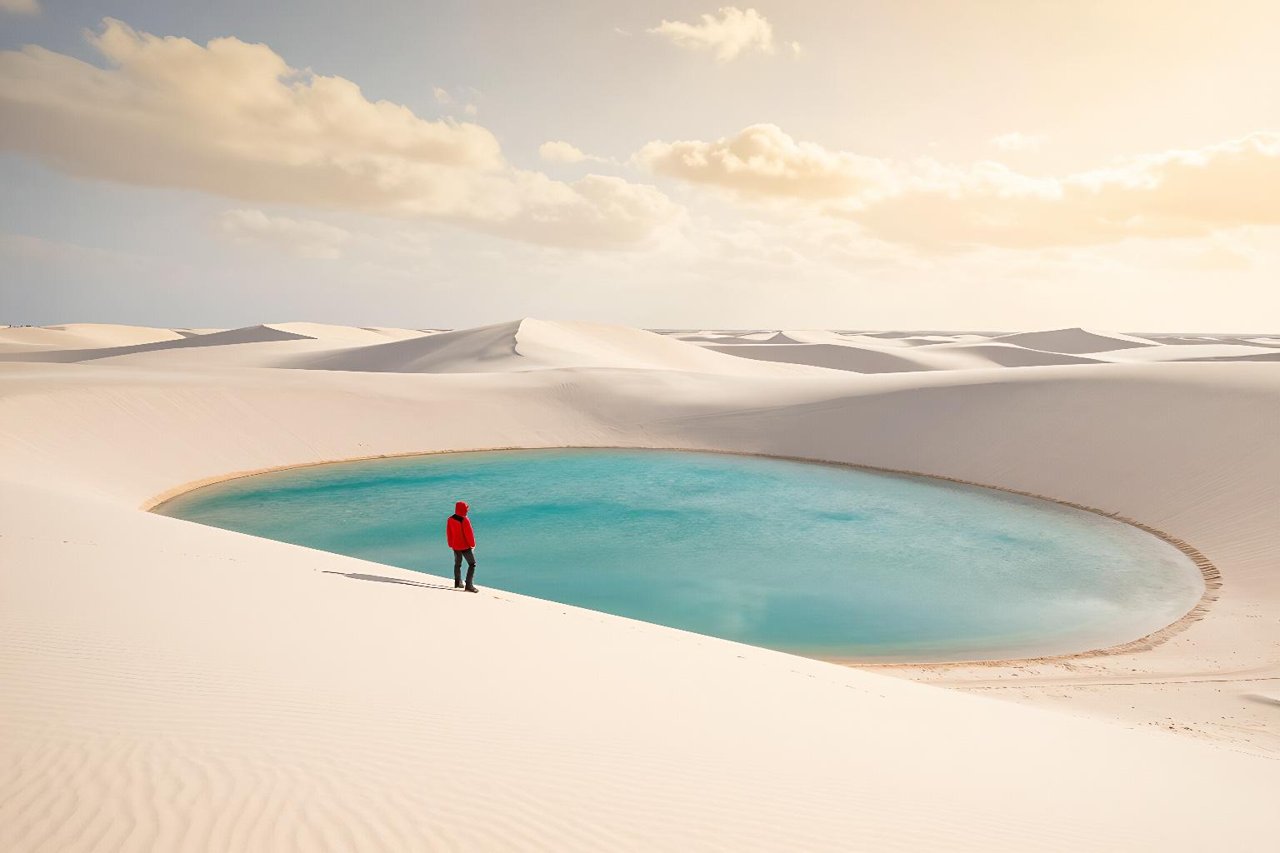
Fifteen hundred square kilometres of white dunes that look like a desert and behave like a sponge. Between January and June the rains fill the valleys between the ridges with freshwater lagoons, some of them hundreds of metres long, and locals swim in them at sunset.
Peak is June to September, when the lagoons are still full and the sky is reliably clear. The village of Atins, reachable by 4×4 along the beach or by boat, is quieter than Barreirinhas and a better base if you want the dunes at dawn.
Access is via São Luís, then roughly four hours by road. There’s no shade out there, the sand hits 50°C by midday, and a local guide is worth every real you pay them — they know which lagoons still hold water in a given month.
How to visit without loving them to death
Every place on this list is fragile in a specific way: goat grazing on Socotra, foot traffic in Gheralta’s chapels, waste management in a Greenland village with no landfill. A few habits go a long way.
- Hire locally, every time. A guide who lives in the valley knows the weather, the landowners and the route that doesn’t erode a hillside.
- Carry cash in small notes. Card machines are rare and ATMs rarer; in Batanes and the Wakhan you’ll need pesos and somoni before you arrive.
- Pack out everything. Including the things you assume someone else will deal with. Remote waste streams are exactly that: remote.
- Go in the shoulder weeks. Two weeks either side of peak season usually means better light, fewer people and the same landscape.
- Build in slack. Small-plane cancellations, closed passes and shifted boat schedules are normal. A spare day turns a disaster into an anecdote.
And learn four or five words of the local language before you land. In places this far off the circuit, the effort is noticed, and it tends to be repaid with the kind of invitation — a meal, a lift, a shortcut through someone’s field — that no guidebook can arrange.


