
Table of Contents
In the spring of 1453, a twenty-one-year-old sultan named Mehmed II dragged seventy ships overland on greased wooden rollers to bypass a chain across the Golden Horn. It was an absurd, expensive, deeply impractical idea. It worked. Within weeks the walls that had protected Constantinople for a thousand years finally gave way, and the Ottoman Empire inherited the capital of the Roman world.
That single siege is the moment most people know. But it sits near the beginning of a much longer story. The Ottomans ruled for roughly 600 years, at their height governing territory across southeastern Europe, Anatolia, the Levant, North Africa, and the Arabian Peninsula. They shaped the borders of the modern Balkans and Middle East more than any other single power. Understanding them is close to understanding how the modern world got its shape.
From a Border Gang to a World Empire
The empire’s origins were modest. Around 1300, Osman I was one of many Turkish chieftains pushing into Byzantine lands along the frontier of a collapsing Seljuk order. What set his followers apart was location. They sat astride the routes between Anatolia and the Balkans, which meant they could recruit, trade, and raid in several directions at once.
Expansion came in waves rather than a single march. Orhan, Osman’s son, took Bursa and made it a capital. Murad I crossed into Europe and won at Kosovo in 1389. Bayezid I nearly strangled Constantinople from the outside before Timur crushed his army at Ankara in 1402 and dragged him off in a cage, triggering a civil war that almost ended the dynasty. The state survived, rebuilt, and tried again.

Geography did much of the work. The Ottoman story is inseparable from the wider story of the region that produced it, which is why it fits so neatly into the long history of the Middle East as a crossroads of empires. Control of the Bosphorus, the Levant coast, and the Red Sea routes gave Istanbul leverage over trade linking Asia, Europe, and the Indian Ocean.
How the Sultan Actually Governed
Foreign observers often described Ottoman rule as pure despotism. The reality was stranger and more interesting. Power flowed through the palace household, a sprawling bureaucracy in Istanbul, and provincial governors who had wide latitude as long as taxes arrived and order held. The sultan was absolute in theory and constrained in practice by precedent, religious law, and the simple difficulty of governing a territory the size of western Europe with sixteenth-century communications.
The devshirme and the Janissaries
One of the most distinctive institutions was the devshirme, a periodic levy of Christian boys from Balkan villages. Taken young, converted, and trained, the most talented entered the palace administration or the Janissary corps, the sultan’s professional infantry. Boys born in a Serbian village could rise to become grand vizier, the empire’s chief minister, and several did. The system was coercive and morally troubling, and it was also an extraordinarily effective machine for producing loyal, capable servants whose status depended entirely on the sultan.
The millet system
Rather than forcing uniformity, the Ottomans organised non-Muslim communities into recognised religious groupings, each with its own leadership, courts for personal law, and tax obligations. The main ones included:
- Rum millet — Greek Orthodox Christians, headed by the Patriarch in Istanbul
- Ermeni millet — Armenian Christians, eventually split into separate church administrations
- Yahudi millet — Jews, including tens of thousands of Sephardim expelled from Spain in 1492 and welcomed into Ottoman cities
The arrangement was pragmatic rather than egalitarian. Non-Muslims paid a special tax and were excluded from the highest offices. But it kept an astonishingly diverse empire from fracturing along religious lines for centuries, and it explains why Ottoman cities like Salonica and Izmir were so polyglot.
The Age of Suleiman
Suleiman I ruled from 1520 to 1566 and is usually treated as the empire’s high-water mark. His armies took Belgrade in 1521, defeated Hungary at Mohács in 1526, and besieged Vienna in 1529. His fleet, built up under admirals like Barbarossa Hayreddin, dominated the eastern Mediterranean until the defeat at Lepanto in 1571. On land, the empire stretched from Buda to Basra.
Law mattered as much as conquest. Suleiman was known as Kanuni, the Lawgiver, for codifying the secular legal code alongside religious jurisprudence. Court architects, above all Mimar Sinan, completed the Süleymaniye mosque complex in 1557, part of a building programme that remade Istanbul’s skyline in stone and lead. The sultan’s household also produced a distinctive high culture of poetry, miniature painting, ceramics from Iznik, and textiles that circulated as far as Venice and Muscovy.
Religious authority became central to legitimacy after Selim I conquered the Mamluks in 1517 and took the title of caliph. That claim carried real weight across the Muslim world, though its precise meaning shifted over the centuries and is often misunderstood today, as explored in this account of the history of Islam and its caliphates.
Why the Machine Slowed Down
The Ottomans did not fall because of one great failure. They fell because of a slow accumulation of them, and because the world around them changed faster than they could.
After the disastrous second siege of Vienna in 1683, a coalition of European powers pushed Ottoman forces back through Hungary. The Treaty of Karlowitz in 1699 forced the first major territorial concessions, and it broke a psychological spell: the empire had been defeated and partitioned in writing.
Meanwhile the economic base shifted. Atlantic trade routes, rising European naval power, and the price of imported manufactured goods eroded Ottoman artisanal industries. The first Ottoman printing press, set up by Ibrahim Müteferrika in 1727, produced only a small number of titles before being shut down by conservatism and clerical objection. By the nineteenth century the government was borrowing heavily, and European financiers effectively ran Ottoman public finances.
Military modernisation came late and in painful fits. In 1826, Sultan Mahmud II finally destroyed the Janissaries in the Auspicous Incident when the corps blocked reform. The Tanzimat reforms from 1839 tried to build citizenship in place of religious hierarchy, promising equality to non-Muslims and rewriting property and criminal law. Reformers hoped the empire could become a modern constitutional state. The Young Turk revolution of 1908 forced a parliament back into being. They ran out of time.
1914 to 1922: The Breakup
Entering the First World War alongside Germany in 1914 was a gamble the empire could not afford. British forces took Baghdad and Jerusalem in 1917. Arab provinces rose in revolt. The war years also brought the Armenian deportations and massacres of 1915, a catastrophe that remains one of the most contested and painful episodes in the region’s memory and belongs in any honest reckoning of mass violence in twentieth-century history.
Defeat produced the Treaty of Sèvres in 1920, which carved up Anatolia itself. That treaty, rather than the war, is what triggered the Turkish War of Independence under Mustafa Kemal. The sultanate was abolished in November 1922, and the republic was declared the following year. The caliphate was abolished in March 1924. It was a remarkably abrupt ending for an institution that had lasted more than six centuries.
What Remains
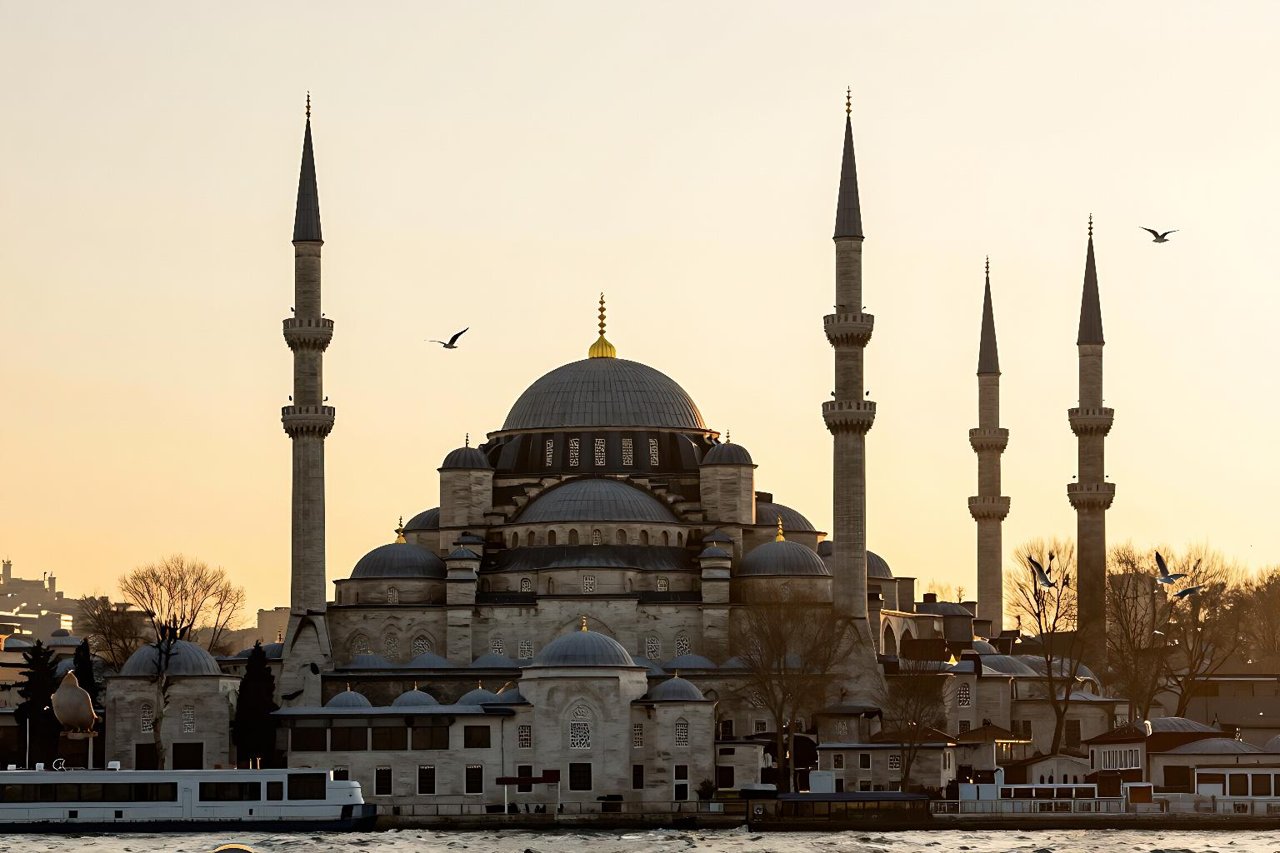
Walk through Sarajevo, Skopje, or Thessaloniki and you will still see the minarets, clock towers, bridges, and bathhouses the empire left behind. Istanbul’s ferry network, its bazaars, and its sprawling cemeteries are Ottoman inventions as much as Byzantine ones. Roughly sixty countries sit on former Ottoman territory today, and many of their borders, minority disputes, and legal habits trace back to arrangements made in Istanbul between the sixteenth and twentieth centuries.
The comparative lesson is worth taking seriously. Historians who study why large states endure tend to find the same ingredients over and over: flexible systems for absorbing difference, a tax base that grows with the economy rather than the sword, and institutions that can adapt before crisis comes. The Ottomans managed the first remarkably well for a long time, the second unevenly, and the third too late. That combination of strengths and blind spots is a recurring pattern in what has historically made empires great, and what has made them brittle. The Ottoman Empire is one of the clearest, and most instructive, cases in the record.


