
Table of Contents
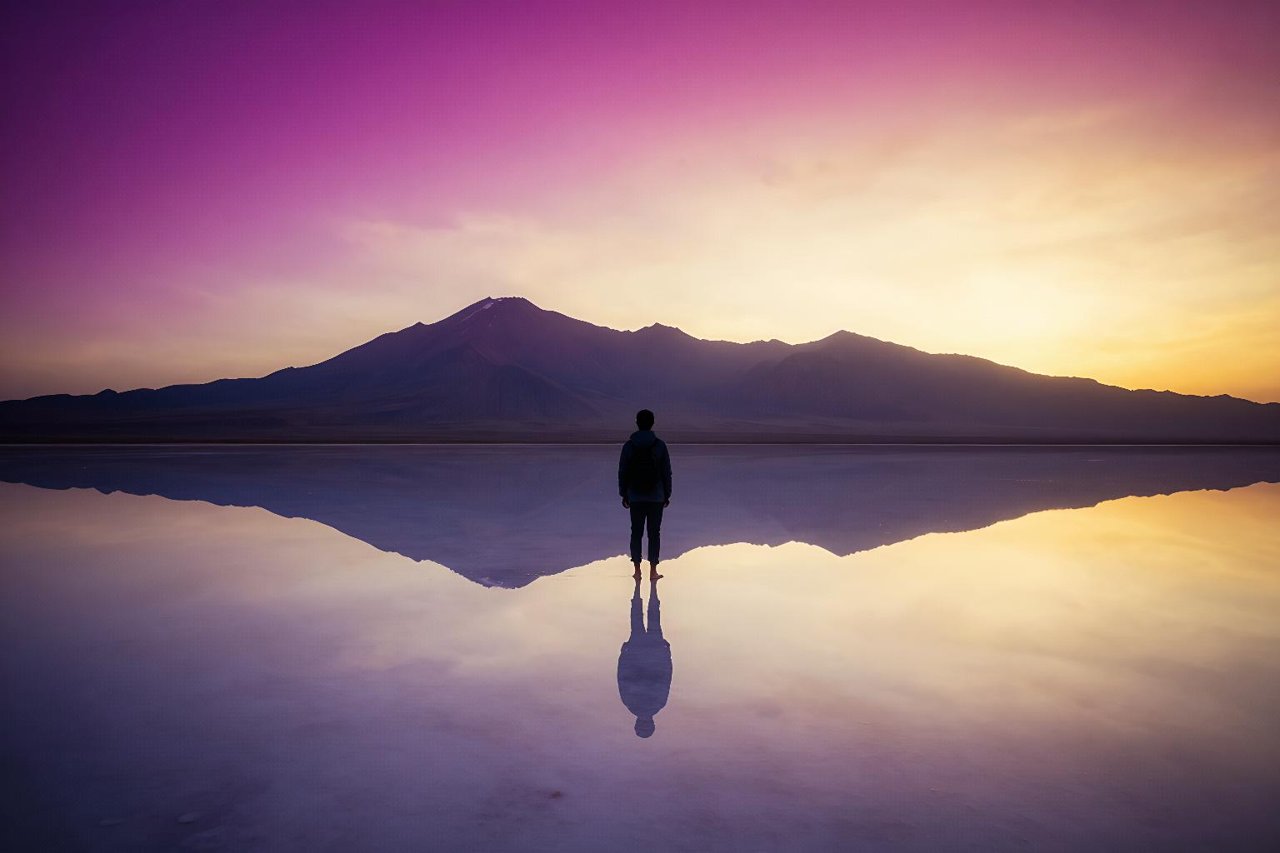
At 3,656 metres on the Bolivian altiplano, the horizon stops working. For a few weeks each year a thin sheet of rainwater sits on the salt and the sky lands on the ground. People stand in the middle of it, take off one shoe, and stare at their own reflection floating above them. Nobody says much. There is nothing to say that the place has not already said.
That feeling is what most travellers are actually hunting for when they search for travel and extraordinary places. Not luxury, exactly. Not a checklist either. Something closer to disorientation, the sense that the world has far more settings than you had assumed.
What Separates Extraordinary From Merely Beautiful
Beauty is common. Almost every country has a coastline or a mountain range that photographs well. Extraordinary places usually have at least one of three properties: geology that exists in only a handful of locations on the planet, isolation severe enough to shape who lives there, or a short annual window when the place does something it does not do the rest of the year. Knowing which of those you are travelling for makes the planning much simpler.
Places That Don’t Look Like Earth
Salar de Uyuni, Bolivia
Roughly 10,582 square kilometres of salt crust, the largest on the planet. From May to November it is a cracked white plain that squeaks underfoot. Between December and March the rains arrive, and a few centimetres of water turn the whole thing into a mirror with no visible edge. Tours leave from Uyuni town in high-clearance 4x4s. Give yourself two days to acclimatise before you go, and pack genuinely dark sunglasses; the glare off wet salt is brutal.

Lençóis Maranhenses, Brazil
About 1,500 square kilometres of white dunes along the Atlantic coast, which sounds like a desert until the rains come. From January to June the hollows between the dunes fill with freshwater lagoons, some three metres deep, and locals swim in them while the sand bakes around them. July to September is the sweet spot: lagoons still full, skies clear, access roads passable. Base yourself in Atins if you want fewer people.
Socotra, Yemen
The dragon’s blood trees look like umbrellas blown inside out, and roughly a third of the island’s plant life grows nowhere else on Earth. Getting there is the hard part. Flights are limited, permits are required, and you should not attempt it independently given the regional situation. Reputable small-group operators run trips from October to April, and the landscape genuinely does not resemble anywhere else you have been.
Where Getting There Is the Whole Story
Tristan da Cunha
The most remote inhabited archipelago on the planet sits about 2,400 kilometres off South Africa, with a population in the low 240s and no airport. You arrive by ship from Cape Town after six or seven days at sea, and berths are scarce enough that some hopeful visitors wait years. There is one settlement, one cafe, and almost nothing to do but walk and talk to people who have chosen a very specific life.
Svalbard, Norway
Longyearbyen sits at 78 degrees north with around 2,400 residents and a polar bear population that demands respect. You carry a rifle outside the settlement boundary, and the local university teaches Arctic survival before it teaches anything else. In polar night the sun vanishes from late November to mid-February; in summer it simply refuses to set.
Extraordinary by Timing
Some places need a calendar more than a map. Pick the wrong week and you get a nice view. Pick the right one and you get the thing you came for.
- Cappadocia, Turkey. Balloons lift off around sunrise, and flights are cancelled when wind picks up, so book three mornings and hope for two.
- Waitomo, New Zealand. The glowworm caves are dark year-round, but the larvae glow brightest in the wetter months when food is scarce and the display matters most.
- Antelope Canyon, Arizona. Those shafts of light only appear between roughly March and October, near midday, on a Navajo-guided tour with a fixed slot.
- Lake Natron, Tanzania. The water is caustic enough to preserve carcasses, which is precisely why hundreds of thousands of lesser flamingos nest here between July and October.
Weather That Leaves a Mark
The Danakil Depression in Ethiopia is one of the hottest places on Earth, with ground temperatures that make midday walking genuinely dangerous, and the Dallol hydrothermal field pools of acid and sulphur look like something from another planet. At the other end, Oymyakon in Siberia hits minus 50 Celsius in winter, schools close below minus 52, and fish is sold frozen solid in the market. Both are visitable with guides. Neither rewards improvisation.
Practical Realities Nobody Puts in the Photos
- Altitude is not a photo filter. Uyuni, Cusco and much of the altiplano sit above 3,500 metres. Arrive slowly, drink more water than feels reasonable, and skip alcohol the first night.
- Permits come with caps. Antelope Canyon, Bhutan’s Tiger’s Nest trail, Machu Picchu and many fragile sites limit daily numbers. Book weeks or months out, not days.
- Guides are often mandatory, and that is fine. Local operators know the weather windows, the access roads and the families who run the homestays.
- Check what your insurance actually covers. Standard policies quietly exclude trekking above 3,000 metres, drone use and anything involving a rifle-carrying guide.
What It Actually Costs
Long-haul flights are the painful part, but the day-to-day numbers surprise people. Bolivia, Ethiopia, Vietnam and much of the Caucasus are startlingly cheap once you land, and the countries where your money goes the furthest tend to overlap neatly with the places that feel most foreign.
Extraordinary Without the Discomfort
You do not have to sleep on a dune to see something remarkable. A handful of luxury travel destinations that redefine opulence sit right on top of genuinely strange landscapes, from glacier-fed fjords in Patagonia to desert camps within sight of the dunes. Paying more here usually buys access and timing rather than thread count: private guides, earlier departures, permits handled for you.
The Crowd Problem at Famous Sites
The most photographed spots come with queues that can flatten the experience. It helps to know which of the highest-rated tourist attractions across the globe reward an early start, and which genuinely cannot handle the traffic. Arriving at opening time is the oldest trick in the book and it still works, because most people don’t.
Read the Season Before You Book Anything
The useful planning question is not when the trip is cheapest. It is what has to be true for the place to look the way you want it to look. Uyuni needs standing water on the salt. Lençóis needs the lagoons full. Svalbard’s dog sleds need snow, not slush. Danakil needs to not be visited in July.
Find the condition first, then build backwards from it: the flight, the guide, the buffer days for weather. That extra day you grumble about paying for is usually the day the sky clears. Everything after that is arithmetic, and arithmetic is the easy part.


