
Table of Contents
The health food shop near me stocks roughly 340 bottles in its supplements aisle, and about a third of them are herbs. Most will be bought on impulse, taken for four days, and then buried at the back of a cupboard next to the vitamin C someone else abandoned last winter. Not because plant medicine doesn’t work. Because nobody explained the fundamentals first: what a remedy actually is, how much to use, how long before anything changes, and which plants deserve shelf space.
So here is the ground-up version, the one you’d get from a friend who has been doing this for years and has no product to sell you.
What actually counts as an herbal remedy
A remedy is a plant preparation you can repeat. A specific plant part, a measured amount, made the same way every time. That’s the whole definition, and it covers more than people expect. A mug of peppermint tea after dinner counts. So does a dropper of tincture, a capsule of powdered nettle root, or a calendula salve rubbed into a cracked knuckle.
What separates a herb from a drug is scale, not philosophy. Every plant is a chemical factory; the word “natural” means nothing on its own. But a pharmaceutical tablet usually delivers one molecule at a controlled dose, while a herb delivers dozens or hundreds of compounds at a dose that shifts with the plant’s age, the soil it grew in, and how it was dried. That variability is why herbalists talk about gentleness, consistency, and weeks rather than hours.

How herbs behave once they’re inside you
Most herbs are nudges, not switches. They work on systems rather than single targets: digestion, nervous system tone, inflammatory signalling, mucus membranes. That explains the slow, cumulative feel of them.
Ginger is the clearest example. The gingerols in a fresh rhizome slow gastric emptying and calm nausea, and 1 to 2 grams of dried ginger genuinely helps with travel sickness or a queasy stomach. Peppermint works differently. Menthol relaxes smooth muscle in the gut wall, which is why a strong cup of it eases cramping within twenty minutes. Valerian is slower still: valerenic acid has a mild sedating effect, but plenty of people notice nothing on night one and feel it clearly after a week of nightly use.
Some traditional uses simply haven’t held up. Echinacea for cold prevention is modest at best in the trials, and a lot of detox teas are senna with better marketing. If you want the herbs with the strongest evidence behind them, that’s a separate reading list, and a practical guide to herbal remedies that actually work covers it well.
The five ways herbs get into your body
- Infusion (tea). One teaspoon of dried leaf or flower per cup, water just off the boil, lid on to keep the volatile oils in, ten to fifteen minutes. Best for delicate parts: chamomile, mint, lemon balm.
- Decoction. A simmer, not a steep. Roots, bark and seeds need fifteen to twenty minutes on the stove to give up anything useful. Ginger, cinnamon, dandelion root, licorice.
- Tincture. An alcohol extract, usually around 1 part dried herb to 5 parts liquid at 40% alcohol, dosed in drops. Shelf life of several years and easy to carry.
- Capsule or powder. Convenient and tasteless. You also absorb less of the plant than you would from a tea, and fine-tuning the dose is clumsy.
- Topical. Salves, compresses, poultices and diluted oils for skin, joints and bruises. Underrated, because the herb goes straight where you want it.
Which one you pick depends mostly on the plant part and your daily routine. If you’re torn between formats, choosing between tinctures, teas and capsules breaks the trade-offs down properly.
Quality decides more than the herb on the label
Here’s the uncomfortable truth: most disappointing results come from bad plant material, not the wrong plant. Two jars of chamomile side by side can be completely different products. Good dried chamomile smells of apples and sweet hay. Old chamomile smells like dust, because the oils that do the work evaporated months ago.
Buy in small amounts, from suppliers who list the Latin name, the plant part used, and a harvest or batch date. Store everything in airtight glass in a dark cupboard. Leaves and flowers hold for about twelve months, roots and bark for two years. Beyond that you’re mostly drinking colour. There’s a longer list of common mistakes that make herbal remedies useless, and stale stock is the one almost everyone makes.
The thirty-second jar test
Smell it before you buy. Check the colour: bright green nettle or vivid yellow chamomile is alive, brown-grey is tired. Read the label for plant part and date. And be suspicious of a kilo of organicanything for eight pounds.
Safety basics nobody mentions first
Start with one herb at a time. If you take four new things in the same week and feel awful, you’ve learned nothing. One at a time, two weeks apart, and you’ll know exactly what caused what.
A few interactions are worth memorising even if you never open a textbook. St John’s wort speeds up the liver enzymes that clear many drugs, which can reduce the effectiveness of oral contraceptives and clash with antidepressants. Ginkgo, garlic and dong quai can thin the blood, which matters if you’re on warfarin or facing surgery; stop roughly two weeks beforehand. Fenugreek and medicinal doses of cinnamon can push blood sugar down. If you have a ragweed allergy, chamomile, echinacea and feverfew may set it off.
Pregnancy and breastfeeding are their own category. Keep to culinary amounts of herbs in food and skip the strong stuff unless a clinician who knows your history says otherwise. For a broader, calmer rundown of what’s reasonable early on, home remedies for first-timers is a sensible starting point.
Five herbs worth keeping in the cupboard
You don’t need a wall of jars. You need five reliable plants you understand.
- Peppermint for indigestion, bloating and tension headaches. One teaspoon, covered, ten minutes.
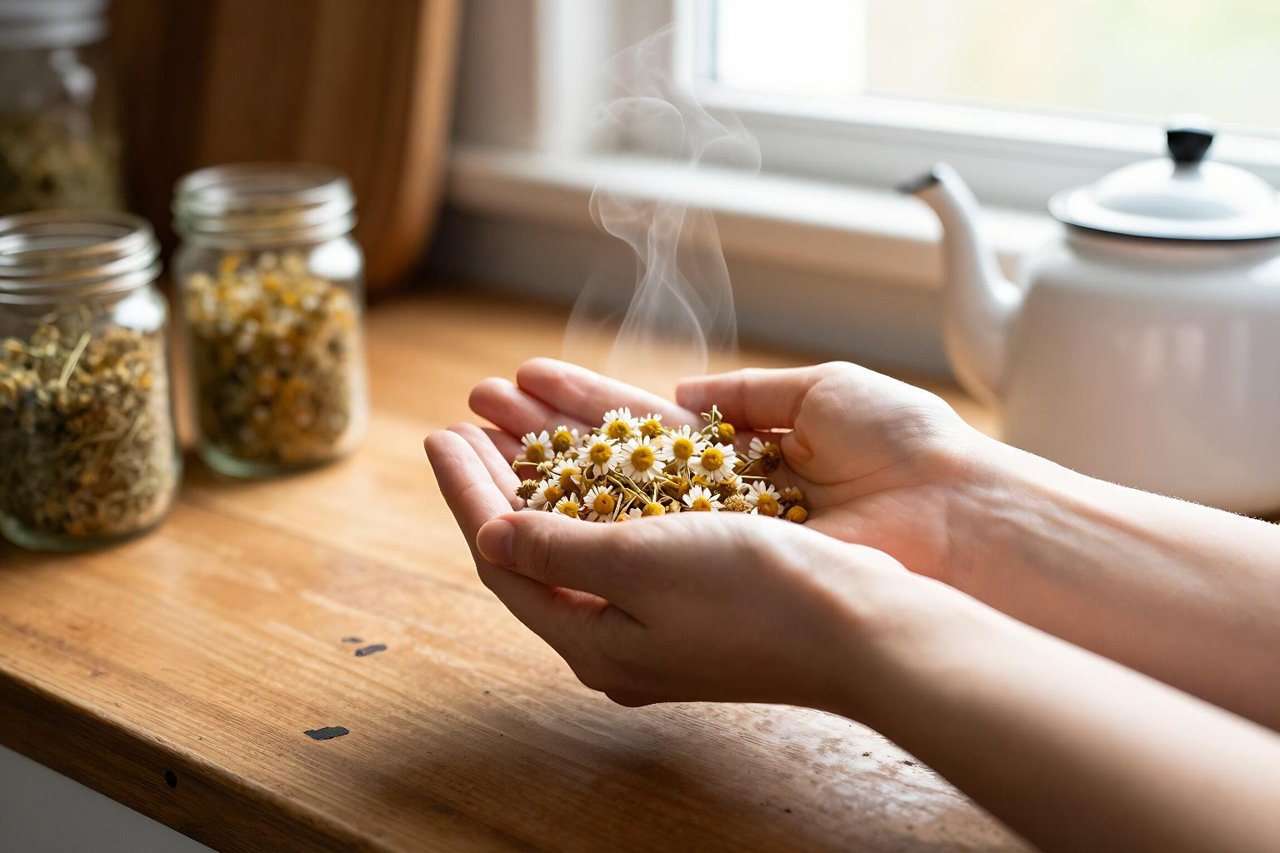
- Chamomile for sleep and a frazzled nervous system. Two teaspoons and a lid on the cup.
- Ginger for nausea, cold hands and the first day of a cold. Fresh root simmered ten minutes with honey.
- Thyme for coughs. A strong infusion, or a teaspoon of honey steeped with the leaves.
- Nettle as a mineral-rich daily brew. Mild, cheap, and hard to overdo.
That’s a working starter shelf. If you want to build it out into something more organised, a step-by-step home apothecary crash course walks through equipment, storage and basic preparations without assuming prior knowledge.
How to tell whether it’s working
Keep a three-line log. The symptom, a score out of ten, and anything unusual that day. Rate it at the same time each evening. Give a new herb two to three weeks before you judge it, because almost nothing useful happens in forty-eight hours.
Then be honest. If your headaches went from six out of ten to three, that’s worth keeping. If the score hasn’t moved after three weeks of consistent, well-made doses, drop it. Placebo is real and not shameful, but a remedy that only works when you remember to believe in it isn’t pulling its weight.
Your first four weeks, mapped out
Week one: pick one symptom that bugs you regularly and one herb from the list above. Nothing more. Week two: buy a small, fresh quantity from a supplier who tells you the plant part and the date, and take it at the same time daily at a consistent dose. Week three: keep logging, resist the urge to add a second herb. Week four: read your scores and make a decision, either keep it on the shelf or give the jar away.
Repeat that loop four times and you’ll have four honest data points, four herbs you actually understand, and a cupboard with nothing dead in it. That’s a better foundation than most people who’ve been buying supplements for a decade.


