
Table of Contents
A splinter under a thumbnail. A sore throat that appeared at breakfast. A wasp sting on the back of the hand halfway through a gardening session. Somewhere in your kitchen there’s probably something that helps with all three: salt water, a spoonful of honey, a cold tea towel. That’s the whole premise of home remedies, and it’s older than pharmacies by several thousand years.
What it isn’t is a free-for-all. The difference between a remedy that helps and one that sends you to a walk-in clinic usually comes down to boring details: the right dilution, the right timing, and knowing when to stop. This guide covers those fundamentals from zero.
So what actually counts as a home remedy?
Broadly, it’s anything you treat yourself with, using things you already own or can pick up cheaply, without a prescription. Beginners tend to blur three quite different families of treatment together:
- Kitchen staples used as active ingredients: honey for coughs, salt for gargles and nasal rinses, oats in a bath for itchy skin, bicarbonate of soda on a sting.
- Physical methods: rest, ice, elevation, compression, steam, cool running water. Unglamorous, and the backbone of most first aid.
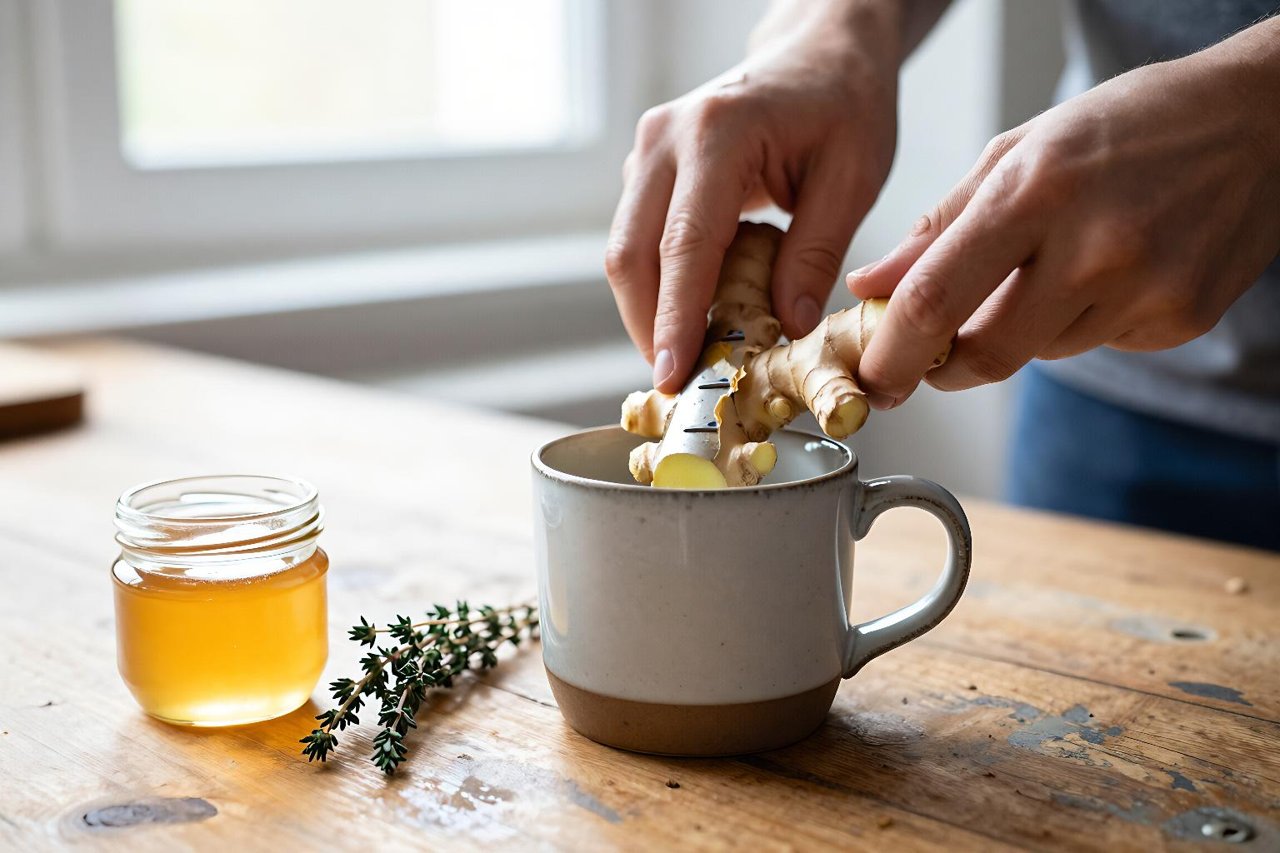
- Herbal preparations: ginger, thyme, peppermint, chamomile, and the stronger plants that deserve proper care and dosage.
Notice what’s missing from that list: anything requiring a diagnosis. Home remedies manage symptoms and minor injuries. They can’t tell you what’s wrong with you, and they can’t distinguish a pulled muscle from something that needs a doctor by Friday.

The three buckets every beginner should know
Nearly every remedy you’ll hear about falls into one of three groups. Sorting them is the most useful skill in this whole business.
Bucket one: decent evidence behind it
Honey genuinely outperforms most over-the-counter cough syrups in trials of night-time coughing in children over twelve months old, and a teaspoon before bed is the standard dose. A salt water gargle, half a teaspoon of salt dissolved in a 250ml glass of warm water, reduces throat swelling enough to notice. Cool running water for a full 20 minutes remains the best first treatment for a minor burn. If you want the shortlist rather than the theory, this roundup of home remedies that work for sore throats, splinters and other everyday problems covers the ones with real evidence.
Bucket two: honest comfort measures
A mug of chamomile tea will not cure a cold. It will make a miserable evening slightly more bearable, and that counts for something. Same goes for a hot water bottle, a warm bath, or soup. There’s nothing wrong with comfort. The mistake is expecting comfort to speed healing, then concluding that home remedies are nonsense when it doesn’t.
Bucket three: the skip list
These are the ones to leave alone, no matter how many times an aunt swears by them:
- Butter, cooking oil or toothpaste on a burn. They trap heat and hold bacteria against damaged skin.
- Hydrogen peroxide poured into a cut. It damages the healthy tissue you’re trying to heal.
- Undiluted essential oils on skin, especially a child’s skin.
- Leftover antibiotics from a previous illness. Not for anything, not ever.
- Vinegar as a universal cure. It’s food, and it stings on broken skin.
A starter drawer that earns its space
You do not need a cupboard full of tinctures. Eight items will handle the majority of small household problems:
- A jar of honey (any pasteurised supermarket jar is fine; never give it to a baby under twelve months)
- Fine table salt
- Bicarbonate of soda
- Plain rolled oats, for an itchy-skin bath
- A digital thermometer
- Oral rehydration sachets, which are far better than sports drinks for a stomach bug
- A pair of fine tweezers and a magnifying glass
- Petroleum jelly and a roll of cling film, the second of which makes a surprisingly good burn dressing
Five rules that keep small problems small
The 20-minute rule for burns
Cool running water, not ice, for a full 20 minutes, starting as soon as you can. Ice causes its own cold injury on top of the burn. Set a timer, because almost everyone stops after two minutes and then wonders why it blistered.
The 48-hour rule
If a symptom isn’t clearly improving after two days, or is getting worse at any point, stop treating it at home and get advice. This one rule prevents most of the trouble beginners run into.
Change one thing at a time
If you start honey, a nasal rinse and a new herbal tea on the same evening, you’ll have no idea which one helped or which one caused the rash.
Patch test anything topical
Dab a small amount on the inner forearm and wait 24 hours before using it properly. It costs you a day and saves you a week of itching.
Dose by weight, not age
Children’s paracetamol and ibuprofen are calculated by body weight. Two four-year-olds can need noticeably different amounts, and the age bands on the box are a rough average, not a personal prescription.
There’s a longer list of avoidable errors in this piece on home remedies gone wrong and the mistakes that turn small problems into big ones, and it’s worth ten minutes before you start experimenting.
Matching the remedy to the problem
Sore throat
Gargle with the salt water solution above, up to four times a day. Follow with a teaspoon of honey. Keep drinking, because a dry throat hurts more than a wet one.
Splinters and grazes
Soak the area in warm water for ten minutes to soften the skin, then use tweezers you’ve wiped with alcohol. Wash grazes with plain running water and cover them. Skip the antiseptic sprays for minor wounds; soap and water do the job.
Congestion
A saline nasal rinse, a hot shower, and sleeping with your head slightly raised will do more than most decongestant sprays, which stop working after three days of continuous use.
Stings, bumps and sprains
Ice wrapped in a cloth for 15 to 20 minutes at a time, several times a day, plus elevation. For a wasp sting, a paste of bicarbonate of soda and water takes the edge off. For a bee sting, flick the sting out sideways rather than pinching it.
If you’d rather follow a set of instructions than improvise, these five easy step-by-step treatments you can do tonight walk through each one in order.
When the pharmacy genuinely deserves to go first
Home remedies are not in competition with modern medicine, and treating them as rivals is how people end up worse off. For a bacterial infection, a persistent fever, a deep cut, or anything involving the eyes, the pharmacy or the doctor wins immediately. For a mild cough, a minor burn, or a tension headache, the kitchen usually performs just as well for a fraction of the cost. This comparison of home remedies versus the pharmacy, condition by condition is a useful gut-check when you’re standing in the aisle unsure which way to go.
Building past the basics without wasting money
Once the fundamentals feel familiar, the temptation is to buy everything at once. Resist it. Start with one or two herbs you’ll actually use, buy small quantities, and store them somewhere dark and cool, because a jar of three-year-old dried thyme is mostly dust. Ginger and peppermint are forgiving places to begin: both are cheap, both taste good enough that you’ll drink them, and both are hard to get wrong. If you’d like a sensible shopping order rather than a wild splurge, this guide to where to start with natural remedies without wasting money saves a fair bit of trial and error.
The most valuable thing you can develop early on isn’t a bigger shelf. It’s a habit of noticing. Write down what you tried, how much, and what happened over the next two days. After six months of those notes, you’ll know exactly which four or five remedies work for your household, which ones do nothing, and which ones you should leave to the professionals.


