
Table of Contents
Ask ten people what “getting fit” means and you’ll get ten different answers. One wants to run a half marathon, another wants to carry two bags of shopping up a flight of stairs without stopping, and a third just wants to stop waking up with a stiff lower back. All three are describing exercise and physical fitness in their own terms, and all three need roughly the same foundation: regular movement, some resistance work, decent sleep, and enough food to recover on.
The noise around that foundation is the problem. Wearables, cold plunges, zone 2 debates, 5am workout cults. Strip all of it away and the boring stuff still does about 90% of the work.
The components that actually make up physical fitness
Fitness isn’t one quality. It’s a handful of them, and they respond to different kinds of training at different speeds. Most people are strong in one or two and quietly ignoring the rest.
- Cardiorespiratory endurance: how efficiently your heart, lungs, and blood vessels deliver oxygen while you move. Built by walking briskly, cycling, swimming, running, rowing, or anything that keeps you breathing harder for 20 minutes or more.
- Muscular strength: the force a muscle group can produce in one hard effort, like standing up from a low chair with a loaded backpack on.
- Muscular endurance: how many times you can repeat that effort. Twenty bodyweight squats and a single heavy squat use the same muscles but train different things.
- Mobility and flexibility: whether your joints can move through the ranges your daily life demands, like reaching overhead for a suitcase or rotating to check a blind spot while driving.
- Body composition: the ratio of muscle to fat, which shifts with training, food intake, and age far more than the scale alone suggests.
You don’t need to maximise all five. A reasonable target is solid endurance, enough strength to protect your joints and posture, and mobility that doesn’t limit the other two.

How much exercise you actually need
The World Health Organization’s guidance is a useful starting point: 150 to 300 minutes of moderate activity per week, or 75 to 150 minutes of vigorous activity, plus muscle-strengthening work on two or more days. That sounds like a lot until you realise 150 minutes is 21 minutes a day, and a brisk walk counts.
Here’s the part worth internalising: the biggest health gain comes from going from nothing to something. Moving from zero to 90 minutes a week produces a far larger reduction in risk than going from 200 minutes to 300. If you’re currently inactive, the first month of walking four times a week is the single most valuable thing you will ever do for your long-term health, and it’s genuinely not that hard.
Step counts follow the same curve. A 2021 study of roughly 2,000 middle-aged adults found that mortality risk dropped steadily with more daily steps before flattening out somewhere around 7,000. Chasing 12,000 is fine if you enjoy it, but it isn’t where the returns are.
Strength training is the part most people skip
Cardio gets the headlines and the parkrun photos. Lifting gets skipped, and it’s the piece that matters most after about 30, when muscle mass starts declining by roughly 3 to 8% per decade. That decline is why a 70-year-old who never trained can struggle to get off the floor, and it’s largely optional.
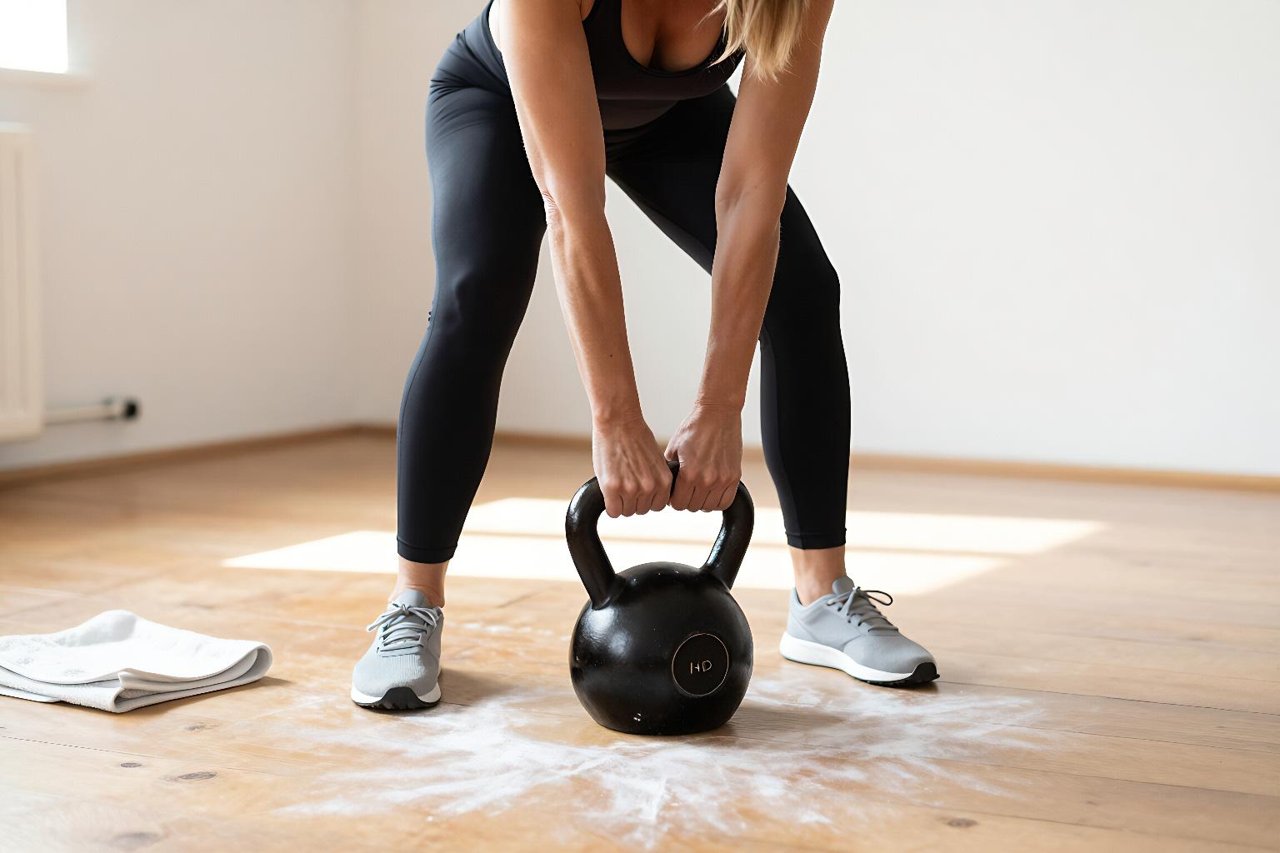
Two sessions a week is enough. A workable template covers six movement patterns: a squat (goblet squat or leg press), a hinge (deadlift or hip bridge), a push (press-up or overhead press), a pull (row or assisted pull-up), a carry (farmer’s walk with shopping bags), and something for the core. Three sets of eight to twelve reps on each, with a load that leaves you two reps short of failure.
Beginners often see strength jump 20 to 40% in the first eight weeks before the muscle looks any different. That’s mostly your nervous system learning to recruit fibres more efficiently. It’s not fake progress, but it does explain why the mirror lags behind the barbell.
Mobility work that isn’t just stretching
Static stretching before a run does very little for injury risk. Controlled movement through a full range does more, and it’s more interesting to do. Pilates sits nicely in this space because it combines flexibility with the core control and breathing patterns that hold posture together under load. If you want a structured starting point, this Pilates workout guide on strength, flexibility, and control walks through the mat sequences and how to progress them without needing equipment.
A week that survives a full-time job
Perfect programmes fail. This one is designed to be done badly on a stressful week and still count.
Monday
35-minute strength session: squat, push, row, carry.
Tuesday
25-minute brisk walk or easy cycle. Nothing heroic.
Wednesday
Rest, or 15 minutes of mobility and hip work.
Thursday
35-minute strength session: hinge, overhead press, pull-up variation, core.
Saturday
Something longer and more fun. A hill walk, a swim, a long bike ride, a class with a friend. This is the session that keeps the rest of the week tolerable.
That totals around 150 minutes of moderate activity plus two strength sessions, and never asks for more than 40 minutes in one go.
Food, energy, and the recovery bit
Training is the stimulus; recovery is where adaptation happens. Two things derail more programmes than motivation ever does: chronic under-eating and chronic under-sleeping. If you’re training four times a week and eating like you’re not, you’ll feel flat by week three and blame your willpower.
Protein matters more as you age. Somewhere around 1.2 to 1.6g per kilogram of bodyweight per day supports muscle repair in active adults, spread across meals rather than crammed into a post-gym shake. Carbohydrate timing is worth understanding too, particularly if your sessions are longer than an hour, and the role of nutrition in sustaining energy during regular exercise covers that in more depth than a paragraph can.
If you’re also tracking intake, treat the numbers as estimates rather than gospel. A calculator is a useful starting hypothesis, and this breakdown of how accurate a calorie calculator really is explains why your actual needs can drift 200 to 300 calories either way.
The habit side is a design problem
People who train for decades aren’t more disciplined than you. They’ve arranged their lives so that training requires fewer decisions. Kit by the door. A gym on the commute route. A standing Tuesday session with someone who’ll notice if they skip.
Time of day matters less than consistency, but it’s worth finding a slot that doesn’t compete with the rest of your life. Morning sessions suit people whose evenings get hijacked, and comparing six healthy morning routine styles is useful if you’re trying to build exercise into the start of the day rather than the end of it.
Training with someone else is one of the most reliable adherence tools there is, and there are fitness benefits for both of you that go well beyond simply having someone to text on a cold Wednesday. Just don’t let the social side become the only reason, because schedules break.
What progress actually looks like
Newcomers usually expect change on a timescale their body doesn’t work on. Here’s a more honest map.
Weeks 1 to 3: better sleep, steadier mood, less stiffness in the morning. Clothes fit differently before anything looks different.
Weeks 4 to 8: measurable strength gains. You’ll notice you can carry more, climb stairs without pausing, and hold a plank longer. Bodyweight might barely move, especially if you’ve added muscle.
Weeks 8 to 16: visible change in how you look and how clothes sit. Resting heart rate typically drops a few beats per minute if you’ve been doing consistent cardio.
Six months to a year: this is where the fitness becomes structural. Bone density, tendon strength, and aerobic capacity are genuinely different. Missing a week no longer feels like starting over.
The compound effect is the whole argument. Thirty minutes, three or four times a week, adds up to roughly 80 hours a year of deliberate physical work. Do that for a decade and you are a completely different physical specimen from the version of you that didn’t. Not because of any single session, and not because of any supplement, but because the sessions kept happening when it was raining, when work was busy, and when the results weren’t visible yet.


