
Table of Contents
A 16-by-32-foot in-ground pool holds roughly 20,000 gallons of water and sits behind the house as the largest liability exposure on the property. Most new owners find that out at renewal rather than at closing. The quote comes back a couple of hundred dollars higher, the insurer wants photos of the fence, and the diving board that came with the house has to go.
Home insurance and swimming pools can coexist without much drama. You just need to know which parts of the pool a policy actually protects, which parts it quietly excludes, and what underwriters look for before they agree to take on the risk.
Why insurers price a pool differently
Drowning is the leading cause of unintentional death for children aged one to four in the United States, and a serious injury claim can pass $300,000 once medical care, legal fees and long-term rehabilitation are added up. A pool is also permanent. A trampoline can be taken apart and stored; a 20,000-gallon hole in the ground cannot.
That combination explains the underwriting. Some carriers decline a home with an older, unfenced pool outright. Most of the rest add an annual surcharge somewhere between $50 and $250, and a few ask for a signed statement that the pool has a self-latching gate before they’ll issue a policy at all.

What a standard homeowner’s policy usually covers
The structure, not the water
On a typical open-peril policy, the pool shell, the attached decking, the pump housing and the filter are covered for the same events that would damage the house: fire, windstorm, hail, vandalism, a tree limb through the screen enclosure. Above-ground pools are usually treated as personal property instead of a structure, which matters at claim time. Many policies put a sub-limit of $1,000 to $2,500 on them, so a $6,000 pool that collapses after a bad winter may only return a fraction of its replacement cost.
The water itself is almost never covered. Refilling a 20,000-gallon pool costs somewhere between $80 and $200 depending on local rates, and insurers treat that as routine upkeep rather than a loss.
Liability, and the attractive nuisance rule
Personal liability coverage pays for injuries to other people, plus your legal defence if they sue. Here the law is not on your side if the pool is unsecured. Under the attractive nuisance doctrine, a homeowner can be held responsible when a child wanders onto the property and is hurt by something tempting, even if that child was trespassing. A working gate latch is the cheapest defence you will ever buy.
Standard liability limits of $100,000 to $300,000 sound generous until you price out a catastrophic spinal injury. Most agents will suggest $500,000 at minimum for a household with a pool.
Where pool coverage tends to stop
Read the exclusions page before you assume anything. These are the gaps that show up most often on pool claims:
- Freezing and gradual damage. A cracked shell caused by water left in the lines over winter is usually treated as poor maintenance, not a sudden event.
- Mechanical breakdown. Heaters, pumps, salt cells and robotic cleaners fail from wear. That is a home warranty or an equipment breakdown endorsement, not a standard policy.
- Chemistry and neglect. Algae blooms, etched plaster and rusted ladders from unbalanced water are maintenance issues.
- Diving boards, slides and raised platforms. Plenty of carriers exclude them or require removal as a condition of coverage.
- Commercial use. Swim lessons, paid pool parties or short-term rentals change the risk class entirely.
- Ground water and surface flooding. Standard policies handle neither.
What underwriters actually want to see
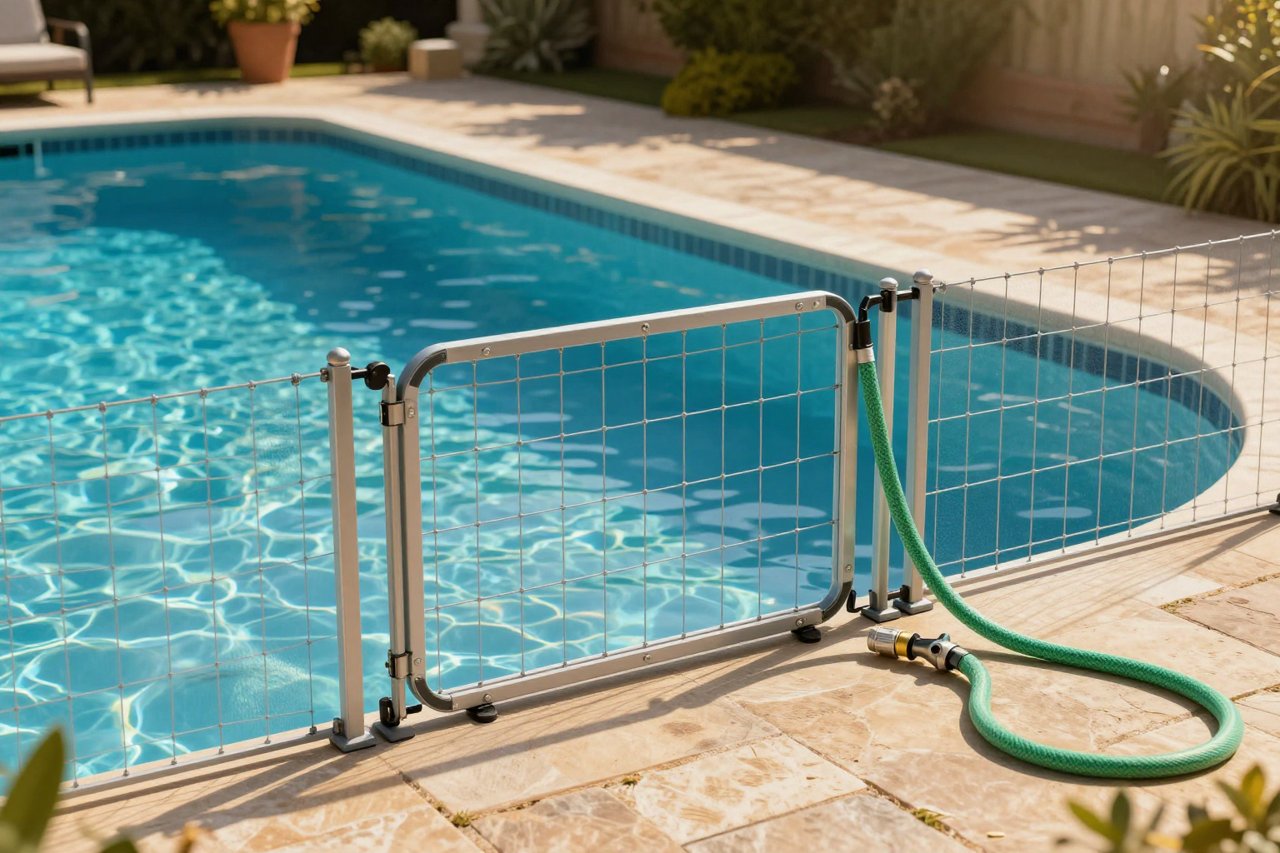
Before a policy is bound, expect questions about the age of the pool, whether it is in-ground or above-ground, and whether the fence is at least four feet high with a self-closing, self-latching gate. Some insurers ask for a photo of the gate from both sides. A pool alarm, a rigid safety cover or an automatic cover usually helps. So does a clean claims history: one slip-and-fall at the pool deck can follow the property for years and push you into a surplus lines carrier.
If the pool is shared with a neighbour, sits on a lot line, or is accessible from an alley, mention it up front. Finding out at claim time that the insurer didn’t know about a second entry point is an expensive way to learn about material misrepresentation.
Safety features that earn their keep
Insurers reward the boring stuff. A four-foot isolation fence around the pool, separate from the property fence, is the single biggest discount trigger. Self-closing hinges, a gate alarm, a surface motion alarm and a safety cover each chip a little more off the premium. Some carriers cut 5% to 10% for a combination of these; others simply agree to keep writing the policy, which is worth more than the discount.
Bundle the upgrades. A new fence and a pool alarm installed in the same month often cost less than $2,500 and can pay back through lower premiums, fewer near-misses and a straightforward renewal conversation.
Raise the liability limit before you need it
A personal umbrella policy sits on top of your home and auto liability and typically adds $1 million of coverage for $150 to $400 a year. For a household with a pool, a trampoline or a teenage driver, it is the best-value line item in the whole insurance folder. Most carriers require you to carry $300,000 on the underlying home policy before they’ll write the umbrella, so check that first.
Flooding, storm runoff and the gap nobody reads
Heavy rain that lifts the water table can pop a vinyl liner or float an empty shell out of the ground. Standard policies exclude that damage because it comes from flooding, which is a separate product. If your yard sits near a creek, a drainage easement or a low-lying neighbour, it’s worth understanding how flood insurance works, including costs, requirements and how claims are paid, before the first big storm of the season rather than after it.
Renting out a house with a pool
Listing a home on Airbnb or Vrbo changes the equation completely. A standard homeowner’s policy generally excludes business use, and a guest injured on the pool deck during a paid stay is a commercial exposure. Landlord policies, short-term rental endorsements and separate commercial liability all exist, but the cheapest option is often to close the pool to guests entirely. Owners who buy a place near one of the best places to visit in September in the USA should price that endorsement before the first booking, not after.
Swimming holes with no premium attached
Not every swim needs a policy rider. Wild swimming carries its own risks, but nobody sends an inspector to photograph the fence around a natural pool. The waterfalls and swimming spots around Cavalcante in Chapada dos Veadeiros are a good reminder of what a river does better than a filter system. Closer to home, the trails and natural pools near São Jorge in Brazil draw the same crowd for the same reason: zero maintenance, zero surcharge, and no gate to latch.
A short checklist before your next renewal
Walk the pool area with a critical eye a month before the policy renews. Measure the fence, test the gate hinge, look for gaps under the fence line bigger than four inches, and photograph everything. Note any changes to the pool since last year, including a new heater, a resurfaced shell or a removed slide, and send them to your agent in writing.
Then ask two direct questions: is the pool listed on the policy as a covered structure, and what is my liability limit? If the answer to the first is vague or the second is $100,000, you have something concrete to fix, and it will cost far less than the alternative.


