
Table of Contents
Most people’s first cup of green tea is a letdown. They dunk a bag into water straight off the boil, wander off for five minutes, and come back to something bitter enough to strip paint. The box goes to the back of the cupboard and stays there for two years.
The gap between that cup and a genuinely good one is roughly ten degrees of water temperature and about ninety seconds of steeping. And the benefits people go on about, the steadier focus and the long-term heart and brain stuff, come from drinking it regularly rather than heroically. Two or three decent cups a day beats one perfectly brewed cup a month.
So if you’re starting at zero, this is the version I wish someone had handed me: what the drink actually is, which compounds are doing the work, what the evidence supports, and the practical bits that make it drinkable.
What green tea actually is
Green, black, white and oolong tea all come off the same bush, Camellia sinensis. The difference is timing and processing. Black tea leaves are rolled and left to oxidise fully, which turns them dark and malty. Green tea leaves get heated almost immediately after picking, either pan-fired or steamed, which halts that oxidation and locks in the green colour and the grassy, slightly savoury flavour.

That single step is why green tea tastes lighter than black tea and why it keeps more of its polyphenols intact. It’s also why green tea is less forgiving. Black tea can survive boiling water and a five-minute steep. Green tea cannot.
One subcategory worth knowing about: matcha. That’s the whole leaf stone-ground into powder, so you drink the leaf rather than just the infusion. A serving of matcha typically delivers more catechins than a steeped tea bag, simply because you’re consuming all of the plant material. It also tastes much stronger, which surprises people.
The three compounds that explain most of the benefits
Strip away the marketing and a lot of what green tea does traces back to three things.
EGCG (the antioxidant)
Epigallocatechin gallate is the headline catechin, and green tea is one of the richest dietary sources of it. In lab and animal studies EGCG behaves as a powerful antioxidant and appears to influence cell signalling in ways that look protective. In humans the picture is messier and the effects are smaller, which is normal and not a reason to ignore it.
L-theanine (the calm)
An amino acid found almost exclusively in tea. It crosses into the brain and tends to promote relaxed alertness, partly by nudging alpha wave activity. This is the reason a cup of tea feels different from a shot of espresso even when the caffeine dose is similar.
Caffeine (the lift)
An eight-ounce cup of green tea holds roughly 30 to 50mg of caffeine, against about 95mg in the same volume of brewed coffee. Smaller hit, slower curve. The combination of caffeine and L-theanine is what produces that focused-but-not-jittery feeling tea drinkers talk about.
What the benefits realistically look like
Focus without the crash
This is the benefit you’ll notice fastest, usually within 30 minutes. It’s modest but real, and it doesn’t come with the clenched-jaw feeling some people get from coffee. If you’re sensitive to caffeine, a cup at 3pm is usually fine where an espresso isn’t.
A small nudge to metabolism
Green tea and its extracts produce a measurable but small increase in energy expenditure, and trials combining green tea catechins with caffeine show modest fat loss over 12 weeks, often in the region of one to two kilos. Small. Worth having. Not a substitute for eating sensibly.
Heart and cholesterol markers
Regular green tea consumption is associated with modest reductions in LDL cholesterol and with lower cardiovascular risk in large observational studies of Japanese and Chinese populations. Observational means association, not proof, but the direction has been consistent across many cohorts for decades.
Antioxidant support and skin
Catechins do show up in skin tissue and there’s reasonable evidence for reduced redness and improved elasticity with consistent intake. It’s the kind of benefit that quietly accumulates. It’s also easily undone by the usual suspects, the same way common anti-aging food mistakes cancel out good intentions elsewhere in your diet.
If you want the deeper version, with effect sizes and study caveats, there’s a separate breakdown of what the research on green tea actually shows that goes well past the beginner level.
How much you actually need to drink
Two to three cups a day is a sensible, sustainable baseline. Most of the research showing benefits sits higher: three to five cups daily, with some Japanese cohorts at eight to ten. You don’t need to jump straight to eight. Build up over a few weeks and see how your sleep handles it.
- Morning: one cup after breakfast, brewed at about 80°C, steeped two to three minutes.
- Early afternoon: one cup as a replacement for a second coffee.
- Cut-off: aim to finish your last cup by around 4pm if you’re sensitive to caffeine at all.
- Empty stomach: skip it. Green tea on an empty stomach makes plenty of people feel mildly queasy.
- Supplements: be cautious. High-dose green tea extract has been linked to liver injury in a small number of cases, and that risk doesn’t apply to drinking the tea.
The brewing fix that changes everything
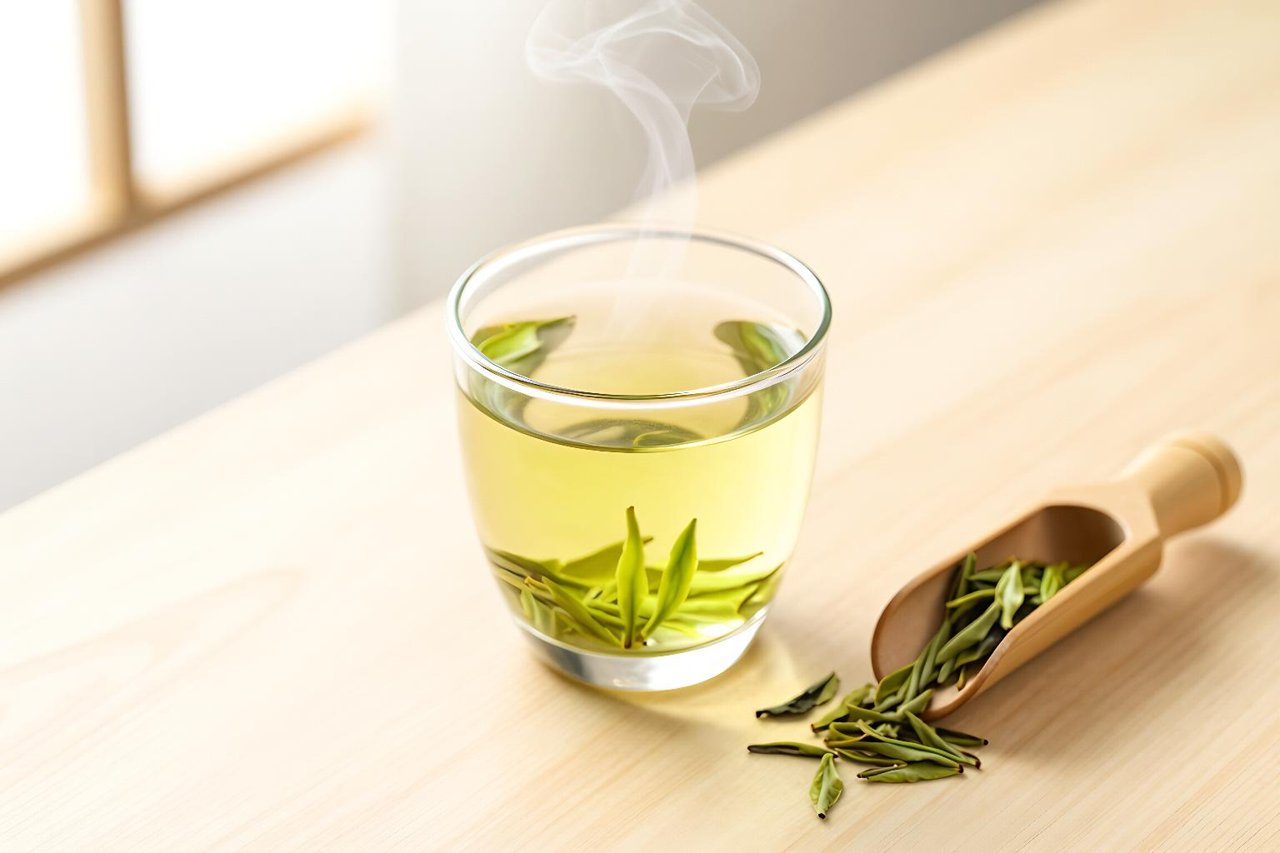
Boiling water is the single biggest reason people think they dislike green tea. Water at 100°C pulls out bitter tannins and destroys some of the delicate compounds you’re actually there for. Let the kettle rest for two or three minutes after it clicks, or splash a little cold water into the cup first.
Aim for 75 to 80°C, about two grams of leaf per 150ml (roughly a heaped teaspoon), and steep for two to three minutes. Loose leaf gives you more control than a bag, but a bag is fine. Don’t squeeze it against the side of the cup, don’t leave it sitting in the water, and don’t re-boil water that’s already been boiled.
There’s a longer list of the everyday habits that quietly waste a good cup in these common green tea mistakes. Most of them take seconds to fix.
Where the hype runs ahead of the evidence
Green tea will not melt belly fat on its own. It won’t offset a diet built on takeaway and fizzy drinks. It won’t detoxify anything, because your liver and kidneys already handle that job, and it won’t replace a vegetable intake you never had. You see the same pattern of overreach with almost every pantry staple that gets promoted online, which is why a similar beginner’s guide to apple cider vinegar benefits exists to separate the useful parts from the nonsense.
What green tea is, honestly, is a pleasant low-calorie drink with a modest and well-documented set of health advantages, one that happens to be one of the easiest good habits to adopt because it takes about ninety seconds to make.
Your first two weeks
Buy a small box of something mid-range rather than the most expensive tin on the shelf, because your palate is still calibrating and you don’t yet know what you like. Sencha is grassy and light, dragon well is nutty and forgiving, genmaicha is toasted and mild enough to win over almost anyone. Try two or three.
For week one, just drink one cup a day and get the temperature right. Week two, add a second cup in the early afternoon and notice whether your focus at 3pm feels different. That’s it. No measuring, no stacking, no green tea before every meal.
If you’d rather follow something more structured, this step-by-step plan for actually experiencing green tea benefits lays out a realistic four-week ramp with the details filled in. The short version, though, is the one above: decent leaf, water that isn’t boiling, two minutes, and enough patience to let a habit form before you judge the results.


