
Table of Contents
Turmeric Is a Root Before It’s Anything Else
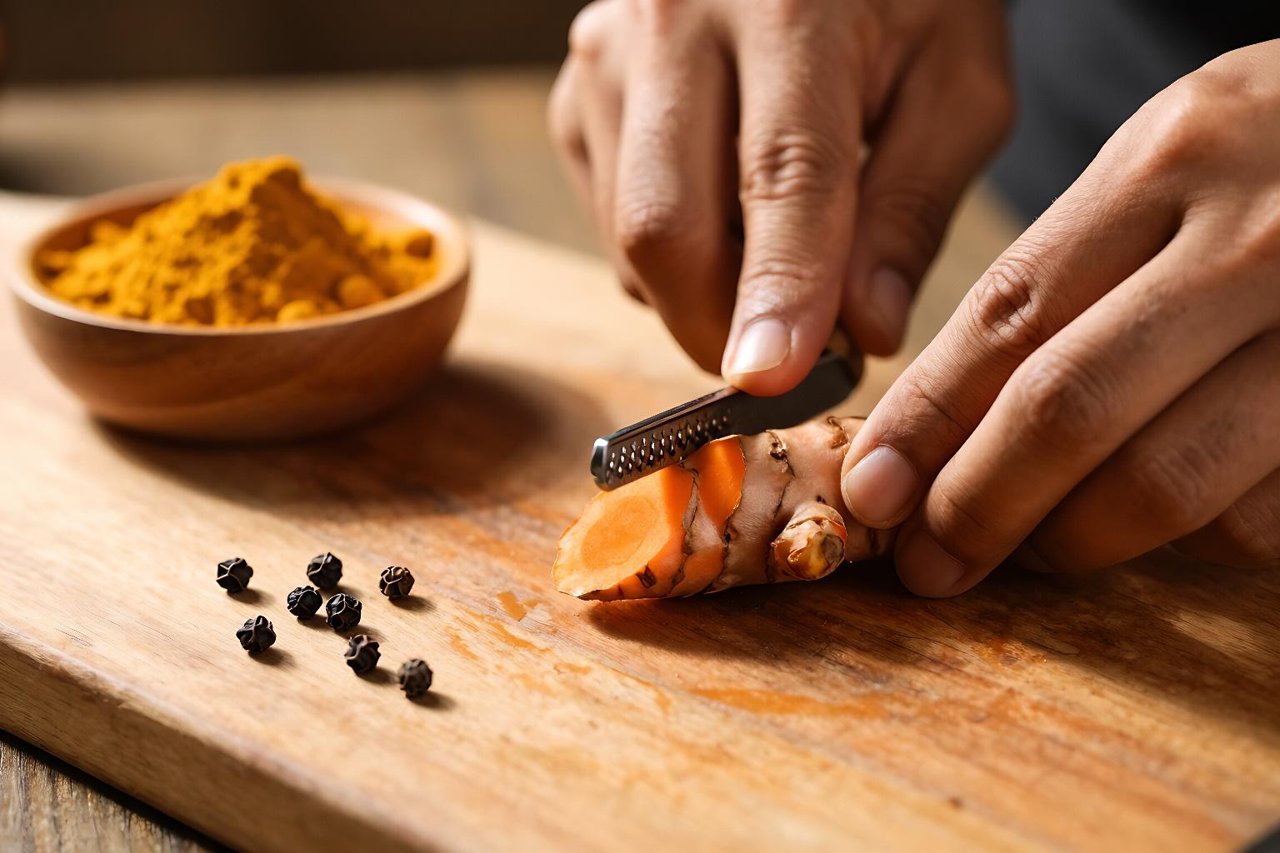
Turmeric is the underground stem, or rhizome, of Curcuma longa, a plant in the same family as ginger. Slice a fresh finger of it open and the inside is a startling orange, roughly the colour of a traffic cone. That colour comes from a family of compounds called curcuminoids, and the best known of them is curcumin.
Almost everything else follows from that one fact. The spice on your shelf and the capsules in the supplement aisle are the same plant, processed very differently. Ground turmeric powder is only about 2–4% curcumin by weight. A standardised curcumin capsule is usually 95% curcuminoids. Most beginner confusion about dosage comes from mixing those two up, because half a teaspoon of powder and a 500 mg capsule are nowhere near the same thing.
What Curcumin Does, and Why Your Body Pushes Back
Curcumin is studied mainly for how it interacts with inflammation. It nudges several signalling pathways that immune cells use to raise alarms; NF-κB and the COX-2 enzyme are the two names you’ll see most often in the literature. That’s the mechanism behind a lot of the headlines.
The catch is absorption. Curcumin dissolves poorly in water, is unstable at neutral pH, and gets processed by the gut wall and liver before it can do much of anything. Swallow a plain curcumin capsule on an empty stomach and only a sliver reaches your bloodstream intact. That isn’t a reason to give up, but it is the single most useful thing to understand early, because it explains nearly every piece of practical advice that follows. If you want the fuller picture of what researchers have and haven’t demonstrated, the evidence on this golden spice is more nuanced than the headlines suggest.

The Two Additions That Change Everything
Fat and black pepper. Curcumin is fat-soluble, so it dissolves readily into the fat already in a curry, a spoonful of yogurt, or a splash of coconut milk. Black pepper supplies piperine, which temporarily blocks the liver and gut enzymes that clear curcumin from your system.
The figure usually quoted comes from a 1998 human study: 20 mg of piperine alongside 2 g of curcumin raised bioavailability by roughly 2,000%. It’s a small, old study, and the number gets repeated more often than it gets re-tested. The direction, though, is consistent, and the cost of testing it yourself is a pinch of pepper. A quarter-teaspoon of ground black pepper in a dish is plenty.
What the Research Actually Supports
Joint pain and stiffness
This is the strongest area. Several randomised trials have compared curcumin extracts with ibuprofen or placebo in people with knee osteoarthritis, over four to eight weeks. More than one found comparable reported pain relief, with fewer stomach complaints than the ibuprofen group. Sample sizes are modest and formulations differ, so no doctor will call it a substitute for treatment. As a supportive daily habit, though, the evidence is well above noise.
Blood sugar and cholesterol
The signals here are real but small: modest improvements in fasting glucose and triglycerides in some trials involving people with metabolic problems. Nothing dramatic, and nothing you’d notice without a blood test.
The long tail of claims
Mood, skin clarity, memory, exercise recovery. Each has small trials with interesting results, and none has settled into a firm recommendation. That’s normal for a compound this heavily studied. If you’re taking turmeric for one of these reasons, treat it as an experiment rather than a certainty.
How Much, and How Long Before You’d Notice
There are two honest options:
- Culinary route: half to one teaspoon of ground turmeric daily (about 1.5–3 g), cooked into food with fat and pepper. Cheap, safe, easy to keep up. The curcumin dose is low, but a small amount every day adds up.
- Supplement route: 500–1,000 mg of curcuminoids daily, in a formulation built for absorption, either with piperine added or as a phytosome or micellar version. More expensive and more concentrated, and worth a word with a pharmacist if you take any prescription medication.
Give either route six to eight weeks. Before you start, write down one specific thing you can measure: how your knee feels on the stairs, how long morning stiffness lasts, how often you reach for painkillers. Vague intentions like “I think I feel better?” are useless, and the placebo effect in pain trials is strong enough that you genuinely need a baseline number.
A few safety notes worth having from day one. Turmeric increases bile flow, so skip high doses if you have gallstones. It can interact with blood thinners and can reduce iron absorption, so keep large supplement doses a couple of hours away from iron-rich meals. Culinary amounts are fine during pregnancy; high-dose supplements are not recommended.
Choosing a Format Without Overthinking It
You don’t need all four. Powder is the default for cooking. Capsules suit people who want a standardised dose and won’t cook with turmeric daily. Fresh root is lovely grated into dressings and tea but has a short fridge life. Golden milk is the pleasant version that often delivers more sugar than curcumin. There’s a clear comparison of powder, capsules, fresh root and golden milk if you want the trade-offs laid out side by side.
Where Beginners Usually Go Wrong
A few patterns show up again and again:
- Buying a “95% curcumin” capsule with no absorption helper and swallowing it with water on an empty stomach.
- Quitting after five days. Nothing about this works that fast.
- Storing powder in a clear jar next to the hob, where light and heat dull it within months. Airtight, dark, cool is the rule.
- Assuming a café turmeric latte does the same job as a home-made one. It’s often mostly milk and syrup.
- Using turmeric instead of getting a persistent symptom properly looked at.
Most of these are small fixes rather than fatal errors. There are nine specific mistakes that quietly cancel out turmeric benefits, and the absorption-related ones cost people the most money.
A Realistic First Two Weeks
Don’t buy anything yet. For fourteen days, put half a teaspoon of turmeric into something you already cook: scrambled eggs, rice, lentil soup, roasted cauliflower. Add a pinch of black pepper and a little oil or yogurt. That’s the whole assignment. You’re testing whether you like the taste and whether the habit survives a busy Tuesday, which matters more than any formulation detail on a label.
If it sticks, add one upgrade per week rather than changing everything at once. In week three, try a chai-style brew with fresh turmeric and ginger. Ginger has its own set of absorption quirks, and the two roots share a family tree along with a lot of kitchen logic. In week four, decide whether cooking alone feels sufficient or whether a standardised capsule earns its place in your cupboard. That staged approach is roughly the shape of a week-by-week plan for absorbing more curcumin, and it beats buying three products on day one and abandoning all of them by February.
The honest frame to hold onto: turmeric is a reasonable, low-risk addition to an already decent diet. It is not a treatment, it won’t compensate for poor sleep, and the gap between using it well and wasting money on it comes down to four small habits. Fat, pepper, consistency, and a baseline you can actually measure.


