
Table of Contents
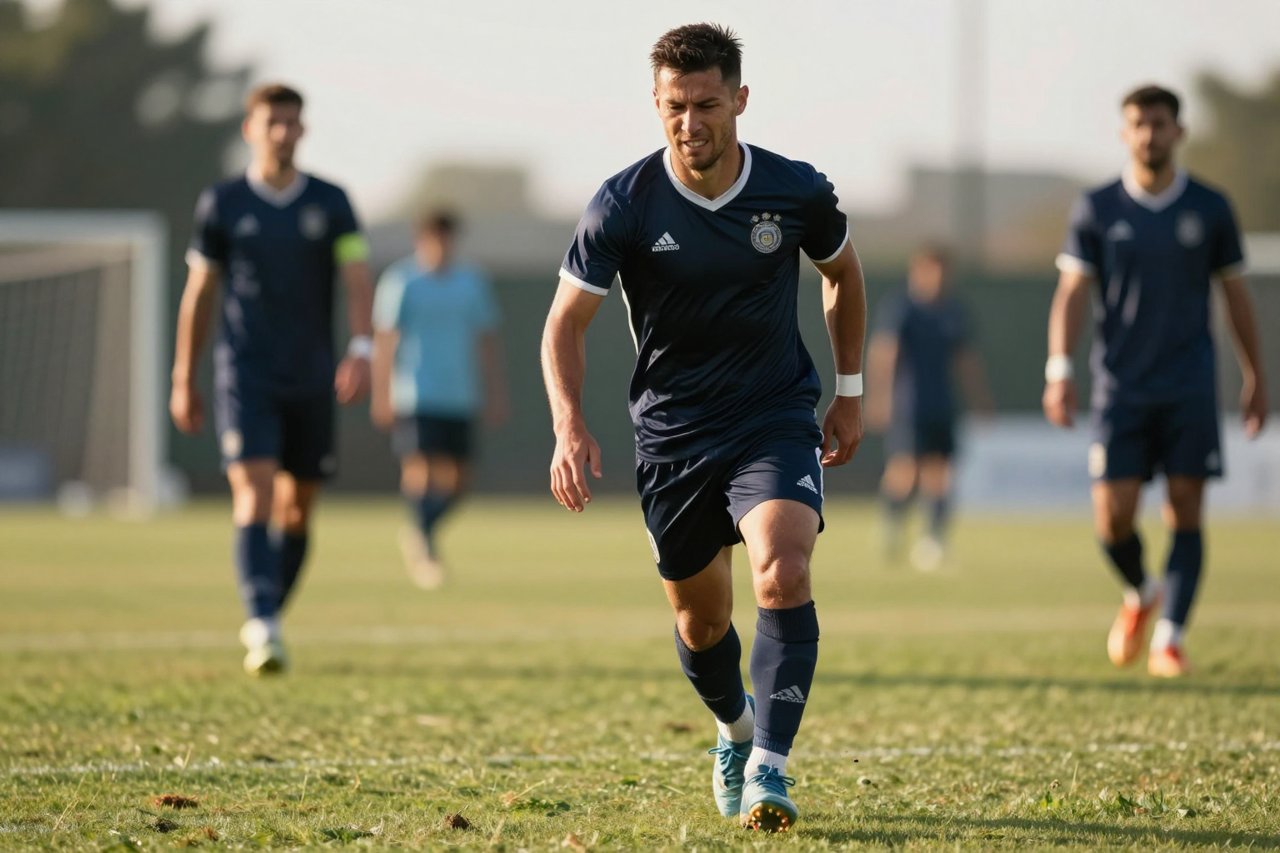
Seventy minutes into an amateur football match, a midfielder plants his foot to turn and goes down clutching the back of his thigh. On a nearby court, a pickleball player lunges for a volley and takes a paddle across the eye socket. Sport has a way of finding the body’s weakest link, and the same handful of problems turn up again and again, from school gymnasiums to Olympic training centres.
Most of these injuries aren’t random bad luck. They follow patterns: a joint pushed past its range, a muscle asked to sprint before it’s warm, a tendon loaded the same way ten thousand times. Recognising those patterns is the difference between two weeks on the sidelines and six months in rehab.
1. Ankle Sprains
Ankle sprains are the single most common injury across organised sport, accounting for roughly a quarter of all cases in sports like basketball, netball and volleyball. The mechanism is almost always the same: the foot rolls inward, the lateral ligaments on the outside of the ankle stretch or tear, and the joint swells within minutes.
Clinicians grade them from one to three. A grade one is a stretch with mild tenderness. A grade two involves a partial tear and bruising that spreads down the foot. A grade three is a complete rupture, and the ankle often feels unstable when you try to stand.

The overlooked problem is recurrence. Up to 40 percent of people who sprain an ankle go on to develop chronic instability, largely because they skip balance work once the swelling drops. Balance and proprioception training, standing on one leg with eyes closed or using a wobble board, cuts re-injury risk substantially.
2. Knee Ligament Injuries
Anterior cruciate ligament (ACL) tears dominate the injury lists in football, basketball, netball and skiing. Around 70 percent happen without any contact at all, usually when a player decelerates sharply, pivots, or lands from a jump with a stiff, straight leg.
Players often describe a pop, followed by the knee giving way. Swelling builds over two to twelve hours, which is a useful clue: rapid swelling usually means blood inside the joint, and that points to a ligament tear rather than a simple strain. Female athletes rupture the ACL at two to eight times the rate of male athletes, a gap researchers link to landing mechanics, wider hip angles and hormonal factors.
Medial collateral ligament (MCL) sprains are more common still and tend to come from a blow to the outside of the knee. Many of those heal without surgery.
3. Hamstring Strains
The hamstring is the most frequently injured muscle group in professional football, and it has an unwelcome habit of coming back. Roughly one in three athletes who strain a hamstring will strain it again, usually within the first two months, often because they return at full sprint speed before the tissue has regained its strength.
Sprinting is the classic trigger. The muscle is lengthening under load at the end of the swing phase, which is why the injury so often happens while running at top speed rather than while jogging. Nordic hamstring curls and progressive sprint exposure have the strongest evidence base for preventing it.
4. Rotator Cuff and Shoulder Injuries
Throwers, swimmers, tennis players and climbers all load the shoulder in the overhead position thousands of times a season. The rotator cuff, four small muscles that stabilise the ball in the socket, bears most of that load.
Tendinopathy tends to build slowly: an ache after sessions that eases with rest, then starts lingering through the day, then wakes you at night when you roll onto that side. Impingement and labral tears can follow. Anyone who has lost throwing velocity or feels a pinch reaching overhead should get the shoulder assessed before the tendon becomes degenerative.
5. Shin Splints and Stress Fractures
Medial tibial stress syndrome, better known as shin splints, affects somewhere between 15 and 35 percent of runners at some stage. There’s a dull, spread-out ache along the inner edge of the shin bone, usually worse at the start of a run and again afterwards.
Stress fractures are the sharper, more serious cousin. The pain becomes pinpoint, it hurts at rest, and running on it feels impossible rather than merely uncomfortable. Runners who increase weekly mileage too quickly, or who switch from cushioned trainers to racing flats overnight, are the usual suspects. Bone needs roughly six to eight weeks to remodel, which is why rest and a graded return matter more than any gadget.
6. Tennis Elbow and Other Overuse Problems
Lateral epicondylitis, the famous tennis elbow, shows up in carpenters, chefs and office workers as often as in players. It affects roughly one to three percent of adults each year, most of them between 35 and 54. The pain sits on the bony bump outside the elbow and flares when you grip a racket, a pan or a mouse.
Golfer’s elbow sits on the inside. Both are tendon problems driven by repetitive load rather than one incident, and both respond better to progressive strengthening than to complete rest. A grip change, a lighter racket or a thicker handle can remove the trigger while the tendon rebuilds.
7. Concussion
Concussion is the injury most likely to be underestimated, because the athlete often looks fine. It happens in rugby, American football, ice hockey, football heading duels, cycling and even in cheerleading, and it doesn’t require a knockout blow. A shoulder to the jaw or a fall onto grass can be enough.
Watch for headache, dizziness, nausea, fogginess, sensitivity to light, and any loss of memory around the incident. Symptoms can appear hours later, so a player who seems fine at the final whistle still needs checking that evening. Any suspected concussion means immediate removal from play and a graded return supervised by a clinician.
- Red flags that need emergency care: repeated vomiting, worsening headache, seizure, unequal pupils, drowsiness or confusion.
- Signs of a fracture rather than a sprain: immediate severe swelling, deformity, inability to bear weight, or numbness in the foot.
- Signs an overuse injury is escalating: pain at rest, pain that wakes you at night, or a drop in performance you can’t explain.
Two Injuries That Slip Under the Radar
Eye injuries in racquet sports
Paddles and balls move fast and courts are small. Emergency departments have reported a steady rise in pickleball eye injuries, mostly from being struck by a ball or a partner’s paddle during doubles play. Protective eyewear rated for sport costs very little and prevents the majority of these injuries, including the serious ones that involve bleeding inside the eye.
Sports hernias and groin pain
Chronic groin pain in footballers and hockey players is often labelled a strain for months before anyone investigates properly. A sports hernia isn’t a true hernia but a tear or weakening in the muscles of the lower abdominal wall, and it tends to worsen with sprinting, twisting and kicking. Understanding hernia treatment, prevention and diet helps here, since core strengthening, load management and body composition all influence recovery and recurrence.
Getting Back to Sport Without Going Backwards
Most sports-related injuries heal. The trouble arrives during the return. A reasonable rule of thumb is that you should be pain-free during everyday activity, have full range of motion, and have rebuilt strength to within about 90 percent of the uninjured side before you consider full training. Skipping the strength stage is the single biggest predictor of re-injury.
Load matters as much as tissue. A footballer returning from a hamstring strain shouldn’t go straight into a match; they need a week or two of increasing sprint distances at training first. A runner coming back from shin pain needs to build weekly volume by no more than 10 percent at a time, with a rest day between hard sessions.
Sleep, protein intake and stress levels all feed into tissue repair more than most athletes realise. Eight hours of sleep and roughly 1.6 grams of protein per kilogram of body weight per day gives the body the raw material to rebuild collagen and muscle. Warm-ups that include dynamic movement rather than static stretching, plus strength work twice a week, cut injury rates across most team sports by a third or more.
The athletes who stay on the field longest aren’t the ones who avoid pain. They’re the ones who treat a niggle as information, get it looked at early, and do the boring rehab properly. That habit is worth more than any pair of boots.


